 listicle
Client Appreciation Gifts for Small Business: 7 Ideas
Table of Contents
- Why Client Appreciation Gifts Matter for Small Business
- 1. Branded Glassware for Clients: The Gift That Stays on the Desk
- 2. Budget-Friendly Client Appreciation Gifts Under $25
- 3. Premium Gift Hampers for High-Value Clients
- 4. Experience-Based Gifts and Digital Gift Cards
- 5. Client Gift Etiquette: What to Give, When, and How
- 6. Tax Deductible Business Gifts Australia: What You Can Claim
- 7. Industry-Specific Gift Curation and Post-Gift Follow-Up
- Frequently Asked Questions
Last Updated: September 10, 2026
Why Client Appreciation Gifts Matter for Small Business
Client appreciation gifts for small business are a retention tool, not a nice-to-have. A thoughtful gift costs less than winning a replacement client and keeps your brand in the room long after the invoice is paid.
The Glassware Company has years of industry experience etching logos onto glassware for businesses that treat gifting as a relationship strategy, not a box-ticking exercise.
Below, we break down seven ideas that work for small budgets, plus the etiquette and tax rules most guides skip.
1. Branded Glassware for Clients: The Gift That Stays on the Desk
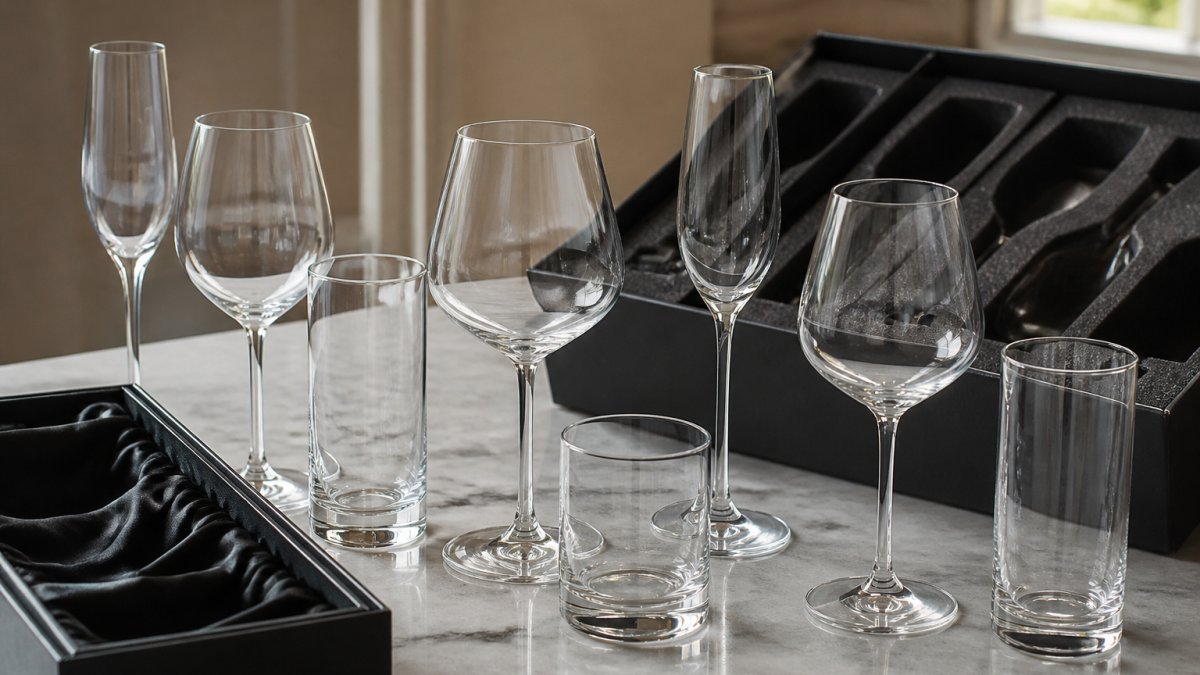
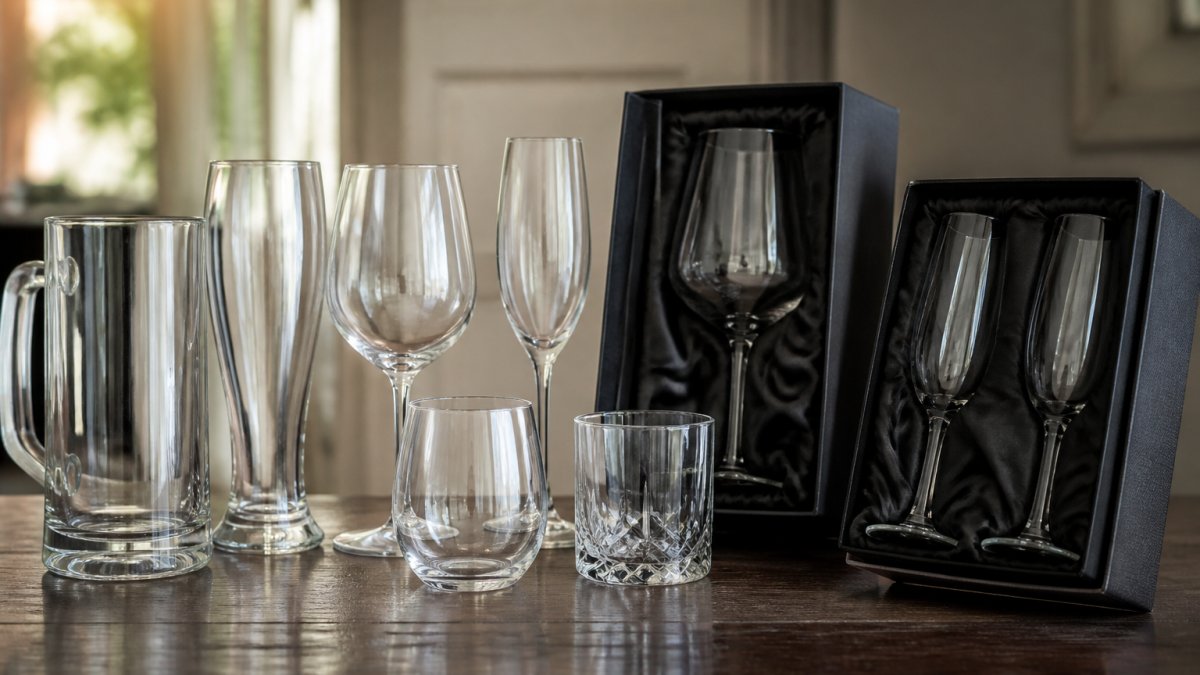
Branded glassware for clients is the highest-return category in corporate gifting because it gets used daily. A custom-etched tumbler, wine glass, or beer stein sits on a desk or bar shelf for years.
The Glassware Company etches logos directly into the glass rather than printing on top, ensuring the branding is durable. A gift that fades after three months reflects badly on the sender.

What to Look For in Custom Drinkware
- Etching or engraving rather than surface printing for longevity
- A shape the recipient will actually use: tumblers for offices, stemware for hospitality
- A logo sized to sit discreetly, not dominate the glass
- A style range broad enough to match different client types
2. Budget-Friendly Client Appreciation Gifts Under $25
You do not need a large budget to make an impression. Pick one well-made item per client tier and keep it consistent.
Reliable budget options include:
- Custom journals for professional service clients
- Stainless steel stemless wine cups for hospitality clients
- Printed drinkware for large-scale events
The trap here is buying the cheapest plastic item available. It signals the opposite of appreciation.
Eco-Friendly and Sustainable Gift Options
Sustainable options carry real weight with clients. Reusable stainless steel drinkware, refillable bottles, and long-life glassware reduce waste while keeping your logo visible.
A single durable item often outperforms a bundle of disposable ones, both in perception and in how long the branding survives.
3. Premium Gift Hampers for High-Value Clients
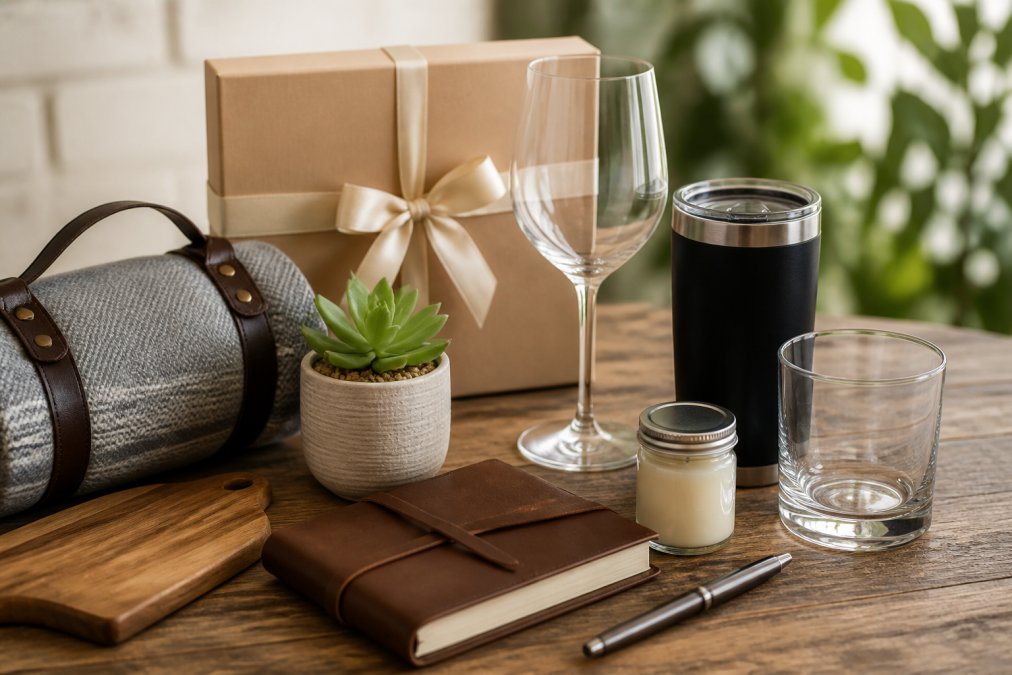
For top accounts, hamper-style gifting signals the relationship's weight. Curated boxes with artisan products, premium packaging, and a personalised message suit milestone celebrations and VIP clients.
The trade-off is cost and lead time. Order early, and reserve this tier for clients whose revenue justifies it.
Luxury Keepsakes vs. Consumable Hampers
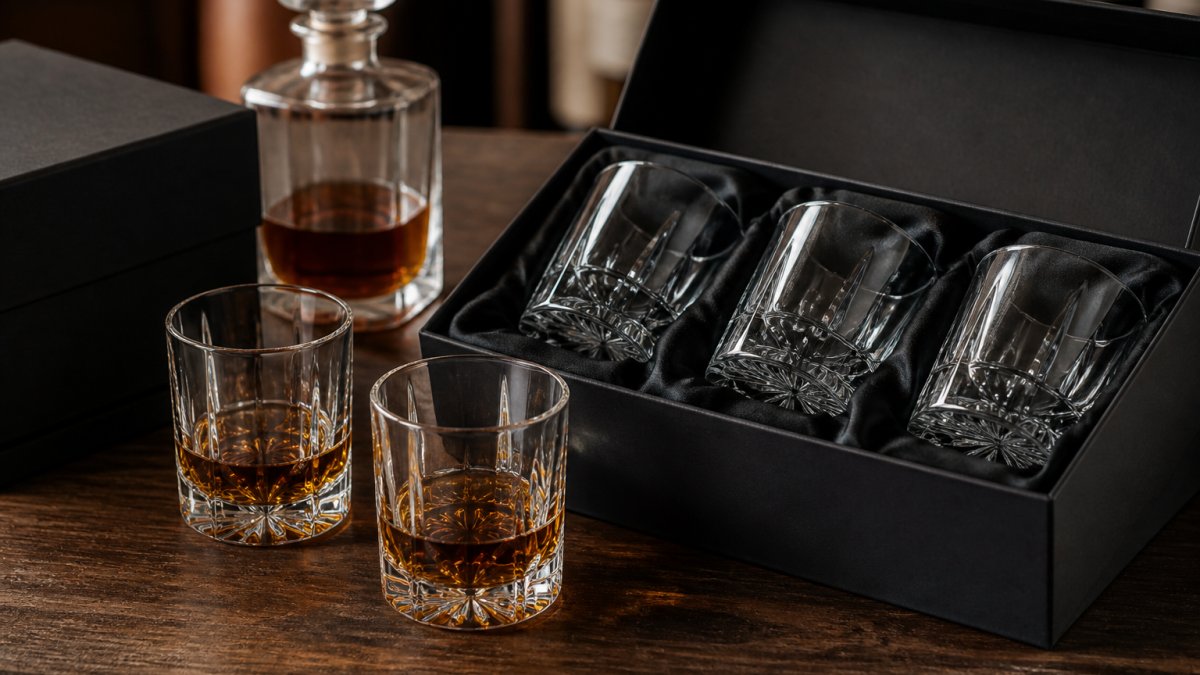
Consumable hampers are enjoyed once. Luxury keepsakes, such as crystal drinkware or engraved decanters, stay on display for years. If you want repeat brand exposure, choose a keepsake. If you want a warm, immediate gesture, choose a hamper.
4. Experience-Based Gifts and Digital Gift Cards
Experience-based gifts and digital gift cards solve the sizing and shipping problem. A restaurant gift card, event ticket, or local experience voucher lets the recipient choose.
Digital gift cards suit remote or interstate clients: they arrive instantly, need no address, and feel personal paired with a hand-written note.
5. Client Gift Etiquette: What to Give, When, and How
Client gift etiquette determines whether a gift strengthens a relationship or creates awkwardness. Get it right and the gesture lands; get it wrong and it reads as a bribe or an afterthought.
A simple framework helps:
| Situation | Appropriate Gift | Avoid |
|---|---|---|
| New client onboarding | Branded glassware or journal | Anything expensive |
| Project milestone | Etched keepsake or hamper | Cash or gift cards over nominal value |
| Annual thank-you | Consumable hamper or drinkware | Anything requiring sizing |
| Referral appreciation | Personalised token with note | Bulk generic swag |
Keep individual gift values modest and consistent. If a client's procurement rules restrict gifts, respect them without comment.
Hand-Written Notes and Personalisation
A hand-written note turns a good gift into a memorable one. Reference something specific: the project, a conversation, or the result you delivered together. Personalised tokens with the recipient's name or a shared milestone outweigh a generic logo drop.
6. Tax Deductible Business Gifts Australia: What You Can Claim
Tax deductible business gifts Australia rules hinge on a distinction most gift guides ignore: whether the item is a gift or entertainment, and who receives it. Get that split right and the deduction is usually straightforward; get it wrong and you can end up with a non-deductible expense, an FBT liability, or both.
The core distinction: gifts vs. entertainment
The Australian Taxation Office treats a genuine gift differently from entertainment. A gift is something the recipient takes away and keeps, a branded tumbler, an engraved decanter, a hamper of shelf-stable goods. Entertainment is consumed in the moment, a meal, a show ticket, a round of golf, a hotel night.
For client gifts, the practical position most small businesses land on is:
- Genuine gifts to clients are generally deductible as a business expense, and GST credits are usually claimable, provided the gift is made for business purposes and you hold a valid tax invoice.
- Entertainment (meals, event tickets, hospitality) is generally not deductible and does not attract GST credits, even when the recipient is a client.
- Gifts to employees sit in a different bucket entirely and can trigger fringe benefits tax (FBT), which is why the client/employee split matters so much.
The $300 minor benefits exemption
For employee gifts, the FBT minor benefits exemption is the rule most small businesses rely on. Where the notional taxable value is under $300 (GST-inclusive) and provided infrequently and irregularly, it can generally be exempt from FBT (ato.gov.au). That threshold is why employee gift programs cluster around $50-$150, under the cap, with room for a card and packaging.
Client gifts do not use this exemption in the same way, because clients are not employees. The relevant question for clients is whether the item is a gift or entertainment, and whether it was made for a genuine business purpose.
Records that survive an audit
A deduction is only as good as its paperwork. For every gift, keep:
- The tax invoice or receipt, showing the supplier, date and amount
- The recipient's name and business
- A short note on the business purpose, for example, "thank-you for Q3 project completion" or "referral acknowledgement"
- The gift type, so you can defend the gift-vs-entertainment classification if asked
A spreadsheet or a column in your accounting software is enough. If the ATO asks, you can show who received what, when, and why.
Where the rules get murky
Three situations trip people up more than others:
- Gift cards and vouchers. These can be treated as gifts or as entertainment depending on what they are redeemable for. A voucher for a restaurant is generally entertainment; a voucher for a retail store is generally a gift (ato.gov.au). The redemption terms matter.
- Cash and near-cash. Cash gifts to clients are rarely deductible and can create their own problems. Avoid them.
- Regulated industries. If your client works in government, finance, healthcare or a procurement-heavy role, their own gift policy may prohibit or cap what they can accept. A deductible gift that breaches their policy is still a problem for them, and for the relationship.
Confirm before you claim
Thresholds, FBT rates and ATO interpretations change. Before you build gifting into your expense forecast, confirm your specific situation with a registered tax agent, or check the Australian Taxation Office guidance on business deductions and gifts. Treat this section as a framework for the right questions, not as tax advice.
7. Industry-Specific Gift Curation and Post-Gift Follow-Up
The gift is only half the strategy. What you do in the two weeks after it lands determines whether it builds the relationship or sits on a shelf, and that is where the return comes from.
Curate by how the client works, not by budget alone
A generic hamper says "you are on a list." A gift matched to how the client works says "I know you." Segment by industry and match the gift to the daily environment.
- Hospitality clients, venues, restaurants, hotels. Stemware, decanters and service glassware get used in front of their own customers, which doubles the brand exposure. Match the glass style to the venue: a cocktail bar wants coupe and highball glasses, a wine bar wants stemware, a brewery wants steins and tasting paddles.
- Professional services, accountants, lawyers, consultants, agencies. Office-based, desk-bound, and often client-facing. Tumblers, journals and desk accessories that sit in meeting rooms get seen by their clients, not just them.
- Real estate and property, agents, developers, property managers. High-volume, relationship-driven, and often gifting at settlement or listing milestones. Personalised keepsakes with the recipient's name or the property address carry more weight than a generic logo drop.
- Tech and creative consultants, remote-first, often interstate. Physical gifts need to survive shipping and suit a home office. Insulated drinkware, compact desk items and well-packaged single items beat bulky hampers.
- Trades and construction, practical, durable, and used on site. Heavy-duty drinkware and rugged branded items that survive a ute tray or a site office outperform anything delicate.
The pattern is consistent: match the gift to the environment where the client will actually use it, and the branding does the work for you every day.
A follow-up cadence that does not feel like a sales call
Most small businesses send the gift, go silent, then reappear months later with an invoice or pitch. A light, structured follow-up keeps the relationship warm without pressure.
A cadence that works for most small businesses:
- Day 0, Gift is delivered, ideally with a hand-written note referencing something specific to the relationship.
- Day 3-5, A short, personal message: "Just checking the gift arrived, hope it's useful." No ask, no pitch. This is the message that confirms delivery and opens a natural reply.
- Day 10-14, If they replied, respond warmly and leave it there. If they did not, do not chase. Log it and move on.
- Next milestone, When the next project wraps, a renewal comes up, or a referral happens, reference the gift naturally: "Glad the tumblers are getting use, here's what we're thinking for the next phase."
The sequence is low-effort and high-signal: it tells you whether the gift landed, whether the contact is engaged, and whether the relationship is warm enough to ask for the next piece of work.
Measuring whether gifting is actually working
Most small businesses never measure gifting, which is why it gets cut first when budgets tighten. You do not need a formal ROI model, just three or four numbers tracked over time.
- Repeat business from gifted clients, compare the renewal or repeat-purchase rate of clients who received a gift against those who did not, over the same period.
- Referrals attributed to gifted contacts, log every referral and note whether the referrer received a gift in the preceding six months.
- Response rate to follow-up, the proportion of gift recipients who reply to the day-3 message. A falling rate is an early warning that your gift or your timing has gone stale.
- Cost per retained client, total gifting spend divided by the number of clients who renewed. Compare that against your cost of acquiring a new client. For most small businesses, the gifting number is dramatically lower.
You do not need a dashboard. A spreadsheet with columns for recipient, gift, date, follow-up sent, reply received, and outcome reveals the pattern within two or three cycles.
The compounding effect
The businesses that get the most from gifting are not the ones with the biggest budgets. They treat gifting as a system: segment the client base, match the gift to the environment, follow up lightly and consistently, and track whether it works. Each gift then builds on the last, and the relationship stops depending on the next invoice to stay alive.
Frequently Asked Questions
What are some good small client appreciation gifts?
Small client appreciation gifts work best when they are practical and personal. Custom branded glassware such as etched tumblers or wine glasses, high-quality notebooks, and gourmet hampers are reliable choices. For budget-friendly options, consider stainless steel wine cups or desk accessories. The key is choosing something the client will actually use, which keeps your brand visible long after the gift is received.
Are there tax implications for corporate gifts in Australia?
Yes. The Australian Taxation Office allows deductions for business gifts given to clients, provided they are not entertainment. Gifts like branded glassware, hampers, or stationery are generally deductible if they carry your business logo and cost less than $300 per recipient. Keep records of the date, recipient, and purpose. Check the ATO website or consult your accountant for your specific situation.
How do you choose a professional gift for a client?
Match the gift to the relationship and the occasion. For new clients, a branded glassware set or a welcome hamper works well. For long-term clients, consider premium keepsakes or experience-based gifts. Always check dietary restrictions if sending food, avoid overly personal items, and include a hand-written note. A good rule is to choose something that feels thoughtful without being extravagant.
What is the best way to follow up after sending a client gift?
Wait a few days after the gift is delivered, then send a brief email or make a phone call to confirm it arrived and thank them for their business. This is not the time to pitch new services. Instead, ask if they enjoyed it and use the opportunity to check in on their current needs. A simple follow-up keeps the relationship warm and shows the gift was not just a transaction.