 listicle
Corporate Gift Trends 2026: Australia's Data-Led Guide
Table of Contents
- Corporate Gift Trends in 2026: Seven Shifts Reshaping Australian Programs
- 1. From Throwaway Merch to Bespoke Corporate Gifts Australia Keeps
- 2. Personalisation at Scale Replaces One-Size-Fits-All Gifting
- 3. Tax-Deductible Corporate Gifts: What the ATO Actually Allows
- 4. Budgeting Frameworks and ROI for Corporate Gift Trends
- 5. Premium Gift Packaging Services Turn Drinkware into a Keepsake
- 6. What Poor Gifting Costs You: The Negative Impacts Nobody Budgets For
- 7. Making These Corporate Gift Trends Work in Your Organisation
- Frequently Asked Questions
Last Updated: October 2, 2026
Corporate Gift Trends in 2026: Seven Shifts Reshaping Australian Programs
Corporate gift trends in 2026 are moving away from branded clutter and toward durable, personalised items that recipients actually keep. This guide from The Glassware Company breaks down the seven shifts we're seeing across client, staff and event gifting programs, and what each one means for your budget and logistics.
The biggest change is this: recipients have grown sceptical of cheap merchandise, and procurement teams are under pressure to justify every dollar. That combination is pushing gifting toward fewer, better items. Below, we'll show you what the tax office allows, and where poor gifting quietly costs you money.
1. From Throwaway Merch to Bespoke Corporate Gifts Australia Keeps
The first shift is a move from novelty items to bespoke corporate gifts Australia recipients hold onto for years. Durable drinkware, engraved glassware and quality textiles now outperform disposable giveaways in most programs.
Why does durability outrank novelty? Because a gift that survives daily use keeps your brand visible long after the launch event. A branded glass on a desk does more work than a plastic trinket in a drawer.
- Etched glassware resists fading far better than some printed surfaces
- Durable items suit both client appreciation and internal recognition
- Long-lasting gifts align with sustainability expectations
2. Personalisation at Scale Replaces One-Size-Fits-All Gifting
Personalisation at scale is the practice of tailoring gifts across a large recipient list without hand-picking every item individually. It typically works through recipient-choice models, tiered gift selection or segmented design options.
The recipient-choice model lets staff or clients select from a curated range, which cuts waste and removes the guesswork. Tiered selection works well when you need to distinguish between VIP clients, general clients and internal teams.
| Approach | How It Works | Best For |
|---|---|---|
| Recipient choice | Recipient picks from a curated range | Remote and hybrid teams |
| Tiered selection | Different gift tiers by relationship level | Mixed client and staff lists |
| Segmented design | Same product, varied artwork or engraving | Large events and conferences |
3. Tax-Deductible Corporate Gifts: What the ATO Actually Allows
Tax-deductible corporate gifts ATO rules are one of the most misunderstood areas of gifting, and getting it wrong is expensive. None of the mainstream gifting guides explain the mechanics, so this section does. Whether a gift is deductible, and whether it triggers fringe benefits tax (FBT), turns on three questions: who receives it, what it is, and how it's recorded.
The entertainment versus gift distinction
The ATO draws a hard line between entertainment and a genuine gift. If the item is something the recipient consumes on your premises or in your presence, a meal, a bottle opened at the table, event tickets you attend together, it is generally treated as entertainment, and entertainment is not deductible and does not attract FBT.
This is why the same bottle of wine can be deductible in one scenario and not in another. The item is identical; the delivery context decides the treatment.
Client gifts
Gifts to clients and customers are generally deductible as a business expense if they are made for business purposes and are not entertainment. They do not attract FBT, because FBT applies to employees and their associates, not to arm's-length clients. The practical requirement is documentation: keep records showing who received the gift, what it was, and the business relationship it supports.
Employee gifts and the FBT thresholds
Gifts to employees are where most programs get caught. Two exemptions do most of the work:
- The minor benefits exemption, a benefit with a notional taxable value under $300 that is infrequent and irregular is generally exempt from FBT. A single birthday or Christmas gift under that threshold usually qualifies.
- The $300 aggregate threshold, if the total value of gifts to one employee in an FBT year (1 April to 31 March) exceeds $300, the exemption is lost and the whole amount can become taxable, not just the excess.
That aggregate rule is the trap. Five small gifts across the year can push an employee over the threshold even though no single gift looked significant.
The $300 cap and what counts toward it
Notional taxable value is not the retail price. It is generally the cost to you, plus GST, plus any delivery or packaging costs. Custom gift boxing, courier charges and personalisation fees can all count toward the threshold, which is why packaging decisions have a tax consequence, not just a presentation one.
Record-keeping that survives a review
A common pattern among teams that get this right is a simple gift register: recipient, date, item, cost, and the exemption being relied on. This takes minutes to maintain and is the first thing an adviser will ask for. Without it, a well-intentioned program can look like an undocumented benefit.
Because thresholds, exemptions and rates change, confirm your specific situation against current Australian Taxation Office guidance on gifts and FBT before you commit budget. The framework above tells you which questions to ask; the ATO tells you the current answers.
4. Budgeting Frameworks and ROI for Corporate Gift Trends
Most gifting budgets are set by working backwards from last year's spend, which is why most gifting budgets are wrong. A workable framework starts by splitting spend by audience and outcome, not by product category.
Step 1: Split by audience, then by outcome
Allocate across three buckets, clients, staff and events, and within each, decide what the spend is meant to achieve. A client gift is usually defending or growing revenue. A staff gift is usually defending retention. An event gift is usually building awareness. These have different justifiable spend levels, and lumping them together hides which programs are working.
Step 2: Set a per-recipient cap by tier
A common pattern is three tiers per audience:
| Tier | Typical recipient | What the cap should reflect |
|---|---|---|
| Tier 1 | High-value or long-tenure relationships | Revenue at risk or replacement cost |
| Tier 2 | Active relationships | Annual value of the relationship |
| Tier 3 | Broad list, low-touch | Cost of acquisition or onboarding |
Tier 1 caps are usually set as a small percentage of the revenue the relationship represents. Tier 3 caps are usually set against the cost of acquiring a comparable new contact. The point is that each cap has a reason behind it, so it survives a budget review.
Step 3: Price the full landed cost, not the unit price
The unit price is rarely the real cost. Landed cost per recipient includes:
- The item itself
- Personalisation or engraving
- Custom packaging, where used
- Freight and any split deliveries
- Admin time for recipient lists and tracking
- Replacement allowance for breakages and reprints
A contingency of roughly 5-10% of total spend is a common buffer for replacements and reprints, because breakage and artwork errors are the two costs teams consistently underestimate. Custom boxing adds lead time as well as cost, build in roughly 28 working days for made-to-measure presentation packaging so it doesn't become an expedited-freight line item.
Step 4: Track proxies, not a single ROI number
Gifting ROI is genuinely hard to isolate, because gifts rarely sit alone as the cause of a renewal or a resignation decision. Rather than force a false precision, track proxies that move in the right direction:
- Reorder rate, how often recipients ask for the same item again
- Mention rate, how often the gift comes up unprompted in client or staff conversations
- Renewal and retention correlation, whether gifted accounts or teams outperform ungifted ones over the same period
- Waste rate, the proportion of items that are discarded, returned or unclaimed
A falling waste rate is often the fastest signal that a program is improving, because it means the item choice is landing.
A worked example
Suppose a program covers 200 recipients across three tiers. If Tier 1 is 20 recipients, Tier 2 is 60 and Tier 3 is 120, and the caps are set at $150, $60 and $25 respectively, the item budget is $3,000 + $3,600 + $3,000 = $9,600. Adding personalisation, packaging, freight and a 10% contingency typically pushes landed cost well above the item budget, which is exactly the gap most teams miss when they set the number from unit price alone.
5. Premium Gift Packaging Services Turn Drinkware into a Keepsake
Premium gift packaging services change how a gift is received, not just how it looks in transit.
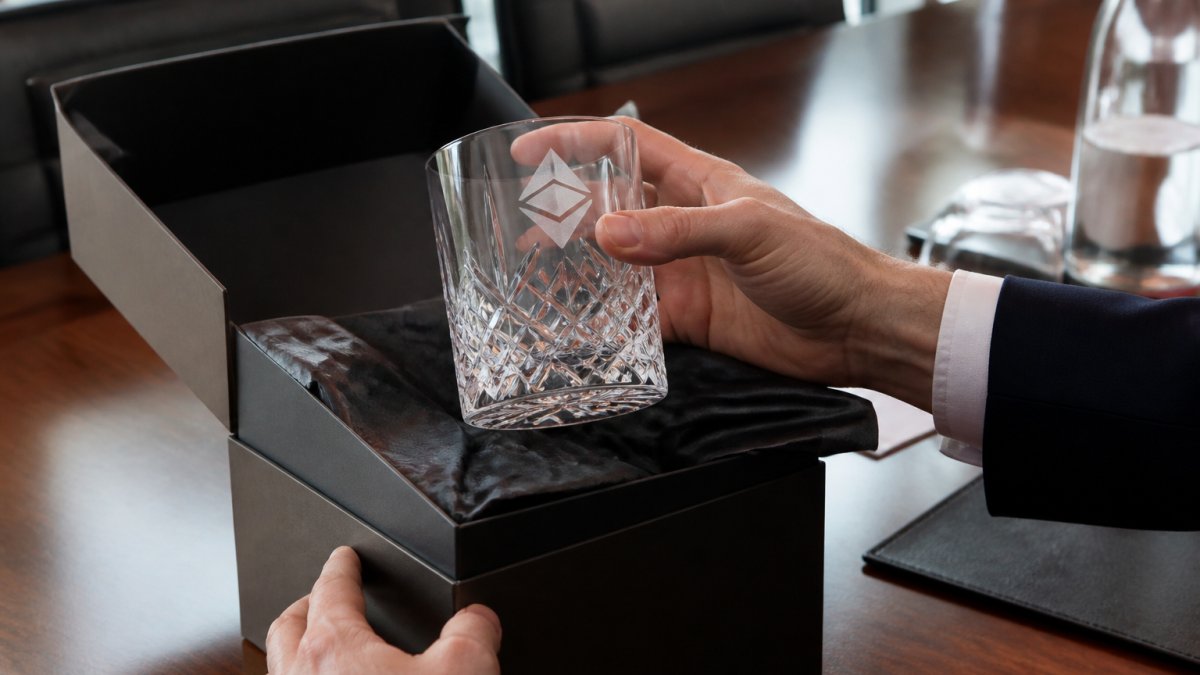
This is where custom manufactured gift boxing earns its place alongside the glassware itself.
The practical point: packaging is not decoration. It's the difference between a gift that reads as premium and one that reads as promotional stock.
6. What Poor Gifting Costs You: The Negative Impacts Nobody Budgets For
Poor gifting has a cost that rarely appears on a spreadsheet. A generic, low-quality item can signal that the recipient wasn't worth the effort, which is worse than sending nothing at all.
The damage shows up in three places:
- Perception: a cheap gift can undercut a premium brand position
- Waste: unwanted items end up discarded, wasting the full spend
- Relationship risk: clients and staff notice when gifting feels careless
Many teams find that a smaller number of well-chosen items can be more effective than a large run of generic merchandise.
7. Making These Corporate Gift Trends Work in Your Organisation
Putting these corporate gift trends to work comes down to three decisions: what you'll give, who receives it, and how you'll present it. Get those right and the rest is logistics.
Start with a shortlist of durable, brandable items, then match them to audience tiers. Build in lead time for custom work, confirm the tax treatment with your adviser, and choose packaging that matches the value of the gift.
Frequently Asked Questions
Can I expense corporate gifts?
In most cases yes, provided the gift is for business purposes and you keep records. Gifts to employees may fall under fringe benefits tax rules, so check whether an exemption applies. Keep receipts and a note of who received each gift, when, and why.
What are the emerging corporate gift trends for 2026?
Four stand out: durable, bespoke items replacing novelty merch; personalisation at scale through recipient-choice and tiered gift selection; premium packaging that turns a gift into a keepsake; and tighter budgeting frameworks that tie gifting spend to retention and engagement outcomes. Sustainability expectations also keep rising, so recipients increasingly judge a gift by how long it lasts rather than how much it cost.
How can custom glassware enhance corporate gifting strategies?
Etched or engraved glassware carries your logo permanently, so it survives years of dishwasher cycles without fading the way printed merchandise does. It suits client appreciation, long-service awards, winery and brewery branding, and event hospitality. Custom manufactured gift boxing lifts the presentation further, and planning around the roughly 28 working day turnaround keeps delivery on schedule for quarterly reorders and event dates.
What are the rules for corporate gifting?
Three rules cover most situations. Brand it so the deduction is defensible and the recipient remembers who sent it. Track it, because records of recipient, date and purpose are what support any claim at tax time and what let you compare this year's spend against last year's results.
Gifting programs fail quietly when items are chosen for cost rather than impact. The Glassware Company offers bespoke etched and engraved glassware, a large range of styles, custom artwork proofing and a custom manufactured gift boxing service with roughly a 28 working day turnaround. Get started with The Glassware Company and turn your next client or staff gift into something recipients keep.