 listicle
Custom Etched Wine Glasses: The Complete Buying Guide
Table of Contents
- What Makes Custom Etched Wine Glasses Worth the Investment
- Laser Engraved Glassware: Techniques, Finishes, and What to Expect
- Wine Glass Shapes: Choosing the Right Style for Your Brand or Event
- Bulk Engraved Wine Glasses for Weddings and Large Events
- Custom Glassware Gift Ideas for Every Occasion
- How to Order Custom Etched Wine Glasses: The Process Explained
- Material Quality, Sustainability, and Glassware Sourcing
- Conclusion
Last Updated: August 8, 2026
What Makes Custom Etched Wine Glasses Worth the Investment
Custom etched wine glasses merge function and brand storytelling. Clients who initially hesitate on the investment often reorder because guests ask where the glasses came from, a reaction driven by quality execution.
The core argument is permanence. Unlike printed labels or vinyl, etching becomes part of the glass itself and does not peel, fade, or wash off after commercial dishwasher cycles. A stemmed wine glass with a laser-engraved logo communicates attention to detail before a word is spoken, carrying real commercial weight for event planners, HR managers, and tasting room operators.
Not all custom glassware is equal. The quality of the glass substrate, the precision of the engraving process, and batch consistency determine whether the finished product enhances your brand or undermines it.
| Decision Factor | What to Check | Why It Matters |
|---|---|---|
| Engraving technique | Laser vs sandblast | Affects detail, depth, and durability |
| Glass material | European crystal vs standard glass | Affects clarity, weight, and finish quality |
| Minimum order quantity | Per-unit vs batch pricing | Affects cost for small vs large runs |
| Artwork proofing | Digital proof before production | Prevents costly errors at scale |
| Batch consistency | Colour and depth matching | Critical for reorders and multi-piece sets |
Laser Engraved Glassware: Techniques, Finishes, and What to Expect
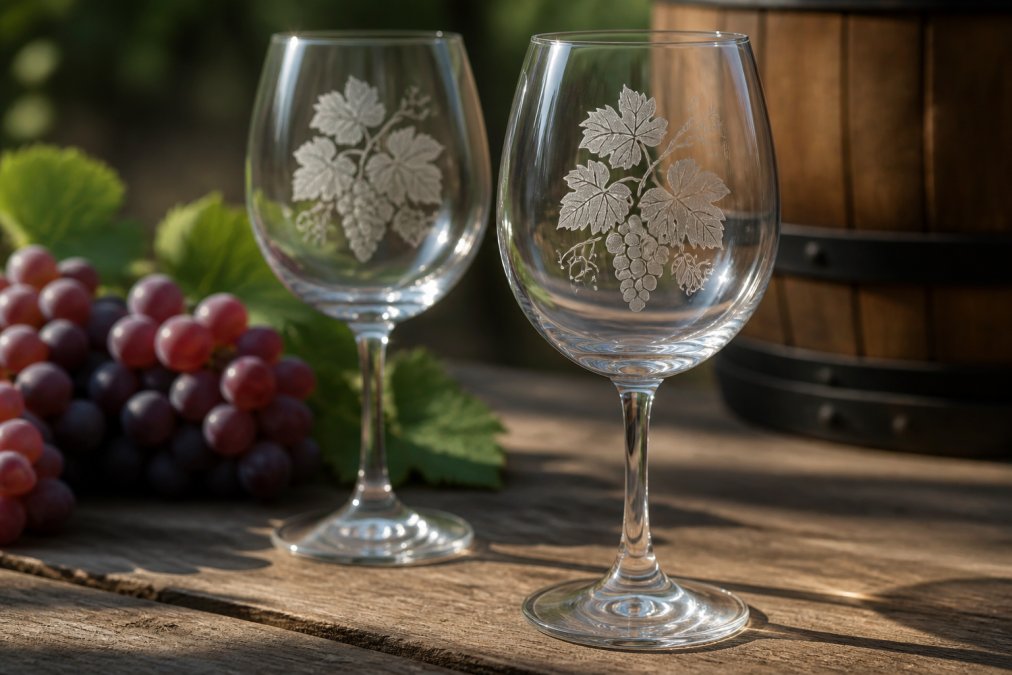
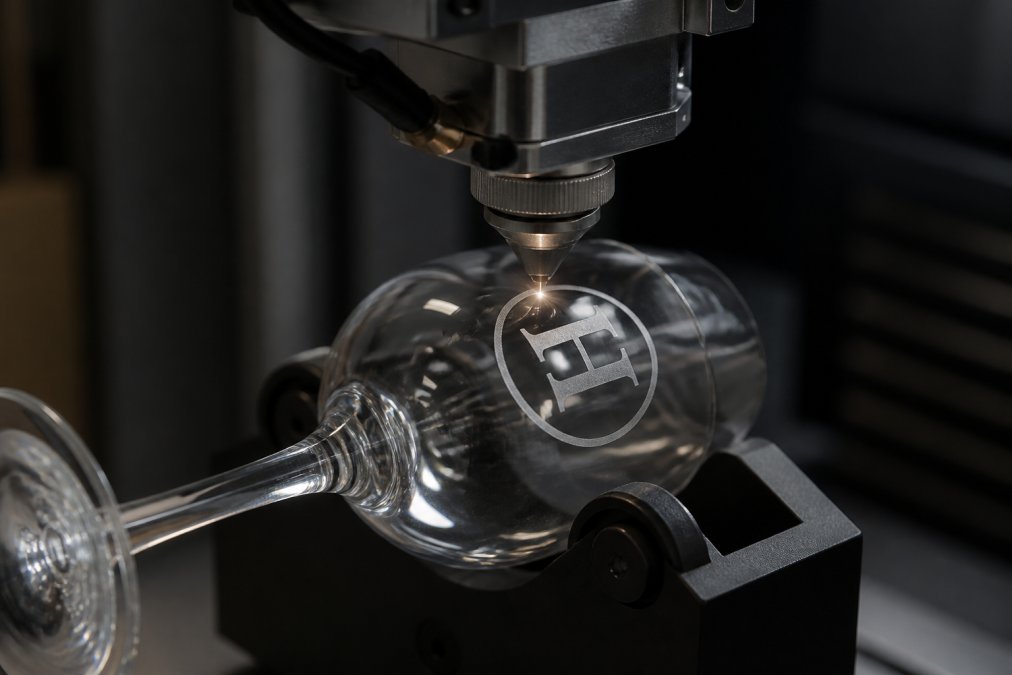
Laser engraving uses a focused beam of light to ablate the glass surface, creating a frosted, etched finish with precise detail and consistent depth. The result is permanent and cannot be removed without damaging the glass.
For corporate and hospitality applications, laser engraving is preferred. It produces sharp lines, handles fine typography well, and scales efficiently across large batches. The finish is a frosted white appearance against clear glass. On high-clarity European glass, this contrast is striking. According to Glass Association of Australasia's guidance on glassware standards, glass composition and thickness directly affect how cleanly a laser etches without micro-fracturing.
Laser Engraving vs Sandblast Etching: Which Suits Your Brief
Laser engraving excels at fine detail: small text, intricate logos, and thin lines. The beam is computer-controlled, so reproduction is exact every time. Setup is fast, making it cost-effective for small and large orders.
Sandblast etching uses pressurised abrasive media to erode the glass, creating deeper, more tactile results. The finish feels more premium to the touch but suits bold, simple designs better than fine detail. Setup requires masking and stencil preparation, adding time and cost.
For corporate branding, wedding favours, and personalised drinkware, laser engraving is the practical choice. Sandblast etching suits bespoke gift sets or prestige hospitality items where tactile quality is part of the product experience.
DIY vs Professional Engraving: The Honest Comparison
Entry-level engraving machines lack the wattage and precision optics of commercial equipment. On curved glass surfaces, maintaining consistent focal distance is technically demanding. Professional setups use rotary attachments and calibrated jigs that compensate for glass curvature automatically.
For more than a handful of glasses, economics rarely favour DIY once labour is factored in.
Wine Glass Shapes: Choosing the Right Style for Your Brand or Event
Glass shape affects how wine presents aromatically, how the glass feels in the hand, and how the engraved design reads visually.
A practical guide to main options:
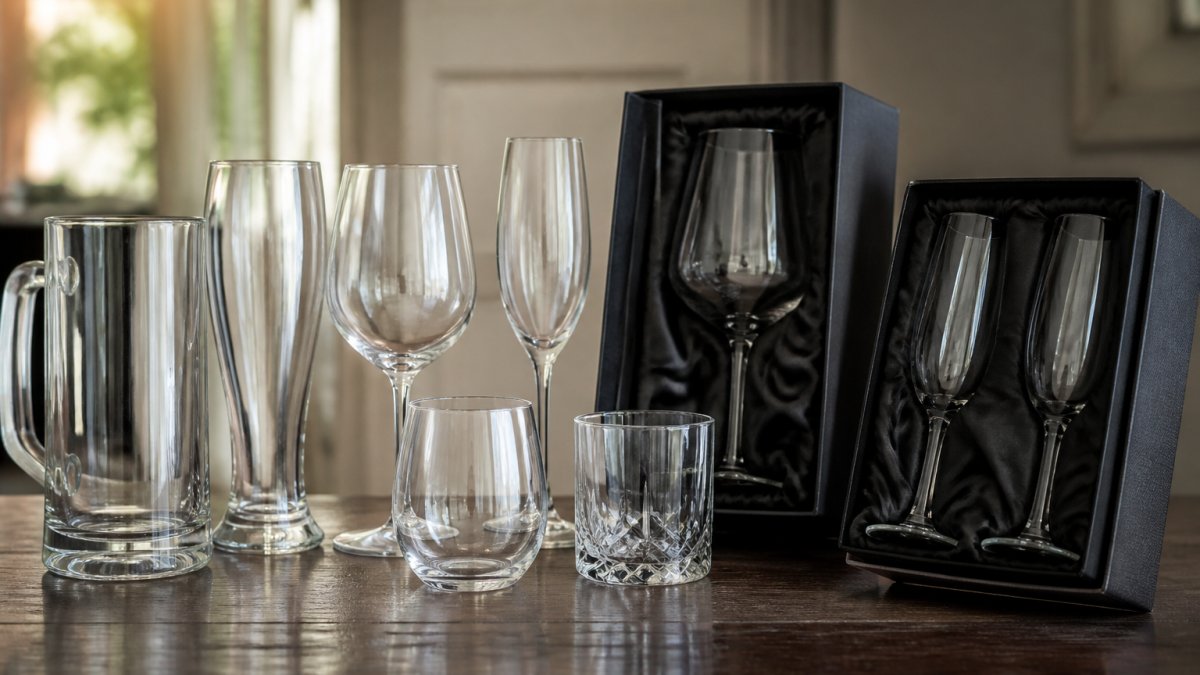
- Large Bordeaux bowl: Wide bowl, tapered rim. Suits full-bodied reds. Curved surface gives generous engraving area for logos and crests.
- Tulip-shaped white wine glass: Narrower bowl, slightly flared rim. Suits aromatic whites. Smaller surface suits monogrammed initials and simple text.
- Universal wine glass: Versatile shape across red and white. Most common for event glassware and corporate gifts.
- Champagne flute: Tall, narrow. Suits celebrations and awards nights. Engraving sits on lower third where it is clearly visible when held.
- Stemless wine glass: No stem, wide base. Popular for casual hospitality and outdoor events.
As noted in Wine Australia's guide to glassware and sensory experience, glass shape influences perceived aroma and flavour, worth communicating to hospitality clients selecting glassware for tastings.
Stemmed vs Stemless Wine Glasses
Stemmed glasses are standard for formal dining, winery tasting rooms, and corporate hospitality. The stem keeps the hand away from the bowl, preventing temperature transfer to wine. Engraved designs display more elegantly because the glass sits higher and the bowl is more visible. The trade-off is fragility: stems are the most common breakage point.
Stemless glasses are more durable, stack efficiently, and suit casual dining, outdoor events, and retail merchandise. The engraving area is the full bowl circumference, giving more design flexibility for wrap-around artwork.
For wedding favours and gift sets, stemmed glasses remain more popular because they photograph better and carry stronger celebration associations.
Bulk Engraved Wine Glasses for Weddings and Large Events
Bulk engraved wine glasses for weddings require consistency across all pieces. When ordering 150 matching glasses, every piece needs identical engraving depth, position, and finish. Production lead time is another critical variable. For events with fixed dates, realistic timeline discussion with your supplier before ordering is essential.
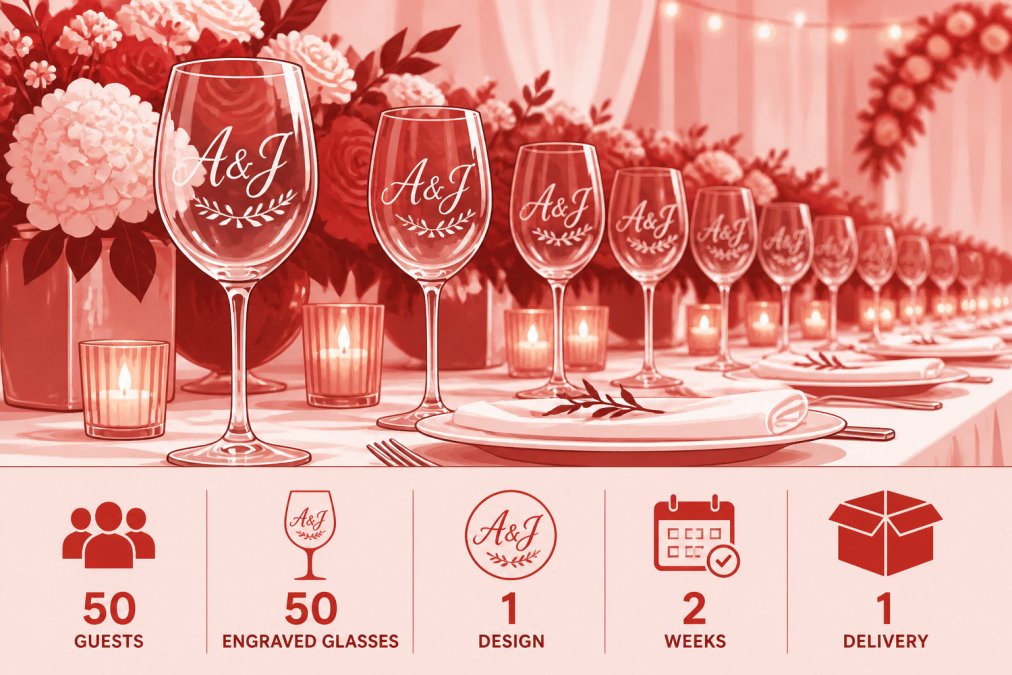
A practical checklist for bulk wedding glassware orders:
- Confirm minimum order quantity upfront
- Request digital proof of engraving layout before production
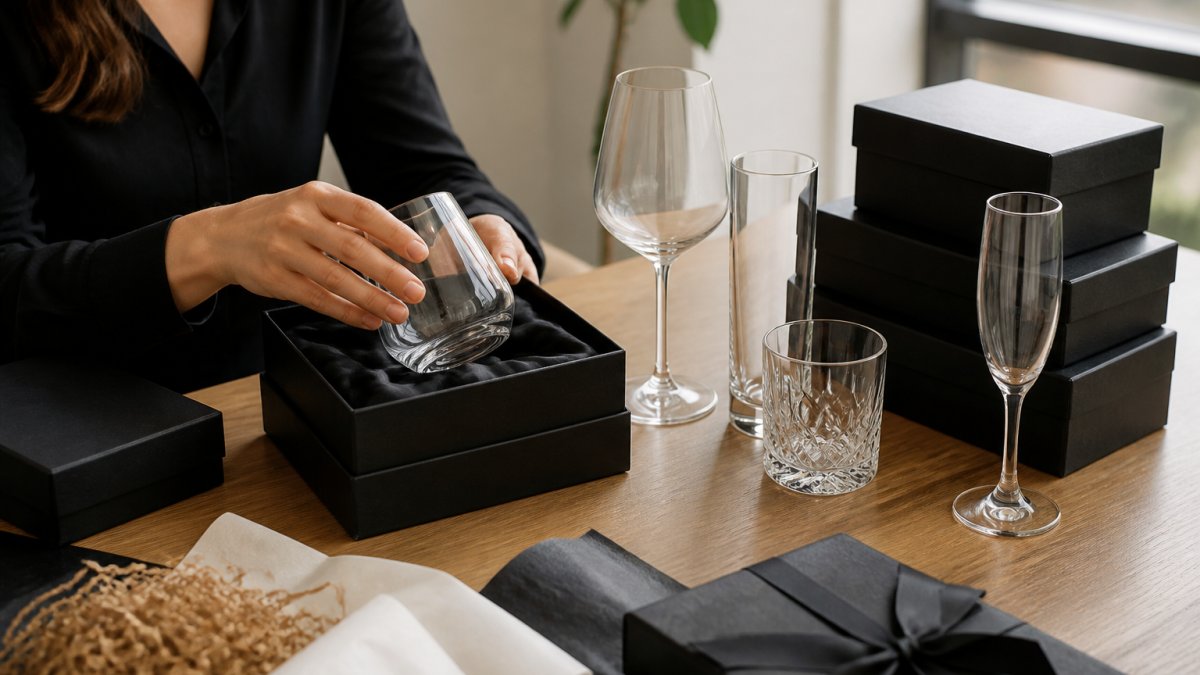
- Ask about packaging options: individual boxes vs bulk packing
- Confirm whether supplier includes breakage allowance
- Lock in delivery date at least two weeks before event
- Check glass style availability in needed quantity
Corporate Branding and Logo Engraving for Hospitality
Corporate branding on glassware requires different design preparation than personal monogramming. Company logos are rarely optimised for engraving out of the box. The most common issue is fine detail that does not translate well to frosted etching. A good supplier flags these issues during artwork proofing and suggests adjustments before production.
For hospitality businesses, engraving position matters as much as design. Standard placement for a logo on a wine glass is the lower third of the bowl, centred on the front face. According to Drinks Association of Australia's industry resources for hospitality branding, branded glassware is consistently cited by hospitality operators as one of the highest-visibility brand touchpoints in dining or tasting room environments.
Custom Glassware Gift Ideas for Every Occasion
Custom glassware gift ideas span many occasions, and format should match context rather than defaulting to convenience.
Wedding and anniversary presents: Stemmed wine glasses with engraved initials, wedding dates, or meaningful phrases are enduring personalised gifts. Sets of two are standard.
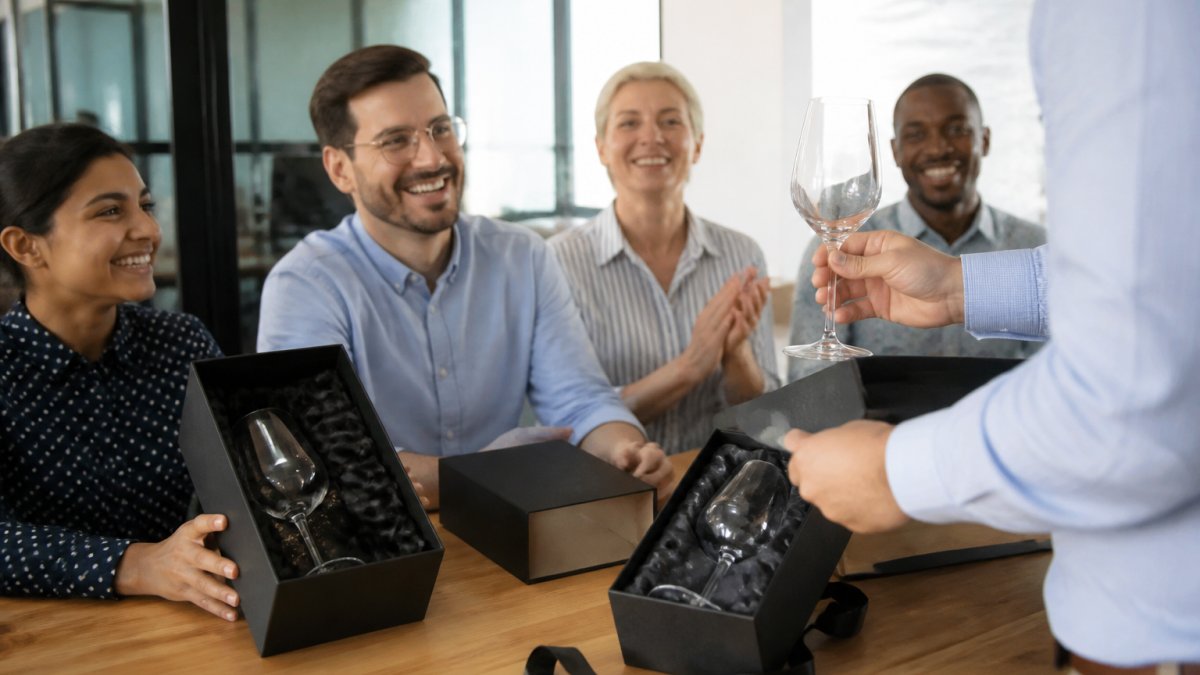
Corporate client appreciation: A set of two or four engraved glasses with recipient or gifting company branding reads as a considered, high-quality gesture. Using premium glass is essential.
Winery and brewery merchandise: Custom etched glasses sold through cellar doors or taprooms generate revenue and leave venues with brand ambassadors.
Sporting clubs and school events: Personalised drinkware for award nights and fundraisers creates keepsakes members actually keep.
Event favours: A single engraved glass at each seat serves as name placement and take-home gift, increasingly popular with event planners reducing printed materials.
How to Order Custom Etched Wine Glasses: The Process Explained
Ordering custom etched wine glasses follows a clear sequence.
Step 1: Define your brief. Quantity, glass style, intended use, and delivery date. Having these confirmed before contacting a supplier speeds quoting.
Step 2: Submit your artwork. Professional engravers prefer vector files (AI, EPS, or PDF). Raster images (JPG, PNG) can be used but may require redrawing at additional cost if resolution is insufficient.
Step 3: Review the digital proof. A reputable supplier provides a digital mockup showing design positioned on the glass before production. Review carefully: check text, positioning, and design scale.
Step 4: Approve and confirm production. Once approved, production begins. Confirm expected completion date and delivery method.
Step 5: Quality check on receipt. When the order arrives, check sample pieces from different batch points for consistency. Report any issues promptly.
For pricing and lead times, contact The Glassware Company directly for a quote tailored to your brief.
Artwork Proofing and Batch Consistency
The proofing stage catches most production errors, and skipping or rushing through it is the single most common cause of unsatisfactory results. A digital proof shows how the design looks on the glass, but does not capture every variable. For large or first-time orders, requesting a physical sample before full production is reasonable.
Batch consistency is critical, particularly for reorders. When running the same design quarterly, engraving position, depth, and glass specification must be locked and documented. As documented in Australian Competition and Consumer Commission guidance on product quality and consumer guarantees, consumers and businesses purchasing custom goods have rights under Australian Consumer Law if the product does not match the approved sample or description.
Material Quality, Sustainability, and Glassware Sourcing
Glass substrate quality is underweighted by most buyers comparing custom glassware. Two glasses with identical engraving feel completely different depending on whether the glass is standard soda-lime or lead-free crystal.
Standard soda-lime glass is most common and affordable. It is heavier for its size than crystal, has a slightly green or grey tint edge-on, and produces a less refined ring when tapped.
Lead-free crystal (often European) has higher refractive index, giving greater clarity and brilliance. It is thinner-walled for the same capacity, feeling more elegant in the hand. Laser engraving on crystal produces a crisper frosted finish with more contrast. For premium gift sets and fine dining, the quality difference is visible and tactile.
On sustainability, glass is infinitely recyclable, giving it material advantage over alternative drinkware. Many European glass manufacturers publish environmental compliance data aligned with Australian import guidelines. Choosing suppliers providing this documentation gives corporate buyers confidence that branded glassware aligns with sustainability commitments.
Premium glassware costs more than commodity options. You are paying for glass clarity, engraving precision, and batch consistency. For brands where glassware represents the business in a client's home or restaurant table, that investment is justified.
Sourcing custom etched wine glasses that genuinely represent your brand requires more than selecting a glass shape and uploading a logo. The quality of the substrate, the precision of the engraving technique, the rigour of the proofing process, and the consistency across batches all determine whether the finished product builds brand equity or quietly erodes it. The Glassware Company brings years of industry experience to each order, with a large range of styles from stemmed crystal sets to stemless drinkware, and a customer-focused team dedicated to ensuring your artwork is executed exactly as approved. Request an online quote to discuss your brief and receive pricing tailored to your quantity and timeline.
Frequently Asked Questions
What is the difference between laser engraving and sandblasting on wine glasses?
Laser engraving uses a focused beam to vaporise the glass surface, producing fine, precise lines ideal for detailed logos, monograms, and custom text. Sandblasting (also called abrasive etching) blasts fine particles at the glass to create a frosted, matte finish across larger areas. Laser engraving offers greater precision and is better suited to complex artwork, while sandblasting produces a softer, more diffused look. Both methods create a permanent, durable etched finish that will not fade with regular washing.
Are custom etched wine glasses dishwasher safe?
Yes. Because etching and laser engraving physically alter the glass surface rather than applying an ink or paint coating, the finish is permanent and does not wash off. Custom etched wine glasses will hold their design through repeated commercial dishwasher cycles, making them a practical choice for restaurants, wineries, and hospitality venues. For fine crystal or handblown European glass, hand washing is still recommended to protect the glass itself, even though the engraved design remains intact.
How long does it take to get custom etched wine glasses delivered in Australia?
Turnaround times vary depending on order volume, artwork complexity, and the provider's current production schedule. For standard bulk orders, allow two to four weeks from artwork approval to delivery. Rush orders may be available for an additional fee. If your event has a fixed date, confirm your deadline with the supplier before placing the order and factor in time for the artwork proofing stage, which typically adds one to three business days before production begins.
Can I use my own logo for custom etched wine glasses?
Yes. Most professional glassware engravers, including The Glassware Company, accept customer-supplied artwork. Files are typically required in a vector format such as AI, EPS, or high-resolution PDF to ensure engraving precision. Once your artwork is submitted, the team will prepare a digital proof for your approval before any glass goes into production. This proofing step is your opportunity to check sizing, placement, and detail before committing to the full run.
This article was written using GrandRanker