 listicle
Best Promotional Glassware for Restaurant Marketing in 2026
Table of Contents
- Why Promotional Glassware Beats Disposable Drinkware for Restaurant Marketing
- Custom Branded Glassware: Matching Glass Styles to Your Beverage Programme
- Branded Beer Glasses: Durability and Commercial Dishwasher Performance
- Custom Wine Glasses for Tasting Rooms and Fine Dining
- Branded Glassware Gift Boxes: Premium Presentation That Extends Campaign Life
- Measuring Marketing Effectiveness: What to Track After Your Glassware Launch
- Choosing a Promotional Glassware Supplier: A Buying Checklist
- Conclusion: Matching Glassware to Your Marketing Goals
- Frequently Asked Questions
Last Updated: October 9, 2026
Why Promotional Glassware Beats Disposable Drinkware for Restaurant Marketing
Promotional glassware is branded, reusable drinkware that carries your venue's logo or artwork into customers' homes and onto their social feeds, turning a single drink sale into months of repeated brand exposure.
We have supplied etched and engraved glassware to restaurants, breweries, wineries and hospitality venues for years, and the pattern is consistent: venues that treat glassware as a marketing asset rather than a consumable get far more from it.
The Sustainability Argument Your Customers Already Care About
Hospitality operators across the country are under pressure to cut single-use waste, and the National Waste Policy Action Plan sets out the direction of travel for packaging and waste reduction.
A branded glass that goes home with a customer replaces hundreds of disposable cups over its life. That is the simplest version of the argument, and it is the one your customers understand immediately.
Cost Per Impression: Reusable vs Single-Use
The maths favours reuse once you look past the initial outlay. A single-use cup is used once and thrown away. A branded glass is used repeatedly at home, at barbecues, at office desks, and it carries your logo every time.
The comparison that matters is not unit price against unit price. It is cost per impression over the life of the item.
| Factor | Single-Use Cups | Branded Glassware |
|---|---|---|
| Lifespan | One serve | Years of repeated use |
| Brand exposure | Minutes | Ongoing, in-home and social |
| Waste stream | Landfill or recycling | None until end of life |
| Customer keepsake | No | Yes |
| Best for | High-volume takeaway | Sit-down service, events, gifting |
Custom Branded Glassware: Matching Glass Styles to Your Beverage Programme
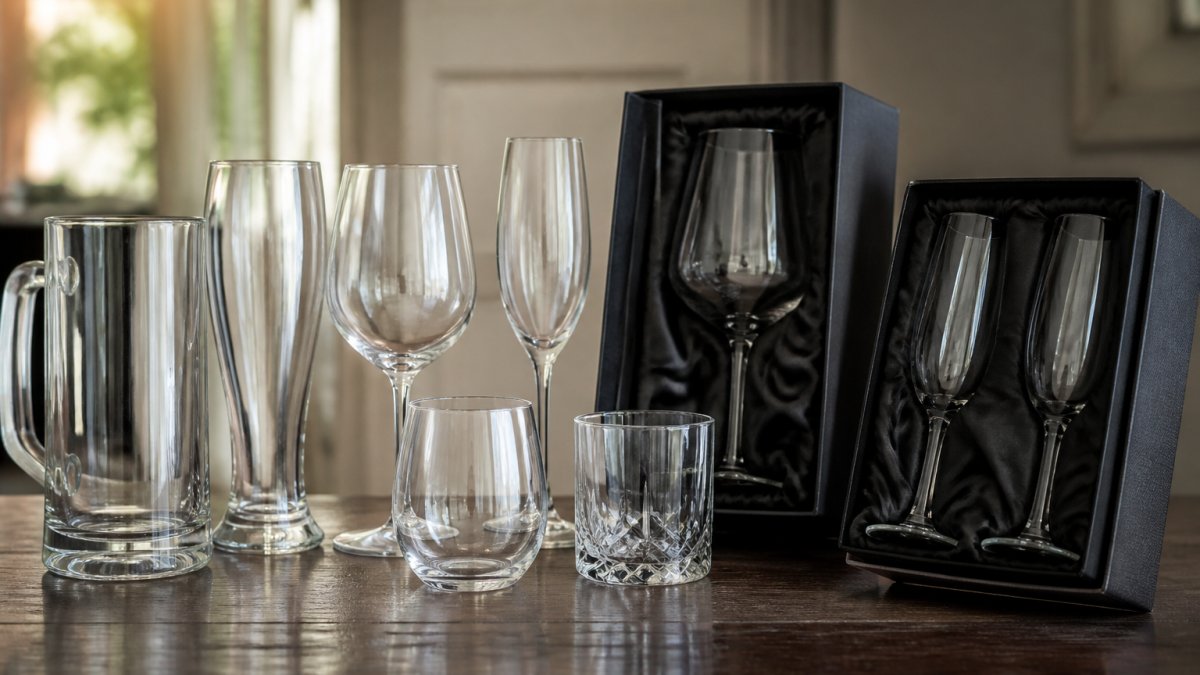
Custom branded glassware works best when the glass shape matches the drink it is poured into. Get that pairing right and the branding feels native to the serve rather than stuck on.
Beer Glasses and Pint glasses for Taprooms and Sports Bars
Pint glasses and beer glasses are the workhorses of taproom and sports bar branding. They suit high-volume service, stack reasonably well, and give you a generous print or etch area across the body of the glass.
For a taproom, a branded pint glass doubles as merchandise. Customers buy them, take them home, and post them. For a sports bar, the same glass becomes a promotion tool: a branded pint on game night, a glass to keep with a jug.
Wine Glasses and Tumblers for Dining Rooms and Cocktail Service
Wine glasses and tumblers carry a different job. They signal the tone of the room. A stemmed wine glass with a discreet etched logo reads as considered and premium. A tumbler suits cocktail service, spirits, and non-alcoholic drinks where a stem would feel out of place.
Shot glasses belong in the same conversation for venues running tasting flights or spirit promotions. They are small, inexpensive to brand, and easy for customers to pocket as a memento.
Branded Beer Glasses: Durability and Commercial Dishwasher Performance
Branded beer glasses live a hard life. They go through a commercial dishwasher multiple times a day, get stacked, knocked against each other, and handled by staff who are moving fast.
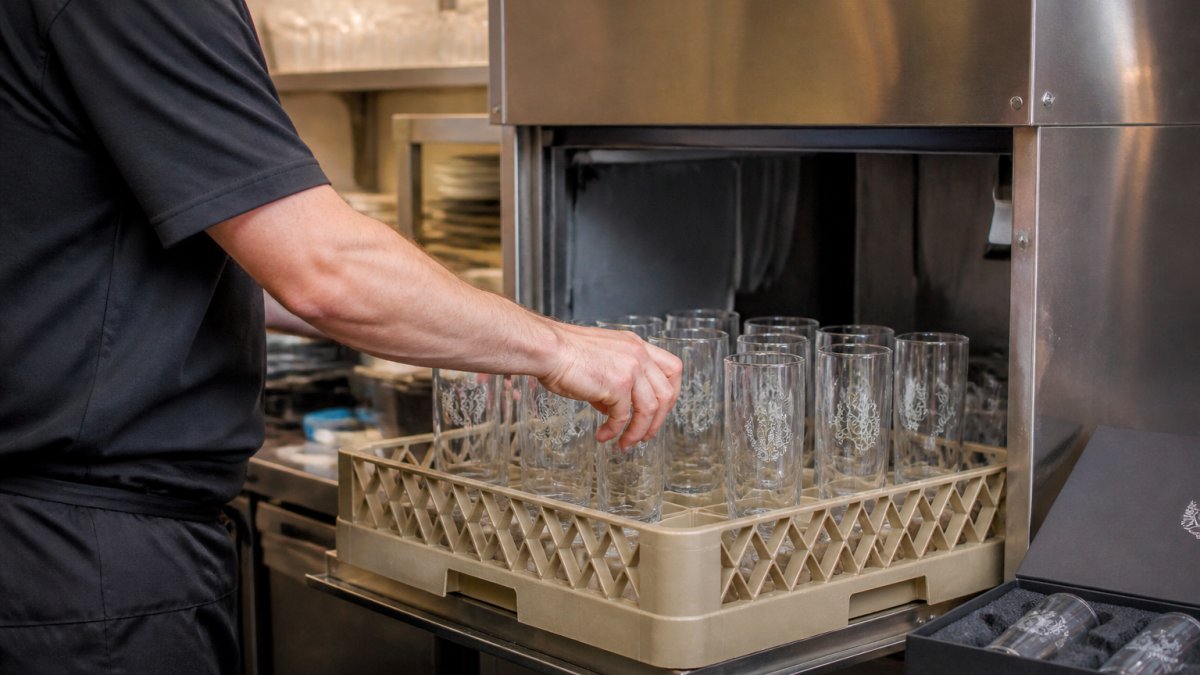
Etching vs Printed Decals: What Survives 500 Wash Cycles
Etching and engraving cut the design into the glass surface itself. Printed decals sit on top of the glass. That difference decides how the branding ages.
- Etched or engraved branding becomes part of the glass. There is no layer to peel, fade or flake, so it holds up to repeated commercial washing.
- Printed decals sit on the surface and can wear at the edges, especially with abrasive detergents and high-temperature cycles.
- Full-colour prints offer more design freedom for complex artwork, but they are the most exposed to wash-cycle wear.
Custom Wine Glasses for Tasting Rooms and Fine Dining
Custom wine glasses need to do two jobs: present the wine properly and carry your branding without distracting from the pour. Etched branding near the base is the usual answer, because it stays out of the way of the wine and the drinker's eyeline. But the shape you choose should follow the service style of your venue, not a generic catalogue page.
Matching Stemware to Your Beverage Programme
A dining room running a classic European list will generally want a narrower bowl for aromatic whites and a wider bowl for structured reds.
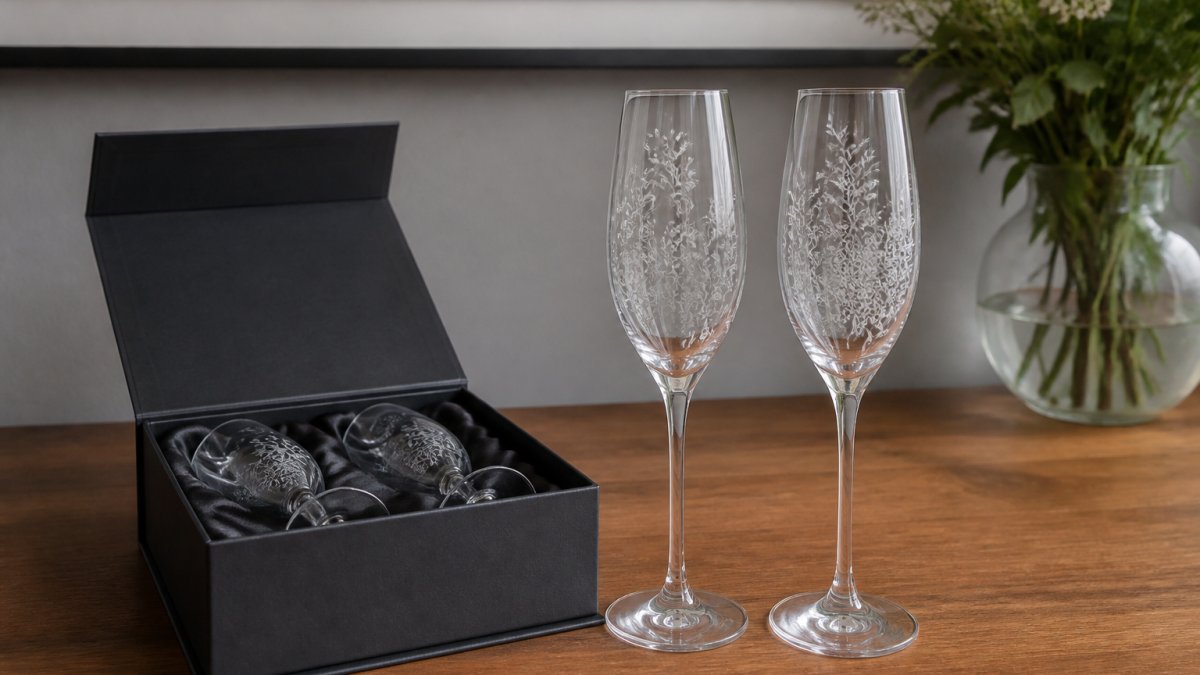
For sparkling service, a tulip-shaped flute preserves the bead better than a narrow straight-sided flute and gives you a broader etch area near the base. For dessert wine and fortifieds, a smaller stemmed glass keeps the pour looking generous without over-serving.
Storage, Breakage, and Back-of-House Reality
Storage decides as much as service style does. Stemware takes up more space per unit than tumblers, and breakage climbs when glasses are packed tightly or racked by staff in a hurry. A few practical patterns are worth knowing:
- Dedicated stem racks reduce breakage in venues with the back-of-house space to install them.
- Stackable stemless designs suit venues with limited storage, but they change the feel of the pour and are better suited to casual dining or bar service than fine dining.
- Mixed programmes, stemmed for the dining room, stemless for the bar, often give the best balance of presentation and durability.
If you are weighing up a tasting room programme, match the glass to the flight. A smaller stem for a structured tasting, a larger bowl for a flagship red, a tumbler for the casual end of the list. Where the glass is going home with a customer as part of a premium package, our custom manufactured gift boxing for etched and branded glassware (approximate 28 working day turnaround) turns the glass into a presentation piece rather than a giveaway.
Branded Glassware Gift Boxes: Premium Presentation That Extends Campaign Life
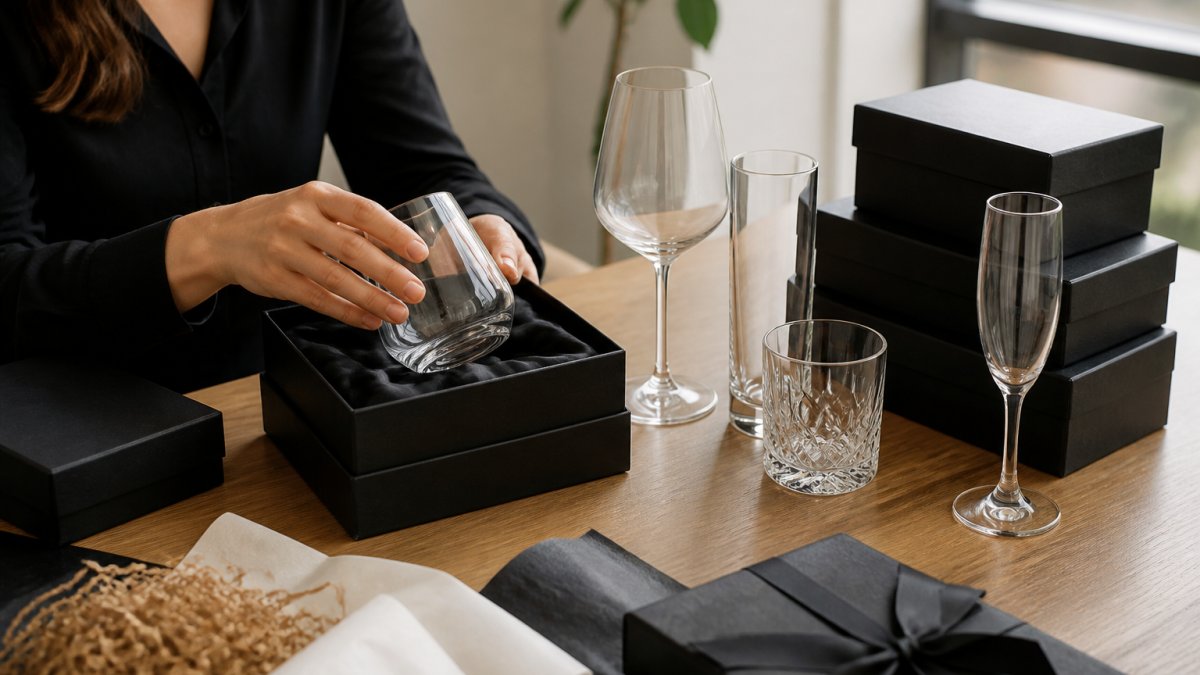
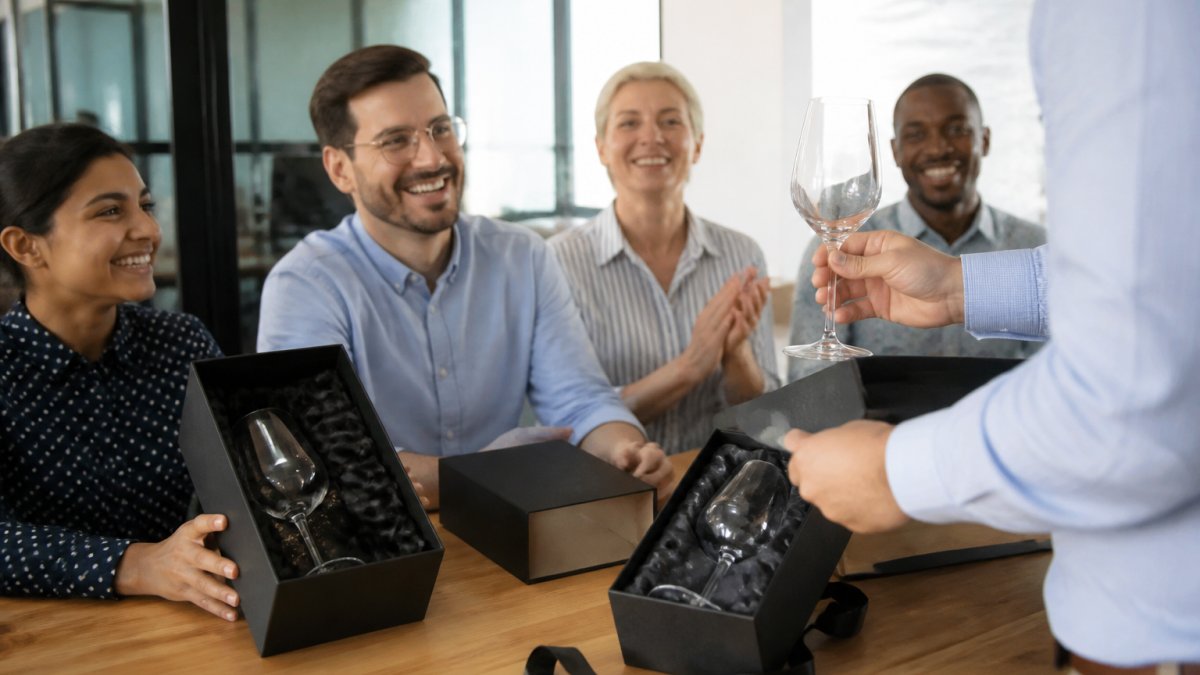
A branded glass in a plain carton is a giveaway. The same glass in a custom manufactured gift box is a gift, and the difference shows up in how long the customer keeps it and how often they show it to someone else.
We manufacture gift boxing to fit etched and branded glassware, with an approximate 28 working day turnaround. That makes it a realistic option for corporate gifting, client appreciation, wedding and event favours, and premium retail packs, provided you build the lead time into your campaign calendar rather than adding it at the last minute.
Measuring Marketing Effectiveness: What to Track After Your Glassware Launch
A glassware campaign is measurable if you set the tracking up before the glasses go out. Decide what success looks like first, then design the campaign around it. Most competitors stop at "track social mentions", the practical question for a restaurant is which numbers to watch, over what window, and against what baseline.
Setting a Baseline Before Launch
Pull four weeks of normal trading data before the campaign starts. You want covers, average spend per head, and sales of the specific beverage the glassware is tied to. Without that baseline, any lift you see afterwards is a guess.
The Signals Worth Watching
- Social mentions. Customers photograph branded glassware. Track hashtags, tags and location mentions around the launch window. A simple pattern is to give the glass a unique hashtag printed on a small card or coaster that ships with it, so mentions are attributable rather than scattered.
- Return visits. If the glass is tied to a promotion, a loyalty offer or a tasting, you can measure whether recipients came back. The cleanest mechanism is a redeemable code or a named offer that only glassware recipients receive, so redemptions are traceable at the till.
- Campaign lift. Compare the promotion period against the same period in a normal trading week, using covers, average spend or a specific product's sales. A four-week post-launch window is usually enough to see whether the campaign moved anything.
What Good Looks Like
Most practitioners find that the clearest signal is not a spike in social mentions but a sustained lift in return visits among recipients. A single viral post is nice; a measurable increase in repeat custom over the following quarter is the outcome that justifies the spend.
None of these require sophisticated tooling. A simple before-and-after comparison, run honestly, tells you more than a vanity reach number.
Choosing a Promotional Glassware Supplier: A Buying Checklist
Supplier selection comes down to three things: whether the artwork will look right, whether reorders will match, and whether the minimum order and lead time fit your campaign.
Proofing, Reorder Consistency, and Minimum Order Quantities
Work through this before you place an order:
- Ask to see a proof of your artwork on the actual glass style before production
- Confirm the branding method (etching, engraving or print) and how it performs in your wash cycle
- Ask how the supplier keeps colour and placement consistent across repeat batches
Conclusion: Matching Glassware to Your Marketing Goals
The right glassware choice depends entirely on what you are trying to achieve.
At The Glassware Company, we etch and engrave your logo or artwork onto a large range of styles, from beer steins to champagne flutes, and we offer custom manufactured gift boxing as a premium presentation option with an approximate 28 working day turnaround.
Request an online quote from The Glassware Company and we will help you match the right glass and branding method to your campaign.
Frequently Asked Questions
What types of glassware work best for restaurant promotions?
Pint glasses suit pubs, breweries, and sports bars because they handle beer, cocktails, and soft drinks. Wine glasses work for tasting rooms and fine dining. Tumblers and drinking glasses fit casual service and coffee. Shot glasses serve bars and events. The best choice depends on your beverage programme and where guests will use the glass. Pick styles that match what you already serve so the branded version feels like a natural upgrade, not a mismatched giveaway.
Is etched or printed branding better for restaurant glassware?
Etching removes a thin layer of glass to create a permanent mark that will not fade, peel, or wash off. Printed decals sit on the surface and can wear faster under commercial dishwasher heat and detergent. For restaurants running high-volume washing, etching holds up better over hundreds of cycles. Printed options can work for short campaigns or where full-colour artwork is essential. Ask your supplier which method suits your wash routine before committing to a bulk order.
How can restaurants use branded glassware in their marketing?
Branded glassware puts your logo in front of guests every time they drink. Use it for table service so every meal reinforces your identity. Sell or gift branded glasses as merchandise to extend reach into customers' homes. Run a campaign where a branded glass comes with a signature cocktail. Track return visits and social media mentions to measure impact. Custom branded glassware works as both a service item and a take-home reminder of your venue.
What should restaurants consider when choosing custom glassware?
Check dishwasher durability, stackability for limited storage, and whether the glass style matches your drinks. Confirm the supplier's proofing process so the artwork looks right before production. Ask about reorder consistency if you plan repeat runs. Minimum order quantities matter for smaller venues. For premium presentation, custom manufactured gift boxing adds a finished look, though it requires planning ahead because turnaround is approximately 28 working days.
How can branded glassware gift boxes make promotional glassware more memorable?
Gift boxing turns a branded glass into a presentation piece. Instead of handing someone a loose glass, you give them a boxed set that feels considered and premium. This works well for corporate gifting, client appreciation, and event takeaways. The box protects the glass during transport and gives you space for additional branding or a message. Custom manufactured gift boxing is available for etched and branded glassware, with an approximately 28-working-day turnaround, so plan ahead for time-sensitive events.