 listicle
Best Custom Drinkware for Luxury Wedding Venues
Table of Contents
- Why Custom Drinkware Sets Luxury Wedding Venues Apart
- Custom Wedding Glassware: Matching Styles to Your Drinks Menu
- Personalised Wedding Glasses: Names, Dates and Monograms That Last
- Engraved Champagne Flutes for the Toast and Beyond
- Custom Glassware for Venues: Materials, Finishes and Service Logistics
- Bulk Ordering, Lead Times and the Premium Gift Boxing Option
- Budgeting, Sustainability and Post-Event Reuse
- Frequently Asked Questions
Last Updated: October 19, 2026
Why Custom Drinkware Sets Luxury Wedding Venues Apart
Custom drinkware is glassware etched, engraved or branded with a couple's names, monogram, date or venue crest, produced as a coordinated set rather than pulled from general hire stock. At The Glassware Company, we produce bespoke pieces for exactly this purpose, and the difference shows up at the bar, the table and in the photograph album.
Hire glassware survives hundreds of events, but it is anonymous: the same coupes appear on someone else's tables every second Saturday.
What Separates Luxury Venue Drinkware From Standard Hire
Four things separate the two, and none is simply "it costs more".
Weight and balance. A well-made flute or tumbler feels deliberate in the hand, while thin, light hire stock reads as disposable.
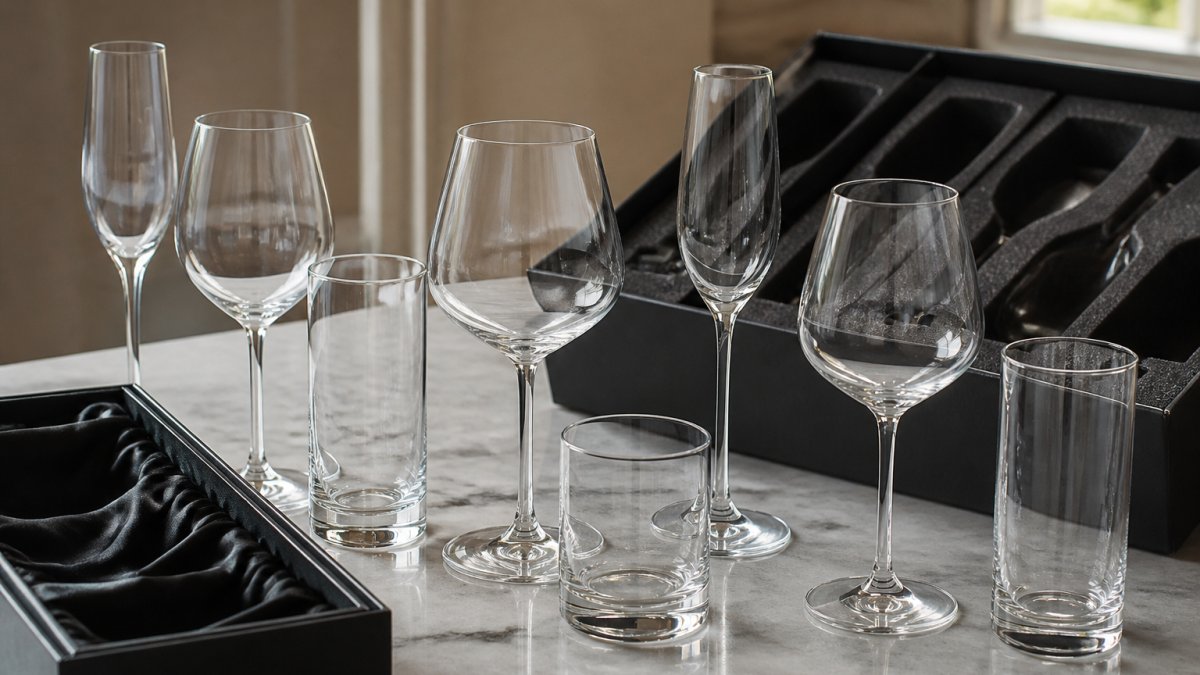
Coordination. A custom set lets you match stemware, tumblers and water glasses across a single table setting, rather than taking whatever the supplier has in circulation that week.
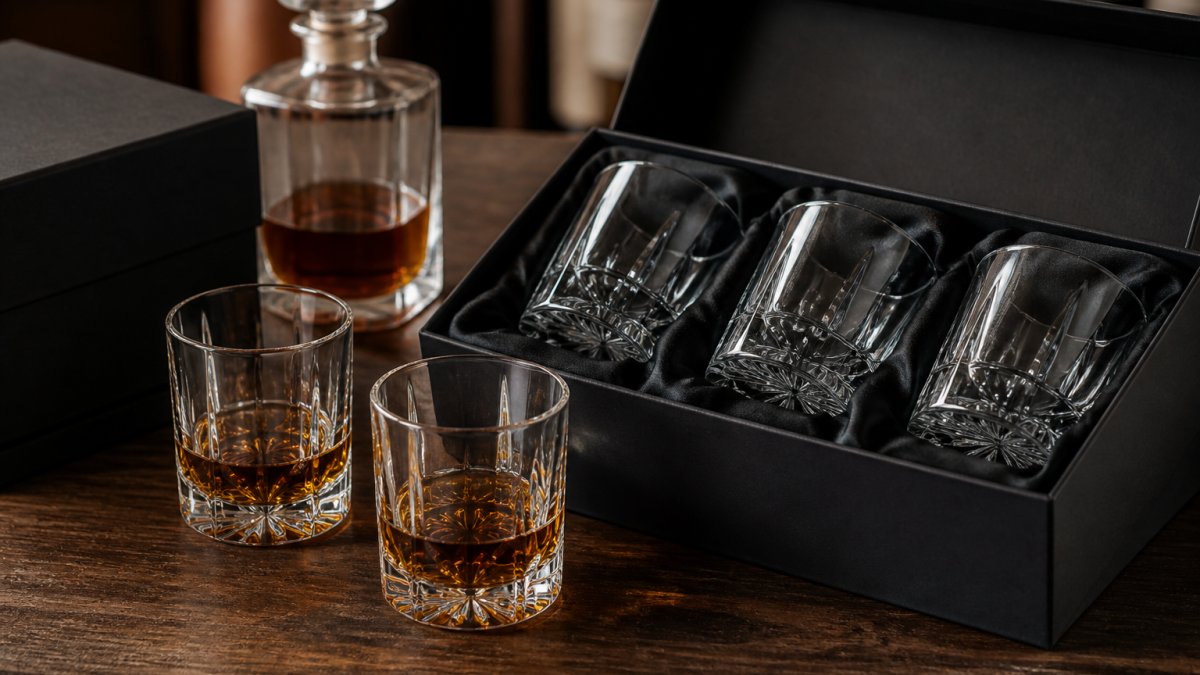
Presentation. Custom-manufactured gift boxing turns a glass into a gift.
Custom Wedding Glassware: Matching Styles to Your Drinks Menu
The most common mistake is choosing glassware by look alone, then discovering the bar cannot serve the menu in it. Start with the drinks list and work backwards: a classic cocktail hour needs coupes, a full wine list needs separate red and white stems or a well-chosen universal glass, and a signature highball needs tall, straight-sided glassware that shows the drink off.
Wine Glasses, Coupes and Tumblers for the Reception Bar
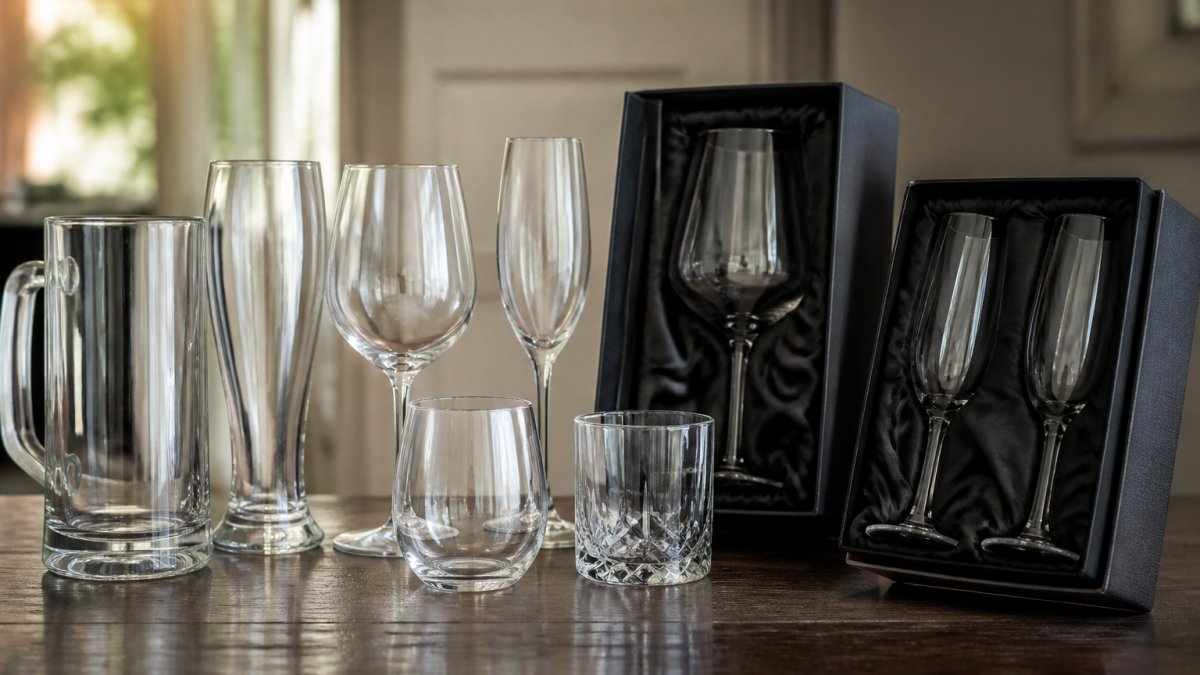
Here is how we would map the common formats to service:
| Drink | Best format | Why it works | Watch for |
|---|---|---|---|
| Champagne and sparkling | Engraved flute or coupe | Keeps bubbles, frames the toast | Flutes are narrow to etch; keep artwork simple |
| White wine | Smaller-bowl stemmed glass | Slows warming | Match bowl size to pour volume |
| Red wine | Larger-bowl stemmed glass | Room to breathe | Storage space at the bar |
| Cocktails | Coupe or highball | Coupe for classics, highball for long drinks | Coupes are fragile in bulk handling |
| Beer | Etched beer stein or tumbler | Weight suits the serve | Etch above the fill line |
| Soft drinks and water | Tumbler or water bottle | Practical, hard-wearing | Keep separate from wine service |
Personalised Wedding Glasses: Names, Dates and Monograms That Last
Legibility is the whole game with personalisation. A monogram that looks elegant in a design file can turn to mush once cut into curved glass at a small size, so the difference between a mark that reads across a candlelit table and one that disappears is decided in the artwork, before production.
Three rules we apply before anything goes to production:
- One idea per glass. A name, or a monogram, or a date. Not all three competing for space.
- Size for the surface. Curved bowls distort fine detail. Simple, well-spaced lettering survives; intricate scripts do not.
- Contrast matters. Etched glass reads as a soft frost. On a highly patterned or coloured piece, the mark can disappear.
Placement, Type Size and Contrast by Glass Shape
The shape of the vessel dictates where the mark can live and how large it can be:
- Flutes and narrow stems. The usable flat area is small, so keep artwork to a single initial, a short monogram or a date; fine scripts and multi-line names will not survive the curve.
- Coupes and wide bowls. The bowl gives more room, but the curve distorts lettering near the rim, so place the mark on the flat of the bowl or the base.
- Tumblers and highballs. Straight sides are the most forgiving surface for names and longer text; keep the mark in the upper third, above the fill line.
Type size follows the same logic: a monogram needs enough weight to read at arm's length, and a guest name must be legible without the guest picking the glass up. When in doubt, simplify rather than shrink.
Engraving Versus Printing: Which Mark Lasts
Etching cuts into the glass surface, so the mark does not peel, fade or wash off, and it reads as a soft frost that suits monograms and simple lettering.
Where a colour accent is essential, raise it at quoting stage, not the week before the event: colour on glass is a different process with different durability, and it changes both the look and the timeline.
Guest names work best on place-setting pieces or favours, where each glass belongs to one person. A monogram suits the couple's own toast flutes and the head table.
Engraved Champagne Flutes for the Toast and Beyond
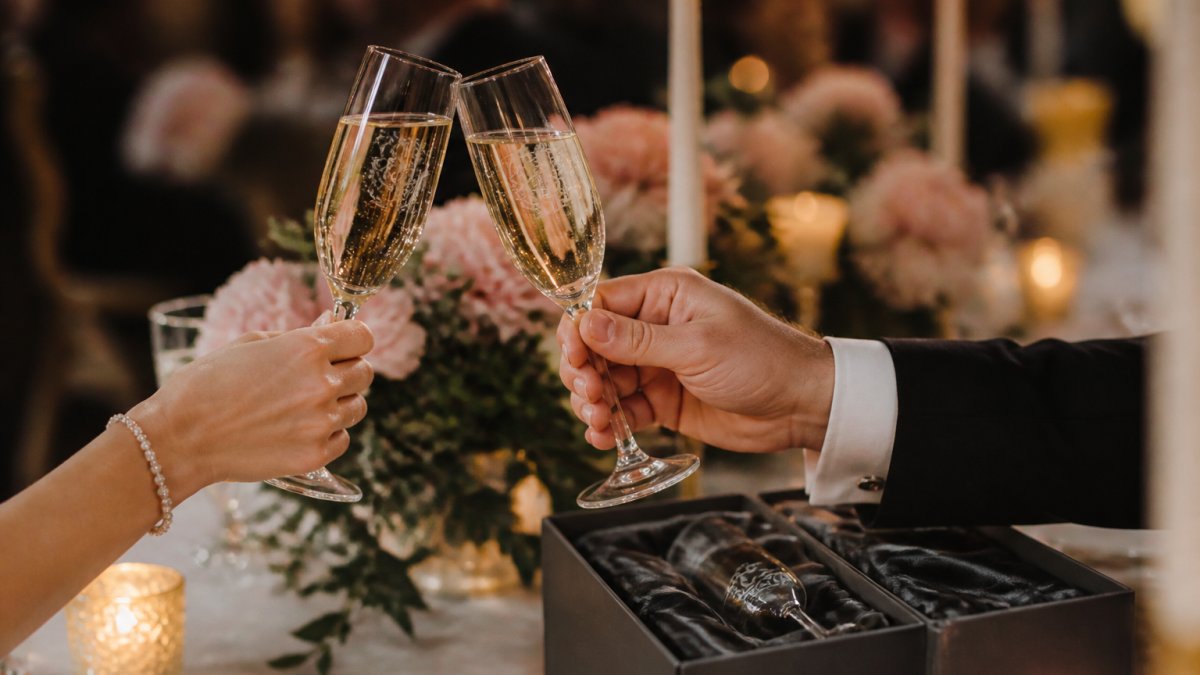
Engraved champagne flutes are the single most requested piece we produce for weddings: they are used at the most photographed moment of the day, then taken home.
Custom Glassware for Venues: Materials, Finishes and Service Logistics
Venue operations decide more of this than aesthetics do. Before choosing a finish, answer three questions: who washes it, where is it stored, and how is it carried to the table?
Glass is the premium choice for plated dinners and formal receptions: it shows the drink properly and feels correct in the hand. It also breaks, so it needs proper racks, careful handling and a realistic breakage allowance, and a broken custom glass cannot be quietly swapped for anonymous hire stock.
Side-by-Side Material and Finish Comparison
| Material | Look and feel | Durability | Washing and storage | Best for | Trade-off |
|---|---|---|---|---|---|
| Etched glass | Premium, classic | Good with careful handling | Commercial glasswasher safe; needs racks and space | Plated dinners, toasts, favours | Breakage risk in bulk service; replacement is bespoke |
| Stainless steel | Modern, weighty | High, rust resistant | Hard-wearing; stacks well | Outdoor ceremonies, cocktail service | Not right for fine wine service |
| Acrylic | Light, casual | High | Very hard-wearing; stacks tightly | Large informal events | Reads as disposable at a luxury venue |
| Frosted or coloured glass | Soft, decorative | Good | As for clear glass | Accent pieces, signature serves | Etching contrast can be weak |
Finish choice follows the same logic: a clean etch on clear glass is the most versatile and legible, while frosted or tinted finishes add character but reduce the contrast of the personalisation, so the artwork needs to be simpler and bolder.
Matching Drinkware to the Venue's Service Style
The gap most buying guides leave is the venue itself. A heritage dining room with silver service calls for stemmed crystal that sits correctly on the table and rings true when set down; a converted warehouse with communal tables suits tumblers and highballs that stack and clear quickly; a garden marquee needs weight and stability on uneven ground; a poolside bar needs something that will not shatter on tile.
Ask the venue's operations team three practical questions before specifying:
- What is the glasswasher cycle and rack format? Tall flutes and wide coupes may not fit existing racks, which changes the labour cost of every service.
- How much back-of-house storage is available? Custom sets arrive in bulk and need somewhere to live between events, so venues with tight storage often prefer fewer styles used across more services.
- What is the bar workflow? A coupe that is fragile in bulk handling slows the bar down, while a tumbler that stacks and clears quickly keeps service moving at a packed reception.
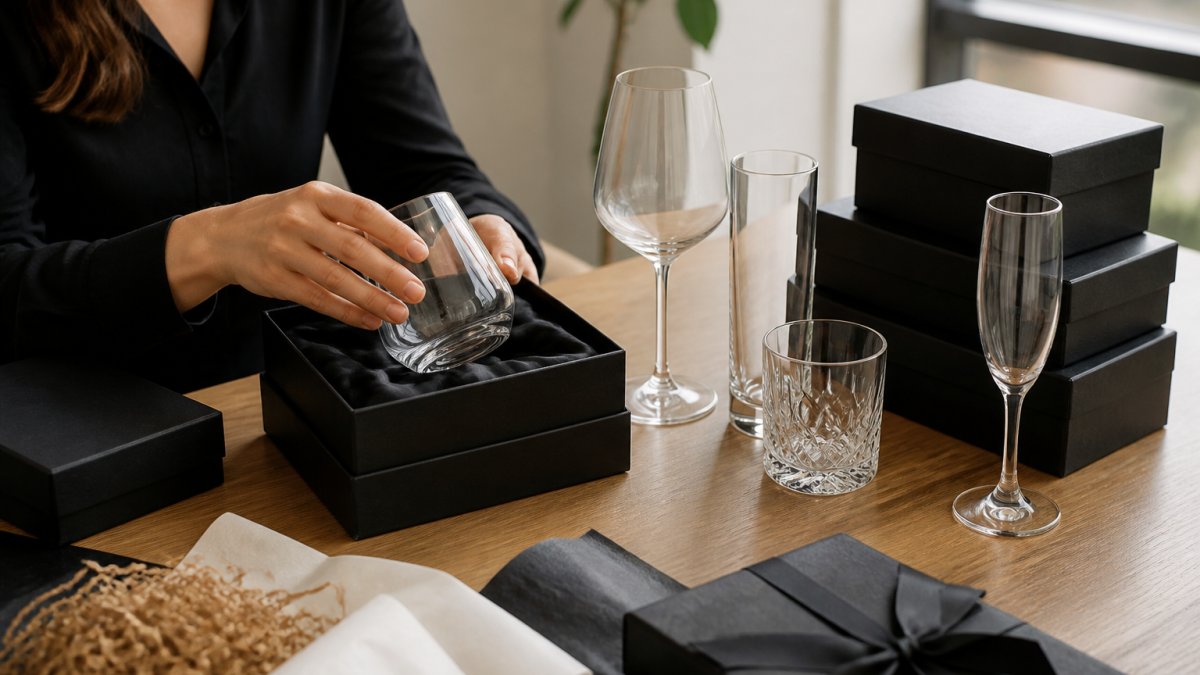
Where the glassware is also going home with guests, our custom-manufactured gift boxing is a premium presentation option alongside the glassware itself, with an approximate 28 working day turnaround. It is worth planning the boxing at the same time as the material choice, because a boxed piece needs to survive the trip home as well as the reception.
Bulk Ordering, Lead Times and the Premium Gift Boxing Option
Timing is where good plans fail. Custom glassware is manufactured to order, so the calendar matters more than the catalogue.
On proofing: ask to see the artwork on the actual glass shape before production.
On gift boxing: our custom-manufactured gift boxing is a premium presentation option for etched and branded glassware, with an approximate 28 working day turnaround.
Australian Competition and Consumer Commission guidance on refunds and returns is worth reading before you sign off on a bulk order, so you understand where you stand if goods arrive faulty or not as described.
Budgeting, Sustainability and Post-Event Reuse
Budget planning for luxury weddings usually starts with the guest count and works backwards.
Sustainability is the stronger argument, and it is not a marketing line.
Practical reuse ideas that venues can suggest to couples:
- Boxed pairs as wedding-party gifts
- Named pieces as place-setting favours
- A matched set for the couple's first home
That last point matters commercially.
Sustainability Victoria's guidance on avoiding waste at events offers a useful framework for thinking about reusable versus single-use at large gatherings.
Luxury weddings are won in the details guests touch, and few are touched more often than a glass.
That is what we do at The Glassware Company.
Get an online quote from The Glassware Company and give your next wedding a set of glassware worth raising.
Frequently Asked Questions
What drinkware is best for a luxury wedding?
Luxury weddings typically call for glassware that feels substantial in the hand and suits the drinks being served. Engraved champagne flutes work for the toast, and stemless wine glasses or coupes suit the reception bar. The right choice depends on your menu, service style and whether the pieces double as guest keepsakes. Venues often mix two or three formats rather than committing to a single style across the whole event.
Can wedding glassware be customised with a couple's names or wedding date?
Yes. Custom lettering, monograms and dates are common personalisation options for personalised wedding glasses. Etching and engraving hold up better than printed transfers across repeated washing, which matters when pieces become guest keepsakes. Supply artwork early and ask for a proof before production so you can check spelling, spacing and how the design sits on the glass. Consistency across batches is also worth confirming if you plan to reorder for future events.
Are personalised glasses suitable as wedding favours?
They are one of the more practical favour options because guests actually use them again. Personalised wine glasses, tumblers and coffee cups all work as take-home gifts, and custom glassware for venues can carry the venue's mark alongside the couple's details. Presentation lifts the perceived value considerably, and custom manufactured gift boxing is worth planning for if the pieces are meant to be opened as gifts. Allow roughly 28 working days for that boxing service and order ahead of your event date.
How far in advance should custom wedding glassware be ordered?
Start the conversation at least eight to twelve weeks before the wedding, and earlier if you need gift boxing. Artwork proofing, production and delivery all take time, and the gift boxing service carries an approximate 28 working day turnaround on its own. Bulk orders for large guest counts need more buffer than small runs. If your date is fixed and your guest list is still moving, order the glassware first and confirm favour quantities once numbers settle.
Is etched or printed branding better for wedding glassware?
Etching and engraving cut into the glass surface, so the mark stays legible through commercial dishwashing and repeated use. Printed transfers sit on top of the glass and can fade, peel or discolour over time, particularly under harsh wash cycles. For luxury venues where the glassware is reused across many events, etching is usually the more durable choice. Printed options can suit one-off disposable cups, but they rarely hold up as keepsakes.