 listicle
7 Benefits of Laser Etched Glassware for Branding
Quick Summary
Laser etched glassware builds lasting brand recognition because the mark is cut into the glass itself rather than applied on top. It resists chemicals, temperature changes and repeated dishwasher cycles, so the logo stays visible for years. Unlike printed or decal options, it does not peel or wear off with regular use.
- Etched marks resist chemicals, temperature changes and repeated dishwasher cycles.
- Laser etching requires no coatings, so the logo is less likely to wear or fade.
- Commercial dishwashers can dull the glass around a mark, so placement and depth matter.
- Custom gift boxing, with an approximate 28 working day turnaround, adds a premium presentation.
Table of Contents
- Why Laser Etched Glassware Works as a Branding Tool
- How Laser Etching Works on Glass
- Laser Etching vs Engraving: What Changes in the Final Mark
- Glassware Branding Techniques Compared
- Durability, Care and Long-Term Visibility of Etched Logos
- Custom Logo Glassware for Corporate, Hospitality and Event Use
- Presenting Branded Glassware in Custom Gift Boxes
- Planning Your Branded Glassware Order With The Glassware Company
- Frequently Asked Questions
7 Benefits of Laser Etched Glassware for Branding
Last Updated: October 29, 2026
Why Laser Etched Glassware Works as a Branding Tool
Laser etched glassware keeps a brand in front of customers long after an event ends. A permanent mark on a glass gets used, washed and noticed for years, while a paper flyer is often gone within a week. Laser etched glassware is a branding tool because the mark is part of the product itself.
The appeal is practical as well as visual. A ComMarker's review of UV laser marking performance on glass reports that 43% of users find the technology delivers high precision on glass without needing coatings. That matters for branding, because a logo that needs no coating is less likely to wear off, peel or fade.
Laser-etched marks also suit corporate gifting and trade shows. Aeon Laser's 2026 overview of laser engraving business ideas notes that engraved items are increasingly used at trade shows and conferences to lift customer engagement. A branded glass handed to a prospect at the right moment carries far more weight than a pen.
How Laser Etching Works on Glass
Laser etching uses a focused beam to alter the surface of glass. The beam heats and marks a small area, leaving a frosted, matte design that is visible in daylight and under bar lighting. The mark is cut into the surface rather than sitting on top of it, so there is nothing to scratch off.
The process is precise enough for fine detail. Small logos, thin script and detailed artwork can all be reproduced accurately, which is why the method suits brand marks with a lot of visual information.
Production scale is also straightforward. Lasit Laser's applications and benefits report describes laser glass etching as economically viable for both small runs and larger production. For a business ordering a few dozen glasses for an event, or several hundred for a rollout, the same method applies.
Laser Etching vs Engraving: What Changes in the Final Mark
The two terms get used interchangeably across the industry, but they describe different physical results, and the difference matters when you are specifying branded glassware.
Laser etching typically removes or fuses a very shallow layer of the glass surface, leaving a frosted, matte mark that sits flush with the surrounding material. Laser engraving cuts deeper, producing a visibly recessed mark with more tactile texture.
Depth is controlled by the equipment settings, power, speed, pulse frequency and the number of passes, rather than by the glass alone. A supplier running a single pass at low power will produce a light frost; multiple passes at higher power cut a deeper, more pronounced mark.
| Attribute | Shallow etch | Deeper engraving |
|---|---|---|
| Appearance | Fine frosted white | Pronounced, sometimes grey-white |
| Tactile feel | Smooth to the touch | Noticeably recessed |
| Line detail | Excellent for fine logos and small text | Better for bold marks; fine detail can blur |
| Durability | High, mark is part of the glass | High, but deeper cuts can create stress points |
| Best suited to | Stemware, tasting glasses, detailed brand marks | Tankards, heavy tumblers, bold monograms |
Some practitioners argue that sandcarving gives a deeper, smoother finish than laser methods. Crystal Imagery's comparison of sandcarving and laser etching makes this point, and it is a fair one. Laser work is faster and more repeatable, but a sandcarved mark can look richer on thick, decorative pieces.
For most branded glassware, a clean laser etch is the better choice. It reproduces logos accurately and holds up to repeated washing. The choice between etching and engraving should follow the artwork and the glass, not a general rule. Choose the right engraving style for corporate logos walks through how to match the style to your artwork.
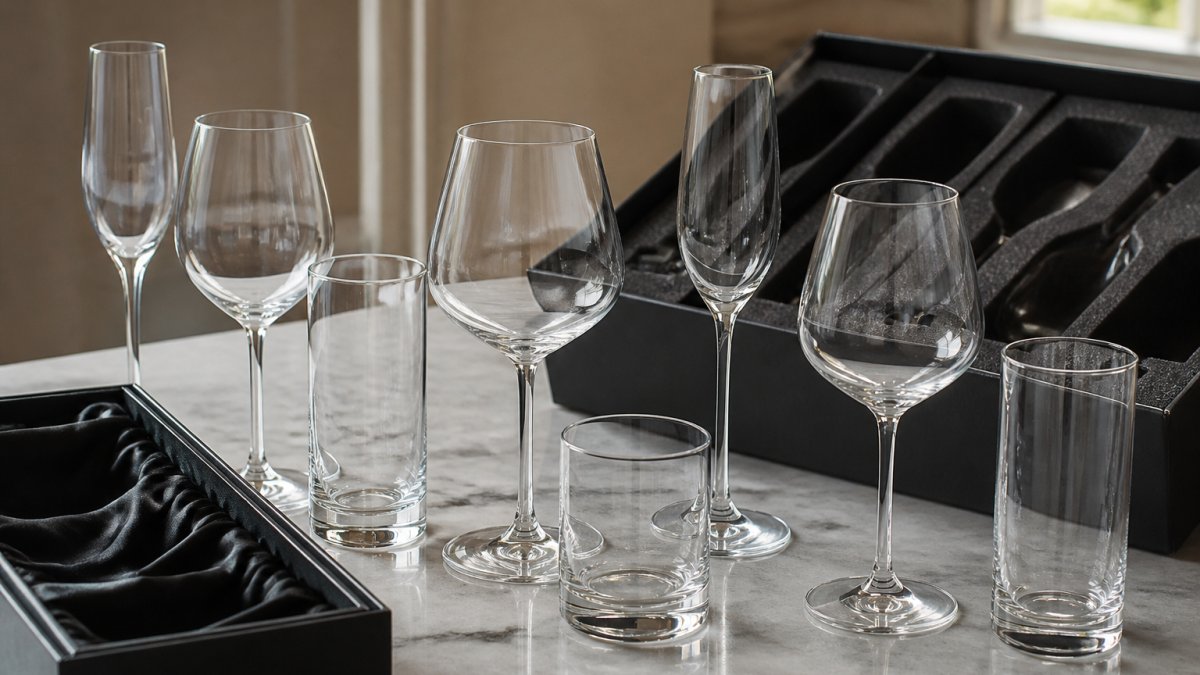
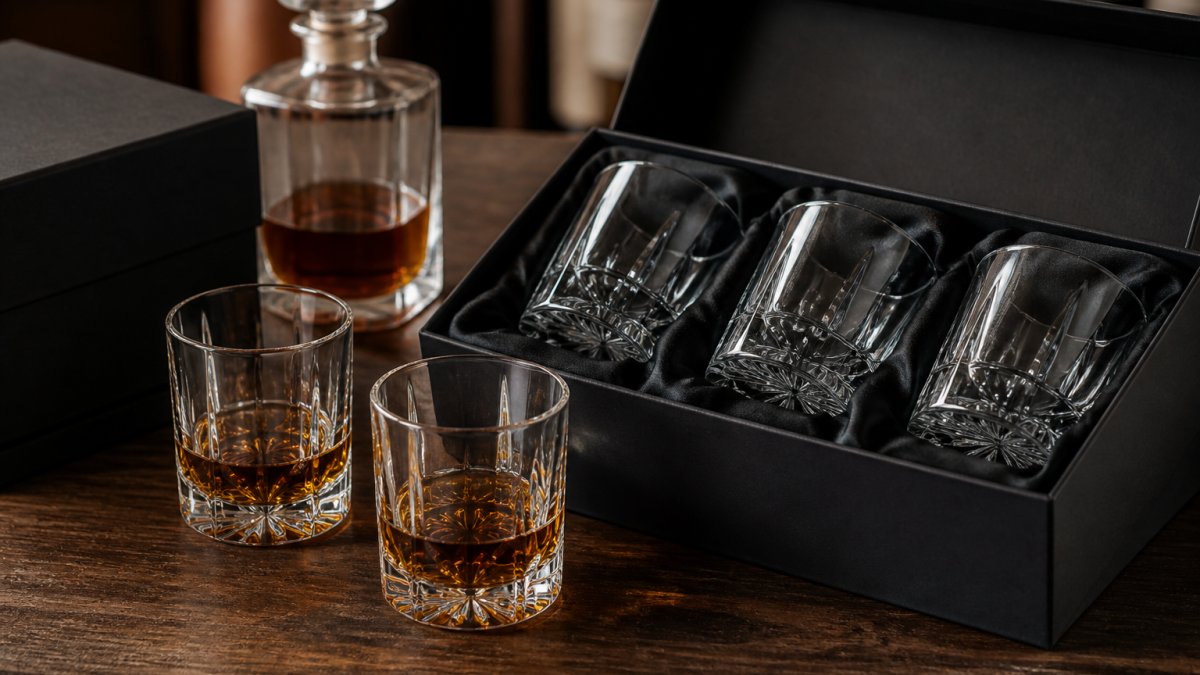
If the glassware is destined for a premium client gift or launch, the finish should be matched to the presentation. A fine etch on stemware pairs well with custom manufactured gift boxing, which can be planned alongside the glassware order from the start.
Glassware Branding Techniques Compared
Laser etching is one of several ways to decorate glass. Each method suits a different brief, and the right one depends on how the glass will be used.
Screen printing and decal application place ink or vinyl on the surface. They can produce vivid colour, but the print can wear with dishwashing and handling. Laser etching produces no colour, but the mark is part of the glass and does not rely on an applied layer.
- Laser etching: Permanent, dishwasher-safe, no colour range, precise line work
- Screen printing: Full colour, lower durability with frequent washing
- Decals: Good for short runs and colour, weaker for heavy commercial use
For a logo that must look the same for years on glassware used every night, etching usually wins on durability. For a campaign that depends on colour, printed options may suit better.
Durability, Care and Long-Term Visibility of Etched Logos
Durability is where laser etching earns its place in a branding budget. Because the mark is created in the glass surface rather than applied on top of it, there is no ink layer or vinyl to peel. Jimani Inc's 2026 guidance on laser-etched marks notes that etched marks resist chemicals, temperature changes and repeated dishwasher cycles. That makes them suitable for bars, restaurants and hotel kitchens where glassware is washed nightly.
What actually wears an etched mark over time is not the etch itself but the glass around it. Commercial dishwashers use hot water, alkaline detergents and high-pressure jets; over hundreds of cycles, the unetched surface can develop a faint haze (often called glass clouding or etching damage) that reduces contrast against the frosted logo. The mark remains, but it becomes less crisp against a dulled background.
Practical care guidance:
- Dishwashing: Most etched glassware is dishwasher-safe on a standard cycle. Avoid repeated use of heavy-duty or caustic detergents, which accelerate surface clouding.
- Abrasion: Do not use steel wool, abrasive scourers or gritty cleansers on or around the etched area. Soft cloths and standard glass cleaner are sufficient.
- Thermal shock: Etched glass is not more fragile than plain glass, but deep engraving can create localised stress points. Avoid moving glasses straight from a hot wash to a cold rinse or freezer.
- Food contact: A shallow etch on the exterior of a drinking vessel is not a food-contact concern. If the mark sits inside the bowl or on a rim, confirm with the supplier that the process is suitable for the intended use.
- Stacking: Etched marks on the base can abrade against the glass stacked beneath. Where base etching is used, interleaving or careful stacking extends clarity.
Placement drives long-term visibility as much as durability. A logo near the rim or on the bowl of a wine glass is seen with every sip. The same logo on a base may be seen only when the glass is picked up. For high-traffic hospitality use, a mark positioned in the upper third of the vessel tends to stay legible longest because it is less exposed to washing abrasion and stacking contact.
For premium gifting, durability and presentation work together. A glass that will be kept and used for years is a stronger brand asset when it arrives in custom manufactured gift boxing, which can be planned alongside the glassware order with an approximate 28 working day turnaround.
Custom Logo Glassware for Corporate, Hospitality and Event Use
Corporate clients use branded glassware for client appreciation dinners, internal celebrations and product launches. The glass stays in the event and often goes home with the guest, which extends the brand's reach beyond the room.
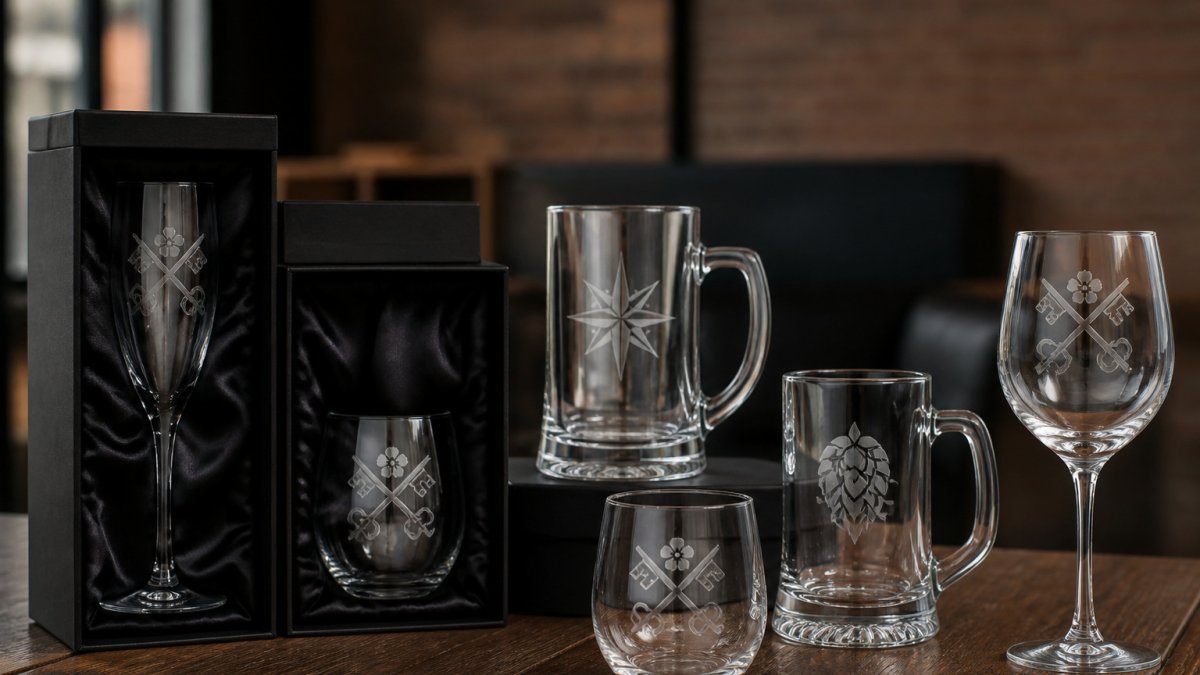
Wineries, breweries and restaurants use custom glassware to reinforce their identity every time a drink is served. A custom beer glass with the taproom's logo does more for recognition than a sticker in the window.
!Guests raising etched wine glasses bearing a company logo at a bright function room bar
Event planners sourcing for weddings, conferences and hospitality use the same logic. A consistent, well-designed glass set makes the occasion look considered, and it can be reused across future events.
Presenting Branded Glassware in Custom Gift Boxes
Presentation affects perceived value. A branded glass in a plain box reads as a giveaway. The same glass in a custom gift box reads as a considered gift.
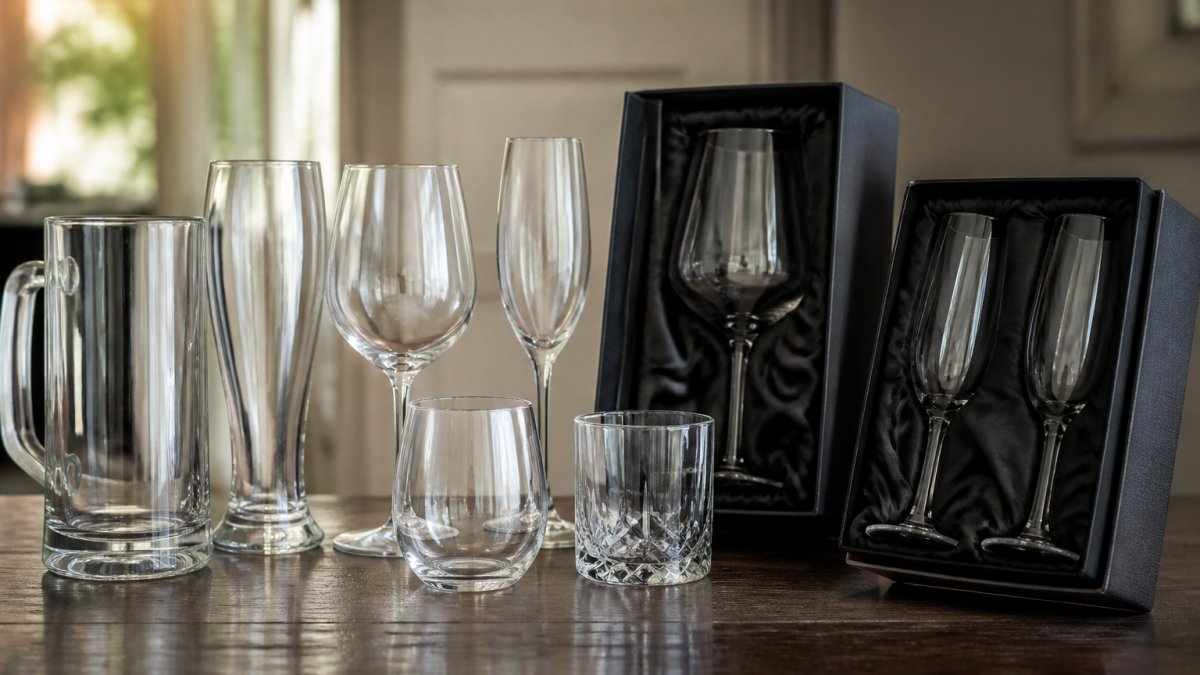
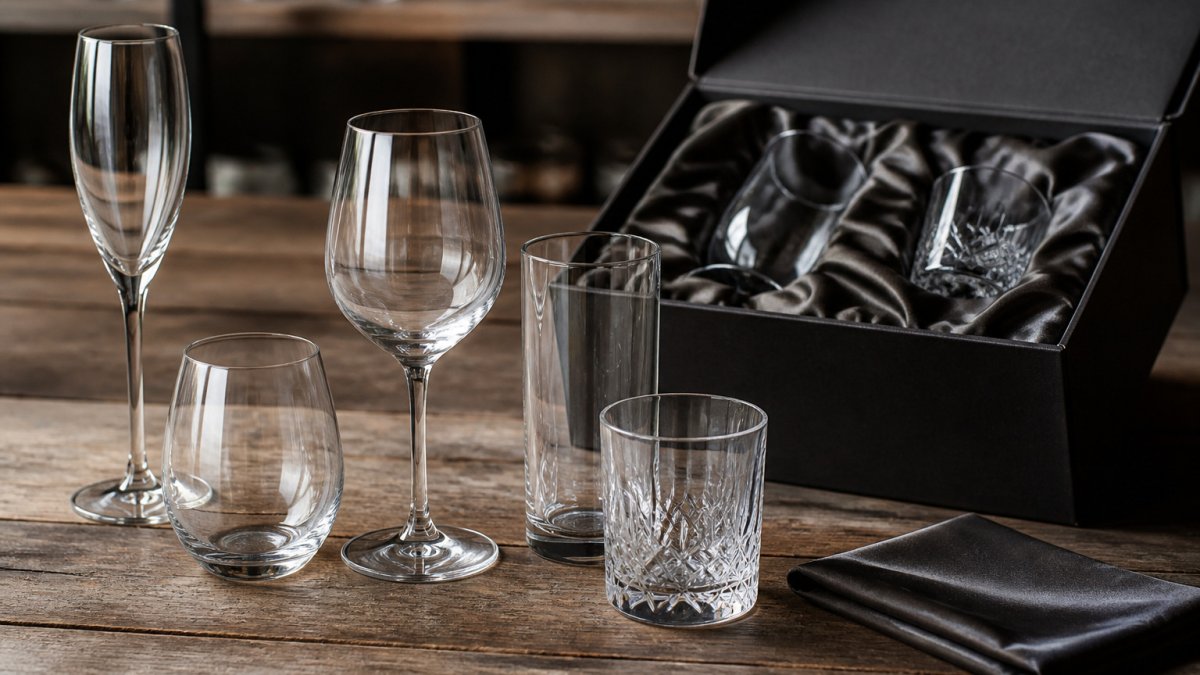
The Glassware Company offers custom manufactured gift boxing for etched and branded glassware, with an approximate turnaround of 28 working days. It is a premium option for client gifts, launches and VIP hospitality, and it can be planned alongside the glassware order from the start. Integrating these bespoke packaging solutions ensures that the presentation matches the high quality of the contents, reinforcing how personalized gifts foster deeper connections and leave a lasting impression on every recipient.
Gift boxing adds lead time, so plan it into the schedule. For time-sensitive events, confirm the boxing timeline when you request a quote.
Planning Your Branded Glassware Order With The Glassware Company
A good order starts with the artwork. Send the logo or design early, confirm the approved proof, and set a clear quantity. Changes after proofing cost time, so the earlier the artwork is settled, the smoother the run.
Next, decide on the glass style and the decoration method. Choose the glass for how it will be used, whether that is beer steins for a taproom, wine glasses for a tasting room or flutes for a wedding. Then decide whether the order needs gift boxing.
Pricing depends on quantity, design complexity, glass type, delivery location and whether gift boxing is included. For current prices and a tailored quote, visit The Glassware Company's website and request an online quote.
Frequently Asked Questions
What are the benefits of laser-etched glassware for branding?
Laser-etched glassware puts a logo on a product that people use repeatedly, so the brand stays in view long after an event ends. The mark is permanent rather than a printed sticker or decal that can peel. For corporate gifts, trade shows and hospitality events, this turns a single handout into an ongoing reminder of the brand.
Does laser-etched branding wear off glassware?
A properly etched mark is designed to last. Because the design is created in the glass surface rather than sitting on top of it, it is far more resistant to wear than printed alternatives. Durability still depends on the glass, the depth of the mark and how the item is washed, so it is worth asking your supplier about care guidance and how the glassware will be used. Ask for the expected performance in your setting, such as commercial dishwashing, before you place a larger order.
What is the difference between laser etching and engraving on glass?
The two terms are often used interchangeably, but in practice they can describe different results. Etching usually produces a frosted, matte mark that softens the glass surface, while engraving tends to cut a more defined, recessed line. The right choice depends on the look you want and how the design will be read. A supplier who can show sample pieces of both finishes will help you judge which one suits your logo and your glassware.
Can branded glassware be presented in custom gift boxes?
Yes. The Glassware Company offers custom manufactured gift boxing for etched and branded glassware as a premium presentation option, with an approximate turnaround of 28 working days. Boxing is useful for client gifts, executive presentations and award pieces, where the unboxing moment matters as much as the glass itself. Confirm the timing and details with the team when you request a quote so the boxes arrive alongside your glassware.