 how-to
How Do You Choose Long-Lasting Custom Glassware?
Last Updated: October 28, 2026
Quick Summary
To choose long-lasting custom glassware for a restaurant, match the glass thickness and material to how often it will be washed and handled, not to menu price. Commercial tumblers typically run 2.5 to 3.5 mm in wall thickness, and high-volume bars stacking glasses in racks need 3 mm or more at the rim.
- Ask how many dishwasher cycles each glass will see per week before choosing a material.
- Commercial tumblers typically run 2.5 to 3.5 mm wall thickness.
- Keep breakage to two to four glasses per hundred covers as a benchmark for high-volume venues.
- Calculate cost per use, not purchase price, to judge whether a pricier glass pays off.
- Request sample glasses tested through repeated dishwasher cycles before placing a large order.
Table of Contents
- Why Restaurant Glassware Fails Early and What It Costs You
- Choosing Glass Material and Thickness for Daily Service
- Matching Glass Shape and Style to Your Restaurant Concept
- Etched vs Printed Glassware: Which Holds Up Better
- Testing Dishwasher Durability and Maintaining Your Glassware
- Lifecycle Cost, Staff Handling and Presenting Your Branded Glassware
- Your Next Step: Requesting a Quote for Your Glassware Order
- Frequently Asked Questions
Why Restaurant Glassware Fails Early and What It Costs You
Most restaurant glassware doesn't fail because of a bad design. Choosing the right custom glassware for daily service starts with understanding the factors that matter to your venue. The global glass tableware market is expected to grow at a CAGR of 7.91% between 2026 and 2034, according to Fortune Business Insights' 2026 glass tableware forecast, so more venues are buying glassware than ever. That makes the choice harder, not easier.
Annealed glass typically lasts only two to three years in a commercial setting, as noted by CBH Oreca's durability benchmarks. That is a short life for a glass that gets washed every night.
Before you buy again, decide what your custom glassware needs to survive. The sections below walk through the choices that matter most.
Choosing Glass Material and Thickness for Daily Service
Start by asking four questions:
- How many dishwasher cycles will each glass see per week?
- Will staff stack glasses rim-down or carry them in large racks?
- Does the drink need a light, delicate feel, or a sturdy one?
- What is your breakage rate per hundred covers at the moment?
Your answers point you to the right material. Most commercial glassware falls into three families, and each behaves differently in a restaurant.
Annealed, Tempered and Borosilicate: What Actually Changes
Borosilicate glass has a low thermal expansion coefficient, so it copes with temperature swings better than either annealed or tempered soda-lime glass. It is the material behind most heat-resistant carafes and coffee service. It is lighter than tempered glass of equivalent strength, which helps with server fatigue, but it chips more readily on rim impact and costs more again.
Thickness: Where the Real Trade-Off Sits
Commercial tumblers typically run 2.5-3.5 mm wall thickness. Below about 2.5 mm, rim chips become common in high-volume service. Above about 3.5 mm, the glass starts to feel heavy and the weight adds up across a tray of twelve.
A useful rule of thumb: match thickness to handling, not to menu price. A high-volume bar stacking glasses in racks needs 3 mm or more at the rim. A fine-dining room where glasses are hand-polished and carried on trays can use 2.5 mm and gain a lighter feel that guests notice.
When Another Material Is the Safer Choice
Our advice: use glass where guests expect it and use a safer material where breakage would be dangerous. If you are specifying etched or branded glassware for a premium venue, our custom manufactured gift boxing service, with an approximate 28 working day turnaround, is worth planning into the order so the presentation matches the durability of the glass itself. Investing in high-quality materials remains the most reliable way to spot products that last, ensuring that your investment maintains its integrity throughout years of frequent service.
Matching Glass Shape and Style to Your Restaurant Concept
Warm-toned glassware is a current trend. Amber, honey and soft-toned textures are popular in 2026, according to Kotto Glass's 2026 trend report. Warm tones can make a room feel more inviting, but they should still suit your brand.
Stackable designs also matter in busy venues. Apparel n Bags' 2026 guide to glassware notes that stackable glass helps high-volume restaurants store and move glassware more safely.
Etched vs Printed Glassware: Which Holds Up Better
Ask your supplier to show samples after repeated dishwasher cycles before you commit to a large order. To compare the two methods side by side, see screen printing versus laser engraving for glassware. You can follow a step-by-step method in checking print durability on custom glasses.
Testing Dishwasher Durability and Maintaining Your Glassware
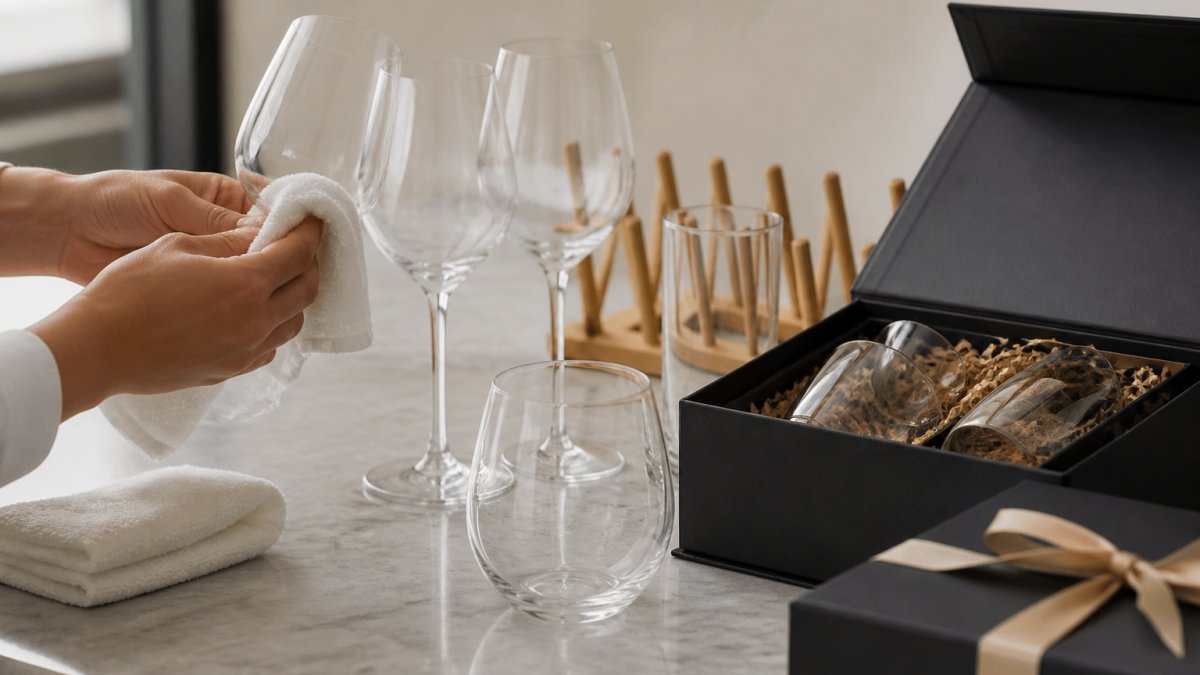
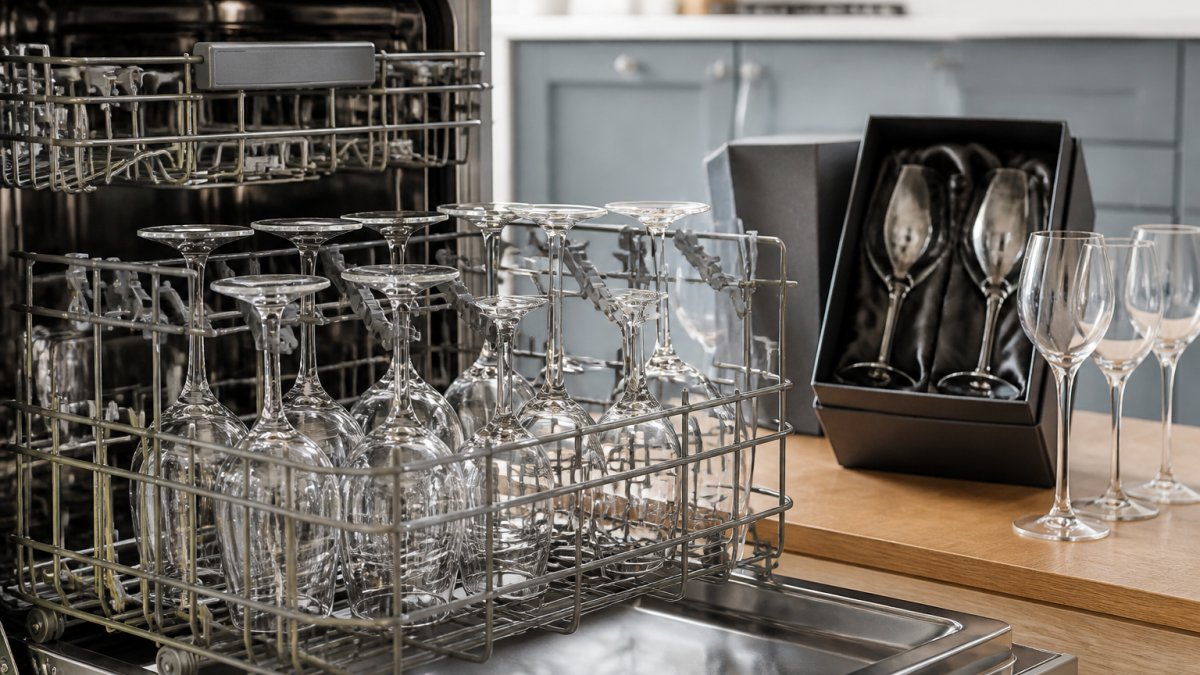
To keep your glassware in good shape after it goes live, avoid stacking glasses too tightly, load them so they don't knock together, and check your dishwasher's temperature settings. If logos begin to fade, read our tips on preventing logo fading on glassware.
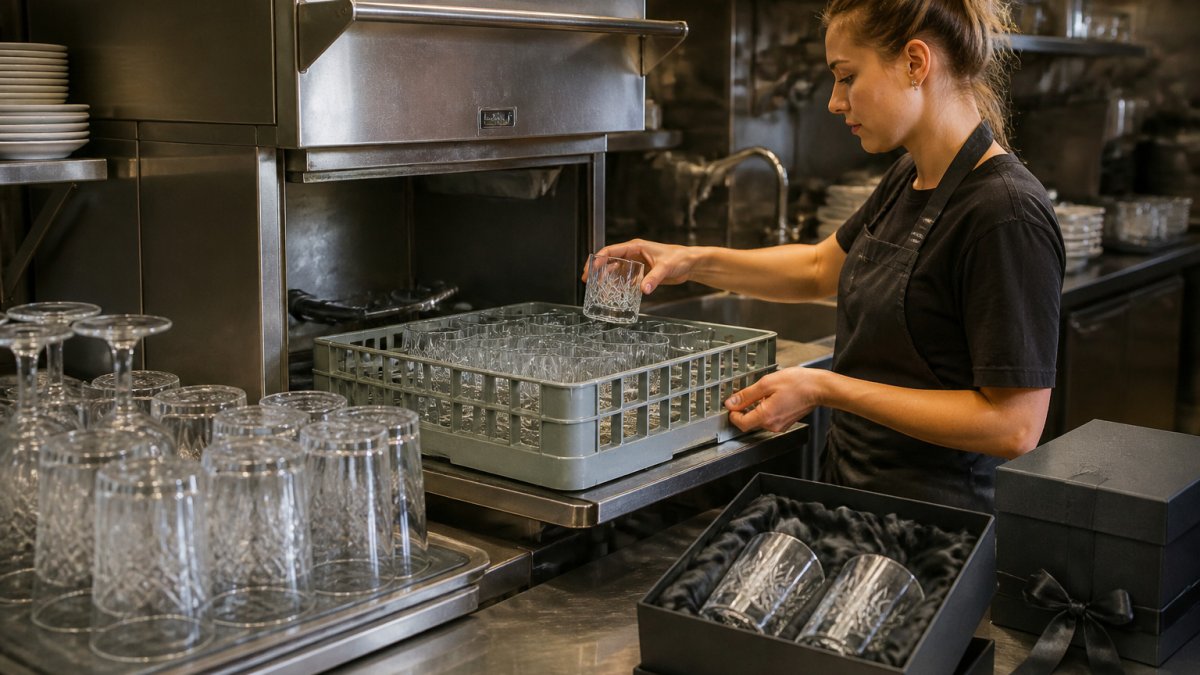
Lifecycle Cost, Staff Handling and Presenting Your Branded Glassware
Most buying guides stop at the purchase price. That is the wrong number to optimise. The figure that matters is cost per use, the purchase price divided by the number of service cycles the glass survives before it is retired through breakage, chipping or clouding.
How to Calculate Cost Per Use
The method is simple, but it needs two inputs most operators never track: breakage rate and average service life.
- Count your current breakage. Over a four-week period, record how many glasses of each type are removed from service and why (broken, chipped, clouded, lost). Divide by the number of covers served in the same period to get a breakage rate per hundred covers.
- Estimate service life. Divide the number of glasses in stock by the number retired per month. That gives you an average life in months.
- Calculate cost per use. Multiply the unit price by the number of glasses retired per year, then divide by the total annual cycles (glasses in stock × cycles per week × 52).
A common pattern in high-volume venues is a breakage rate of two to four glasses per hundred covers. A glass that costs more but halves that rate often wins on cost per use within the first year, even at a 30-40% price premium.
The Hidden Costs Beyond Breakage
Replacement cost is only part of the picture. Add:
- Restocking labour, someone has to reorder, receive and shelve replacements.
- Service interruption, a broken glass on the floor stops service while staff clean up, and a shortage of a specific shape forces staff to substitute.
- Dishwasher load, thicker, heavier glass reduces the number of pieces per rack, which raises energy and chemical cost per cover.
- Guest perception, clouded or chipped glassware reads as a dirty venue, even when it is spotless.
Tracking breakage by shape and by shift reveals patterns. If one shape breaks twice as often as the rest, the problem is usually handling or storage, not the glass itself.
Staff Ergonomics: The Overlooked Durability Factor
Heavy glass tires servers during long shifts, and tired hands drop things. If you are choosing stemware for high-volume events, see how to select durable stemware for catering events. A tumbler that weighs 400 g empty feels manageable for the first hour and punishing by the fourth. Lighter, well-balanced glass speeds up service and reduces the risk of drops, which is itself a durability gain.
Three practical ergonomic checks before you commit to an order:
- Grip diameter. A glass that is too wide for an average hand forces a pinch grip, which is the most common cause of drops during peak service.
- Balance point. A glass that is top-heavy when full is harder to carry on a tray at speed.
- Rack compatibility. If your dishwasher racks are fixed, check that the new glass fits without wobbling, a loose fit in the rack is a leading cause of rim chips.
Presenting Your Branded Glassware
Presentation is where you can make a lasting impression. Etched glassware can be customised with your logo or artwork.
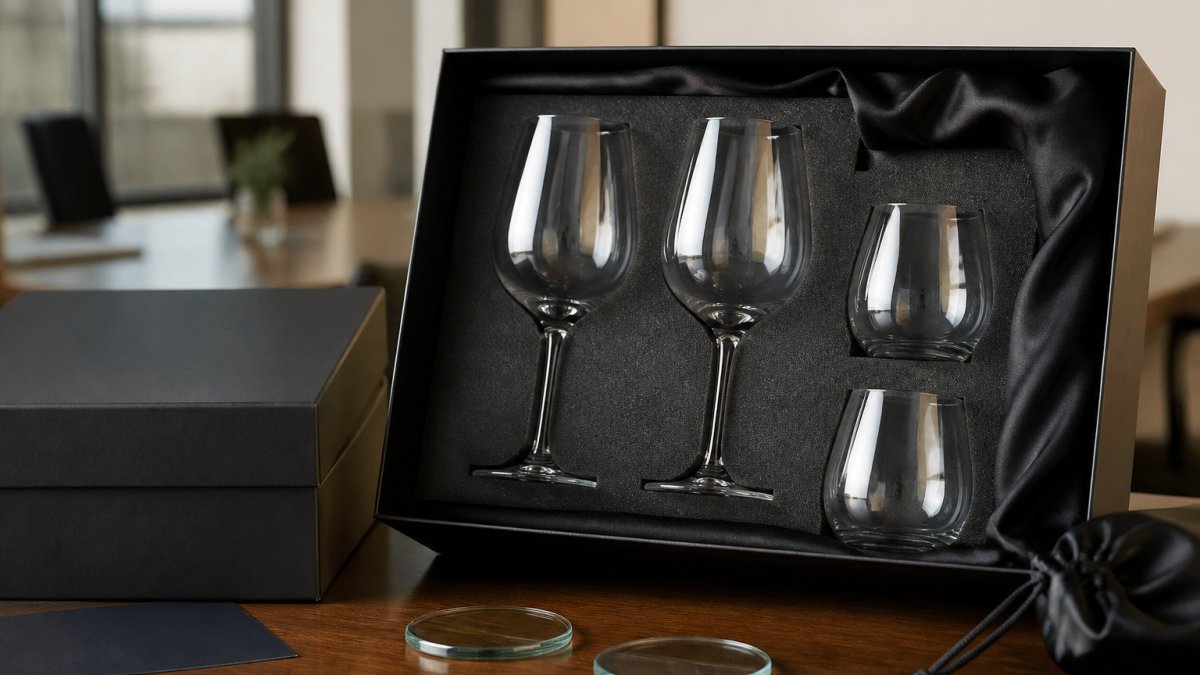
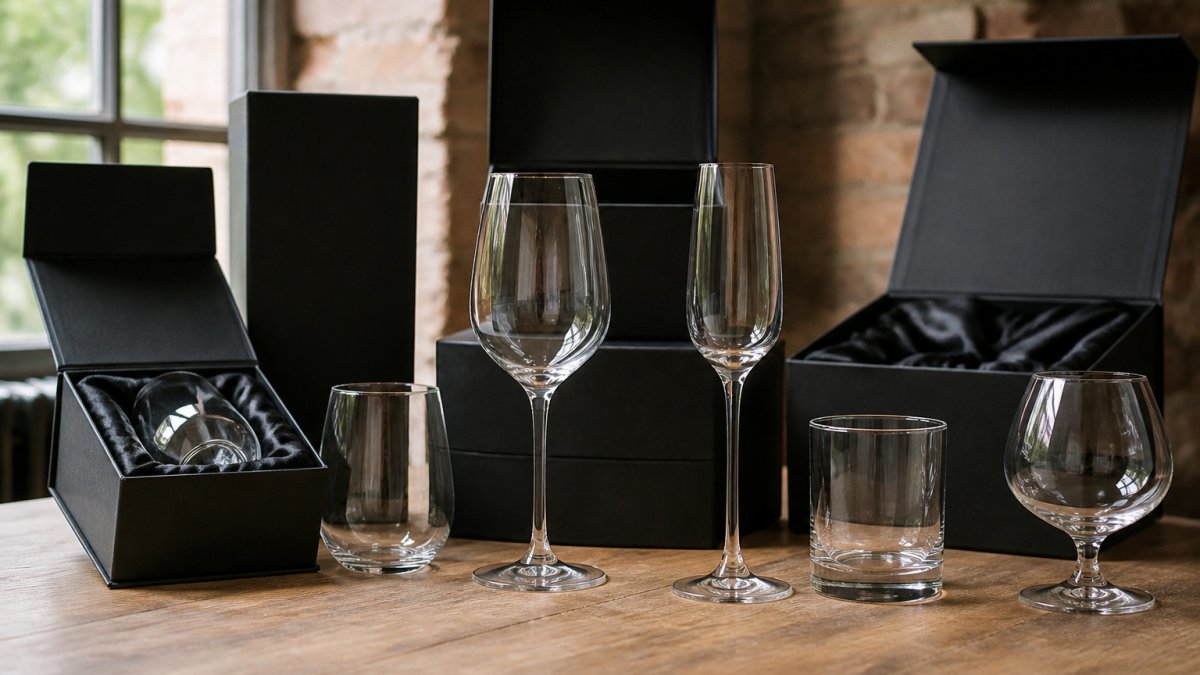
Our custom manufactured gift boxing service for etched and branded glassware, with an approximate 28 working day turnaround, is a premium presentation option for gifts, client appreciation and special events.
The article lays out the key figures behind cost per use and staff handling, which are summarised below.
| Factor | Figure from the article | Note |
|---|---|---|
| Annealed glass service life | Two to three years | Commercial setting, washed nightly |
| Typical breakage rate | Two to four per hundred covers | High-volume venues |
| Recommended wall thickness | 2.5-3.5 mm | Match to handling, not menu price |
| Premium glass price premium | 30-40% | Can win on cost per use within a year |
| Gift boxing turnaround | Approx. 28 working days | Custom manufactured service |
Your Next Step: Requesting a Quote for Your Glassware Order
Pricing depends on quantity, design, dates and delivery, so we can't give a fixed figure here. The best next step is to request a quote for your specific order.
If you need the glassware in a set window, mention that early. Our custom manufactured gift boxing service, with its approximate 28 working day turnaround, works best when planned ahead.
Request a quote from The Glassware Company today.
Frequently Asked Questions
What is the difference between tempered and standard glassware for restaurants?
Tempered glass is heat-treated so it resists breakage and thermal shock better than standard annealed glass. Annealed glass typically lasts around 2 to 3 years in a commercial setting, depending on handling and dishwasher use. Tempered options cost more per piece, but they can reduce replacement frequency in high-volume venues. Ask your supplier to confirm the glass treatment before you order, and request a sample to check rim thickness and base stability for your service style.
How does custom etching affect the durability of restaurant glassware?
The Glassware Company offers custom glassware expertly etched or engraved with your logo or artwork.
What should I look for when choosing glassware for high-volume bars?
For a branded order, our custom manufactured gift boxing service for etched and branded glassware, with an approximate 28 working day turnaround, is a premium presentation option alongside the glassware itself.