 how-to
Protect Logo Prints on Glassware: A Care and Washing Guide
Last Updated: October 31, 2026
Quick Summary
To protect logo prints on glassware, hand wash in warm water with mild dish soap, using a soft sponge and air drying upright. Avoid hot water, scouring pads, overnight soaking and stacking glasses rim-down, since heat and abrasion break the bond between ink and glass.
- Identify the decoration type first: screen print ink sits proud of the glass, while etching is cut into it.
- Rinse glasses soon after use so residue does not dry onto the print.
- Never stack printed glasses rim-down on top of each other.
- A dishwasher-safe label on the glass does not guarantee the logo print is dishwasher-safe.
- Store with a paper napkin between stacked glasses to stop rim-to-body contact.
Table of Contents
- Identify the Print Type Before You Protect It
- How to Care for Printed Glassware Day to Day
- How to Wash Branded Glasses Without Damaging the Logo
- Dishwasher-Safe Logo Glassware: What to Check First
- Printed vs Etched Glassware Durability
- Drying, Storage and Protective Coatings That Help
- Repairing Faded, Chipped or Peeling Logo Prints
- Request a Quote for Etched Glassware and Gift Boxing
- Frequently Asked Questions
Identify the Print Type Before You Protect It
The first step in any plan for how to protect logo prints on glassware is working out what kind of decoration you are actually handling. Print type decides everything that follows: how you wash it, how you dry it, and how long the logo will realistically last.
At The Glassware Company, we etch and engrave glassware rather than print it, and the difference matters when a client asks why one glass fades and another never does. Etching cuts into the glass itself. A print sits on top of it. Treat both the same and you will shorten the life of the printed piece.
Here is the core distinction in one line: a logo print on glassware is a layer of ink or film bonded to the surface, while etching is a permanent mark cut into the glass.
That single fact explains why care advice for printed drinkware cannot be copied across to etched drinkware, and vice versa.
Printed, Etched or Applied Decal: Telling Them Apart
You can usually identify the decoration type by eye and by touch, without any special tools:
- Screen print: ink sits slightly proud of the glass. You can feel a faint raised edge under a fingernail, and the colour is opaque.
- Etched or engraved: the mark is frosted and sits level with, or slightly below, the surface. Your fingernail catches the edge of the recess rather than riding over ink.
- Applied decal or transfer: a film carries the artwork. Look for a very faint outline at the edge of the design, and check whether the colour sits above the glass like a sticker.
- Shrink sleeve or label: wraps around the body of the glass. It peels at a corner if you pick at it, which no true print will do.
If you are unsure, hold the glass up to a window. Etching scatters light and looks cloudy white. Ink and film block light and look solid.
How to Care for Printed Glassware Day to Day
Daily habits decide whether a logo print survives a year or a season. The single biggest factor is heat, followed closely by abrasion.
Industry guidance on caring for branded glassware is blunt about this: care instructions depend on the decoration method, and ink-based logos call for hand washing rather than automatic dishwasher cycles. That advice is specific to ink-based decoration, so confirm the requirements for your own glass and print method with your supplier.
What that looks like in practice:
- Rinse glasses soon after use so residue does not dry onto the print.
- Skip the scouring pad. A soft sponge is enough.
- Keep printed glasses away from the hottest water you can stand.
- Never stack printed glasses rim-down on top of each other.
A common mistake is treating a branded pint glass like any other glass in the cupboard. It is not. It has a decorative layer that responds to heat and friction.
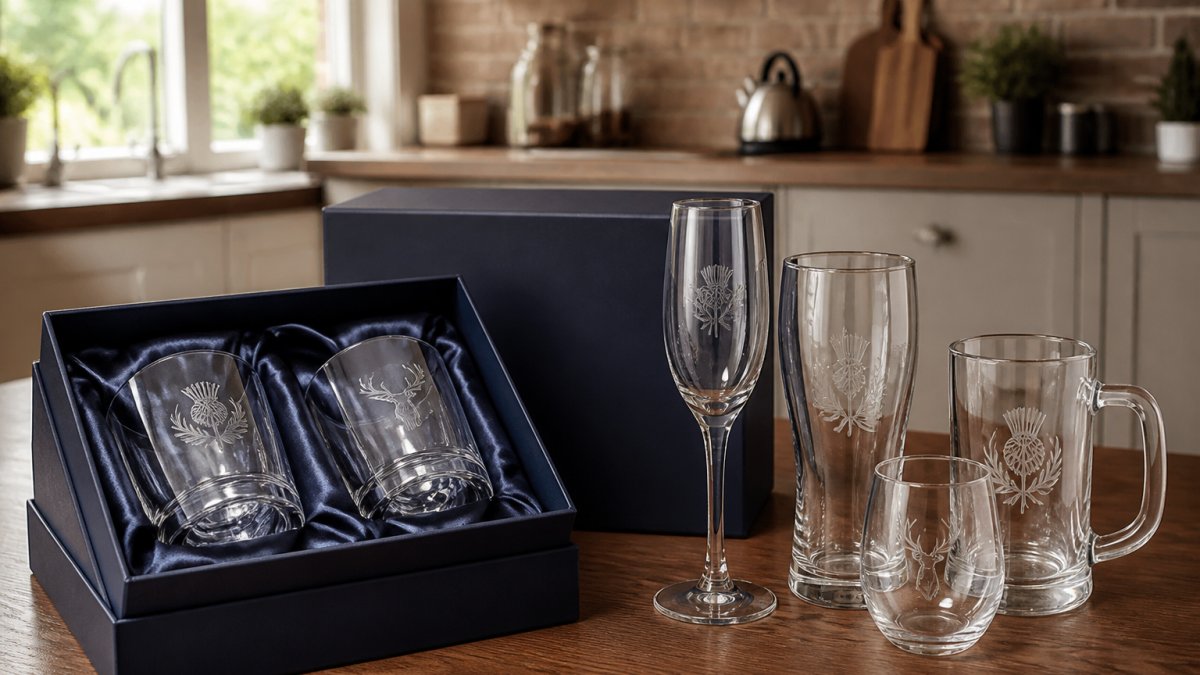
How to Wash Branded Glasses Without Damaging the Logo
Hand washing is the safest routine for any decorated glass, and it takes about a minute per glass once you have the habit. Here is the sequence we would use.
Hand Washing Step by Step
- Fill the sink with warm water and a small amount of mild dish soap. Not hot. Warm.
- Lower the glass in gently so the print is fully submerged but not rubbing against the sink base.
- Wipe the inside with a soft sponge, then pass the sponge lightly over the printed area.
- Rinse under running warm water until the soap is gone.
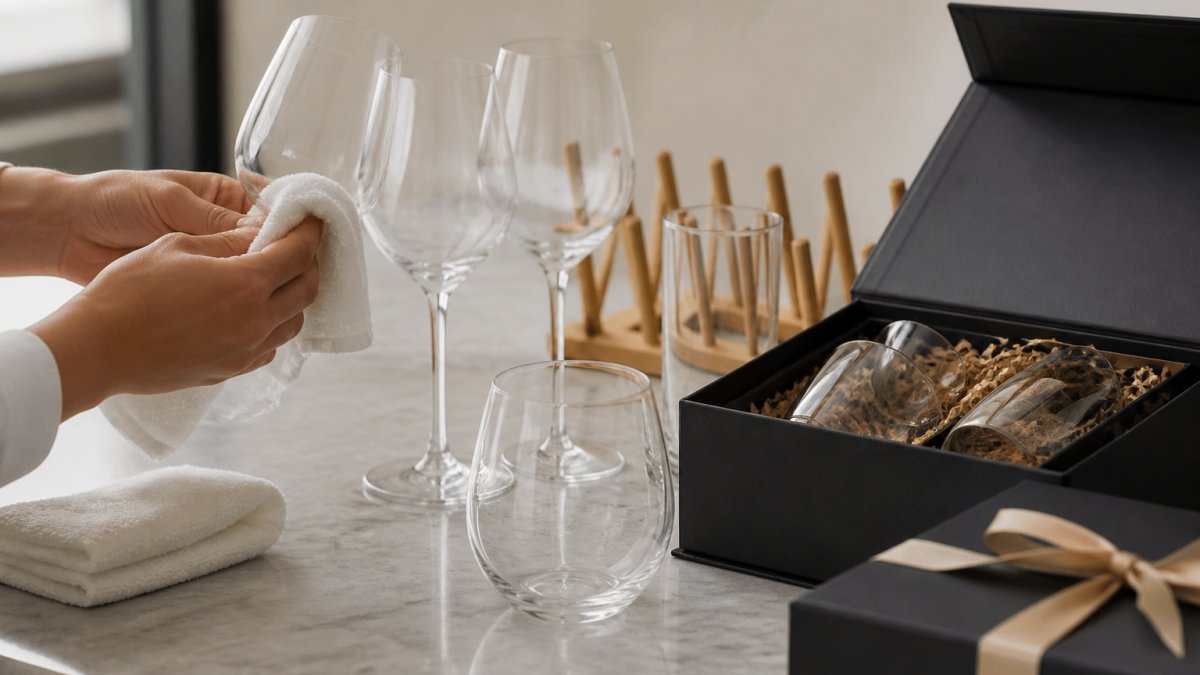
- Stand the glass upright on a drying rack and let it air dry.
For printed beer glasses specifically, our guide on how to maintain custom printed beer glasses covers the extra steps that suit that glass shape.
Two things to avoid: soaking printed glasses overnight, and twisting a cloth hard against the logo to dry it. Both work at the bond between ink and glass.
If fading is already your concern, how to prevent logo fading on glassware goes deeper into the habits that slow it down.
Dishwasher-Safe Logo Glassware: What to Check First
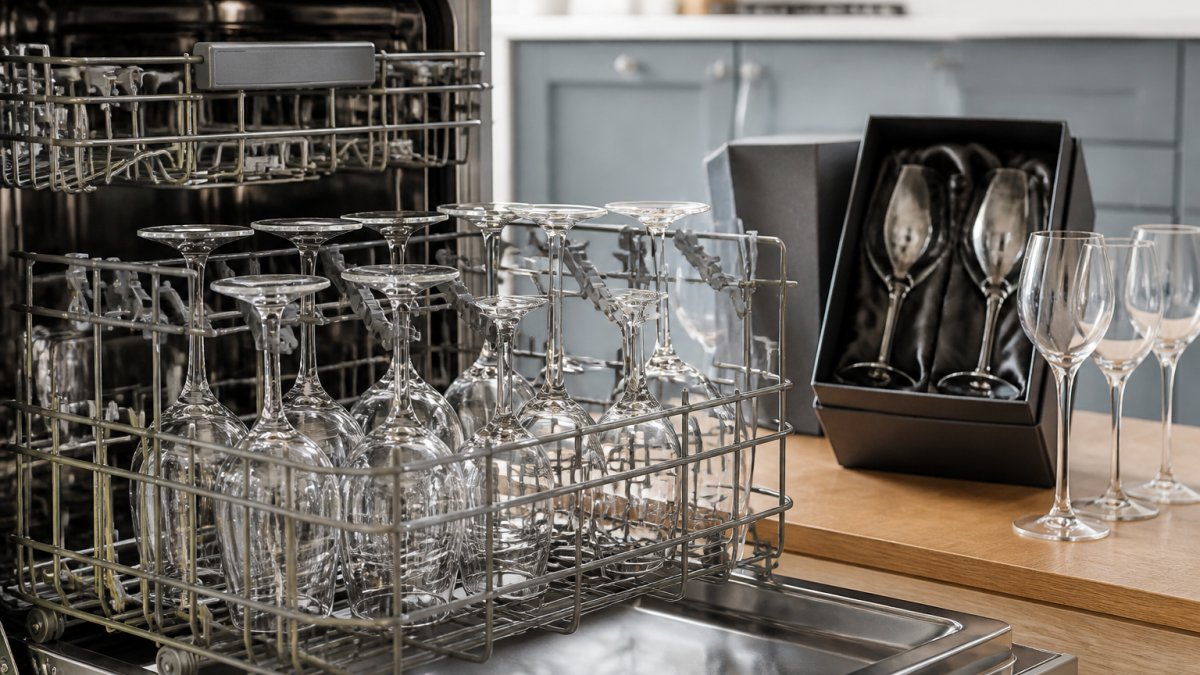
Most "dishwasher-safe" claims for decorated glassware need verifying before you trust them with a full run of branded glasses. The reason is mechanical: a dishwasher cycle combines heat, water pressure, and alkaline detergent, and each of those attacks a printed logo differently depending on how the ink or film is bonded to the glass.
Decoration methods respond differently to machine washing, so check the method before relying on a dishwasher. For a closer look at which branding methods are actually dishwasher-safe, see commercial dishwasher safe branding options.
Before the first cycle, work through these checks:
Ask the supplier directly. Which decoration method was used, and does the manufacturer state that method is dishwasher-safe? Get it in writing if the glasses are for a commercial venue. "Dishwasher-safe" on a product page often refers to the glass body, not the decoration.
Check the print position.
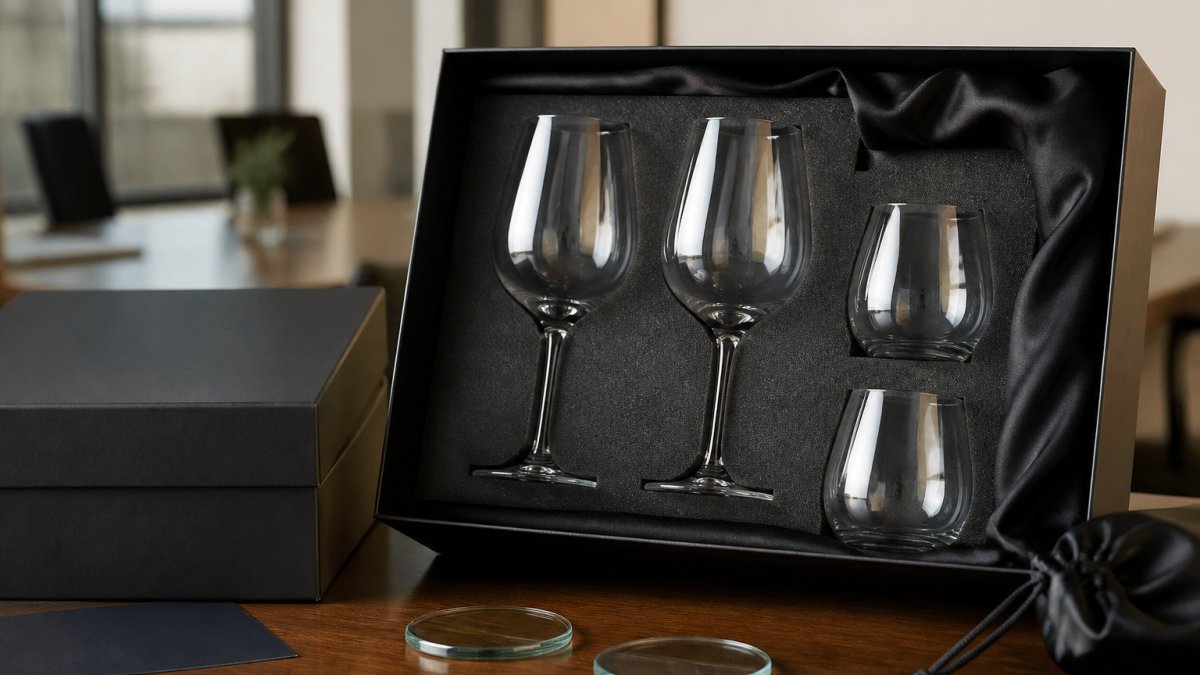
If the glasses are for a venue where machine washing is unavoidable, etching is the approach to discuss with us, because the mark is cut into the glass rather than bonded to it. For branded glassware that needs to look premium from the first pour to the hundredth, our custom manufactured gift boxing service for etched and branded glassware, with an approximate 28 working day turnaround, pairs a permanent mark with a presentation box built around the glass.
Printed vs Etched Glassware Durability
Etched glassware outlasts printed glassware by a wide margin, and that is the honest comparison. Etching removes a thin layer of glass, so the mark cannot peel, flake or wash off. It is part of the glass.
| Decoration | How it wears | Best washing method | Best for |
|---|---|---|---|
| Screen print | Ink can dull, chip or peel over time | Hand wash | Short-term campaigns, high-volume giveaways |
| Applied decal | Film edge can lift and trap water | Hand wash | Detailed full-colour artwork |
| Etching or engraving | Frosted mark stays permanently | Hand wash or dishwasher | Wineries, breweries, corporate gifts |
| Shrink sleeve | Sleeve can scuff or peel at seams | Hand wash | Temporary or seasonal branding |
The practical takeaway: if the glasses need to survive years of service in a tasting room or taproom, etching is the safer bet. For a fuller breakdown of screen printing vs laser engraving, see our comparison. If the artwork is complex and full-colour, print gives you options that etching cannot match.
Drying, Storage and Protective Coatings That Help
Drying and storage cause more logo damage than most people expect, and both are free to fix.
- Air dry upright. Lying glasses down traps moisture against the print.
- Use a lint-free cloth if you must dry by hand, and pat rather than rub.
- Store with a paper napkin between stacked glasses to stop rim-to-body contact.
- Keep them out of direct sun for long periods, since UV exposure fades ink.
Repairing Faded, Chipped or Peeling Logo Prints
Small chips and light scuffs are sometimes manageable. Faded or peeling prints generally are not, and repainting a glass logo at home rarely looks good. The reason is that a print is a bonded layer, and once that bond has failed, whether through heat, abrasion, or detergent attack, a DIY fix sits on top of a compromised surface rather than restoring the original bond.
What you can try, with realistic expectations:
- Light surface scuff: a soft cloth with mild soap, gentle circular motion. Stop if the colour starts lifting. This removes surface residue, not damage to the ink itself.
Etching cuts into the glass, so there is no ink layer to fade, chip, or peel, which makes it a sound choice when ordering a new batch. If the glasses are destined for client gifts or corporate events, our custom manufactured gift boxing service for etched and branded glassware, with an approximate 28 working day turnaround, turns a permanent mark into a presentation piece that will not need repairing in a year's time.
Request a Quote for Etched Glassware and Gift Boxing
Etched and engraved glassware cuts the mark into the glass rather than sitting it on top. That is what we do at The Glassware Company, across a large range of styles from beer steins to champagne flutes.
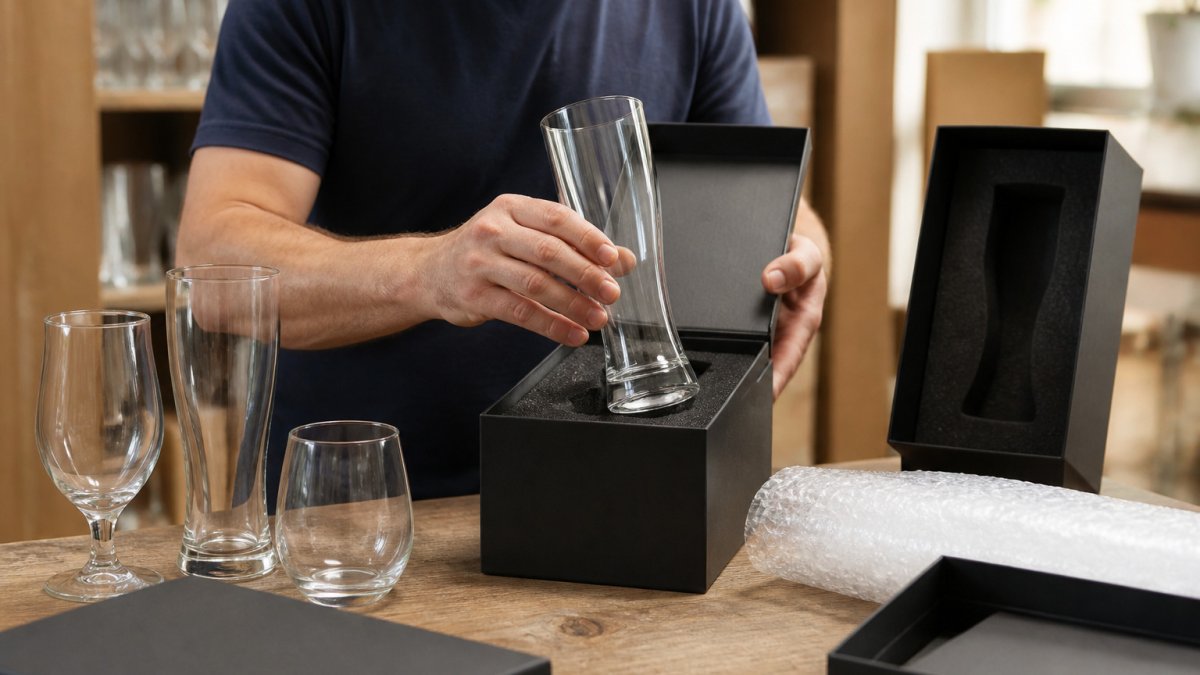
We also offer custom manufactured gift boxing for etched and branded glassware, with an approximate 28 working day turnaround. It turns a branded glass into a presentation piece for client gifts and corporate events, and the box is built around the glass rather than bought off a shelf.
Our custom gift boxing for etched glassware guide explains what the presentation option includes.
Frequently Asked Questions
How do you stop a logo from wearing off glassware?
Start by identifying the print type. Ink-based logos need hand washing in warm water with mild soap, and should stay out of the dishwasher, as care guidance for ink-based decoration advises. Skip abrasive scourers and harsh chemicals, dry with a soft cloth, and store glasses so the printed area does not rub against neighbouring items. Etched logos are cut into the glass itself and generally tolerate more handling. Always follow the supplier's care instructions for the specific glass and decoration.
Can logo-printed glasses go in the dishwasher?
Only if the supplier confirms the decoration is dishwasher safe. Care guidance for ink-based logos specifically advises hand washing and avoiding the dishwasher, so treat dishwasher-safe logo glassware as a claim to verify rather than assume.
Is etched glassware more durable than printed glassware?
Etching cuts the mark into the glass surface itself, so it is part of the glass rather than a layer sitting on top.
Can a damaged glass logo be repaired?
A faded or chipped ink print is difficult to restore cleanly at home; touching it up with household paint will not survive washing and may not be food-contact suitable. The reliable fix is re-decoration by a professional, or replacing the item. If a print is peeling at an edge, stop machine washing it immediately to slow further loss. For etched glassware, light surface scuffs can sometimes be polished, but deep chips are permanent.
Ready to move away from prints that fade? Get started with The Glassware Company and request an online quote for etched glassware with custom gift boxing, and we will confirm artwork, styles and turnaround for your event.