 how-to
How to Prevent Logo Fading on Glassware
Table of Contents
- Why Branded Glassware Logos Fade Over Time
- Etched vs Printed Glassware Durability: What Lasts Longer?
- Dishwasher Safe Glassware Care: Protecting Your Investment
- How to Clean Branded Glassware Without Damaging the Logo
- Preventing Logo Fading: Sealants, Coatings, and Water Hardness
- Repairing Faded Logos and Reordering with Confidence
- Frequently Asked Questions
Last Updated: September 15, 2026
Why Branded Glassware Logos Fade Over Time
Logo fading on glassware rarely happens overnight. It's the slow result of repeated exposure to heat, harsh detergents, and friction, and understanding what causes it is the first step in preventing it. Logo fading on glassware rarely happens overnight. It's the slow result of repeated exposure to heat, harsh detergents, and friction, and understanding what causes it is the first step in preventing it.
The mechanism is simple enough. Printed logos sit on top of the glass surface as a layer of ink, cured onto the curve during production. That layer is durable, but it isn't indestructible. Every dishwasher cycle throws hot water, alkaline detergent, and physical contact at it. Over months, the ink softens, lifts at the edges, and eventually peels.
Etched designs behave differently. Instead of sitting on the surface, the design becomes part of the glass itself, so it can't peel or flake the way ink can. That difference shapes everything about how you clean, store, and protect your branded glassware.
The Difference Between Surface Imprints and Etched Designs
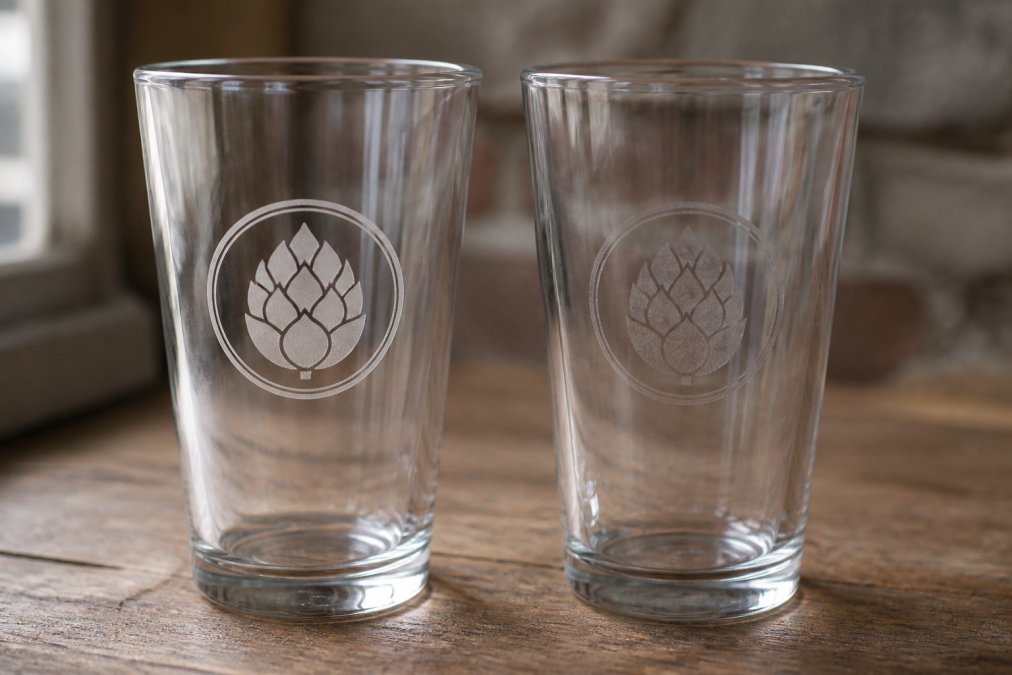
Surface imprint refers to a logo printed onto the glass with ink, which sits as a thin layer above the surface. Etched design refers to a logo cut into the glass itself, usually with a laser or abrasive method, creating a permanent mark with no ink to wear away.
That distinction matters because the two types fail in completely different ways. A surface imprint fades, cracks, or peels. An etched design doesn't fade at all, though it can still be damaged by thermal shock if the glass itself cracks.
If you're ordering custom glassware and want a logo that survives years of commercial washing, etching is the more resilient choice. If you're ordering custom glassware and want a logo that survives years of commercial washing, etching is the more resilient choice.
Etched vs Printed Glassware Durability: What Lasts Longer?
Etched glassware outlasts printed glassware in almost every commercial setting. The reason is structural: etching removes or alters the top layer of glass, so the design is physically part of the material. There's no ink layer to degrade.
Printed glassware can still perform well, but it depends heavily on the ink and the curing process. A well-cured print on a glass that's hand washed and dried gently will hold its appearance for a long time. The same print run through a hot commercial dishwasher every day will fade noticeably faster.
Here's how the two compare across the factors that matter most:
| Factor | Etched Design | Printed (Ink) Design |
|---|---|---|
| Durability | Permanent, won't peel | Can fade or peel over time |
| Dishwasher tolerance | High | Low to moderate |
| Best for | Wineries, breweries, daily use | Short-term events, giveaways |
| Appearance | Frosted, subtle, premium | Bold colour, high contrast |
| Repair options | Not needed | Limited, often reorder |
The practical takeaway: if the glass is going to be washed repeatedly, choose etching. If it's a one-off event piece that will be handled carefully, a printed logo can work well and often delivers stronger colour.
Dishwasher Safe Glassware Care: Protecting Your Investment
Most branded glassware is not truly dishwasher safe in a commercial machine, even when a supplier labels it that way. The label usually refers to a domestic cycle at lower temperatures. Commercial machines run hotter, use stronger detergents, and spray water at higher pressure, and that combination is what drives most logo fading.
To understand why, it helps to separate the three forces acting on a printed logo inside a dishwasher:
- Chemical attack. Commercial detergents are strongly alkaline, often around pH 10-12 (Detergents in Great Britain). That alkalinity is what cuts through grease, but it also softens and slowly dissolves the cured ink layer on a printed glass. Over repeated cycles, the ink loses adhesion and lifts at the edges.
- Thermal stress. Wash temperatures in commercial machines commonly sit between 60°C and 85°C, with a final rinse that can be hotter still (foodstandards.gov.au). Heat expands the glass and the ink at different rates, weakening the bond between them.
- Mechanical impingement. Wash-arm jets hit the glass directly, and glasses knock against each other in the rack. That physical contact abrades the ink surface and chips the edges of the design.
Etched glassware resists all three because there is no ink layer to attack. The design is part of the glass, so alkaline detergent, heat, and jet pressure have nothing to strip.
If you must run printed glassware through a dishwasher, treat it as a controlled risk rather than a convenience:
- Use the lowest temperature cycle available. A short, low-temperature cycle does less damage than a long, hot sanitising cycle.
- Choose a mild, neutral detergent. Avoid heavy alkaline powders and any product labelled for heavy-duty or burnt-on food removal.
- Skip the heated drying cycle. Let glasses air dry or hand dry them. The drying phase exposes the ink to sustained heat with no benefit.
- Use rinse aid. It reduces water spotting, which in turn reduces the temptation to scrub dried residue off the logo later.
- Load glasses so they don't touch. Use a dedicated glass rack with individual compartments rather than a general-purpose rack where items knock together.
Glassware care guidelines from the Australian Glass and Window Association note that sudden temperature changes are a leading cause of glass damage, and the same principle applies to decorated drinkware. A glass that goes from a cold storeroom straight into a hot wash is under more stress than one that has been allowed to reach room temperature first.
Water Temperature and Thermal Shock
Thermal shock is the cracking or weakening of glass caused by a rapid change in temperature. A cold glass hitting hot dishwasher water, or a warm glass plunged into an ice bath, stresses the material and can cause fine cracks or full breakage.
For branded glassware, thermal shock matters for two reasons. It can crack the glass outright, and it can weaken the bond between printed ink and the surface, accelerating peeling. Let glasses come to room temperature before washing, and never move them straight from a hot wash into cold water.
The practical rule is to keep temperature changes gradual. If you are hand washing, use warm water rather than hot, and rinse at a similar temperature to the wash. If you are using a dishwasher, avoid pre-rinsing glasses in cold water immediately before loading them into a hot machine.
How to Clean Branded Glassware Without Damaging the Logo
Hand washing is the single most effective way to protect a printed or etched logo. It takes a few extra minutes, but it dramatically extends the life of the design.
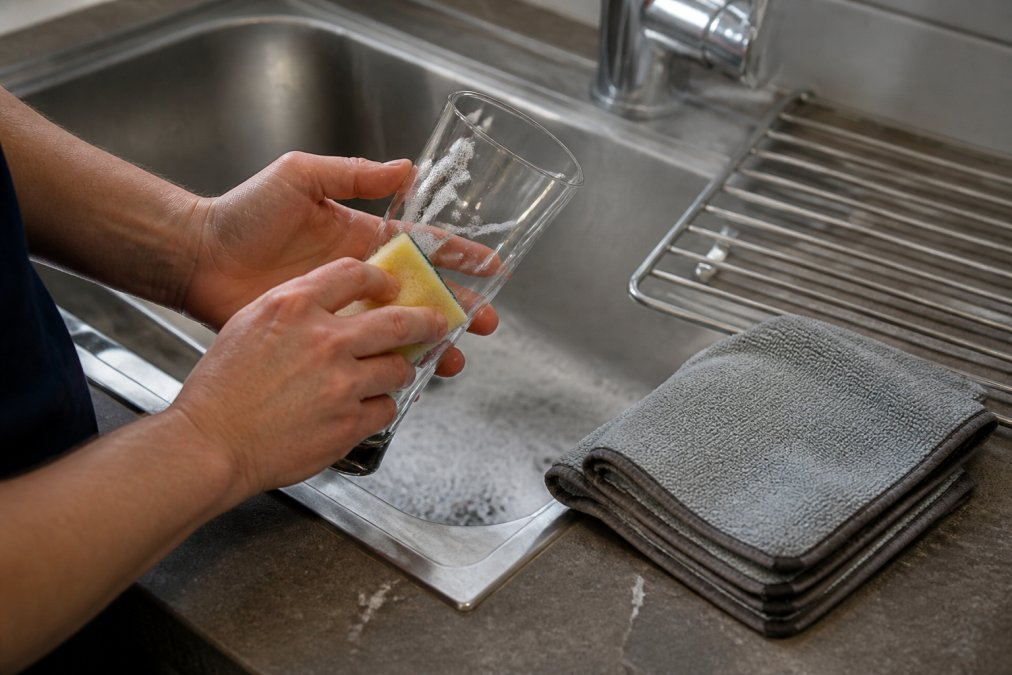
Follow these steps:
- Fill a sink with warm, not hot, water and add a small amount of mild detergent.
- Submerge the glass and let it soak for a minute to loosen residue.
- Wipe the logo area with a non-abrasive sponge or soft cloth, never a scouring pad.
- Rinse under warm running water to remove all soap.
- Dry immediately with a clean microfiber cloth.
Avoid abrasive cloths and steel wool entirely. They scratch the glass surface and, on printed items, strip the ink layer directly. For stubborn residue, a diluted vinegar solution works well and is gentler than most commercial cleaners.
The Right Way to Dry and Store Your Glasses
Air drying leaves water spots and mineral residue that make glassware look cloudy over time. Dry each glass by hand with a lint-free microfiber cloth while it's still slightly warm from the rinse.
Store glasses upright with a little space between them.
Preventing Logo Fading: Sealants, Coatings, and Water Hardness
The main options fall into three groups:
Why Water Hardness Matters More Than Most People Realise
Repairing Faded Logos and Reordering with Confidence
Frequently Asked Questions
Is glass etching permanent?
Yes, etched designs are permanent because the process removes a thin layer of the glass surface, creating a recessed mark that cannot peel or wash away. Unlike ink-based logos, etching does not rely on adhesion to the surface. However, etched glassware can still become cloudy over time if exposed to harsh detergents or abrasive cleaning tools, so proper care remains important to keep the design looking sharp.
Are dishwasher-safe logos truly permanent?
It depends on the decoration method. Etched or laser-engraved logos are effectively permanent because the design is part of the glass itself. Printed or decal-based logos labelled dishwasher safe will last longer than standard prints, but repeated exposure to high heat, harsh detergents, and water hardness can still cause gradual fading. For the longest lifespan, use a mild detergent and a gentle cycle.
How can I prevent logo fading on glassware during regular use?
Wash branded glasses by hand with mild detergent and a non-abrasive sponge where possible. If using a dishwasher, choose a low-temperature cycle, use a rinse aid to reduce water spots, and avoid overloading. Keep glasses out of direct sunlight, which can degrade ink-based logos over time. Storing glasses upright with protective padding also reduces surface wear.
What is the difference between screen printing and laser etching for durability?
Screen printing applies ink to the glass surface and cures it with heat. It offers vibrant colours but sits on top of the glass, making it more vulnerable to scratching and fading over time. Laser etching removes a thin layer of glass to create a permanent, frosty mark. Etching handles commercial dishwashing far better and will not peel, though it typically produces a single-tone finish rather than full colour.