 how-to
What Is the Best Dishwasher Rack for Delicate Glassware?
Last Updated: October 30, 2026
Quick Summary
A divided compartment glass rack sized to hold each item upright without contact, matched to your machine's basket dimensions, is the usual approach for delicate glassware. The grid sets the maximum glass diameter each cell accepts, so match it to your glass rather than your throughput target. Confirm the standard 500 x 500 mm footprint and that the loaded rack clears the spray arms.
- A 5 x 5 rack gives 25 compartments; a 4 x 4 gives 16 larger cells.
- Peg racks suit plates and flatware, not glasses, which get no lateral support.
- Extenders add height clearance but only work with a matching base rack.
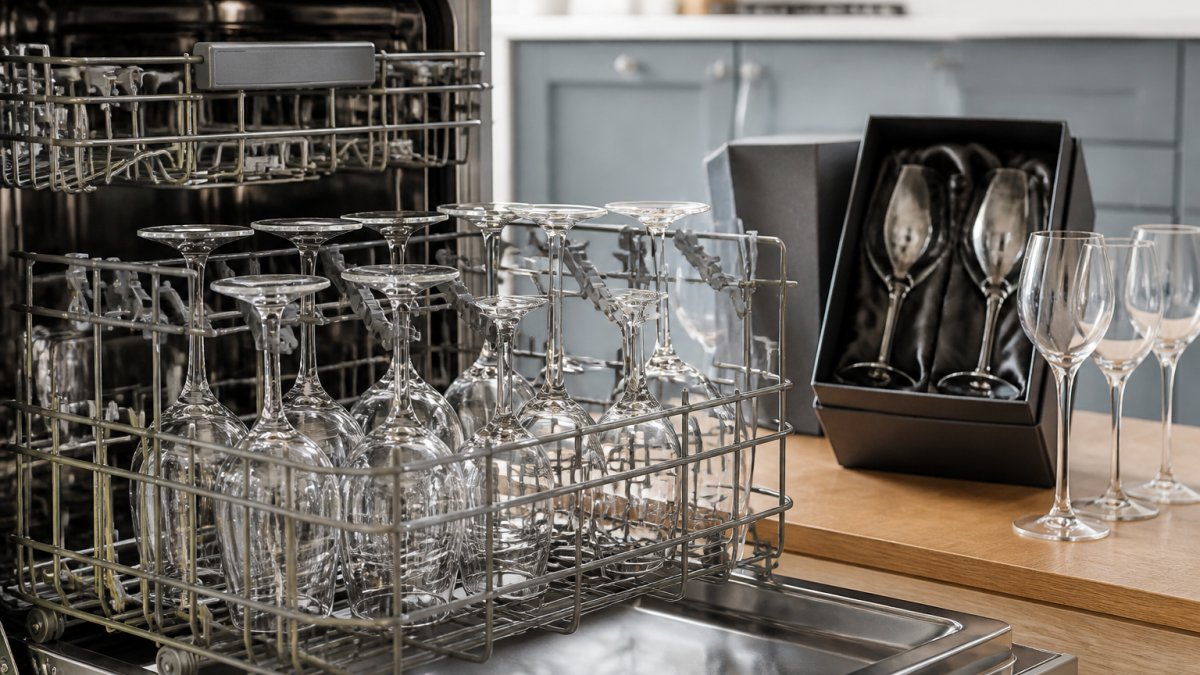
- Load wine glasses bowl-down, base up, so water drains and spray reaches the bowl.
- Replace damaged racks rather than repair them, and keep spare racks on hand.
Table of Contents
- Why Rack Choice Decides Whether Delicate Glassware Survives the Wash
- Commercial Glasswasher Racks: Divided, Open, Peg and Extender Options Compared
- Glasswasher Basket Sizes and How They Fit Undercounter, Pass-Through and Conveyor Machines
- Configuring a Wine Glass Dishwasher Rack for Stems, Bowls and Thin Rims
- Champagne Flute Dishwasher Rack Setup: Angled Loading and Clearance Rules
- Breakage Prevention, Wash Performance and the Trade-Offs Nobody Mentions
- Matching Racks to Your Custom Etched Glassware Range
- Request a Quote for Custom Glassware and Presentation Boxing
- Frequently Asked Questions
Why Rack Choice Decides Whether Delicate Glassware Survives the Wash
A compartmented glass rack sized to hold each item upright without contact, matched to your machine's basket dimensions, is the usual approach for delicate glassware. At The Glassware Company, we supply etched and branded drinkware to wineries, breweries, and hospitality venues.
Three forces do the damage inside a commercial machine. Mechanical impact is first: glasses knock against each other when compartments are oversized or the rack is overloaded. Second is thermal shock, where a cold glass meets a hot wash or a hot glass meets a cold surface. Third is physical pressure, the squeeze that comes from forcing a stem or bowl into a compartment that does not quite fit. KaTom's commercial dishwashers and accessories buyers' guide notes that glass racks exist specifically to keep delicate glassware separated so it is not damaged during washing.
Watch out: stacking two glasses in one compartment to save a cycle is the fastest way to lose both. The second glass has no support and no spray access.
Commercial Glasswasher Racks: Divided, Open, Peg and Extender Options Compared
Rack selection starts with the item type, not the machine. Win Depot's commercial dishwasher racks and accessories guide separates the category into four uses: divided glass racks and cup racks for drinkware, open racks for bowls and oversized items, and peg racks for plates. For delicate glassware, the divided compartment rack is almost always the right answer, but the differences between divided racks matter more than the category label.
| Rack type | Best for | Pros | Cons |
|---|---|---|---|
| Divided compartment rack | Wine glasses, flutes, tumblers | Full separation, predictable spacing | Fewer items per cycle |
| Open rack | Bowls, oversize pieces | Flexible loading | No separation for stemware |
| Peg rack | Plates, flatware | High density | Unsuitable for glasses |
| Extender | Tall stems, handled mugs | Adds height clearance | Needs matching base rack |
What compartment count and grid layout actually mean
A divided glass rack is described by its grid, for example, a 5 x 5 rack gives 25 compartments across the footprint, while a 4 x 4 gives 16 larger cells. The grid is the first decision because it sets the maximum glass diameter each cell can accept. A 25-compartment rack suits tumblers and small stemware; a 16-compartment rack suits wider bowls and heavy crystal. Neither is better in isolation, the grid must match your glass, not your throughput target.
Compartment shape matters as much as count. Square cells with straight dividers hold a base firmly but offer less lateral cushioning. Rounded or open-corner cells let a bowl sit without touching a hard edge. For stemware, look for cells tall enough that the stem is supported along its length rather than pinched at one point.
Pegged and open designs: when they are the wrong tool
Peg racks are built for plates and flatware, where pegs locate items at high density. A glass placed over a peg concentrates load on a small contact area and gives no lateral support, a recipe for a cracked base or a tipped glass. Open racks are flexible but offer no separation, so stemware leans into its neighbour as soon as the machine vibrates.
Extenders and height clearance
Extenders raise the effective rack height for tall stems and handled mugs. They only work with a matching base rack from the same system, and they change the loaded rack's overall height, which must still clear the spray arms and the machine's internal ceiling.
The trade-off is density. A compartment rack holds fewer glasses per cycle than an open rack, and that is the point.
Glasswasher Basket Sizes and How They Fit Undercounter, Pass-Through and Conveyor Machines
Basket dimensions decide compatibility, and the standard footprint across most professional machines is 500 x 500 mm. Measure your existing rack base before ordering anything, then confirm the glasswasher accepts the rack height you need. Undercounter and glasswasher units typically take a single rack with limited vertical clearance. Pass-through and conveyor machines give you more height but demand racks that track cleanly on the belt.
The measurement checklist before you buy
- Measure the internal width and depth of the wash chamber, not the door opening
- Confirm the rack base footprint matches your machine's track or runners
- Measure your tallest glass, stem included, and add clearance above the rim
guidance on choosing commercial glass racks that fit your machine recommends compartments large enough to hold each glass without forcing it into place, then selecting rack height or compatible extenders to suit. Skipping the height check is the mistake we see most often. A rack that fits the machine but not the stem is a rack that breaks glasses.
Configuring a Wine Glass Dishwasher Rack for Stems, Bowls and Thin Rims

Load wine glasses bowl-down over the peg or into the compartment, base up, so water drains and spray reaches the bowl interior. Angled loading, where the glass tilts slightly, improves drainage and spray coverage but only if the rim never contacts the rack.
A working sequence for a wine glass dishwasher rack:
- Sort by height and bowl diameter before loading anything
- Place the tallest stems at the outer edges where clearance is greatest
- Seat each glass so the base sits flat and the bowl clears the compartment wall
- Leave empty compartments between heavy crystal pieces rather than crowding
- Check that no rim touches metal or another glass before closing the door
If you are still choosing the glasses themselves, our guide to selecting durable stemware for catering events covers the shapes and weights that survive high-volume washing.
Champagne Flute Dishwasher Rack Setup: Angled Loading and Clearance Rules
Flutes are the hardest item in the wash. Their narrow bowl limits water access, their height demands clearance, and their rim is thin enough to chip on contact.
Angled loading helps here more than anywhere else. Tilting a flute so the bowl opening faces the spray direction improves bowl access and drainage, provided the base remains fully supported. Never let an angled flute rest its rim on the compartment divider.
Three clearance rules we apply:
- The rim must clear the rack top by a visible margin
- The bowl must not touch the compartment wall at any point
- The base must sit flat, not perch on a peg
Breakage Prevention, Wash Performance and the Trade-Offs Nobody Mentions
Loading that protects glassware and loading that cleans it best do not always coincide. Tight compartments reduce movement but can shield surfaces from spray. Wide spacing improves spray coverage but lets glasses shift. Matching compartment size closely to glass diameter is one way to balance support and water access.
How rack density affects spray access and drainage
Water reaches a glass from the spray arms below and, in many machines, from wash and rinse arms above. A glass sitting flat in a deep compartment can have its base shadowed from the lower spray, while a bowl loaded opening-down can trap water if the drainage path is blocked by the compartment floor. Three practical rules:
- Leave the spray-arm path clear: no glass should overhang into the centre where the arm rotates.
- Load bowls opening-down or angled so water drains rather than pools.
- Do not pack cells so tightly that water cannot sheet off the rack between cycles.
Breakage prevention and safe loading
Most breakage in a commercial wash is contact, not heat. Glasses chip when rims touch dividers, when bases perch on pegs instead of sitting flat, and when a loaded rack is carried with glasses leaning into each other. A working sequence:
- Sort by height and bowl diameter before loading anything.
- Seat each glass so the base sits flat and the bowl clears the compartment wall.
- Leave empty compartments between heavy crystal pieces rather than crowding.
- Check that no rim touches metal or another glass before closing the door.
- Carry the loaded rack level and never stack a second rack on top of glasses.
Maintenance, inspection and replacement
A damaged rack can break glasses. Inspect racks regularly for cracked dividers, bent pegs, worn coating and residue buildup. Cracked dividers no longer hold a glass upright; bent pegs concentrate load; worn coating exposes hard edges; residue harbours soil and can transfer to glass.
If presentation is part of the program, our custom manufactured gift boxing service for etched and branded glassware, with an approximate 28 working day turnaround, is a premium presentation option alongside the glassware itself.
Matching Racks to Your Custom Etched Glassware Range
Etched glassware raises the stakes. A chipped rim on a plain glass is an inconvenience. A chipped rim on a glass carrying a client's logo is a brand problem, and it usually happens because the rack was bought for generic tumblers and then used for stemware.
Match racks to your actual range, item by item. This is also where presentation matters: our custom gift boxing for etched glassware guide covers how to package and present etched pieces as a premium option, and our custom manufactured gift boxing service for etched and branded glassware runs on approximately a 28 working day turnaround, so it can be planned alongside the glassware order rather than after it.
Request a Quote for Custom Glassware and Presentation Boxing
Racks protect the glassware you already own. The bigger decision is what goes into them.
If you are sourcing branded or etched glassware for a venue, event, or client program, we can quote the full package: the glassware, the etching or engraving, and the gift boxing that presents it properly.
Get started with The Glassware Company and build a glassware program suited to your venue and events. Request an online quote and tell us your styles, quantities, and timeline.
Frequently Asked Questions
What type of dishwasher rack is best for delicate glassware?
Divided compartment racks with soft-touch or coated dividers are the safest choice for delicate glassware. Each glass sits in its own compartment, so glasses cannot knock against each other during the cycle. Choose compartments wide enough that the glass drops in without force, and add a compatible extender if tall stems need extra clearance. Open and peg racks suit bowls and plates better than stemware. If you wash a mix of glass types, keep a dedicated rack for stemware rather than sharing one with crockery.
How should wine glasses be arranged in a commercial dishwasher rack?
Load wine glasses upside down, base up, with the bowl resting clear of the compartment floor so wash water can reach every surface. Keep a finger-width gap between rims and dividers, and never let bowls touch. Angle glasses slightly where the rack design allows so water drains off the base. Check that spray arms are not blocked by tall stems, and run a short cycle first to confirm the arrangement before committing a full service. A dedicated wine glass dishwasher rack makes this repeatable for staff.
Can champagne flutes go in a commercial glasswasher?
Yes, provided the rack suits the flute's height and narrow bowl. Flutes are the most fragile item in most glasswasher loads, so use a compartment rack with tall dividers or an extender, and load at a slight angle so the rim does not sit flush against a hard surface. Confirm the flute's total height fits under the machine's spray arm before loading. If flutes share a rack with tumblers, group them together at the edge rather than scattering them among heavier glasses.
How do you stop glasses from chipping in a commercial dishwasher?
Most chipping comes from contact, not heat. Give each glass its own compartment, leave space between rims, and avoid overloading a rack to save a cycle. Check compartment floors and dividers for worn coating, because exposed wire will chip bases over time. Keep wash water clean and at the temperature the machine specifies, and cool glasses briefly before stacking them, since thermal shock weakens rims. Inspect racks monthly and replace any with bent tines or missing coating.