 how-to
Commercial Dishwasher Safe Branding Options
Table of Contents
- Understanding Commercial Dishwasher Safe Branding
- Dishwasher-Safe Etched Glassware: Durability and Process
- Etched vs Printed Glassware Durability in Commercial Settings
- Branding Methods: Engraving, Laser Marking, and Screen Printing
- How to Care for Branded Glassware Between Washes
- Commercial Glassware Washing Best Practices
- Choosing the Right Branding Option for Your Hospitality Business
- Frequently Asked Questions
Last Updated: October 14, 2026
Understanding Commercial Dishwasher Safe Branding
When you're choosing branded glassware for your hospitality business, the most critical question isn't about the design, it's about durability. Dishwasher safe branding means your logo, artwork, or custom marking will survive repeated high-temperature commercial wash cycles without fading, peeling, or becoming illegible. This matters because a faded logo defeats the entire purpose of branded glassware.
The challenge is real. Not all branding methods are created equal. Some fade within weeks of regular commercial use. Others hold up for years. The difference comes down to the substrate you choose, the branding technique applied, and how well those two work together in a harsh commercial environment.
At The Glassware Company, we've spent years helping hospitality businesses, breweries, wineries, and corporate clients navigate these decisions. We work with etched, engraved, and printed glassware across dozens of applications, from bar service to corporate events to merchandise. What we've learned is that choosing the right commercial dishwasher safe branding option requires understanding how each method performs under real conditions.
Dishwasher-Safe Etched Glassware: Durability and Process
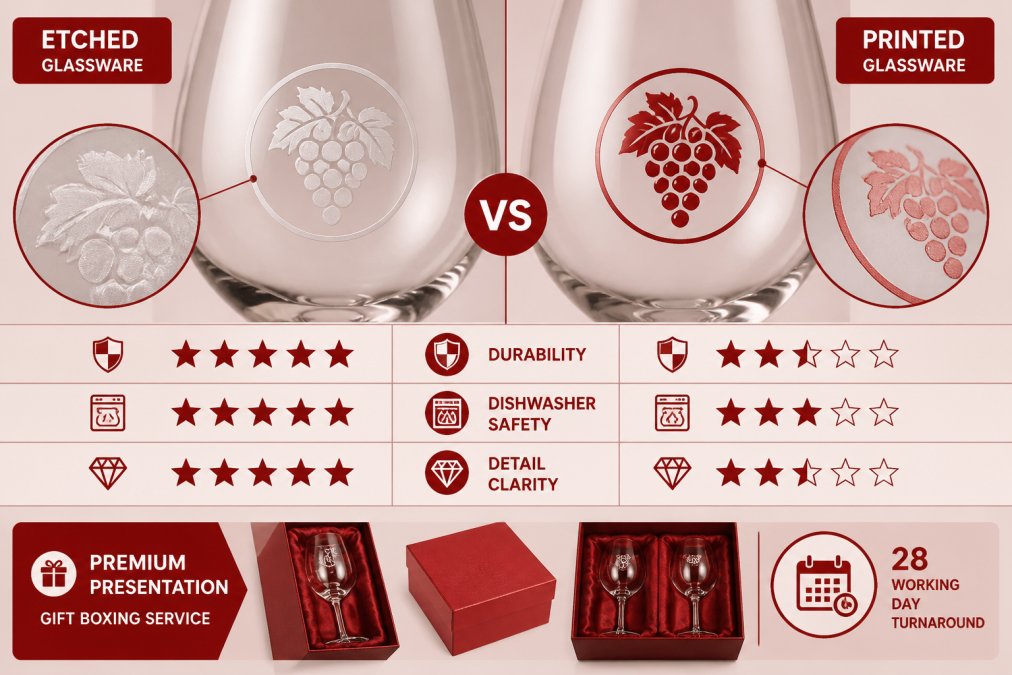
Etched glassware represents the gold standard for durability in commercial dishwasher environments. The etching process physically removes a thin layer of glass surface, creating the design. Because the mark is part of the glass itself, not applied on top, it cannot fade, peel, or wear away through washing.
The etching process works by using hydrofluoric acid or a mechanical abrasion technique to create a frosted or textured surface where your logo or artwork sits. The depth of the etch determines visibility and longevity. A deeper etch is more durable and more visible under different lighting conditions. The result is a permanent mark that survives thousands of commercial wash cycles without degradation.
This permanence is why etched glassware commands a premium in the market. You're paying for a branding method that will outlast the glassware itself in most cases. For corporate clients, wineries, and breweries that reorder the same design regularly, etching offers consistency across batches. The mark looks identical whether it's produced today or six months from now.
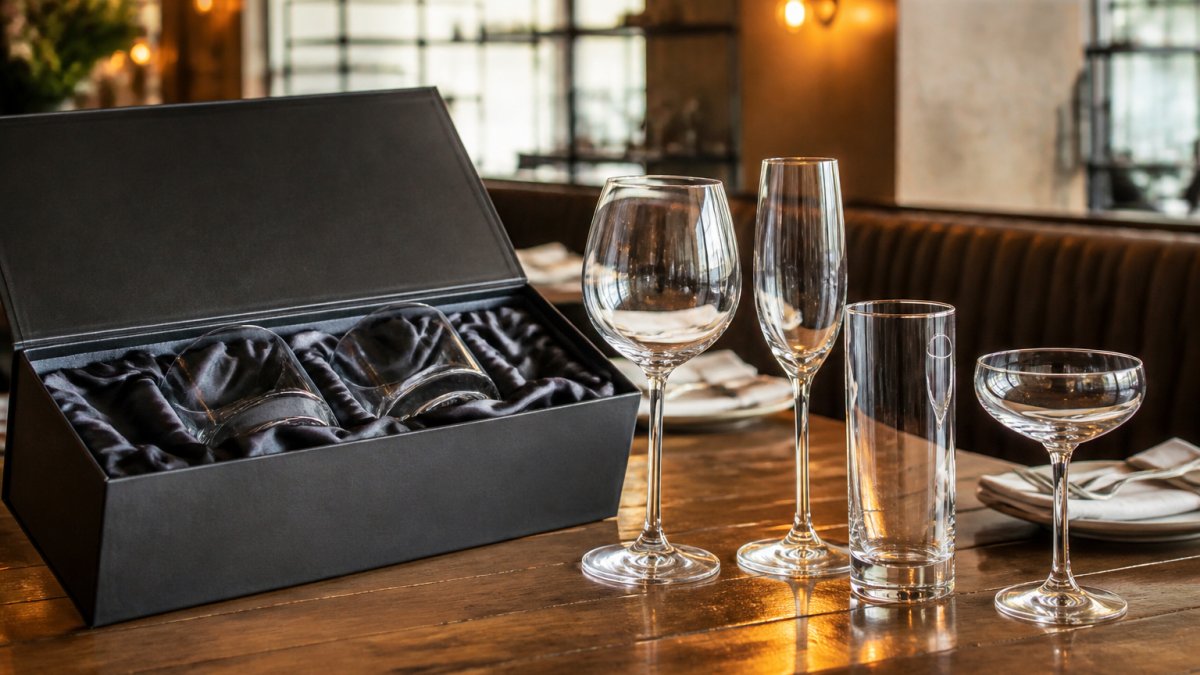
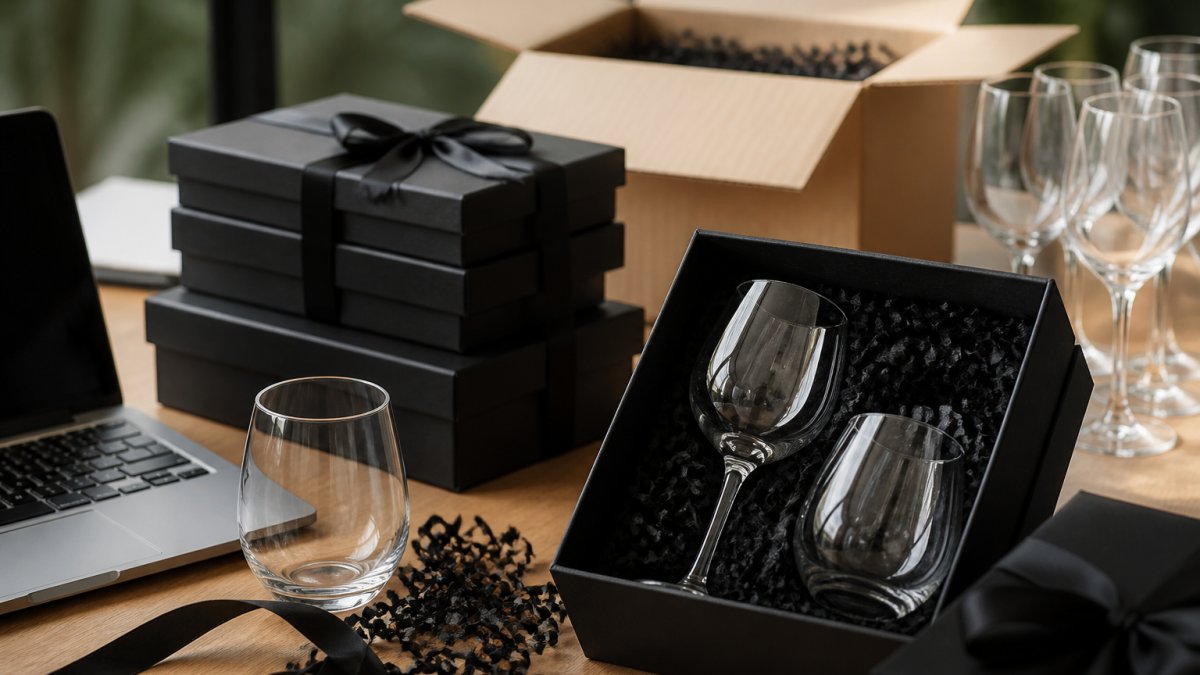
The trade-off is turnaround time. Custom etching requires tooling and setup. Our team at The Glassware Company typically requires approximately 28 working days for etched glassware orders, especially when paired with our custom manufactured gift boxing service, a premium presentation option that elevates the perceived value of your branded pieces. Bulk orders with longer lead times may qualify for faster production, but standard orders follow this timeline.
Etched vs Printed Glassware Durability in Commercial Settings
The durability difference between etched and printed glassware is stark, and it matters most in high-volume commercial environments.
Etched glassware maintains its appearance indefinitely. The mark is structural, part of the glass. After 500 commercial dishwasher cycles, an etched logo looks identical to how it looked on day one. After 2,000 cycles, still unchanged.
Printed glassware, whether screen-printed, pad-printed, or digitally printed, relies on ink or coating adhesion to the glass surface. These methods work well for short-term use or low-volume applications.
Most printed glassware begins showing visible fading after 100-150 commercial wash cycles. By 300 cycles, the degradation is obvious. Colours fade. Edges blur. Fine details disappear. For a busy bar, restaurant, or event venue, this timeline translates to 2-4 weeks of regular service before branding quality noticeably declines.
The cost difference reflects this reality. Printed glassware costs less upfront because production is faster and requires no tooling. But you're replacing stock more frequently. Etched glassware costs more initially but lasts effectively forever. The maths favours etching if you're keeping glasses in rotation for more than a few months.
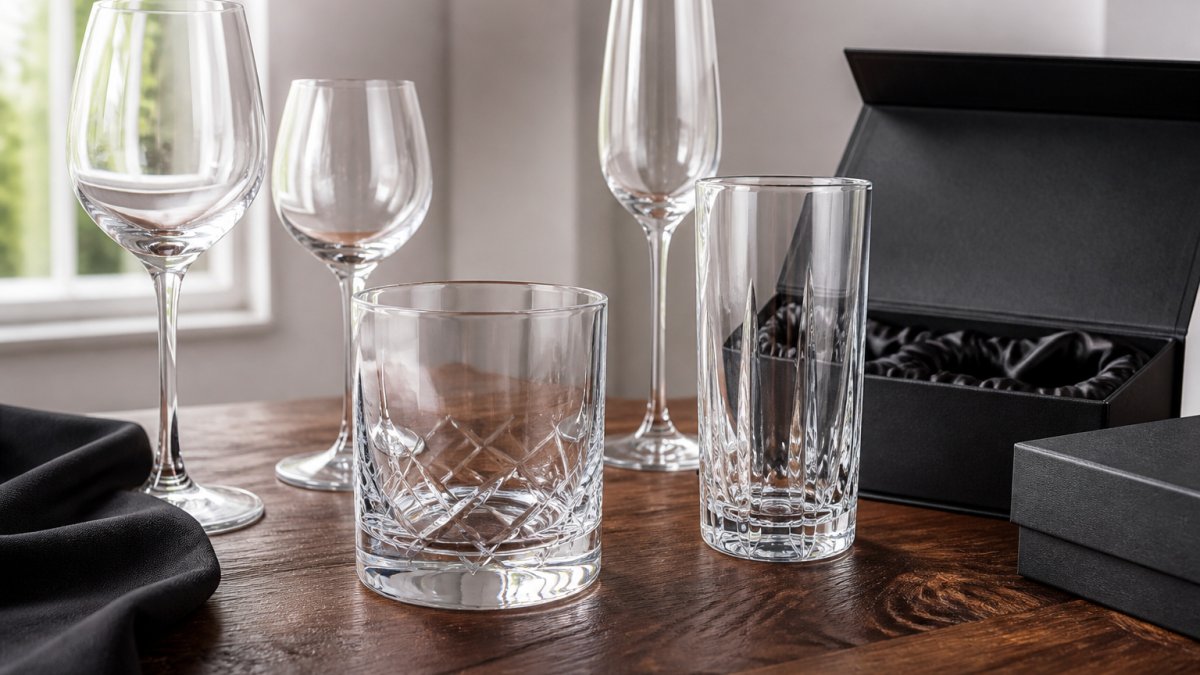
There's also a visual difference. Etched glassware has a frosted, textured appearance where the design sits. It catches light and creates depth. Printed glassware can look flatter, more like a label. Both have aesthetic merit, it depends on your brand identity and the impression you want to create.
Branding Methods: Engraving, Laser Marking, and Screen Printing
Your choice of branding method shapes both the appearance and longevity of your commercial dishwasher safe branding solution. Each technique has strengths and limitations in commercial dishwasher environments.
Engraving uses mechanical cutting tools to carve your design into the glass surface. The process is similar to etching but typically creates deeper, more pronounced marks. Engraved glassware is exceptionally durable and produces a distinctive, high-end appearance. The carved lines catch light and create shadow effects that print cannot replicate. Engraving works best for logos, text, and geometric designs. Fine photographic detail is difficult to achieve. Like etching, engraved marks survive unlimited commercial dishwasher cycles.
Laser marking uses focused laser energy to create marks on glass. The process can produce fine detail, including photographs and gradients, that engraving cannot. Laser marks are permanent and survive commercial dishwashing. However, laser marking creates a different aesthetic than etching or engraving, the mark is often darker or more opaque rather than frosted. Laser marking works well for detailed artwork and photographic logos. It's faster than etching or engraving, typically requiring 2-3 weeks for custom orders. The cost sits between printing and engraving.
Screen printing applies ink through a mesh screen onto the glass surface. It's the fastest and least expensive method. Screen printing produces vibrant colours and sharp detail. For applications that won't see heavy commercial dishwasher use, corporate gifts opened once, event glassware used a single evening, merchandise sold to customers, screen printing is practical and cost-effective. In a commercial dishwasher environment, screen-printed logos fade noticeably within weeks. This method is not recommended if your glassware will cycle through commercial washing regularly.
| Branding Method | Durability in Commercial Dishwasher | Setup Time | Best For |
|---|---|---|---|
| Etching | Permanent (1000+ cycles) | ~28 working days | High-volume hospitality, permanent brand presence |
| Engraving | Permanent (1000+ cycles) | ~28 working days | Premium gifts, distinctive aesthetic |
| Laser Marking | Permanent (1000+ cycles) | ~14-21 days | Detailed artwork, photographic logos |
| Screen Printing | Limited (100-150 cycles) | ~7-10 days | One-time events, corporate gifts, merchandise |
How to Care for Branded Glassware Between Washes
Proper handling between commercial dishwasher cycles extends the life of your branded glassware and protects your investment.
Pre-rinse glassware promptly after use. Dried residue, wine, beer, food particles, lipstick, becomes harder to remove and may require more aggressive washing. A quick rinse immediately after service prevents buildup. This is especially important for etched and engraved glassware, where residue can settle into the textured surface and make cleaning more difficult.
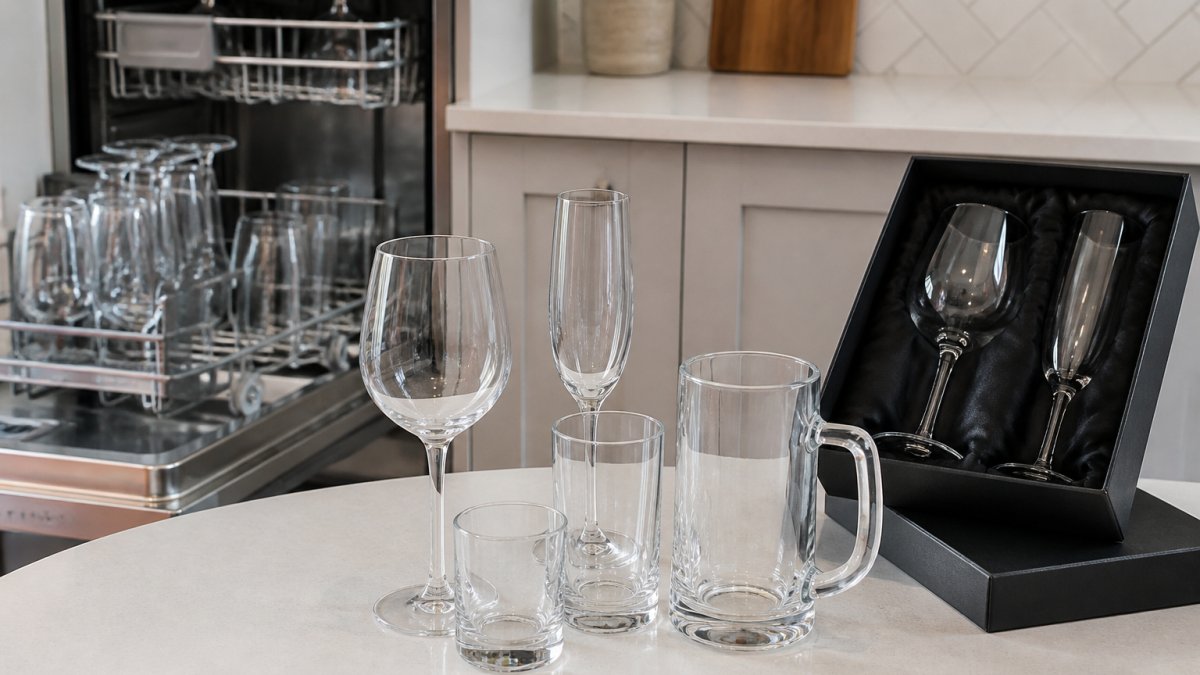
Stack glassware carefully. Avoid stacking glasses directly on top of each other, which creates pressure points and increases breakage risk. Use glass racks designed for commercial dishwashers. These racks hold glasses securely and allow water to circulate freely around the branding area.
Inspect glassware regularly for chips or cracks. A small chip can become a larger break during the commercial dishwasher cycle. Remove damaged glasses from service immediately. Broken glass contaminates other items and creates safety hazards.
For etched, engraved, or laser-marked glassware, avoid abrasive scrubbing before the dishwasher cycle. The branding is durable, but aggressive manual scrubbing with steel wool or harsh scouring pads offers no benefit and increases wear on other glass surfaces. Let the commercial dishwasher handle the cleaning.
Store branded glassware in a dry location away from direct sunlight. While etched and engraved marks won't fade from light exposure, prolonged UV exposure can affect certain types of glass coatings or decorative elements if your glassware includes additional finishes.
Commercial Glassware Washing Best Practices
Commercial dishwashers are engineered for high-volume, rapid-cycle washing. Understanding how they work helps you protect your branded glassware and maintain branding quality over time.
Most commercial dishwashers operate on one of two cycles: undercounter models for smaller operations and conveyor systems for high-volume venues. Both use high-temperature water, typically 60-75°C for wash cycles and 80°C+ for final rinse, combined with commercial-grade detergents and rinse aids. This combination removes food residue, sanitises the glassware, and creates a spot-free finish.
The high temperature is where durability matters most. Printed branding begins degrading around 60°C repeated exposure. Etched, engraved, and laser-marked glassware handle these temperatures indefinitely. If you're running a high-volume bar or restaurant, this difference becomes critical within weeks of service.
Load glassware strategically. Place glasses in racks with openings facing downward so water jets can reach all surfaces. Avoid overcrowding, which prevents water circulation and reduces cleaning effectiveness. Properly loaded glasses spend less time in the wash cycle and experience less mechanical stress.
Use appropriate detergent and rinse aid. Commercial dishwasher detergents are formulated differently than household products. They're designed to handle the volume, temperature, and mineral content of commercial water systems. Rinse aid reduces spotting and water marks on glassware. Both contribute to cleaner results and, by extension, better-looking branded glassware.
Monitor water temperature and pressure. If your dishwasher runs cooler than designed, cleaning effectiveness drops. If pressure is too high, glassware can crack or chip. Regular maintenance, cleaning filters, checking nozzles, testing temperature, keeps the machine operating at design specifications.
Choosing the Right Branding Option for Your Hospitality Business
The right commercial dishwasher safe branding method depends on three factors: how often your glassware cycles through the dishwasher, how long you want the branding to remain visible, and your budget.
If your glassware is in daily commercial dishwasher rotation, bars, restaurants, hotels, breweries, wineries, etching or engraving is the only practical choice. The upfront cost is higher, and the turnaround is longer (approximately 28 working days through The Glassware Company, or faster for some applications).
If your glassware is used occasionally or for single events, corporate gifts, conference merchandise, or wedding favours, other methods may be sufficient. These methods are faster and less expensive. The branding won't survive heavy commercial dishwashing, but it doesn't need to. The glassware serves its purpose and moves on.
If you want premium presentation, pair your etched or engraved glassware with custom manufactured gift boxing. The Glassware Company offers this service with approximately 28 working day turnaround, transforming your branded glassware into a high-impact corporate gift or retail product.
Consider batch consistency. If you reorder the same design quarterly or annually, etching and engraving offer guaranteed consistency. Your logo looks identical across every batch, produced months apart.
Think about visibility and aesthetics. Etched glassware has a distinctive frosted appearance. Engraved glassware shows carved depth. Choose the method that aligns with your brand identity and the impression you want to create.
Branded glassware is an investment in your brand presence. Whether you're outfitting a hospitality venue, creating corporate gifts, or building merchandise for your brewery or winery, choosing dishwasher safe branding that survives real-world use is essential.
Frequently Asked Questions
Is etched glassware safe to wash in a commercial dishwasher?
Yes. Etched glassware is one of the most durable commercial dishwasher safe branding options. The design is created by removing the glass surface itself, so it cannot fade, peel, or wear away during high-temperature wash cycles or repeated sanitisation. Etching bonds permanently with the substrate and withstands thousands of commercial dishwasher cycles without degradation.
Does printed glassware fade in a commercial dishwasher?
Standard screen-printed designs can fade over time in commercial settings, especially with high-temperature washes, strong detergents, and rinse aids. If durability is your priority for high-volume hospitality use, etched or engraved glassware will outlast printed alternatives.
What is the most durable way to brand glassware for commercial use?
Etching and engraving are the most durable branding methods for commercial dishwasher environments. Both permanently alter the glass surface, making them immune to chemical degradation, temperature extremes, and abrasion. Both methods survive thousands of commercial wash cycles without visible wear, making them ideal for restaurants, bars, wineries, and event venues.
How should branded glassware be washed in a commercial dishwasher?
Place etched or engraved glassware in standard commercial dishwasher racks, ensuring glasses do not touch during the cycle. Use appropriate detergent and rinse aid for your water hardness. Avoid overloading, which can cause chipping. Most commercial dishwashers operate at 60-65°C wash temperature and 82°C rinse temperature; etched and engraved designs withstand these temperatures indefinitely. Inspect glassware regularly for chips or cracks that could harbour bacteria.