 how-to
Budgeting for Custom Branded Glassware for New Restaurants
Table of Contents
- Why Branded Glassware Is a Smart Investment for New Restaurants
- Your Restaurant Glassware Checklist: What to Order Before Opening
- How to Calculate Restaurant Glassware Order Quantities
- Etched vs Printed Glassware: Which Branding Method Fits Your Budget?
- Custom Branded Glassware Lead Time: Planning Your Order Timeline
- Building Your Glassware Budget: Costs, Quantities, and Value
- Presentation and Packaging: Custom Gift Boxing for Your Branded Glassware
- Conclusion: Setting Your Restaurant Up for Success
- Frequently Asked Questions
Why Branded Glassware Is a Smart Investment for New Restaurants
Budgeting for custom branded glassware for new restaurants is one of the few startup costs that pays you back every service.
Most new venues learn late that glassware is not a one-off purchase, it is a running cost with a replacement rate.
Branded glassware is drinkware permanently marked with your venue's logo or artwork, usually by etching or printing.
Your Restaurant Glassware Checklist: What to Order Before Opening
A restaurant glassware checklist lists every glass your menu needs, grouped by drink type and matched to a quantity, so you don't buy glasses you have no drink for.
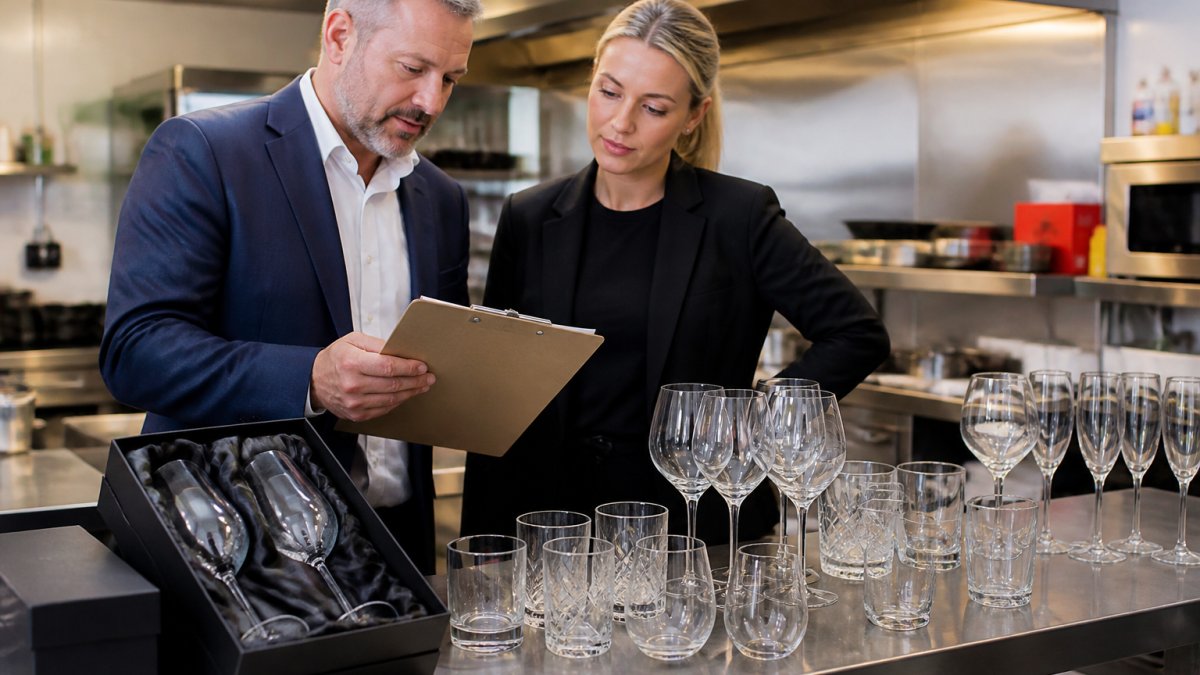
Start with the menu, not the catalogue.
Essential Glass Types for a New Restaurant
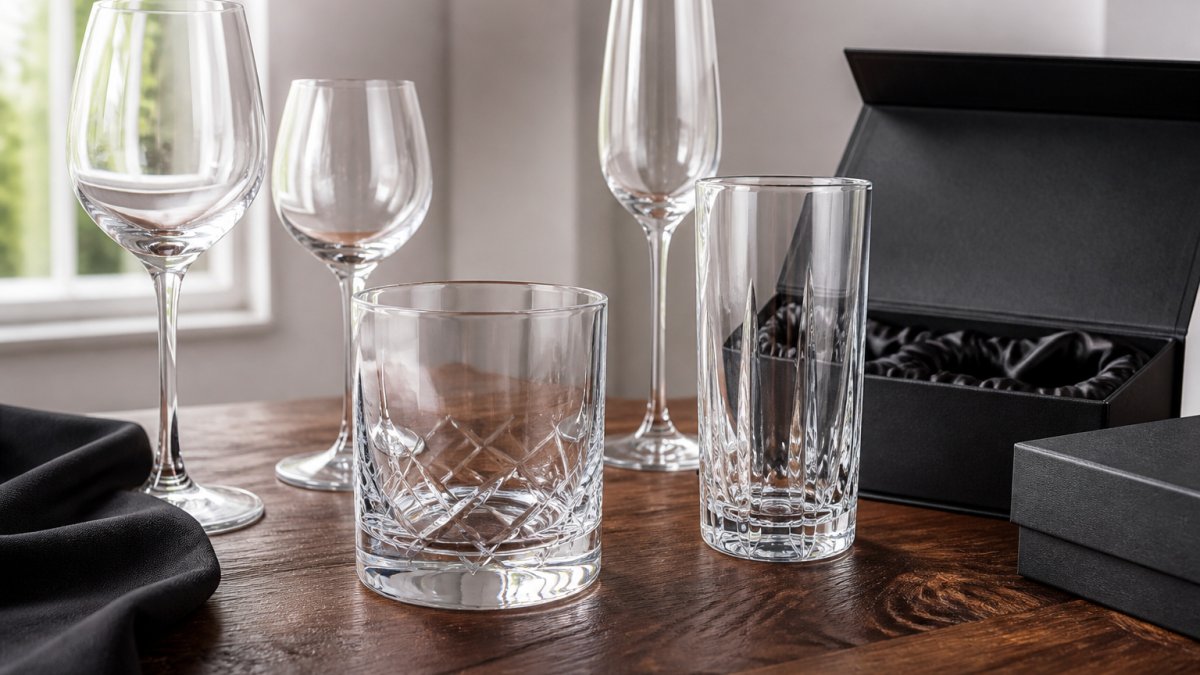
Most new venues open with six to eight core shapes. Fewer shapes means simpler ordering and easier storage.
- Tumblers: water, soft drinks, spirits, highballs
- Wine glasses: red, white, sparkling
- Beer glasses: schooners, pints, tasting glasses
- Coupe or martini: cocktails and sparkling serves
Add specialty shapes only when a signature drink demands one.
Matching Glassware to Your Menu and Drink List
Match each glass to a specific drink so nothing sits unused: a wine bar needs more stemware, a brewery taproom needs steins and tasting paddles. The crossover glass is what most guides miss, one well-chosen tumbler can cover water, spirits, and soft drinks, cutting your opening order and storage needs.
How to Calculate Restaurant Glassware Order Quantities
Restaurant glassware order quantities are calculated by seat count, drink type, and a replacement buffer. The formula:
- Count your seats
- Multiply by 2.5 to 3 for each core glass type
- Add a replacement buffer of 10 to 15 per cent
- Round up to the supplier's pack size
A 60-seat venue might order around 150 to 180 tumblers and a similar count of wine glasses. Specialty glasses need fewer, often one per two seats.
Etched vs Printed Glassware: Which Branding Method Fits Your Budget?
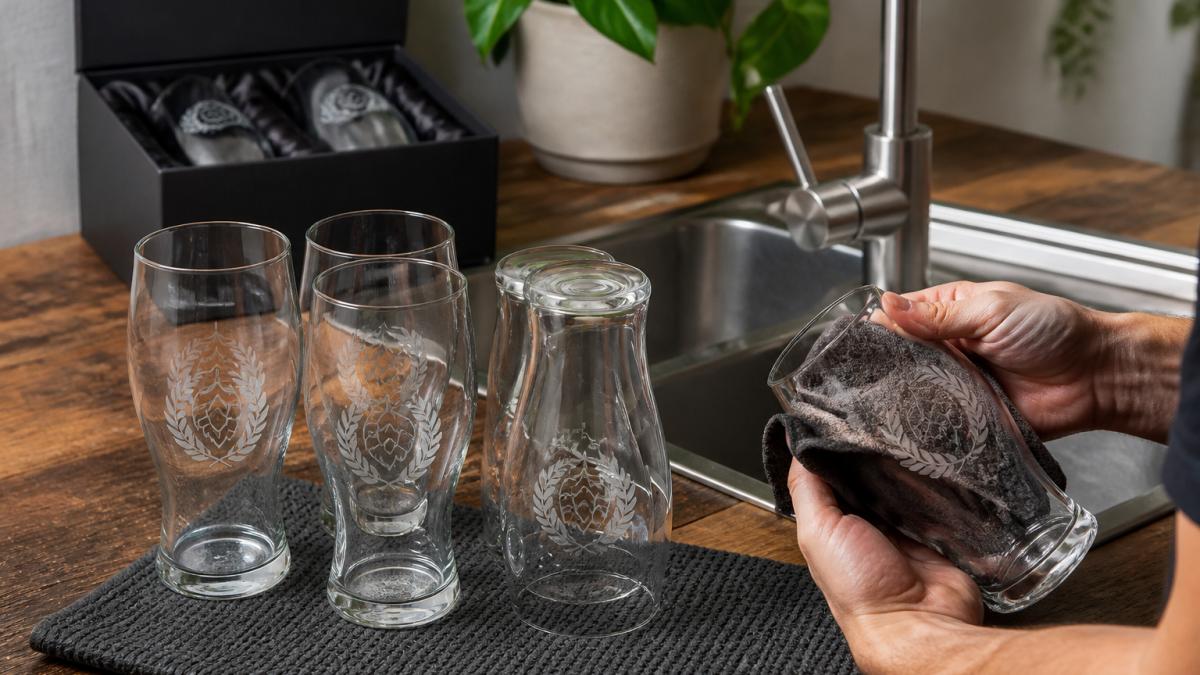
Etched glassware is marked by cutting the design into the glass surface; printed glassware uses applied ink or enamel. Etching lasts far longer and suits commercial dishwashing better, that durability difference is the whole decision.
| Feature | Etched | Printed |
|---|---|---|
| Durability | Permanent, resists washing | Can wear with heavy use |
| Look | Subtle, frosted, premium | Bold, full colour |
| Best for | Restaurants, breweries, wineries | Short-run events, promotions |
| Cost per unit | Higher setup, strong value at volume | Lower setup, higher unit cost |
| Reorder consistency | Very consistent | Colour can shift between runs |
For a venue washing glasses daily, etching is the safer long-term spend. Printing suits a one-off event where colour matters more than lifespan.
Custom Branded Glassware Lead Time: Planning Your Order Timeline
Custom branded glassware lead time is the total time from approved artwork to delivered glasses, covering proofing, production, and delivery, so it should drive your whole order schedule.
Six weeks is workable for most orders; larger runs, custom shapes, and gift boxing need more. Our custom manufactured gift boxing for etched and branded glassware runs on approximately 28 working days, so if you are ordering boxing alongside your glasses, start earlier than for glassware alone.
A Step-by-Step Procurement Workflow
A workflow is more useful than a timeline because it tells you what to do at each stage, not just when.
- Lock the menu and drink list. Glassware follows the menu; every glass should map to a drink you serve.
- Build the glassware checklist. Group by drink type, match each glass to a serve, and note quantities using the seat-count formula plus buffer.
- Request quotes from two or three suppliers. Ask for the same specification from each so numbers are comparable.
- Compare quotes on more than price. Use the checklist below.
- Order samples. A sample in your hand tells you more about weight, rim, and balance than any catalogue photo.
- Approve artwork and proof. Check logo size, placement, and colour against the glass, not a screen.
- Place the production order. Confirm quantities, method, and packaging in writing.
- Book delivery before opening week. Leave a buffer so you can unpack, check, and store.
Quote-Comparison Checklist
When you compare supplier quotes, ask each supplier the same questions:
- Unit cost at your quantity, and whether a small change hits a lower price band
- Setup or artwork fees, one-off or per reorder?
- Minimum order quantity, per glass type, method, and packaging option
- Lead time, from artwork approval, not enquiry
A quote that looks cheapest per unit can lose on setup, freight, or minimums. Compare total landed cost for your full opening order, not the headline unit price.
Minimums, Lead Times, and Reorder Terms
Minimum order quantities are where new restaurants get caught: a supplier may have a low minimum for standard tumblers but a much higher one for specialty shapes or a specific decoration method.
Lead times vary by method, etching and printing have different production windows, and gift boxing adds its own. Build the longest lead time into your schedule.
Reorder terms matter more than most new operators realise. Ask whether your artwork file is held on file, whether the reorder price is locked, and how long a reorder takes.
Avoiding Opening Delays
The fastest way to open with mismatched glassware is to start during fit-out week. Start the moment your menu is locked: confirm the proof in writing, book delivery before opening week, and keep buffer stock unopened so a broken glass never becomes a service problem. Plan the workflow, compare quotes on total cost, and confirm reorder terms before you sign.
Building Your Glassware Budget: Costs, Quantities, and Value
A glassware budget for a new restaurant is not one number. It is four cost lines that behave differently, and treating them as one is how venues over-order dead stock or run short in week two:
- The glasses themselves, unit cost multiplied by opening quantity
- Branding, setup plus per-unit decoration, which varies by method
- Replacement stock, the buffer you hold unopened from day one
- Presentation packaging, optional, but a real line if you sell or gift glassware
We do not publish fixed prices because every order differs by quantity, glass type, and branding method. What we can give you is the structure, the trade-offs, and the questions to ask a supplier so your quote is comparable.
What Affects the Cost of Custom Branded Glassware
Several factors move the cost per unit up or down:
- Quantity: larger runs lower the cost per unit, but only within a pack-size band, ordering 140 when the next price break is 144 wastes the saving
- Glass type: specialty shapes and stemware cost more than standard tumblers, and thin-rim glass costs more again
- Branding method: etching and printing carry different setup costs and minimum order quantities
- Artwork complexity: detailed logos with fine lines or multiple colours take more work to reproduce consistently
- Packaging: gift boxing adds a premium presentation line, priced separately from the glass
A common pattern is that the glass unit cost is the smallest part of the branded cost. Setup and decoration often dominate at low volumes, which is why ordering your full opening quantity in one run is usually cheaper per unit than splitting the order.
Decoration Methods and Their Cost Trade-offs
Before you compare quotes, know which method you are asking for, because the trade-offs are not just price:
- Etching (sandblasting or laser): permanent mark cut into the surface. Higher setup, strong value at volume, very consistent on reorder. Best for daily service.
- Screen printing: applied ink, bold and full colour. Lower setup, but can wear under heavy commercial dishwashing and colour can shift between runs.
- Decals and enamel: fired-on decoration, good colour, but minimum order quantities are often higher and lead times longer.
- Engraving: similar durability to etching, often used for premium or gift pieces.
Planning for Breakage and Replacement Stock
Breakage is normal in hospitality, so budget for it from day one. A replacement buffer of 10 to 15 per cent keeps service running while you reorder.
Hold that buffer as unopened stock, and set a reorder trigger: when stock drops below your buffer, place the next order so lead time never catches you short. Your reorder should match the original specification exactly, same glass, same method, same artwork file, so new glasses sit alongside old without a visible difference.
Presentation Packaging as a Budget Line
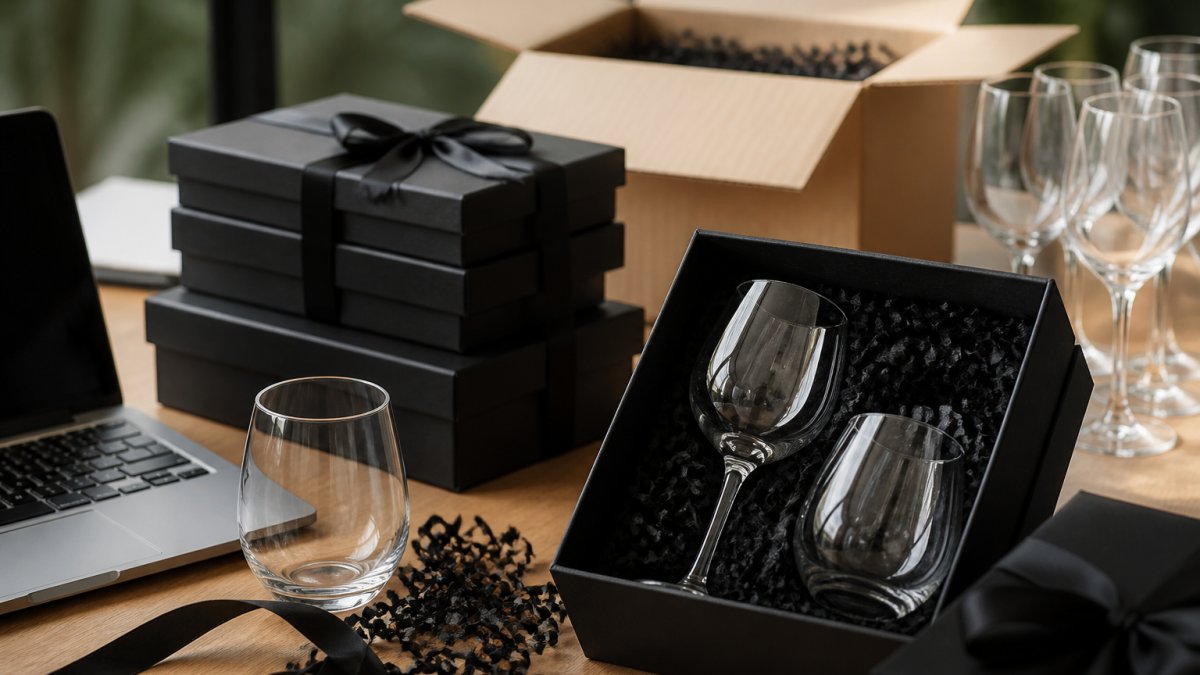
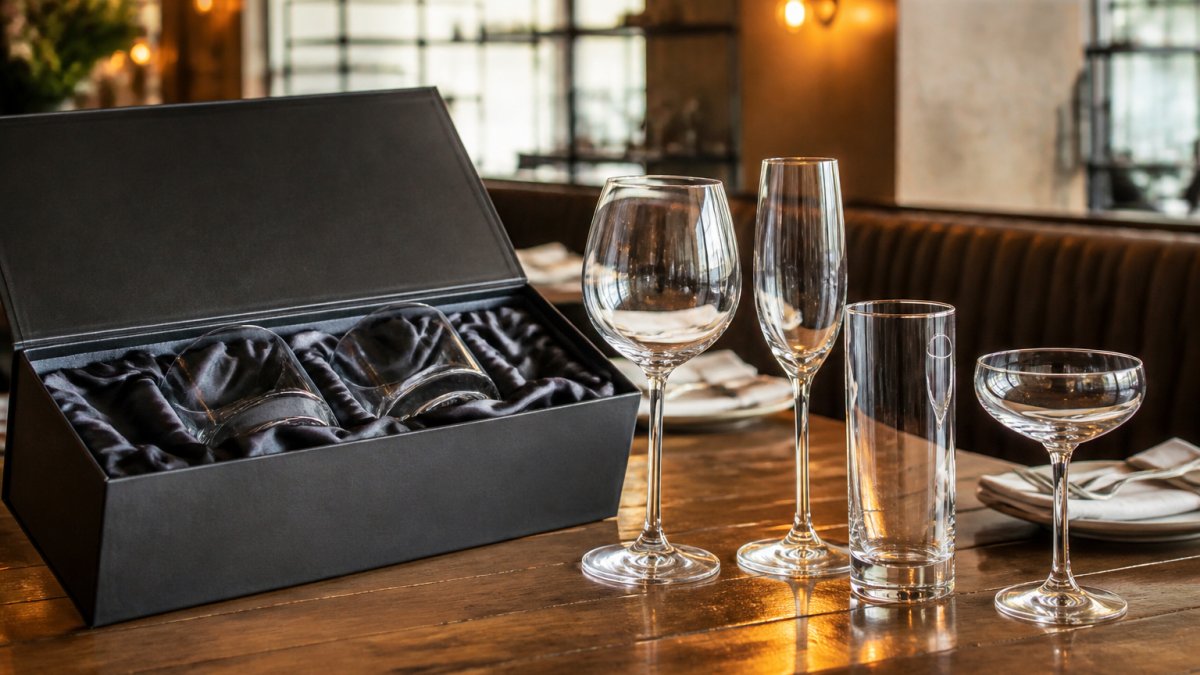
If you plan to sell or gift branded glassware, presentation packaging belongs in the budget from the start. We offer custom manufactured gift boxing for etched and branded glassware, which lifts the whole product into something clients keep, most valuable for corporate orders, cellar door sales, and event gifting, where a branded glass in a custom box reads as a considered gift rather than a promotional freebie.
Return on Investment: What Branded Glassware Actually Earns
Glassware is not décor, it is a marketing asset that works every service. A branded glass travels to every table, toast, and guest photo, and that repeat exposure is the return.
Treat the budget as an investment with a replacement rate, not a one-off purchase. Plan the four lines, hold the buffer, and the glassware quietly builds brand recognition for years.
Presentation and Packaging: Custom Gift Boxing for Your Branded Glassware
Presentation packaging turns a glass into a gift. We offer custom manufactured gift boxing for etched and branded glassware, which lifts the whole product into something clients keep.
This matters most for corporate orders, cellar door sales, and event gifting. A branded glass in a custom box reads as a considered gift, not a promotional freebie.
The turnaround for this service is approximately 28 working days, so build it into your timeline alongside your glass order.
Conclusion: Setting Your Restaurant Up for Success
The hard part of glassware budgeting is not the money. It is guessing quantities, timelines, and branding methods before you have served a single guest. Plan those three well and the rest follows.
At The Glassware Company, we make that planning simpler.
Get started with The Glassware Company and request an online quote for your branded glassware today.
Frequently Asked Questions
How much glassware should a new restaurant order?
Plan for roughly two to three times your seating capacity per glass type, then add 15-20% for breakage. A 60-seat restaurant typically needs 120-180 glasses per type. Factor in replacement stock from day one. Ordering in larger quantities often reduces the cost per unit, and having spares on hand prevents rushed reorders that can disrupt service during busy periods.
Is etched or printed branding better for restaurant glassware?
Etched glassware uses a permanent mark that won't fade, peel, or wash off, making it ideal for daily commercial dishwasher use. Printed glassware can be more cost-effective for short-term events or limited runs, but the design may wear over time. For restaurants planning long-term brand presence, etching usually offers better durability and a more premium look.
What affects the cost of custom branded glassware?
Key factors include glass type and size, branding method (etching or printing), order quantity, number of colours or design complexity, and packaging. Custom gift boxing adds a premium presentation option. Pricing depends on quantity, dates, and delivery, so request a quote for current rates. Larger orders typically lower the cost per unit.
When should a new restaurant order custom glassware before opening?
Start the process at least eight to ten weeks before opening. Allow time for artwork approval, production, and delivery. Custom branded glassware lead time varies by complexity and quantity. If you need custom gift boxing, factor in approximately 28 working days for that service. Rush orders may be possible but confirm availability and any additional costs with your supplier early.