 how-to
Print Durability on Custom Glasses: A How-To Guide
Table of Contents
- Understanding Print Durability on Custom Glasses
- Etched vs Printed Glassware: Which Lasts Longer
- Selecting Materials and Print Methods for Maximum Durability
- Glassware Print Durability Testing Before Large Orders
- Dishwasher Safe Custom Glassware: Specifications and Standards
- Post-Processing and Protective Coatings for Durability
- Care Instructions for Printed Glassware: Maintenance and Longevity
- Recognising Print Failure and Long-Term Wear Patterns
- Frequently Asked Questions
Last Updated: October 10, 2026
Understanding Print Durability on Custom Glasses
Print durability custom glasses refers to how well etched or engraved designs hold up to washing, handling, and daily use. When you invest in custom glassware for corporate gifts or events, you need that artwork to last, not fade, chip, or wear away.
Durability depends on material choice, print method, and protective coating. At The Glassware Company, we've worked with corporate clients, breweries, and event venues with years of industry experience.
Most people assume all etching and printing methods are equivalent. They're not. Some produce durable finishes that survive commercial dishwashers; others fail quickly under heat and abrasion.
Etched vs Printed Glassware: Which Lasts Longer
Etching and printing are two fundamentally different approaches to decorating glassware, and their durability profiles differ significantly.
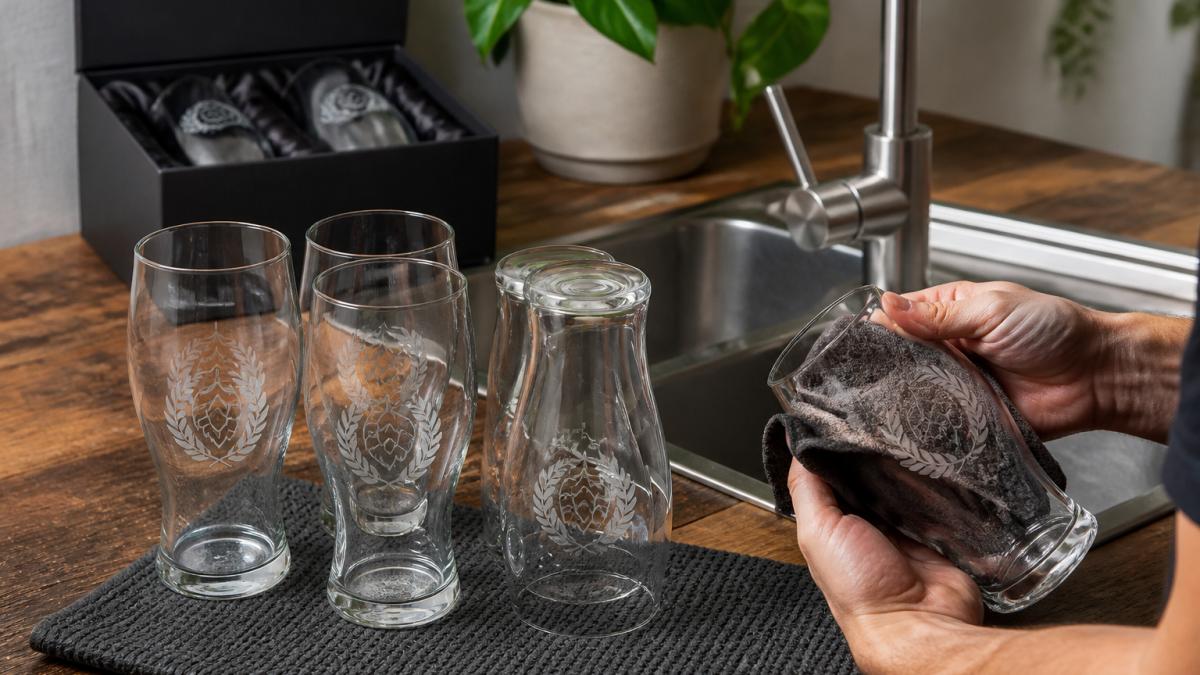
Etching cuts into the glass surface using acid or abrasive methods, making the design part of the glass structure itself. Because it's physically carved in, it cannot fade or wear away. Etched designs survive dishwashers, hot water, and decades of use without degradation.
Printing applies ink or coatings to the glass surface. The design sits on top rather than being part of the glass, so it can fade under UV exposure, heat stress, and repeated washing, especially in commercial dishwashers.
For durability, etching wins. A printed design may last 6-18 months with regular use. An etched design lasts indefinitely.
Etching has limitations: fine details and colour aren't possible with traditional etching.
Selecting Materials and Print Methods for Maximum Durability
Choose etching for functional drinkware used daily in commercial kitchens.
Print Orientation and Infill Density
If you're working with 3D-printed frame components or custom glass inserts, orientation and infill affect durability.
Print orientation determines how layers bond together. Printing vertically (standing the object upright) creates stronger layer adhesion than printing horizontally. Vertical orientation also reduces the number of support structures needed, which means fewer weak points where supports were removed.
Infill density controls how much material fills the interior of a printed object. Higher infill (80-100%) produces stronger, more rigid parts. Lower infill (20-40%) saves material and printing time but creates brittle parts prone to cracking. For glassware components, aim for 60-80% infill as a balance between strength and material efficiency. Selecting the correct internal structure remains essential because improper settings are among the primary causes of print cracking that compromise the long-term integrity of your custom glassware.
Wall thickness is critical. Thin walls (under 2mm) crack easily. Walls thicker than 4mm are unnecessarily heavy. A 3mm wall thickness offers good strength without excess weight.
Layer Adhesion and Wall Thickness
Layer adhesion is how well each printed layer bonds to the one below it. Poor adhesion creates weak planes where the print can split or delaminate.
Adhesion improves with:
- Slower print speeds (allows each layer to fuse properly)
- Higher nozzle temperature (within material limits)
- Proper bed levelling and adhesion
- Consistent filament quality
Wall thickness works hand-in-hand with infill. A thick wall with low infill is stronger than a thin wall with high infill. For functional glassware, 3-4mm walls with 70% infill is a proven combination.
Glassware Print Durability Testing Before Large Orders
Before committing to large production runs, test your print durability custom glasses design and finish method at small scale. Create a test protocol with clear pass/fail criteria and document everything with photos. This baseline ensures consistency across future orders.
Dishwasher cycle test (most critical for functional glassware):
- Run test pieces through 20 full dishwasher cycles at 65°C with standard detergent.
- Inspect after cycles 5, 10, 15, and 20.
- Pass criteria: No visible fading, coating peeling, or colour loss exceeding 5%.
- Fail criteria: Colour loss over 10%, coating separation, or visible cracks.
- If your test fails, adjust your coating system or switch to etching before production.
Thermal shock test (simulates rapid temperature changes):
- Move test pieces between hot water (60°C) and cold water (5°C) 10 times, allowing 2-3 minutes between transfers.
- Pass criteria: No visible cracks, crazing, or coating separation.
- Fail criteria: Any visible cracking or coating separation.
Abrasion test (simulates handling and washing wear):
- Rub the printed surface with a soft microfibre cloth and mild detergent 50 times in circular motions.
- Pass criteria: No visible colour loss, design remains sharp.
- Fail criteria: Visible colour fading, coating worn through, or blurred design edges.
UV exposure test (for outdoor or sunlit applications):
- Place test samples in direct sunlight or under a UV lamp (UVA 365nm) for 30 days, 8 hours per day, with an unexposed control sample for comparison.
- Pass criteria: Colour shift less than 10%, no visible fading or yellowing.
- Fail criteria: Colour shift over 15%, yellowing, or significant fading.
Impact and flex test (for glassware that will be handled or stacked):
- Drop test pieces from 30cm onto a hard surface 3 times.
- Pass criteria: No cracks, chips, or coating damage.
- Fail criteria: Any cracking, chipping, or coating separation.
Documentation and decision-making:
- Photograph samples before and after each test phase.
- Record date, test conditions, and observations in a spreadsheet.
- If any test fails, identify the cause (wrong coating, insufficient thickness, poor surface prep, unsuitable glass) and adjust one variable at a time before retesting.
- Once all tests pass, use that specification for all future production runs.
- Test at least 3 identical samples per test to identify inconsistencies.
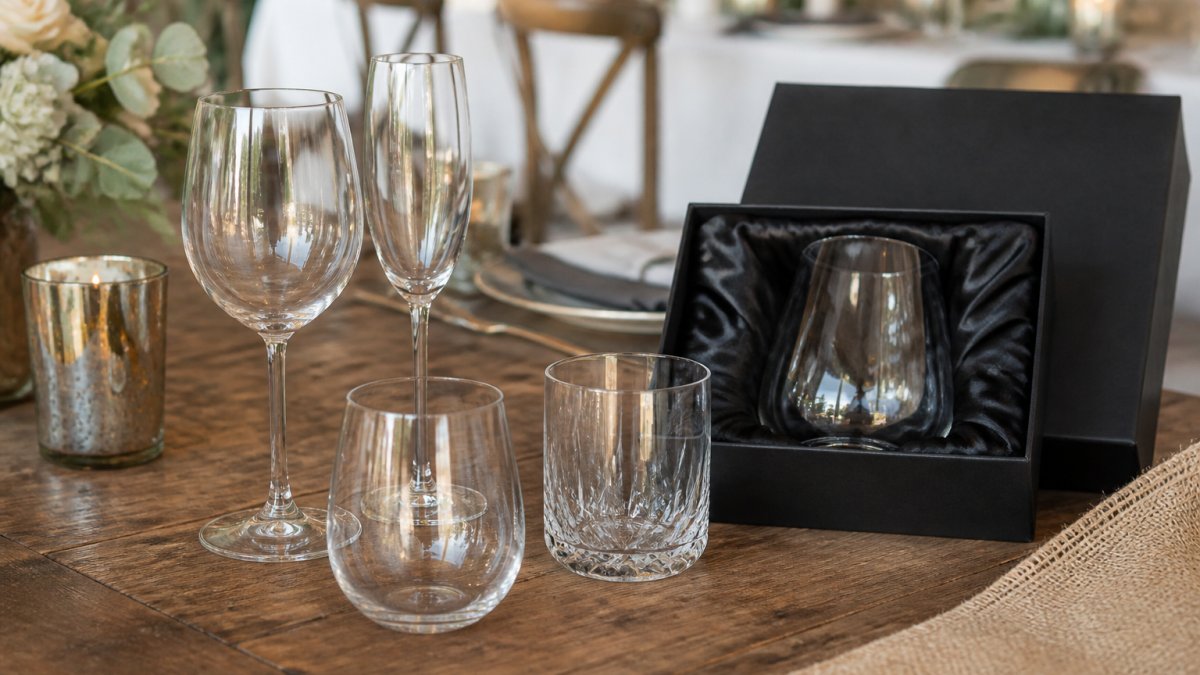
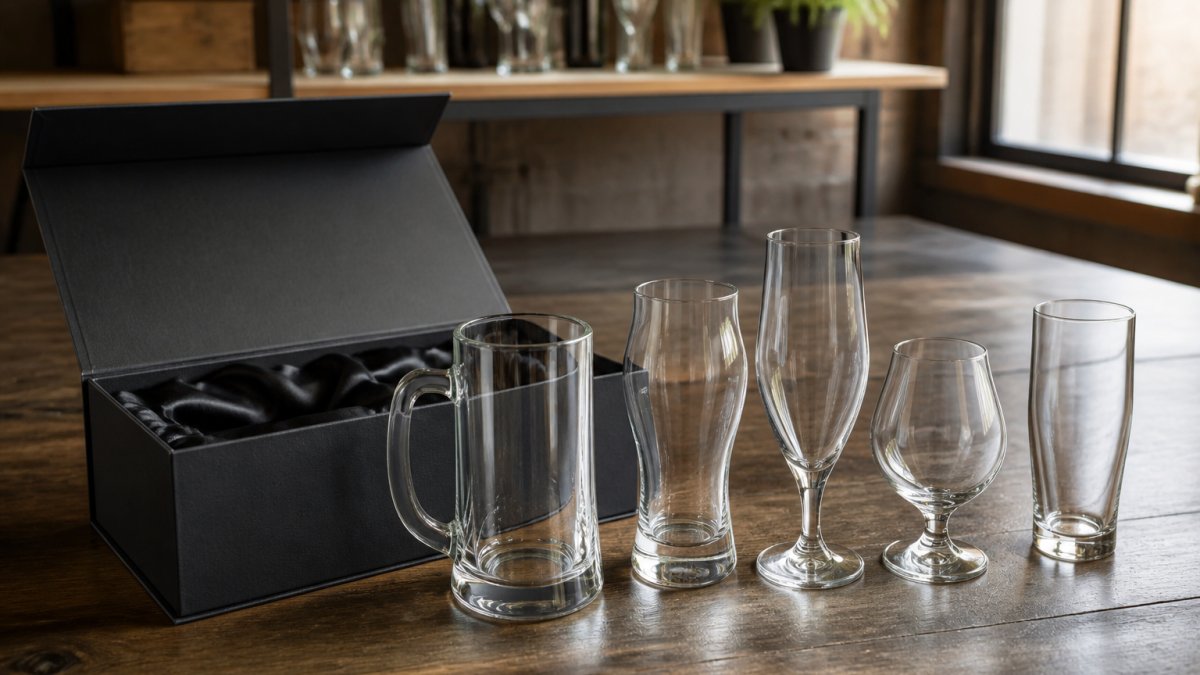
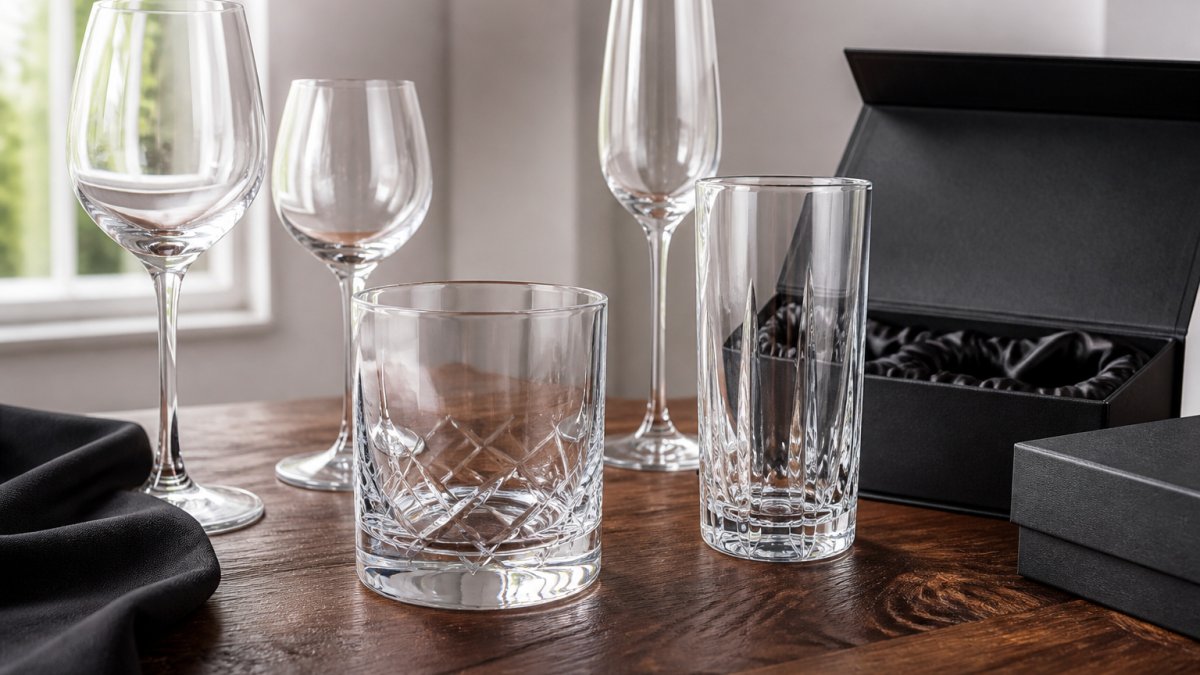
For premium presentation and protection during transit, consider our custom manufactured gift boxing service for etched and branded glassware. With approximately 28 working days turnaround, this option provides professional packaging that shields your tested and validated glassware during delivery, ensuring the printed or etched finish arrives in perfect condition and ready to impress.
Dishwasher Safe Custom Glassware: Specifications and Standards
Not all custom glassware is dishwasher safe. Dishwasher-safe glassware must withstand 65°C water, alkaline detergents, multiple cycles, and thermal cycling without fading or cracking. Etched designs are inherently dishwasher safe. For commercial applications, confirm dishwasher safety with your supplier before ordering.
Post-Processing and Protective Coatings for Durability
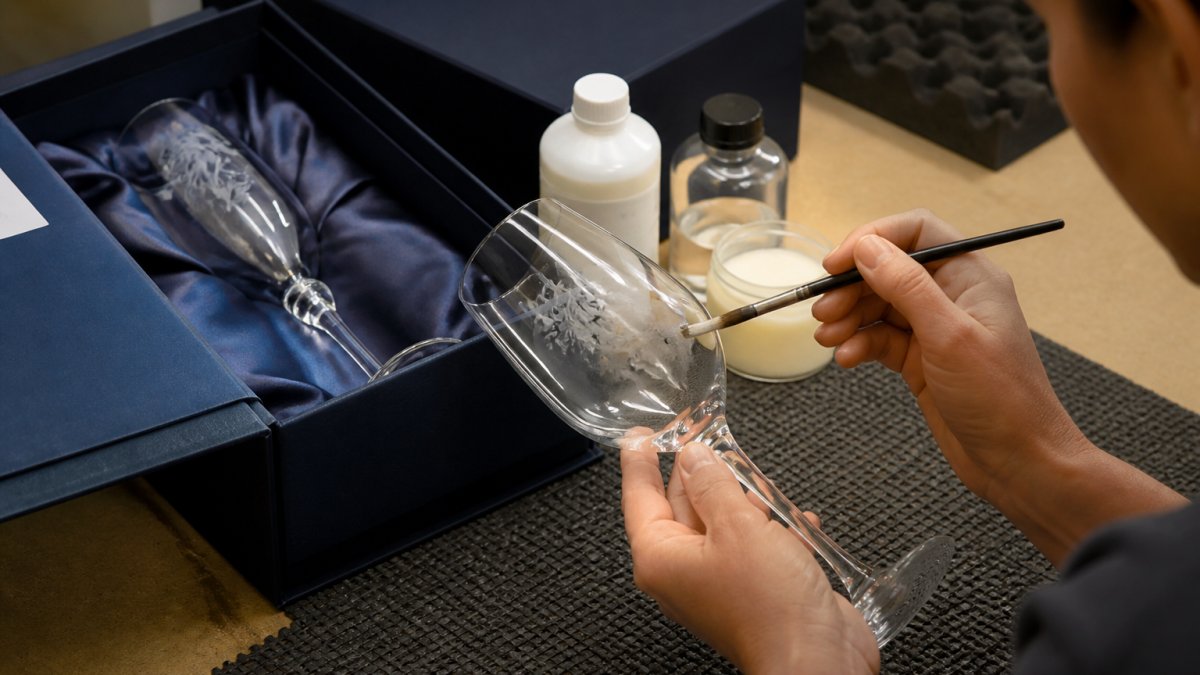
For premium presentation, consider our custom manufactured gift boxing service for etched and branded glassware. With approximately 28 working days turnaround, this option adds professional packaging that protects your glassware during transit and delivery, ensuring the printed or etched finish arrives in perfect condition.
Care Instructions for Printed Glassware: Maintenance and Longevity
How your clients care for the glassware directly affects how long the design lasts. Provide clear instructions.
Best practices for printed glassware:
- Hand wash when possible, especially for the first month after delivery
- Use soft cloths and avoid abrasive scrubbers
- Wash in warm (not hot) water with mild detergent
- Avoid prolonged soaking, which can soften protective coatings
- Air dry or pat dry with soft cloth
- Store away from direct sunlight to prevent UV fading
For dishwasher use:
- Place on the top rack (cooler zone)
- Use gentle or eco cycle when available
- Avoid pre-rinsing with hot water (thermal shock)
- Skip heated dry cycles
Storage:
- Keep in a cool, dry place
- Avoid stacking without protective padding
- Protect from dust and direct sunlight
Include these instructions with every order. Many print failures occur not because the coating is weak, but because the user exposes it to conditions it wasn't designed for.
Recognising Print Failure and Long-Term Wear Patterns
Document failures with photos and notes on how the glassware was used. This information helps your supplier improve future batches.
Print durability on custom glasses isn't complicated once you understand the variables: material choice, finish method, and user care. The most common mistake is assuming all etching methods are equivalent, they're not.
If you're sourcing custom glassware for corporate gifts, events, or hospitality use, start by deciding whether etching fits your design and budget. Test at small scale before committing to large orders.
The Glassware Company has years of experience matching designs to the right finish methods and materials. We work with you to ensure your custom glassware not only looks striking on arrival, but holds up through years of real-world use. Get a quote today and let's discuss which durability approach is right for your project.
Frequently Asked Questions
How do you make a logo last on a glass?
Durability depends on the print method and post-processing. Etched designs are generally more permanent because they're mechanically removed from the surface. Always request durability testing samples before a large order to confirm the etching will withstand your intended use.
Does printing on glassware withstand dishwasher use?
Dishwasher safe custom glassware is possible, but depends on the print method and protective finish. High-temperature dishwasher cycles (65-70°C) can fade or damage unprotected prints over time. Ask your supplier whether their glassware is dishwasher safe and at what temperature setting. Many suppliers recommend hand-washing pieces to extend their life, or using a gentle cycle if machine washing is necessary. Etched designs are inherently dishwasher safe because they're part of the glass itself.
What information should I give a supplier to ensure a durable glass print?
Provide clear details about your intended use: frequency of washing, whether dishwasher or hand-wash only, exposure to sunlight, and any chemicals or abrasive cleaning methods involved. Share your design file in a high-resolution format (vector files for 2D graphics). Ask about their etching durability testing process. Request samples for durability testing before committing to a large order. Confirm the expected turnaround time. If you're ordering etched or branded glassware with custom gift boxing, mention that as well so packaging is suited to your delivery timeline.
How can I prevent a logo on glassware from fading or scratching?
Store glassware away from direct sunlight when not in use. Hand-wash rather than machine-wash if possible, using soft cloths and mild detergent. Avoid abrasive scrubbers or harsh chemicals that can scratch the surface. Stack glasses with protective padding between them to prevent friction damage. For commercial or high-use settings, consider etched or engraved designs, as they're mechanically bonded to the glass and far more resistant to fading and scratching.