 how-to
How to Maintain Custom Printed Beer Glasses
Table of Contents
- Why Custom Printed Beer Glasses Need a Different Care Routine
- Printing, Etching and Engraving: What Your Decoration Can Take
- How to Clean Printed Beer Glasses Without Damaging the Design
- Is Dishwasher Safe Branded Glassware Actually a Safe Bet?
- How to Remove Beer Glass Residue and Stuck-On Debris
- How to Store Beer Glasses to Prevent Chips, Cloudiness and Breakage
- A Step-by-Step Maintenance Routine for Taprooms and Events
- Troubleshooting Fading, Peeling and Cloudy Glass
- Frequently Asked Questions
Last Updated: October 8, 2026
Why Custom Printed Beer Glasses Need a Different Care Routine
Custom printed beer glasses are glassware decorated with your logo or artwork, and they need gentler handling than plain glass because heat and harsh chemicals attack the print itself. At The Glassware Company, we supply etched and engraved glassware to corporate clients, wineries, breweries, and hospitality events, and the care question comes up in almost every order. A standard glass can survive years of hot dishwasher cycles. A decorated one often cannot.
The reason is simple. Decoration sits on or just below the glass surface. Strong detergent, high heat and constant rubbing wear that decoration down. Plain glass has nothing to lose. Yours does.
Printing, Etching and Engraving: What Your Decoration Can Take
Etching and engraving cut into the glass itself, while printing sits on the surface, so each type handles washing differently. This distinction decides almost everything about how you clean and store your glassware, yet most care advice treats every decorated glass as if it were the same. It is not.
Here is how the main decoration methods compare, and what each one means for your wash routine:
| Method | How It Works | Durability | Dishwasher Risk | Care Implication |
|---|---|---|---|---|
| Screen printing | Ink is applied and cured onto the surface | Good with careful washing | Moderate to high | Handwash preferred; avoid hot cycles and abrasives |
| Digital or transfer printing | Ink layer bonded to the surface | Moderate | High | Treat as fragile; handwash only where possible |
| Etching | Surface marked with a subtle, frosted finish using a chemical or abrasive process | Very high | Low | Tolerates warmer washing; still avoid abrasives |
| Engraving | Design cut into the glass with a wheel or laser | Very high | Low | Most forgiving; inspect for chips at the cut edges |
The mechanism matters more than the label. Etching and engraving remove or displace glass rather than adding to it, so there is no separate layer to fail. The design is the glass.
A common mistake is treating every decorated glass the same. A screen-printed promotional glass and an engraved stein are not equals in the wash. If you are unsure which type you have, check with your supplier before the first wash.
How to Tell Which Decoration You Have
Run a fingernail lightly across the design. If the surface feels smooth and the design sits flush or slightly recessed, it is etched or engraved. Hold the glass up to a light: etched designs usually have a soft, frosted appearance, while engraved designs show crisp cut lines with a slight depth.
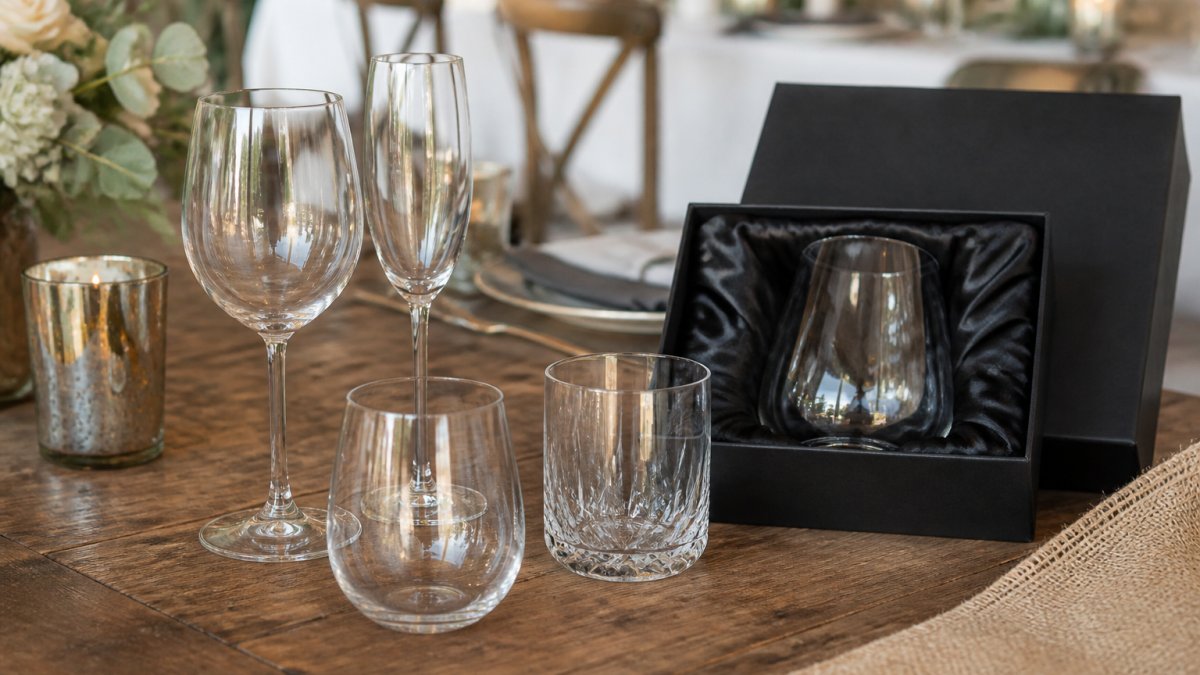
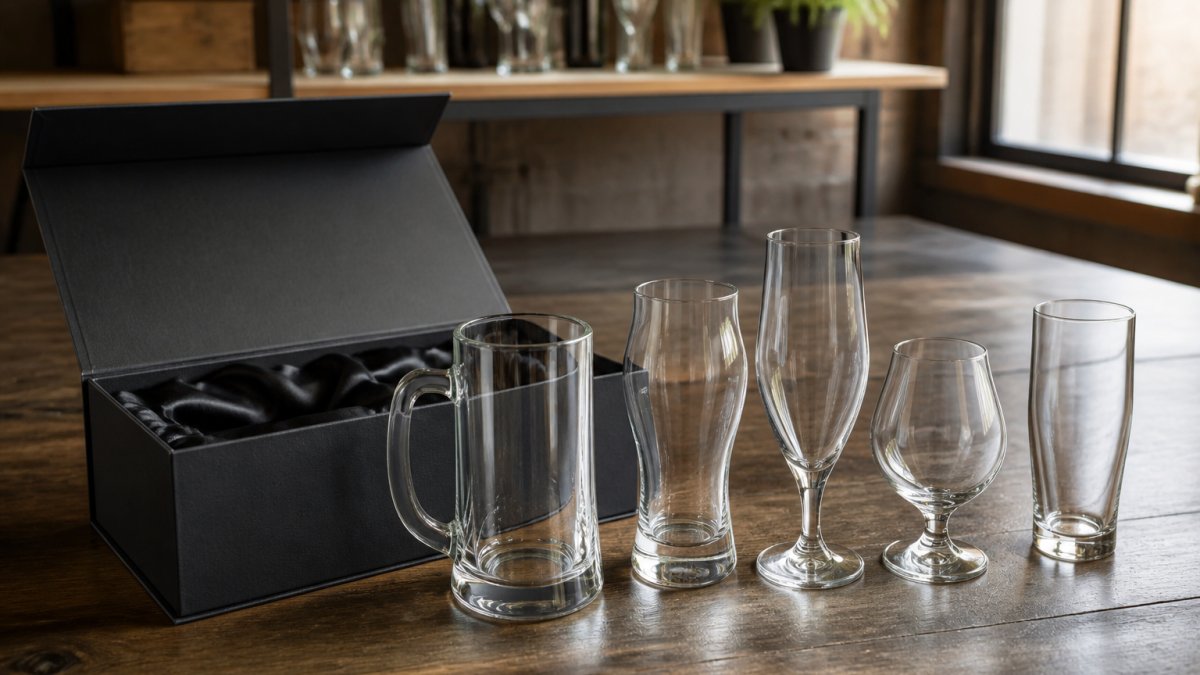
This quick check takes seconds and tells you whether the glass can survive an occasional cool dishwasher cycle. If the glassware is destined for a client or guest, our custom manufactured gift boxing service for etched and branded glassware, with an approximate 28 working day turnaround, presents it as a premium option alongside the glass itself.
How to Clean Printed Beer Glasses Without Damaging the Design
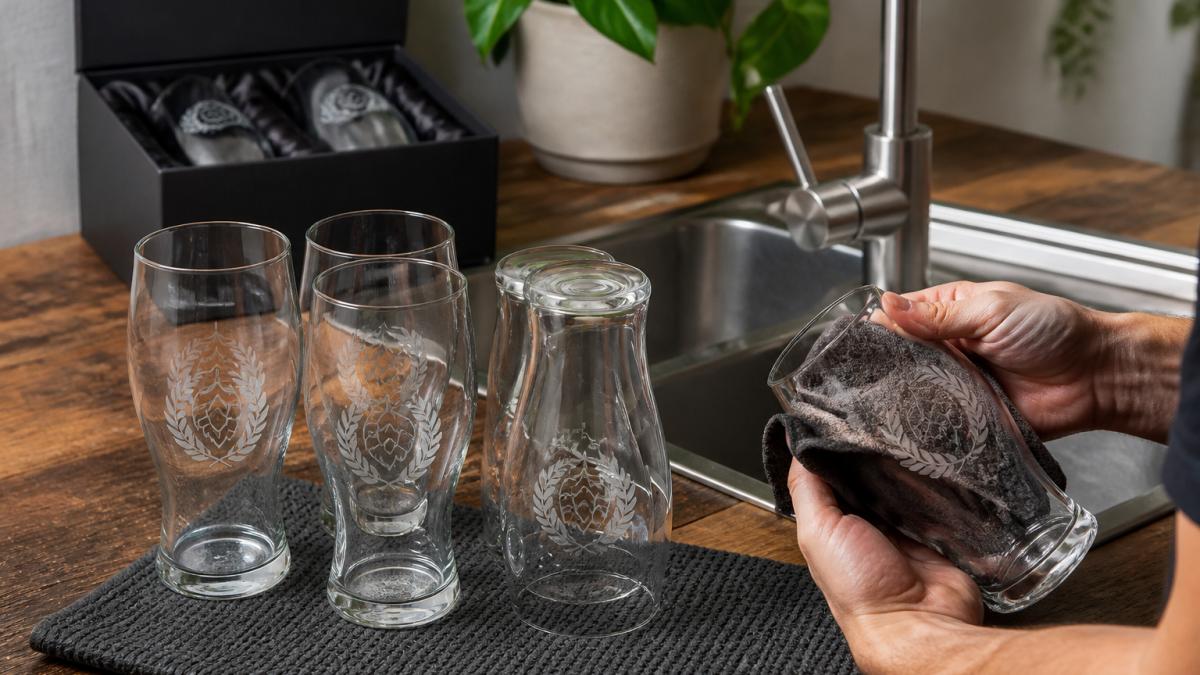
Handwashing in warm water with mild detergent is the safest way to clean printed beer glasses and protect the decoration. The steps below take under a minute per glass and prevent most of the damage we see.
- Rinse the glass with warm water straight after use.
- Add a small drop of mild, non-abrasive detergent.
- Wipe gently with a soft sponge or cloth.
- Rinse thoroughly under warm running water.
- Air dry upside down on a clean rack.
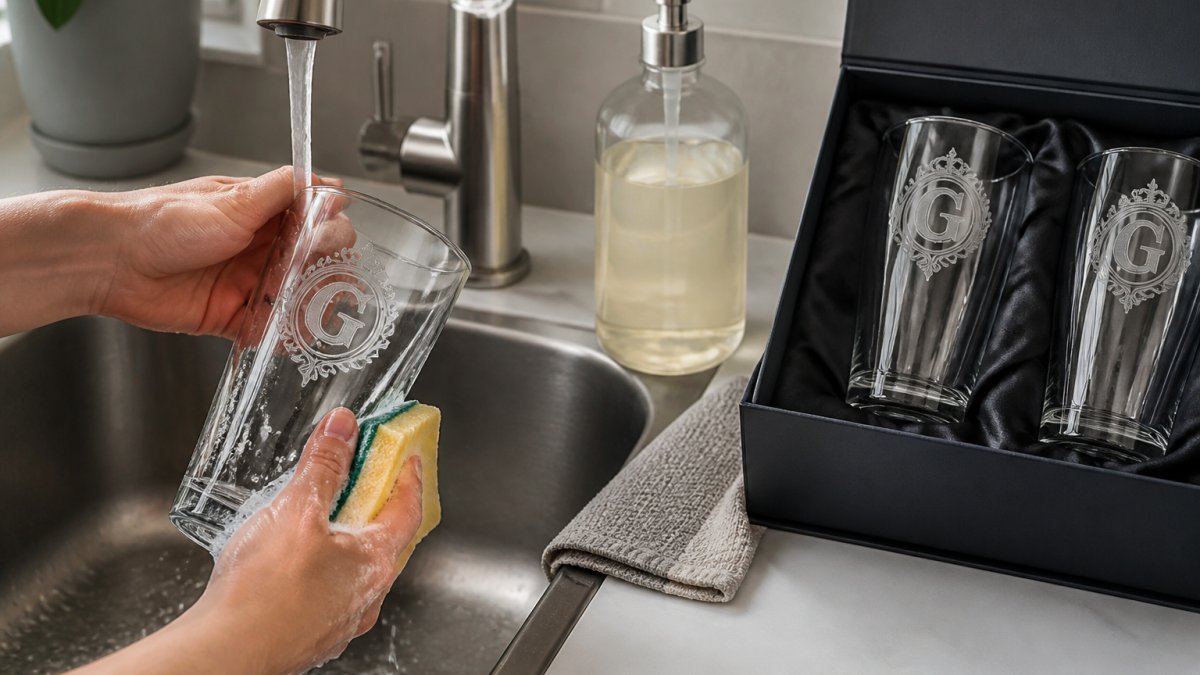
Never use steel wool, scouring pads or gritty cleaners. They scratch the glass. Also avoid sudden temperature changes, which can crack glass.
Handwashing: The Safest Method for Printed Glassware
Handwashing wins because you control the temperature, the detergent and the pressure. Commercial glass washers and home dishwashers do not offer that control. Keep the water warm, not hot. If you run a busy venue, train staff on this routine early. It saves far more glass than it costs in time.
Dishwasher Cycle, Temperature and Detergent Choices
If a dishwasher is unavoidable, use the shortest, coolest cycle available and skip the heated drying stage. Choose a mild detergent with no bleach or citrus additives. Rinse aid helps prevent water spots, but too much can leave a film. Load glasses so they do not touch each other, and never place them over the heating element.
Is Dishwasher Safe Branded Glassware Actually a Safe Bet?
Most dishwasher safe branded glassware survives occasional cycles, but frequent hot washing still shortens the life of the print. "Dishwasher safe" is not a promise of forever. It means the glass will not shatter in a normal cycle. It says nothing about how the decoration holds up after a year of daily washes.
So treat the dishwasher as a backup, not the default. Use it when you are short on time, then return to handwashing. This is where etched and engraved glassware earns its keep. Because the design is part of the glass, not sitting on top of it, it takes far more punishment. For venues that wash hundreds of glasses a day, that difference decides whether your branding lasts one season or five.
How to Remove Beer Glass Residue and Stuck-On Debris
Soak dried residue in warm water for a few minutes, then wipe gently with a soft cloth. Beer leaves behind proteins from the malt, minerals from the water, and hop oils that together harden into a film. That film traps odours, dulls the glass, and kills the head on the next pour. Removing it properly is not just about appearance; it is about serving quality.
To remove stubborn residue:
- Soak the glass in warm water with a drop of mild detergent.
- Add a little white vinegar for mineral haze.
- Wipe with a soft sponge, never a scouring pad.
- Rinse well and air dry.
For lipstick marks or dried foam, the soak does most of the work. Do not scrub harder. Pressure is what damages print. A good soak removes residue without touching the decoration.
Food-Safe Sanitation for Printed Glassware
Sanitising is not the same as cleaning. Cleaning removes visible residue; sanitising reduces the microorganisms left behind. For printed glassware, the safest approach is a two-step process: wash first, then sanitise with a food-safe sanitiser mixed to the manufacturer's directions. Avoid chlorine-based sanitisers. A no-rinse acid sanitiser, used at the correct concentration, is gentler and leaves no residue that would affect head retention.
Always allow the sanitiser to contact the glass for the full time stated on the product label. Rushing this step is a common cause of off-flavours and short-lived heads. If you use a glass rinser at the bar, a quick cold-water rinse before each pour removes dust and sanitiser residue without re-wetting the print for long.
How to Check Whether a Glass Is Beer-Clean
A beer-clean glass is one that has no residue that would affect the head or flavour. You can test it without any special equipment. Wet the inside of the glass with clean water, then look at how the water behaves. In a clean glass, water sheets evenly down the sides. In a glass with residue, the water breaks into droplets or leaves patches, because the residue repels water. Another check: pour a small amount of beer and look at the head. A clean glass produces a tight, lasting head.
If either check fails, return the glass to the wash. Do not simply rinse and re-use it, because the residue that causes the problem is not always visible.
How to Store Beer Glasses to Prevent Chips, Cloudiness and Breakage
Store beer glasses upright, with space between them, in a cool dry cupboard away from direct sunlight. Good storage protects both the glass and the print.
Follow these rules:
- Keep glasses upright so rims do not chip.
- Leave a gap between each glass to stop knocks.
- Avoid stacking unless the glasses are designed for it.
- Skip the freezer and direct sun, which stress glass.
Cloudiness usually comes from mineral build-up, not age, so a vinegar soak brings most glasses back. Chips and cracks are almost always a storage problem. If your venue moves glassware between events, padded trays and crates pay for themselves quickly.
A Step-by-Step Maintenance Routine for Taprooms and Events
A simple weekly routine keeps printed glassware looking new: daily handwash, weekly deep soak, monthly inspection. Here is the routine we suggest to venues running custom glassware at volume.
| Frequency | Task | Why It Matters |
|---|---|---|
| After each use | Rinse and handwash | Stops residue bonding |
| Weekly | Vinegar soak | Removes mineral haze |
| Monthly | Inspect for chips and fading | Catches damage early |
| Each event | Check storage crates | Prevents breakage in transit |
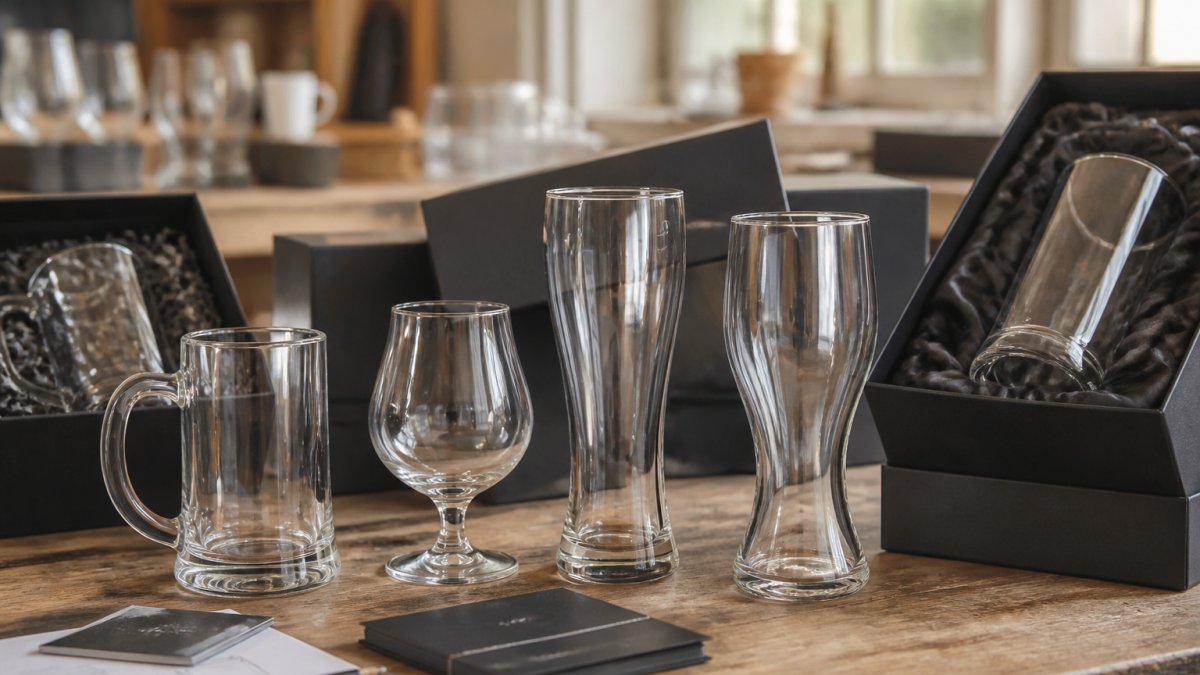
For events, print a one-page care sheet and pin it above the wash-up sink. Casual staff will follow a clear routine and ignore a vague instruction. This one habit prevents most of the fading complaints we hear about. When you order from us, we can supply care guidance alongside your glassware so your team starts with the right habits, and our custom manufactured gift boxing service, with an approximate 28 working day turnaround, is available when you want that glassware to arrive presentation-ready for a client or guest.
Troubleshooting Fading, Peeling and Cloudy Glass
Fading and peeling almost always trace back to heat, harsh detergent or abrasion, while cloudiness is usually a mineral film. Match the symptom to the cause and you can fix most problems.
- Cloudiness: soak in white vinegar, then rinse well.
- Water spots: dry upside down and use a light rinse aid.
For glassware that must survive heavy commercial washing, etching and engraving hold up well, and we are happy to talk through which method suits your venue before you commit to a large run.
Frequently Asked Questions
Can custom printed beer glasses go in the dishwasher?
It depends on the decoration and the manufacturer's guidance. Many etched and engraved glasses handle a commercial dishwasher on a mild cycle, but high heat, harsh detergents and abrasive rinse aids can affect the logo over time. Check the care instructions supplied with your custom glassware, run a lower-temperature cycle where possible, and handwash if you want the branding to last for years.
How do you clean custom printed beer glasses without damaging the design?
Rinse the glass in warm water straight after use, then wash by hand with a mild detergent and a soft sponge. Avoid scouring pads, steel wool and bleach-based cleaners, which can dull etched and engraved surfaces. For glassware that is dishwasher safe, use a gentle cycle, skip the heated dry setting, and let glasses air dry on a rack.
How do you remove stubborn beer glass residue?
Fill the glass with warm water and a small amount of mild detergent, let it soak for 10 to 15 minutes, then wipe gently with a soft sponge. For dried-on residue, a solution of bicarbonate of soda and warm water lifts most deposits without scratching. Rinse thoroughly afterwards, because leftover detergent film traps foam-killing oils and affects head retention on the next pour.
How should you store branded beer glasses to keep them looking new?
Store glasses upright on a clean, dry shelf with enough space between them so they do not knock together. Avoid stacking glasses inside each other, which causes chips and scratches around the rim and body. Keep shelves away from direct sunlight and heat sources, and rotate stock so older glasses are used first. For presentation, custom manufactured gift boxing keeps etched and branded glassware protected and ready to hand over.
Keeping printed glassware looking sharp takes a little discipline, and most venues only learn the hard way. If you would rather start with glassware built to last, The Glassware Company offers expert etching and engraving, a large range of styles, and full customisation with your logo or artwork. Ask us for an online quote and we will match the decoration method to how you actually wash and use your glasses.