 How-to
Promotional Glassware: Campaign Performance Metrics That Matter
Last Updated: November 1, 2026
Quick Summary
Promotional glassware campaign performance metrics measure exposure, recall, practical value and relationship impact, because branded drinkware is seen repeatedly rather than clicked. Set two or three KPIs before production, attach a measure and collection method to each, and track results at the two-week, three-month and twelve-month review points.
- Practical value multiplies exposure: a glass is used, washed and used again, creating repeated impressions.
- Give each batch or channel its own unique code so redemptions trace back to a distribution source.
- Count full campaign cost, including decoration, gift boxing, freight, breakage and staff time, before calculating ROI.
- Estimate lifetime impressions conservatively and report a range rather than a single number.
- Custom manufactured gift boxing for etched and branded glassware has roughly 28 working days turnaround.
Table of Contents
- Why Promotional Glassware Needs Its Own Measurement Framework
- The Metrics That Reveal Branded Merchandise Effectiveness
- Setting Promotional Campaign KPIs Before You Order
- Promotional Product Campaign Tracking: Attribution for Offline Items
- Calculating Promotional Products ROI Without Guesswork
- A/B Testing Glassware Variables and Measurement Timelines
- Request a Quote and Build Your Measurement Plan
- Frequently Asked Questions
Why Promotional Glassware Needs Its Own Measurement Framework
Branded glassware is often ordered for taproom launches and client gifts. It can look excellent on the day, yet go unmeasured for weeks afterwards.
Here is the problem with borrowed benchmarks. A glass sits on a desk, gets washed, and comes back out at dinner. Its exposure is physical and repeated, not clickable.
So we built a measurement approach around what glassware actually does: it stays in view, gets used in front of other people, and carries your brand into rooms you never entered.
The Metrics That Reveal Branded Merchandise Effectiveness
Branded merchandise effectiveness comes down to four measurable things: exposure, recall, practical value, and relationship impact. Track those four and you have a defensible picture of whether the spend worked.

Exposure is how many people see the item and how often.
Recall is whether the person who received it can name your brand later.
Practical value is whether the item gets used at all. Drinkware wins here.
Relationship impact is the effect on clients and staff.
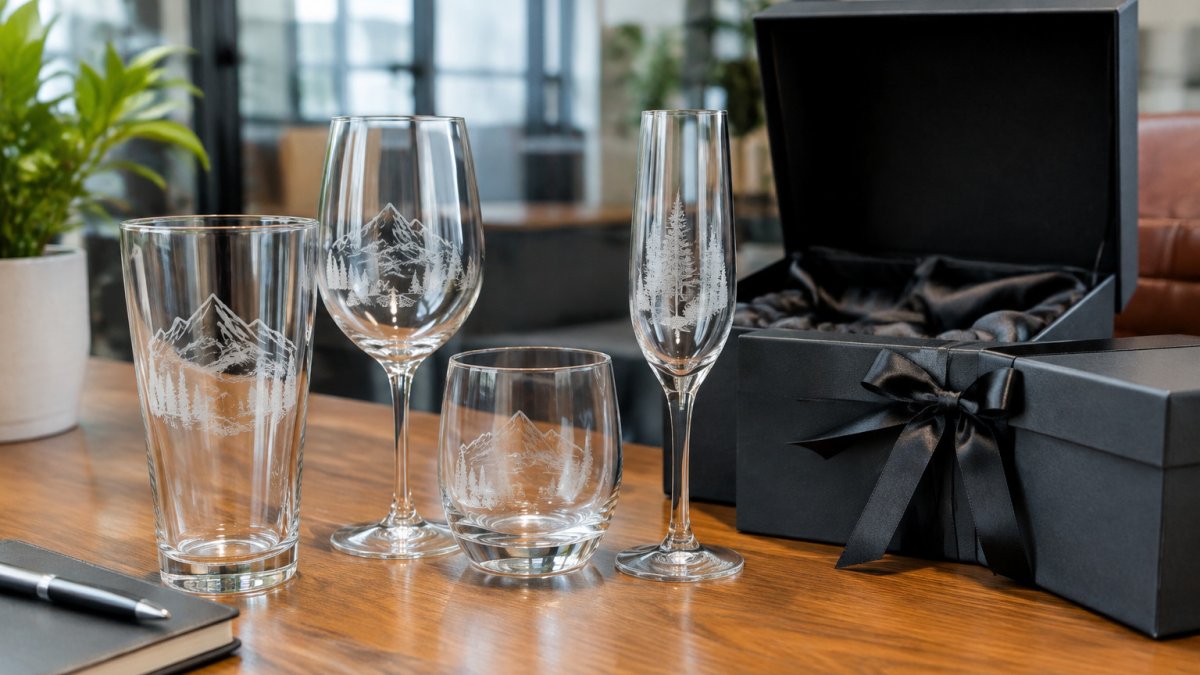
A faded logo undercuts every one of these metrics, so durability is worth checking before you commit budget.
Exposure, recall and the practical-value multiplier
Practical value multiplies exposure. A decorative item gets displayed once. A glass gets used, washed, and used again, and each use is another impression in front of whoever is in the room.
That is the argument for drinkware over almost any other promotional product. The Australian Competition and Consumer Commission guidance on advertising and promotional claims is a useful reminder that any claim you make about a campaign's results needs to be accurate and able to be backed up.
Setting Promotional Campaign KPIs Before You Order
Promotional campaign KPIs work best when set before production, not after delivery. Pick two or three objectives, attach a measure to each, and write down how you will collect it.
A simple framework we recommend:
- Reach objective: how many people will receive or encounter the glassware?
- Recall objective: how will you test whether recipients remember the brand?
- Relationship objective: what behaviour should change, such as reorders or repeat bookings?
- Presentation objective: does the item arrive in a way that matches your brand?
That fourth one matters more than most teams expect.
For event-driven campaigns, check turnaround times early so your KPI dates line up with reality.
Set two or three objectives before production and attach a measure and collection method to each.
| Objective | What it measures |
|---|---|
| Reach | How many people receive or encounter the glassware |
| Recall | Whether recipients remember the brand later |
| Relationship | Behaviour change such as reorders or repeat bookings |
| Presentation | Whether the item arrives in a way that matches your brand |
Promotional Product Campaign Tracking: Attribution for Offline Items
Promotional product campaign tracking for physical items relies on giving each recipient a path back to you.
A QR code on its own is not a measurement plan.
The most reliable methods, ranked by how much attribution strength they buy you:
- Unique codes per recipient or per event, each batch gets its own code, so a redemption can be traced to a distribution channel, event, or client tier. Codes etched or engraved on the glass itself are more durable than those on a card.
- QR codes on accompanying cards or packaging, flexible, but if the card is discarded the tracking is lost with it.
- Dedicated landing pages with a short address, one page per campaign, one clear action, and a tracking parameter.
- Redemption offers tied to the item, a refill, a tasting booking, or a replacement offer can turn attribution into a behavioural signal.
QR codes, unique codes and landing pages
Keep the landing page simple. One clear action, one thank-you page, and a tracking parameter that tells you which campaign sent the visitor.
A common mistake is routing every code to the homepage. You lose the attribution you paid for.
If you print codes on a card rather than the glass, tracking can be lost when the card is discarded.
Matching the attribution method to the campaign objective
The method should follow the objective you set before production. If the goal is reach, a card-based QR is enough.
A practical pattern many teams use: assign one code per distribution channel (taproom, corporate gifting, event, trade show), then compare redemption and reorder rates across channels at the three-month and twelve-month review points.
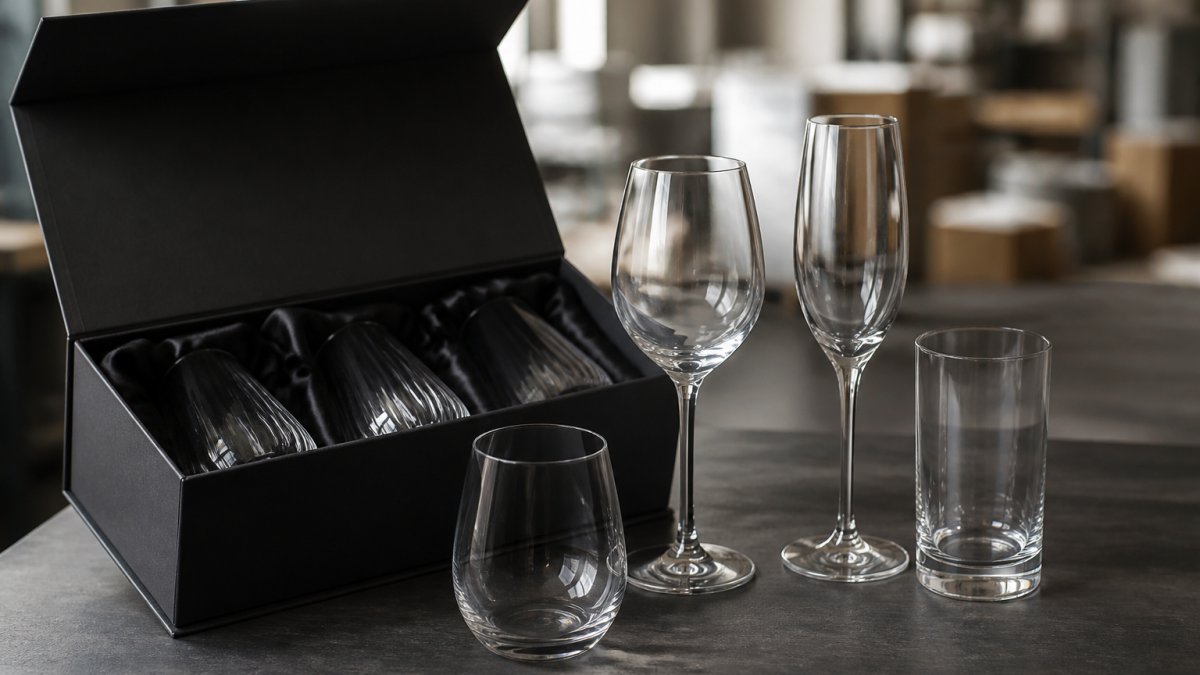
If presentation is part of the campaign, custom manufactured gift boxing for etched and branded glassware gives you a natural home for the card, the code, and the call to action, with roughly 28 working days turnaround to build into your launch date.
Calculating Promotional Products ROI Without Guesswork
Promotional products ROI is calculated by dividing the value you can attribute to the campaign by its full cost. Comparing the full cost with attributable value gives campaign performance metrics a practical foundation for refining future promotional glassware investments.
Start with full campaign cost accounting. Every line below belongs in the denominator:
- Glassware unit cost and setup or artwork fees
- Etching or engraving charges
- Gift boxing and packaging
- Freight and delivery
- Breakage and replacement allowance
A campaign that looks efficient on unit cost alone often looks very different once decoration, packaging, freight, and staff time are added.
Then estimate return using conservative assumptions. If a recipient reorders, book that revenue; if a client renews, note it.
Build cost-per-impression figures from your own actual costs rather than estimates. For a grounding in real pricing structures, see this cost comparison of custom printed glassware.
Australian Bureau of Statistics business data and indicators can help you sanity-check your own baseline figures against published industry context.
Cost per impression and lifetime exposure
Cost per impression is total campaign cost divided by estimated impressions. Lifetime exposure extends that across the item's useful life, and this is where glassware separates itself from almost any other promotional product.
Estimate it in four steps, and write down each assumption so the figure is auditable:
- Uses per week per item. Be conservative. A desk tumbler might be used three to five times a week; a display piece far less.
- People present per use. A shared household or a busy taproom multiplies each use.
- Weeks in service. Estimate the item's realistic life, not its best-case life. Glass that is washed frequently and used in commercial settings will not last as long as a display piece.
- Multiply and divide. Uses × people × weeks gives estimated lifetime impressions; total campaign cost divided by that figure gives cost per impression.
Run the calculation twice, once conservative, once optimistic, and report the range. A range you can defend beats a single number you cannot.
A/B testing glassware variables
A/B testing on physical products sounds awkward, but it works. Split a recipient list, change one variable, and compare results on the same measure.
Variables worth testing:
- Etched versus printed branding and how each holds up over time
- Gift boxing versus plain packaging and the effect on recall and perceived value
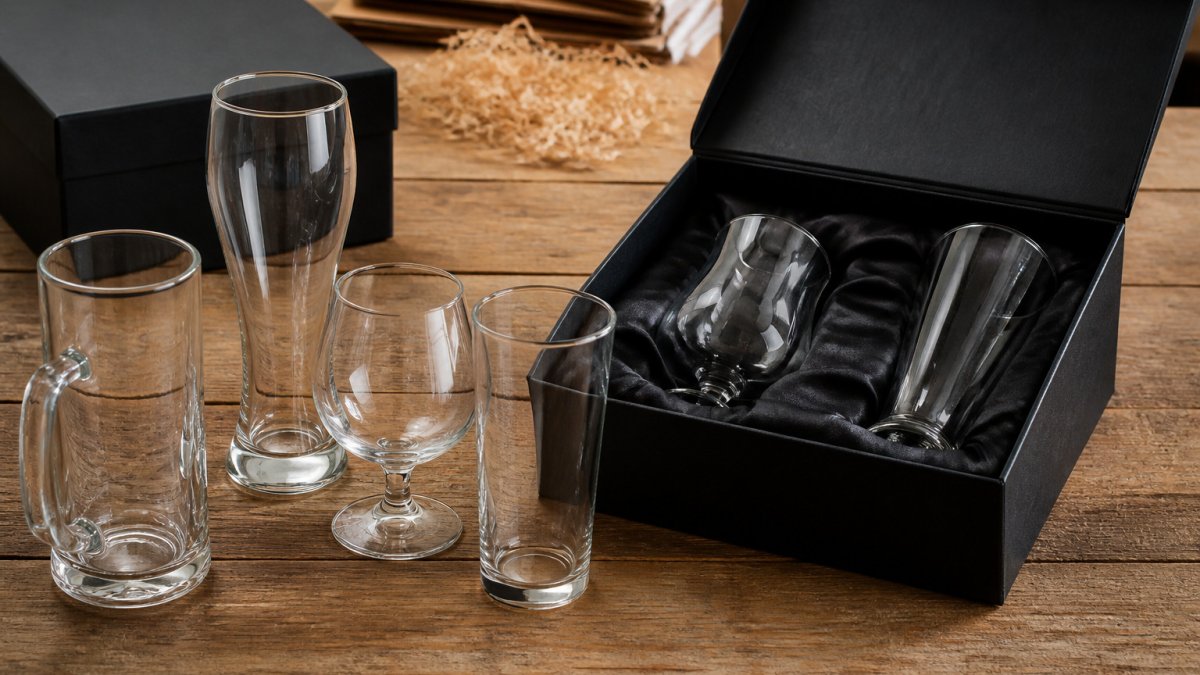
- Style choice, such as steins versus tumblers, by audience
- Accompanying card copy and landing page wording
Change one variable at a time, keep the recipient profiles comparable, and judge results at the same review points you set for the main campaign. Testing is how you improve the next campaign rather than only reporting on the last one.
Measurement timelines and benchmarks
Set review points rather than one final verdict. Check response in the first fortnight, again at three months, and once more at twelve.
Benchmarks are best built from your own history. Track the same measures across successive campaigns, redemption rate by channel, reorder rate among gift recipients, recall in post-campaign surveys, and you will build a baseline far more useful than any borrowed industry figure.
If you are weighing whether branded gifts shift client behaviour at all, do corporate gifts actually improve client retention covers the evidence and the caveats.
A/B Testing Glassware Variables and Measurement Timelines
A/B testing on physical products sounds awkward, but it works. Split a recipient list, change one variable, and compare results on the same measure.
Variables worth testing:
If you are weighing whether branded gifts shift client behaviour at all, do corporate gifts actually improve client retention covers the evidence and the caveats.
Request a Quote and Build Your Measurement Plan
The measurement plan is only as good as the product underneath it. A glass that fades or arrives late breaks your tracking before it starts.
If presentation is part of your campaign, our custom manufactured gift boxing for etched and branded glassware adds a premium finish, with roughly 28 working days turnaround to plan around.
Ready to set your metrics against a product that will carry them?
Frequently Asked Questions
How do you measure the success of a promotional glassware campaign?
Start with the objective, then pick metrics that match it. For awareness, track distribution volume, estimated impressions and unaided recall through a short survey. For engagement, use QR codes or unique landing pages to count scans and sign-ups. For sales, compare redemption codes against a control group. Promotional glassware works through repeated exposure, so measure over at least three to six months rather than the week after an event. Pair real-world indicators like reorders and client mentions with the hard numbers from your tracking.
How do you calculate promotional products ROI for branded glassware?
Add every cost first: glassware, etching or engraving, custom gift boxing, freight and distribution. Then attribute revenue using redemption codes, tracked landing pages or CRM notes on deals where the glassware was mentioned. Subtract total cost from attributed revenue and divide by total cost to get a percentage. Because glassware keeps working for years, run the calculation at 6 and 12 months, not just at campaign close. A single large client retained after receiving etched glassware can cover a whole run.
How can QR codes help track leads from promotional glassware?
A QR code etched or printed alongside your logo turns a passive gift into a measurable touchpoint. Send scans to a dedicated landing page with a form, a booking link or a discount code, then track scans, cost per lead and conversion rate in your analytics. Use one code per event or audience segment so you can compare performance. Keep the destination mobile-friendly, since most scans happen on a phone, and offer something worth the tap, such as a tasting booking or a replacement-glass offer.
How long should you measure a promotional glassware campaign?
Plan for a minimum of three months and a preferred window of six to twelve months. Glassware sits in homes, offices and tasting rooms, so exposure accumulates slowly and steadily. Check early indicators like scan rates and distribution numbers in the first month, then review recall, reorders and attributed revenue at the three and six month marks. If you reorder the same design quarterly, keep a rolling record so you can spot trends in repeat engagement rather than judging each run in isolation.
Your campaign deserves numbers you can defend. Tell us your event date and artwork, and we will help you choose the right glassware and packaging so your measurement plan has something solid to measure.