 How-to
How to Design Professional Branded Drinkware That Lasts
Last Updated: November 4, 2026
Quick Summary
Effective branded drinkware design starts with restraint: use one simple logo placement, limit colours to two or three, and pick a finish that suits the brand. A well-made item is kept and used, giving your brand repeated, low-pressure exposure at the desk and at home.
- Supply true vector artwork such as AI, EPS, SVG or print-ready PDF, not a website PNG or JPG.
- Convert text to outlines so the logo renders correctly on any production system.
- Design the logo in one tone, since etching frosts clear glass and has no colour.
- Specify the mark's size in millimetres and its exact position on the vessel.
- Approve a physical sample before production, because a digital proof cannot show how the etch looks on glass.
Table of Contents
- Why Branded Drinkware Works as a Brand Touchpoint
- Branded Drinkware Design Ideas That Look Professional
- How to Prepare a Logo for Glass Engraving
- Comparing Engraving, Etching, Screen Printing and Sublimation
- Choosing Glassware for Hospitality Branding
- Keeping Colour and Design Consistent Across Batches
- Presenting Your Branded Glassware with Custom Gift Boxes
- Requesting Your Online Quote for Branded Glassware
- Frequently Asked Questions
Branded drinkware does a job most advertising can't. A client who uses a well-made tumbler at their desk sees your name every day, and branded drinkware is often kept because recipients find it useful. Getting the design right is what decides whether that item gets used or ends up in a cupboard. This guide from The Glassware Company walks through how to design professional branded drinkware that lasts, from the logo through to the final presentation.
Why Branded Drinkware Works as a Brand Touchpoint
The value comes from repeated, low-pressure exposure. Recipients see the item at their desk, in meetings and at home. Because the item is useful, it stays in use.
Brand consistency also matters. Drinkware that matches your other materials supports that consistency.
Branded Drinkware Design Ideas That Look Professional
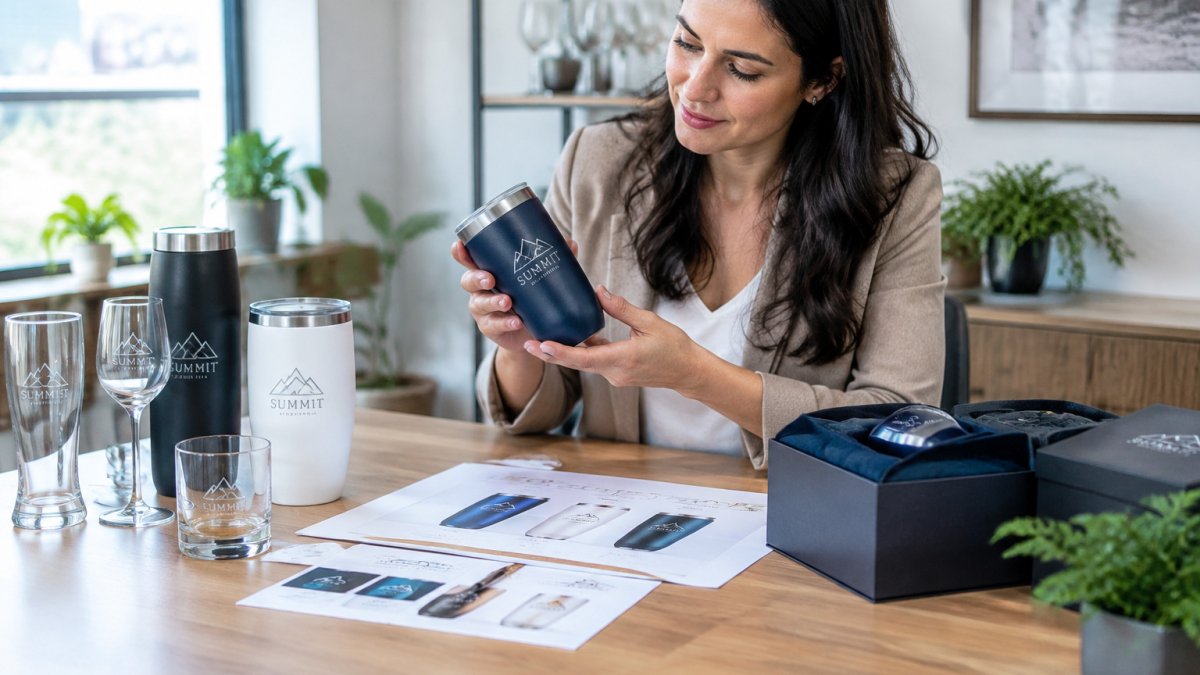
Professional design starts with restraint. A small, well-placed logo usually looks better than a large one.
Keep these principles in mind:
- Use one logo, placed simply. A single, simple placement usually reads more cleanly.
- Limit colours. Two or three colours look cleaner than a full palette.
- Choose a finish that suits the brand. Matte, polished or frosted surfaces each send a different signal.
- Respect the item's use. Too much design can make a drinkware item feel like a billboard. Over-branding can reduce how often a recipient uses it.
How to Prepare a Logo for Glass Engraving
Most engraving problems are decided before production starts, in the artwork file. A file built for print or screen rarely translates cleanly to an etched mark, so it is worth preparing the logo specifically for the process. The steps below cover the file specifications that production teams actually check.
1. Supply true vector artwork. Files in AI, EPS, SVG or a print-ready PDF scale without losing sharpness. A PNG or JPG pulled from a website is a raster image: it is made of pixels, and enlarging it produces visible steps along every curve. If you only have a raster logo, ask your designer or supplier to redraw it as a vector before production.
2. Convert text to outlines. Live text depends on the fonts installed on the production machine. If a font is missing, the text reflows or substitutes. Converting text to outlines turns each letter into a shape, so the logo renders exactly as designed on any system.
3. Set a minimum line weight. Very thin lines and small text can disappear or fill in when etched. Keep the thinnest line in the design at a size that will hold on glass, and test the smallest text on a physical sample before committing. Fine detail that reads well on screen often closes up on glass.
4. Design in one tone. Etching has no colour, the mark is a frost against clear glass. Convert the logo to a single colour (black on white) and check that it still reads. Gradients, drop shadows and multi-colour logos need to be simplified into solid shapes and negative space before they will etch cleanly.
5. Specify size and position precisely. State the exact width and height of the mark in millimetres and its position on the vessel, for example, centred on the front face, with the top of the mark a set distance below the rim. Suppliers cannot infer placement from a mock-up alone.
6. Allow for the curve of the vessel. A flat logo wrapped onto a curved tumbler or stem will distort at the edges. Keep critical elements away from the wrap zone, or ask the supplier to show how the artwork maps onto the actual vessel shape. Because curved surfaces can shift proportions as well as edges, professional artwork conversion should preserve the logo’s balance across the vessel’s full wrap.
7. Confirm the proof before production. A digital proof confirms layout and scale; a physical sample confirms how the etch actually looks on the chosen glass. Approve both before the full run begins.
Watch out: a low-resolution logo exported from a website can produce a blurry or stepped engraving. Ask for the original vector file from whoever designed your logo before you brief the supplier.
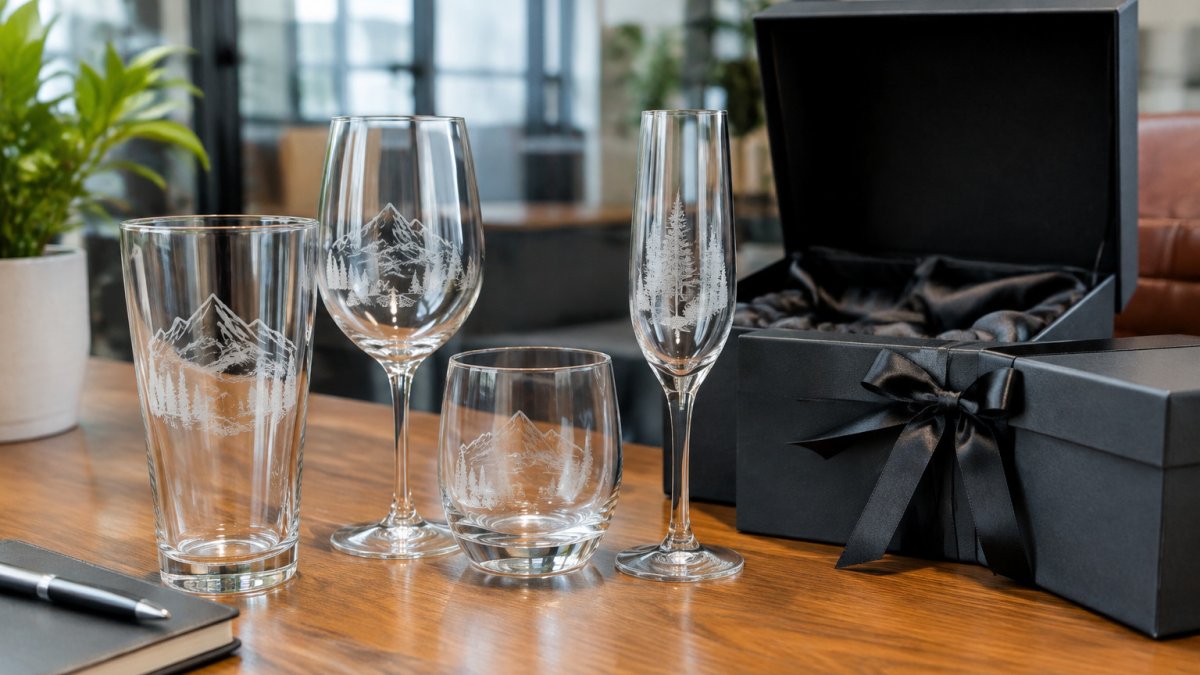
Once the artwork is production-ready, the decorated piece can be presented in our custom manufactured gift boxing service for etched and branded glassware, which runs at approximately 28 working days turnaround and lifts the piece into gift-ready condition for client and event use.
Comparing Engraving, Etching, Screen Printing and Sublimation
Each decoration method works on a different principle, and that principle determines how the mark ages, what artwork it can carry and what it costs per unit at volume. The table below summarises the practical differences, and the notes after it explain the mechanisms behind them.
| Method | How it works | Finish | Durability | Artwork it suits | Best for |
|---|---|---|---|---|---|
| Laser engraving | A focused beam removes or carbonises the surface layer | Cut into surface, tactile | Very high | Single-tone vectors, line art, fine text | Premium gifts, long-term corporate programmes |
| Chemical etching | Acid or a paste resists and frosts the glass surface | Frosted, smooth to the touch | High | Single-tone vectors, detailed crests and patterns | Glassware, clean corporate look |
| Screen printing | Ink pushed through a mesh stencil and cured | Ink on surface, raised | Moderate | Bold spot colours, larger runs | High-volume promotional runs |
| Sublimation | Dye gas bonds into a polymer coating | Dye fused into coating | Good | Full-colour photographic designs | Coated tumblers and bottles |
Laser engraving removes material rather than adding it, so the mark cannot peel or flake. On stainless steel it typically produces a light, high-contrast mark; on glass it leaves a frosted, tactile line. Because the beam follows a vector path, the artwork must be a clean vector file, a raster logo will engrave with visible pixel steps. Very fine hairlines can disappear, so most practitioners test the smallest line weight on a sample before committing to a full run.
Watch out: confirm the substrate before choosing a decoration method. Ask your supplier to show decorated samples that have been through the washing conditions the item will actually face before you place a bulk order.
For etched and branded glassware, our custom manufactured gift boxing service is a premium presentation option that pairs with the decorated piece, approximately 28 working days turnaround, and suits client gifts, launches and events where the unboxing is part of the impression.
Choosing Glassware for Hospitality Branding
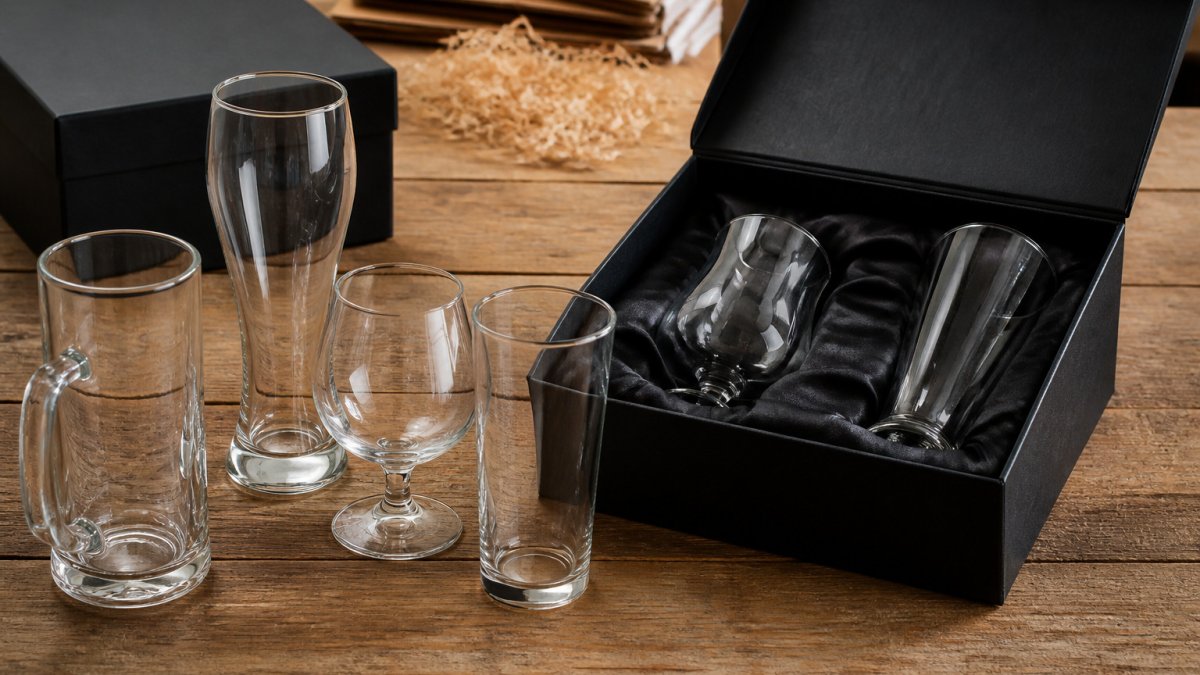
Hospitality buyers have different needs from corporate buyers. A winery needs stemware that shows off the wine. A brewery needs steins that handle heavy use. A venue needs glassware that survives high-volume service.
Consider these factors when you choose:
- Intended use: Daily service, events or one-off gifts each call for different glassware.
- Dishwasher resistance: Ask whether the decoration survives commercial washing cycles.
- Weight and feel: Heavier glass suits steins and tumblers. Lighter stemware suits tasting events.
- Volume: Check whether the supplier can match your order size and timing.
Our team at The Glassware Company can talk through which styles suit your setting, from beer steins to champagne flutes.
Keeping Colour and Design Consistent Across Batches
Repeat orders are where many brands get caught out. A design approved in one batch can look different in the next.
To keep batches consistent:
- Approve a physical sample. A digital proof does not show how the etch looks on real glass.
- Keep the artwork file. Store the approved artwork file and reuse it for reorders.
- Note the exact specifications. Record the size, position, decoration method and glass style.
- Compare each new batch to the sample. Check it before the full run ships.
Our proofing process lets you review the artwork before anything goes into production.
Presenting Your Branded Glassware with Custom Gift Boxes
Presentation shapes the first impression. A plain box can make a premium piece feel ordinary, while a well-finished box signals care.
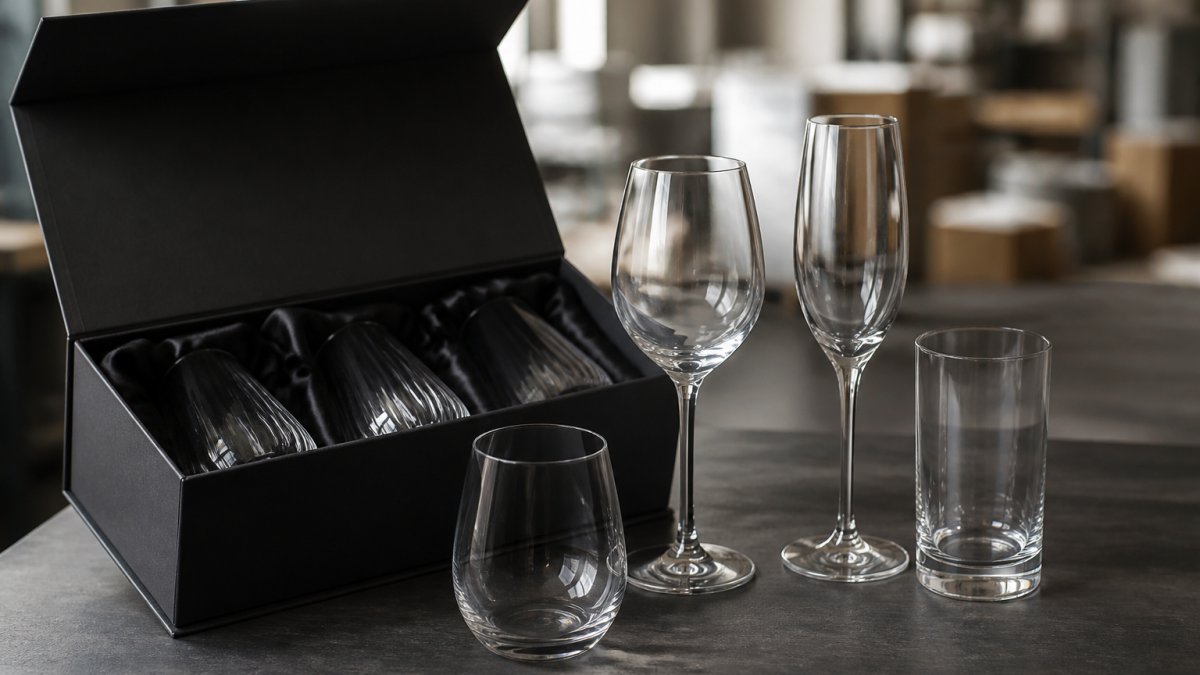
Our custom gift boxing service for etched and branded glassware is a premium option that suits client gifts, launches and events. Turnaround is approximately 28 working days, so plan ahead for event deadlines. You can see how the boxing fits with your glassware on our custom gift boxing for etched glassware guide.
Requesting Your Online Quote for Branded Glassware
Pricing depends on quantity, decoration method, glass style, delivery location and timing. We do not publish fixed prices here because each order is different. To get current pricing for your project, request an online quote from The Glassware Company.
Before you request one, have these details ready:
- The logo or artwork file, ideally in vector format
- The glassware style and quantity
- The decoration method you prefer
- Your event or delivery date
If your event is close, check turnaround times first. Our custom glassware turnaround times for events guide explains what to expect.
Frequently Asked Questions
How do you customise drinkware with a company logo?
Start with a vector version of your logo, then choose a decoration method that suits the glass or metal. Engraving and etching are decoration options that suit premium finishes. Share your artwork and placement preferences with your supplier so they can proof the design before production. Pricing depends on quantity, design complexity, and delivery, so request a quote through The Glassware Company's website for current figures.
What makes branded drinkware look professional?
Professional branded drinkware keeps the logo clean, sized for the vessel, and placed where it sits well when the item is held or displayed. Restrained colour palettes that match your brand guidelines usually look more premium than crowded designs. Research on promotional drinkware suggests that over-branding can make an item feel like a billboard rather than something people want to use, so balance visibility with utility.
Which logo file format is best for custom glassware?
Confirm the exact artwork requirements with your supplier before preparing your files.
What is the difference between etched and printed glassware?
Etched glassware has its design chemically marked into the surface, giving a frosted, premium look. Ask your supplier about decoration options for your specific glassware and use.