 How-to
Eco Friendly Custom Beer Glass Manufacturing: A Buyer's Guide
Last Updated: November 3, 2026
Quick Summary
Eco friendly custom beer glass manufacturing starts with a high cullet ratio, meaning crushed recycled glass in the furnace mix, and short transport distances, the two biggest levers on environmental performance. Etching or engraving brands your custom beer glass without ink, plastic or adhesive, so it recycles cleanly.
- Ask suppliers what share of their batch is cullet, not just whether they use recycled glass.
- Buy from a manufacturer close to you, because freight is part of your footprint.
- Etched or laser-engraved glass recycles cleanly, while printed or sleeved glass may contaminate cullet.
- Custom manufactured gift boxing for etched and branded glassware has roughly a 28 working day turnaround.
- Ordering packaging after the glasses arrive is the most common scheduling mistake.
Table of Contents
- How Custom Beer Glass Is Made, From Molten Glass to Finished Print
- Why Recycled Glass Beer Glasses Lower the Footprint
- What Sustainable Glass Manufacturing Actually Changes
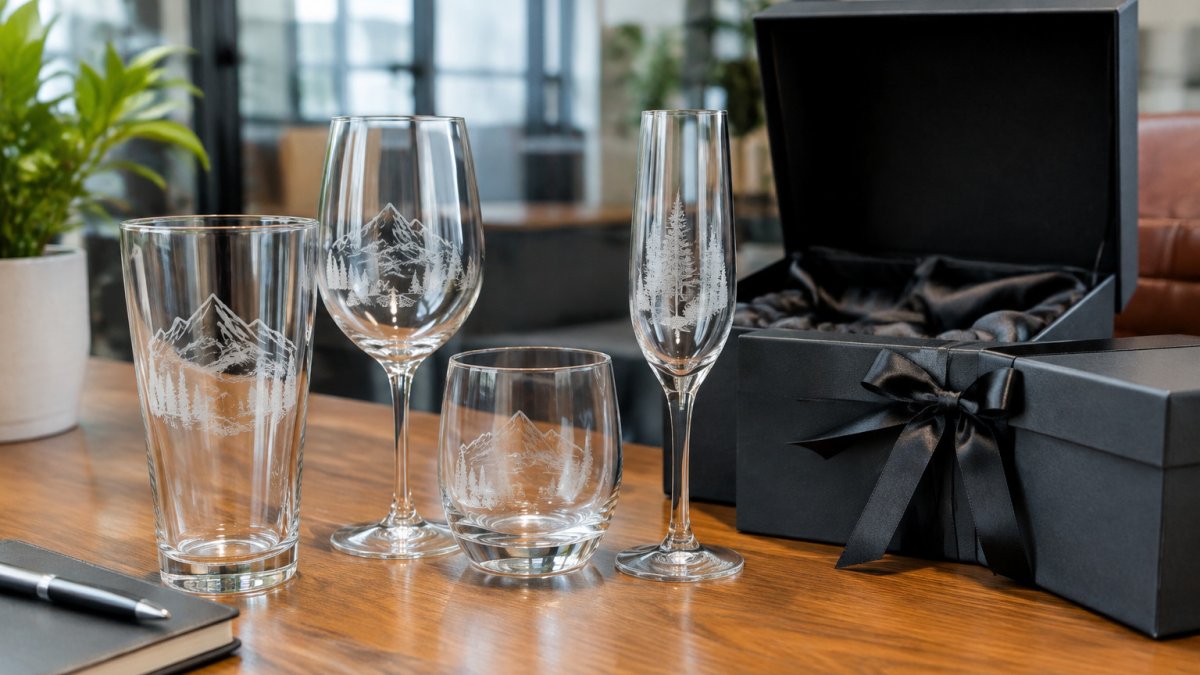
- Glass Etching and Engraving: The Low-Impact Way to Brand a Glass
- Custom Glassware Packaging That Protects the Glass and the Claim
- Glass vs Recycled PET and Bio-Polymers: Which Container Wins
- Request a Quote and Proof for Your Custom Beer Glass Run
- Frequently Asked Questions
How Custom Beer Glass Is Made, From Molten Glass to Finished Print
Eco friendly custom beer glass manufacturing processes start with one number that matters more than any other: how much recycled glass goes into the furnace. A 2025 study on recycled glass bottles for craft-beer packaging found that raising the cullet ratio and cutting transport distances are the two biggest levers on environmental performance (Wojnarowska et al., Resources, 2025).
Here is the short version of how a beer glass gets made:
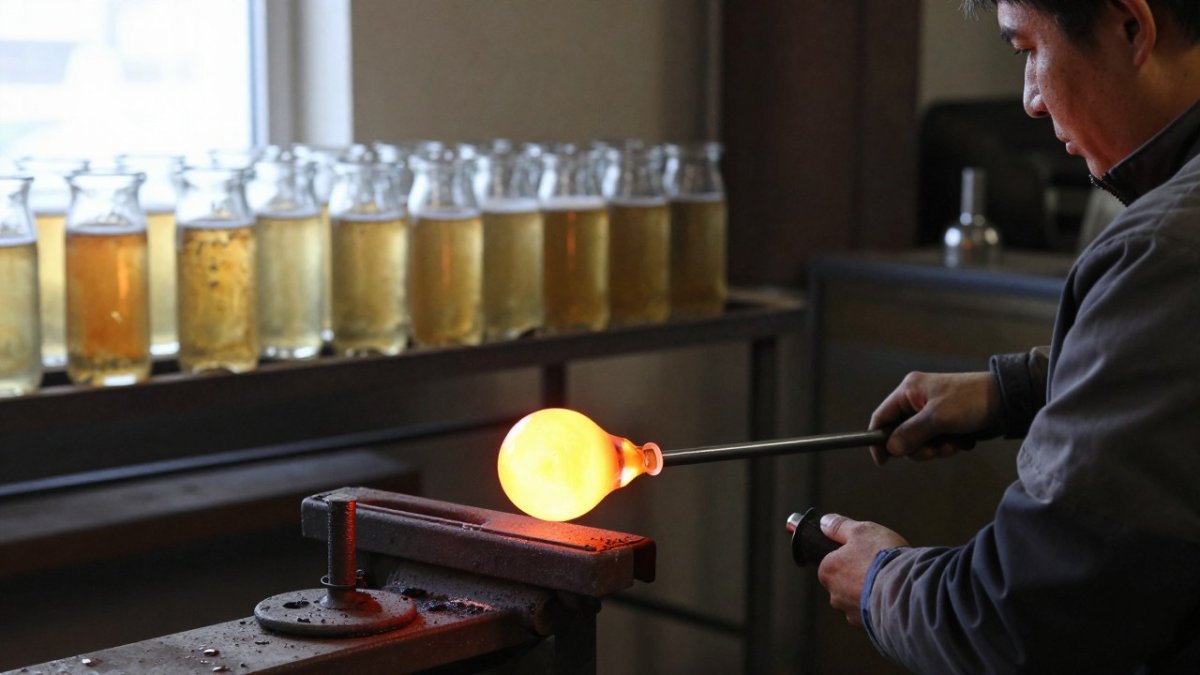
- Raw material sourcing. Silica sand, soda ash and limestone are blended with cullet, which is crushed recycled glass.
- Melting. The mix enters a furnace running continuously at high heat until it becomes molten glass.
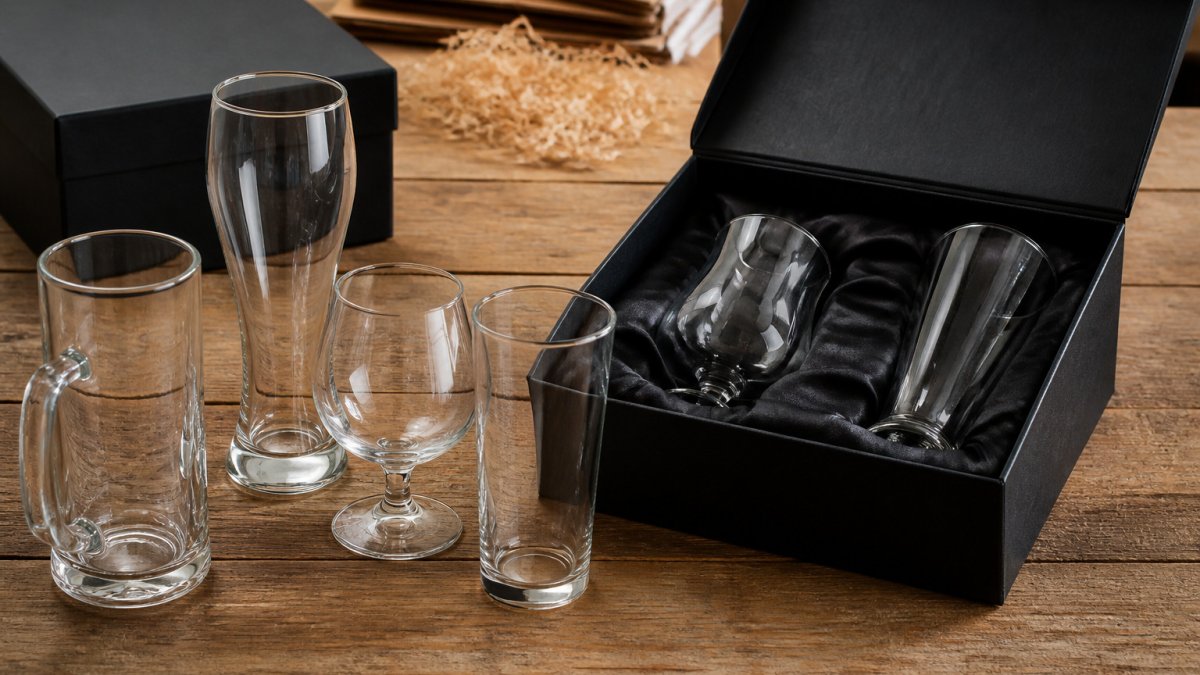
- Forming. A glass forming machine or a glass blower shapes the gob into a stein, tumbler or mug.
- Annealing. The hot glass passes through an annealing lehr, a long oven that cools it slowly to relieve internal stress.
- Inspection. Each item is checked for cracks, bubbles and shape faults.
- Decoration. Etching or engraving adds your artwork.
- Packing. Glasses are boxed, palletized and loaded for dispatch.
Why Recycled Glass Beer Glasses Lower the Footprint
The same 2025 life-cycle work identifies cullet content and transport distance as the key variables (Recycled Glass Bottles for Craft-Beer Packaging study). Two practical takeaways for a brewery buyer:
- Ask suppliers what share of their batch is cullet, not just whether they "use recycled glass".
- Buy from a manufacturer close to you. Freight is part of your footprint, not a separate line item.
Glass is also endlessly recyclable without losing quality, which keeps material in the circular economy rather than in landfill. Once your branded glasses reach end of life, how to recycle custom branded drinkware properly covers the right way to handle them.
What Sustainable Glass Manufacturing Actually Changes
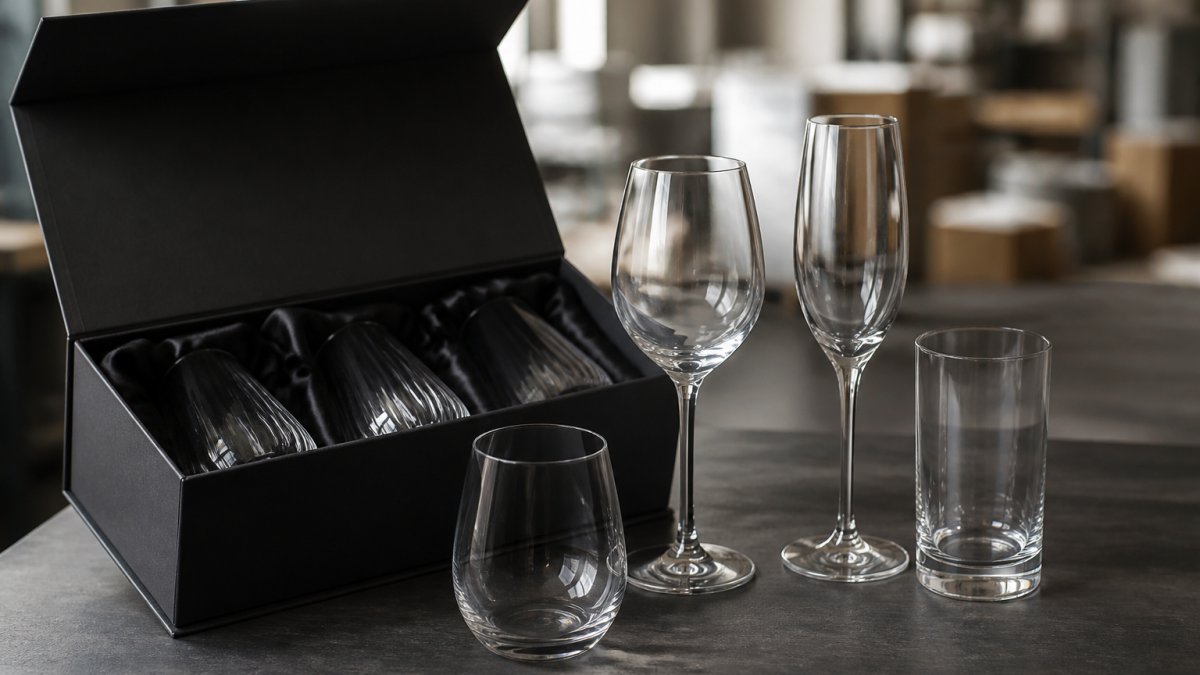
Waste stream and packaging. Manufacturing waste is only half the footprint. The other half is what leaves the factory: pallet wrap, dividers, cartons and inserts. A recycled-content glass in a foam insert undercuts the claim, which is why custom manufactured gift boxing for etched and branded glassware is worth considering as a premium presentation option, with roughly a 28 working day turnaround, so the packaging matches the piece.
What to verify.
None of this shows up on the finished glass. It shows up in the sustainability metrics your procurement team asks for, and in whether the claim survives scrutiny.
Glass Etching and Engraving: The Low-Impact Way to Brand a Glass
Glass etching and engraving brand a glass without ink, plastic or adhesive.
Weighing etching against other decoration methods? Screen printing versus laser engraving compares durability, cost and finish side by side.
Custom Glassware Packaging That Protects the Glass and the Claim
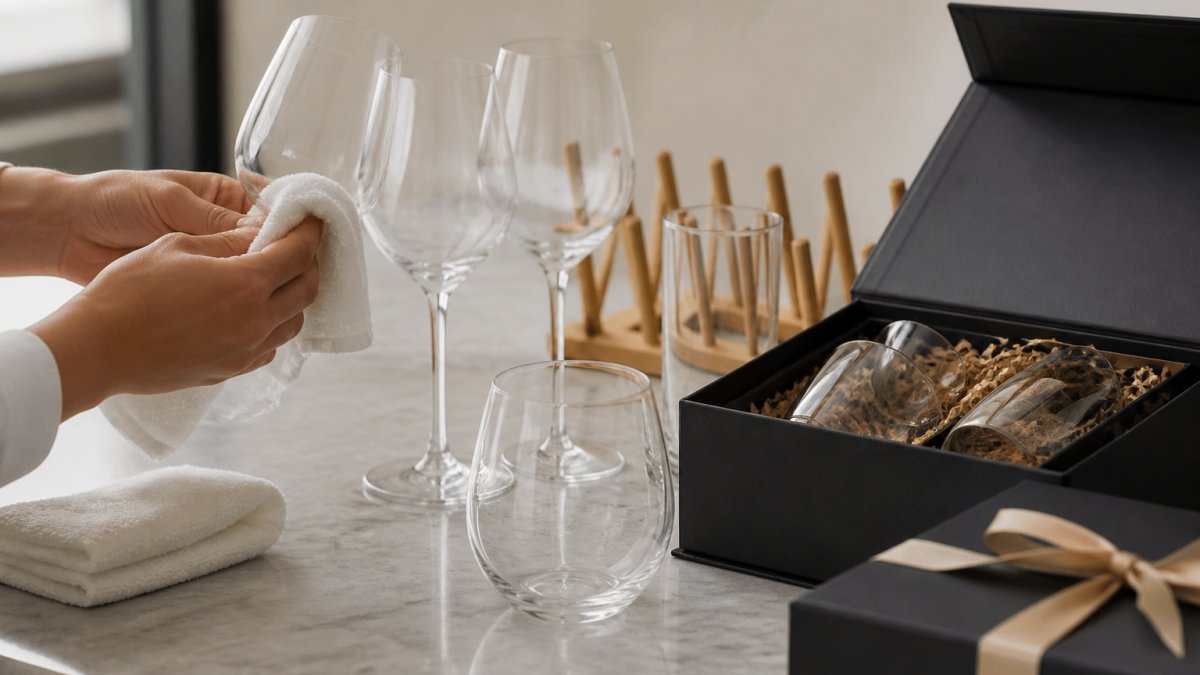
Custom manufactured gift boxing for etched and branded glassware is available as a premium presentation option, with roughly a 28 working day turnaround.
Watch out: ordering packaging after the glasses arrive is the most common scheduling mistake. Both need to land together for an event.
For the full detail on materials and options, see the custom gift boxing guide for etched glassware.
Glass vs Recycled PET and Bio-Polymers: Which Container Wins
Glass and recycled PET and bio-polymers each have different strengths for packaging.
The branded-glass recycling paradox. A plain glass bottle is one of the most recyclable packaging formats there is, it can be remelted repeatedly without loss of quality. A decorated glass is a different proposition. Applied ceramic labelling, organic inks, heavy metallic films and plastic shrink sleeves can contaminate the cullet stream or force the recycler to downgrade the batch. If your artwork is printed, ask the decorator whether the ink is ceramic-fired and compatible with your local kerbside collection, and check what your council accepts before you promise customers the glass is recyclable.
Where the alternatives actually win. Recycled PET is light, which cuts freight emissions per unit, and it is widely collected in Australian kerbside systems. But PET degrades each time it is reprocessed, so it is downcycled rather than endlessly recycled, and it does not keep beer cold or carry the premium feel a taproom or gift buyer expects. Bio-polymers depend on industrial composting infrastructure that is patchy across most of Australia, so a bio-polymer cup that ends up in general waste delivers none of its intended benefit.
| Factor | Glass | Recycled PET | Bio-polymers |
|---|---|---|---|
| Recyclability | High, repeated cycles | Moderate, degrades each cycle | Limited collection and composting infrastructure |
| Weight and freight | Heavy | Light | Light |
| Brand feel | Premium, keeps beer cold | Functional | Niche |
| Decorated end-of-life | Etched or laser-engraved glass recycles cleanly; printed or sleeved glass may contaminate cullet | Label and sleeve removal needed | Often not accepted in kerbside |
| Best for | Taproom, gifts, events | High-volume transport | Short-life trials |
The lifecycle question. A fair comparison weighs the whole journey, not just the bin. Glass is heavier to freight but is recycled domestically at scale and can be refilled or remelted many times. PET is lighter to move but loses quality on each cycle. For a brewery merchandise program or a corporate gift, glass carries weight that plastic cannot, and an etched mark keeps the recycling story intact. For palletised container loading at scale, the freight maths shifts toward lighter formats.
What to do with your own stock. Once your branded glasses reach end of life, how to recycle custom branded drinkware properly covers the right way to handle them, including how to separate decorated items from clean cullet. And if you are weighing decoration methods, screen printing versus laser engraving compares durability, cost and finish side by side.
Request a Quote and Proof for Your Custom Beer Glass Run
Requesting a quote and proof is a useful step before production. Pricing depends on quantity, glass style, decoration method and delivery, so request a quote for current figures.
Before you approve anything, work through the seven proof checks for a custom beer glass order. If durability is your main concern, how to choose durable custom beer glasses explains what the forming and annealing stages mean for day-to-day washing.
When you are ready, send us your artwork and quantities for an online quote.
Frequently Asked Questions
Can beer glasses be made from recycled glass?
Yes. Recycled glass, known as cullet, is melted alongside raw materials in the furnace. A 2025 study by M. Wojnarowska and colleagues found that increasing the cullet ratio and shortening transport distances are the two main levers for improving the environmental performance of craft-beer glass bottles. For branded beer glasses, ask your supplier what proportion of recycled content goes into the melt and where the glass is formed, since both shape the footprint of your order.
What is the difference between etched and printed glassware?
Etching and engraving cut the design into the glass surface, so the mark sits in the material itself and will not peel or wash away. Printing applies ink or a transfer to the surface, which allows full colour but adds a layer that can wear with heavy commercial washing.
Can custom beer glasses be recycled at the end of their life?
Glass remains recyclable after etching or engraving because the mark is part of the glass, not a coating. Printed glass is harder to process, and heavily decorated items are often diverted from cullet streams. The 2025 Wojnarowska study identifies more cullet in the melt as a key route to better environmental outcomes, so keeping your branded glass free of applied coatings helps it re-enter that loop.
How do you keep branding consistent across repeat orders of custom beer glass?
If your glassware also ships in branded gift boxes, the custom manufactured gift boxing service runs on roughly a 28 working day turnaround, so build that into your quarterly reorder schedule rather than ordering at the last minute.
Your next event, taproom launch or client gift deserves glass that looks the part and holds up to a commercial dishwasher. The Glassware Company offers expert etching and engraving, a large range of styles from beer steins to champagne flutes, customisation with your logo or artwork, and custom gift boxing for a premium finish. Get started with The Glassware Company and request your online quote today.