 how-to
How to Recycle Custom Branded Drinkware Properly
Table of Contents
- Why Recycling Custom Branded Drinkware Matters
- Are Drinking Glasses Recyclable?
- Step-by-Step: Preparing Branded Drinkware for Recycling
- How to Dispose of Broken Glassware Safely
- Recycling Etched Glass and Branded Items
- How to Reuse Branded Drinkware Before Recycling
- Commercial and Bulk Disposal for Businesses
- Common Mistakes to Avoid When Recycling Drinkware
- Frequently Asked Questions
Last Updated: October 15, 2026
Why Recycling Custom Branded Drinkware Matters
Branded drinkware, from etched wine glasses to engraved beer steins, often becomes a casualty of time.
The answer isn't always straightforward, it depends on the material, the condition of the item, and what local facilities accept. This guide walks you through the real options.
Recycling branded drinkware reduces waste and conserves resources. Glass, ceramic, and metal all have value in the recycling stream when prepared correctly.
Are Drinking Glasses Recyclable?
Yes, most drinking glasses are recyclable, but there's a catch. Standard drinking glasses made from soda-lime glass can go into curbside recycling bins in most areas.
The material type matters most. Glass is infinitely recyclable without quality loss, which makes it one of the most sustainable choices for drinkware. Ceramic and some plastics are also recyclable, though their acceptance varies by location.
Glass vs. Ceramic vs. Plastic Drinkware
Glass drinkware is the most recyclable option. Borosilicate glass (used in laboratory and some premium drinkware) requires higher melting temperatures and may not be accepted at all facilities (Borosilicate glass).
Ceramic drinkware, including porcelain and stoneware, is trickier. Many councils do not accept ceramic in curbside bins because it contaminates the glass stream.
Plastic drinkware varies by resin code. Polypropylene (PP, code 5) and high-density polyethylene (HDPE, code 2) are commonly accepted. Polycarbonate and other codes may not be.
Identifying Material Type and Recycling Codes
Every piece of drinkware carries clues about its material. Finding them takes 30 seconds and determines your next step.
For glass items:
- Look at the base or side for a recycling symbol or material marking
- Test the weight: soda-lime glass is lighter than borosilicate
- Check the thickness: borosilicate is often thicker and more durable
For ceramic items:
- The base usually states "ceramic," "porcelain," or "stoneware"
- Ceramics are heavier than glass of the same size
- Glazed ceramics have a smooth, shiny finish
For plastic items:
- The recycling code (1-7) appears on the base inside a triangle
- PP (5) and HDPE (2) are most commonly accepted
- Polycarbonate (7) is rarely accepted in curbside programs
Once you've identified the material, cross-check your local council's acceptance list. Councils in different regions have different rules. A ceramic mug accepted in one area may be rejected in another.
Step-by-Step: Preparing Branded Drinkware for Recycling
Preparing drinkware correctly prevents contamination at the recycling facility and ensures your items actually get processed. Most rejections happen because items arrive dirty, damaged, or still carrying non-recyclable components.
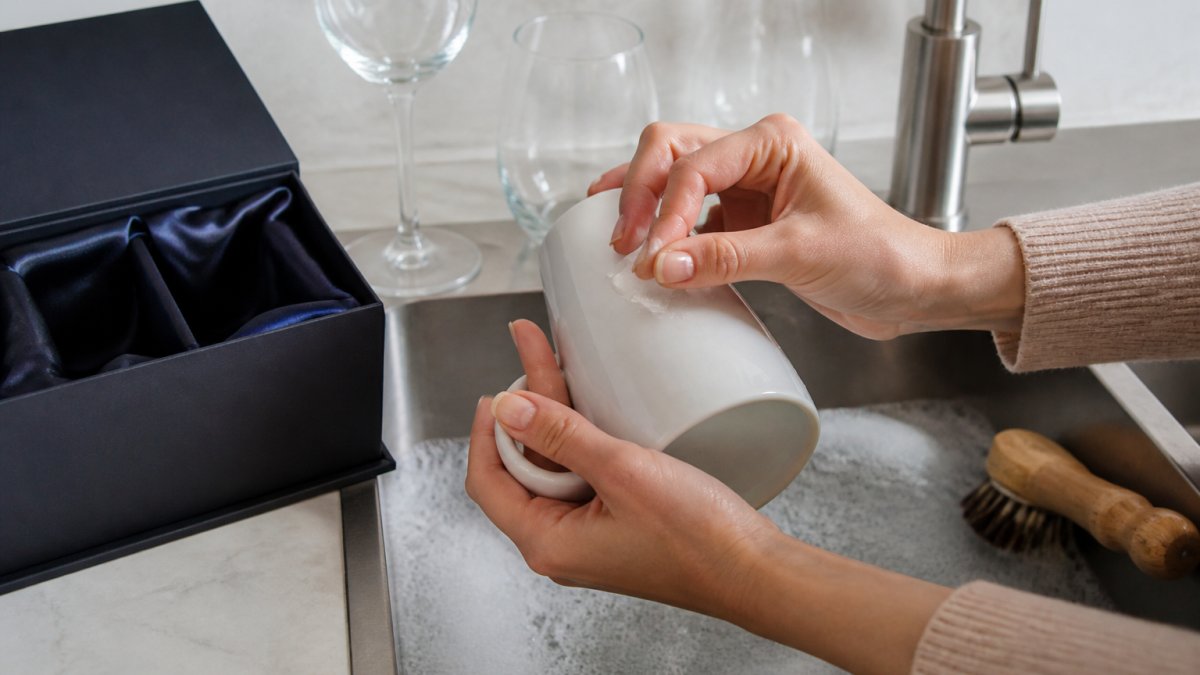
Remove Logos, Coatings, Lids, and Straws
Logos and coatings are the first things to address. Etched or engraved logos are permanent and won't affect recycling, they're part of the glass itself. Screen-printed or vinyl logos, however, must come off.
For printed logos:
- Soak the item in warm water for 10-15 minutes
- Use a soft brush or sponge to gently scrub the logo away
- For stubborn prints, try a cloth with a small amount of rubbing alcohol
- Rinse thoroughly with clean water
For adhesive labels:
- Peel off as much as possible by hand
- Use warm water and a sponge to remove residue
- Rubbing alcohol works on sticky residue
- Dry completely before recycling
For attached components:
- Remove plastic lids, straws, and rubber seals, these don't belong in the glass stream
- Unscrew metal components like handles or decorative rings if possible
- Leave items that are permanently bonded (like welded metal bases)
Coatings like varnish, lacquer, or protective sealant also need removal. These burn off during recycling, releasing fumes. Scrape gently with a plastic scraper or let warm soapy water soften them first.
Wash and Sort by Material
Once logos and coatings are removed, wash each item thoroughly.
Washing steps:
- Use hot water and dish soap
- Clean inside and outside with a brush
- Rinse multiple times until no soap remains
- Dry completely with a clean cloth
Moisture can cause problems at the facility, especially if items are wrapped or stacked. Wet items also freeze in winter, potentially cracking during transport.
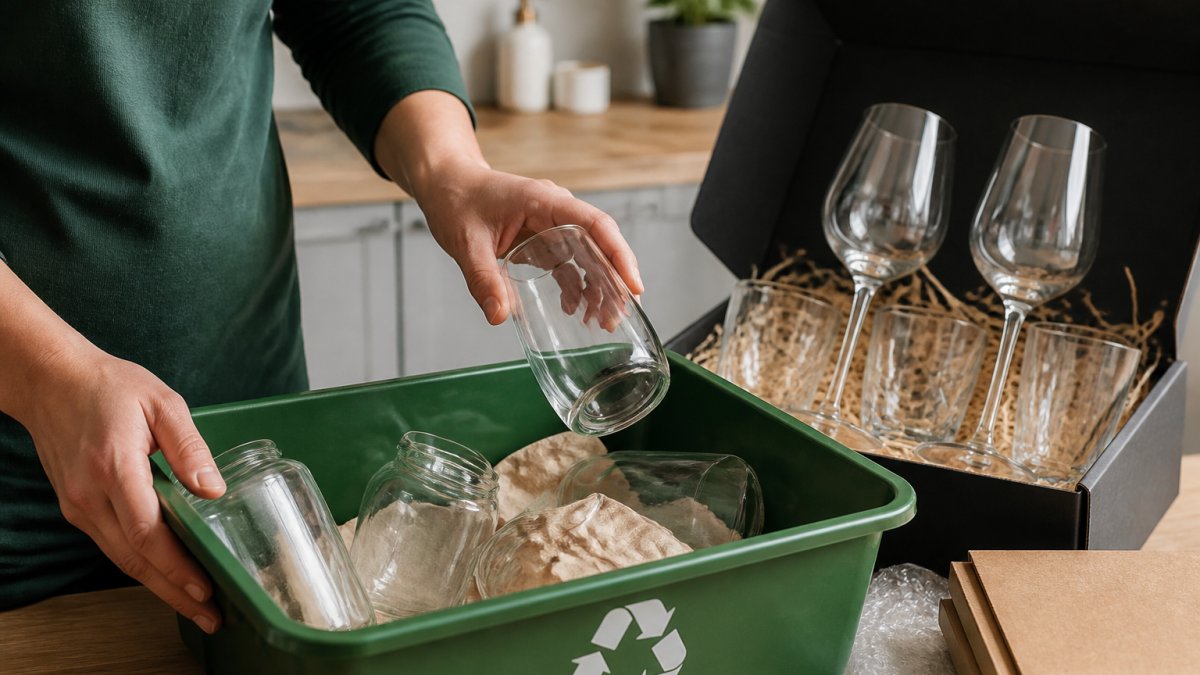
After washing, sort by material type. Keep glass separate from ceramic. Keep different plastic codes apart if your council requires it. Grouping by material helps facility staff process items faster.
Package Securely for Collection
How you package drinkware matters. Broken glass creates safety hazards for collection workers and contaminates the recycling stream.
Packaging guidelines:
- Do not crush or break items intentionally
- Wrap fragile items loosely in newspaper or paper (not plastic)
- Place wrapped items in a sturdy box or bag
For curbside collection, place the box or bag next to your recycling bin on collection day. If items are too large for the bin, ask your council whether they accept oversized items separately.
How to Dispose of Broken Glassware Safely
Broken or chipped drinkware should not go into curbside recycling. Broken glass poses a serious injury risk to sorting workers and can jam equipment.
For small broken pieces:
- Wrap securely in several layers of newspaper
- Label the package clearly: "Broken Glass"
- Place in your general waste bin, not recycling
- Never mix broken glass with curbside recycling
For large broken items:
- Contact your local council to ask about hazardous waste drop-off points
- Some facilities accept broken glass separately
- Never place broken items loose in any bin
If a branded item is chipped but still functional, consider reuse or donation instead. A chipped mug still holds coffee. Broken glass, however, is a safety issue and belongs in general waste.
Recycling Etched Glass and Branded Items
Etched and engraved drinkware presents a different recycling scenario than printed items. The engraving or etching is part of the glass itself, it won't wash off or cause contamination.
Will Etching or Engraving Prevent Recycling?
No. Etching and engraving are permanent modifications to the glass surface. They don't interfere with the recycling process. The glass melts the same way whether it's plain or etched.
However, many people choose not to recycle etched items because of their sentimental or promotional value. A set of etched glasses bearing your company logo or a memorable date often has a second life waiting.
Checking Your Local Recycling Rules
Even when an item is theoretically recyclable, local rules vary. Some councils accept all glass types; others have restrictions.
How to check your local rules:
- Visit your council's website and search "glass recycling"
- Look for a list of accepted items
- Call the council directly if the website is unclear
- Ask specifically about ceramic and decorative glassware
Many councils provide a phone number or online chat for recycling questions. Use it. A two-minute conversation prevents items from being rejected at the facility.
Some councils also maintain drop-off points for items that don't fit curbside collection. Large sets of branded drinkware may qualify for drop-off rather than curbside pickup.
How to Reuse Branded Drinkware Before Recycling
Recycling should be a last resort. Reuse extends the life of branded drinkware and often provides more value than the material recovery from recycling.
Donation and Second-Life Options
Branded drinkware in good condition has real value. Consider these options before recycling:
Internal reuse:
- Donate to staff as thank-you gifts
- Use in office kitchens or break rooms
- Offer to employees who missed the original campaign
Community donation:
- Local schools and clubs often welcome branded glassware
- Community centres, libraries, and charities accept donations
- Hospitality training programs use drinkware for student practice
Online resale:
- List sets on marketplace platforms
- Sell as vintage or promotional collectibles
- Bundle items for better pricing
Event venues and catering:
- Restaurants and bars may purchase bulk glassware
- Catering companies use extra drinkware for events
- Wedding and event planners sometimes buy branded items for themed events
Donation keeps items in use longer and often requires less effort than recycling. A box of branded mugs that might cost money to recycle could be welcomed by a local school or community group.
Upcycling Ideas for Branded Glassware
Creative reuse gives branded drinkware new purpose. Consider these upcycling ideas:
- Candle holders: Glass vessels work well for pillar candles or tea lights
- Flower vases: Etched glasses make attractive small vases for single stems or dried flowers
- Desk organizers: Tall glasses hold pens, pencils, and office supplies
Upcycling keeps items out of the waste stream and often creates something more useful than the original purpose. A branded beer stein becomes a desk organizer; an etched wine glass becomes a candle holder.
Commercial and Bulk Disposal for Businesses
If you're a business with large quantities of branded drinkware, overstock, discontinued designs, or end-of-campaign inventory, standard curbside recycling isn't practical.
Commercial recycling services handle bulk glass, ceramic, and plastic drinkware. These services collect directly from your premises and process items at industrial facilities.
For branded items with promotional value, consider reaching out to:
- Corporate gift resellers who buy overstock
- Hospitality suppliers who purchase bulk drinkware
- Event rental companies that may use items for themed events
Some businesses find that donating large quantities to schools, community centres, or charities creates goodwill while clearing inventory.
Common Mistakes to Avoid When Recycling Drinkware
Most recycling problems stem from a few preventable mistakes.
Mistake 3: Mixing materials Placing ceramic mugs in a glass-only bin creates sorting problems.
Mistake 4: Including broken glass Broken items injure workers and damage equipment.
Mistake 5: Not washing items thoroughly Residual food, drink, or soap causes contamination.
Mistake 6: Packing items loosely Loose items shift during transport and break.
Mistake 7: Forgetting to check local rules Recycling rules vary by council.
When you're ready to retire a branded drinkware campaign, The Glassware Company can help you plan for new designs that will serve your business better. We also offer custom manufactured gift boxing for etched and branded glassware, a premium presentation option that makes your drinkware stand out.
Frequently Asked Questions
Can custom branded glassware go in the recycling bin?
Yes, custom branded glassware can be recycled if the base material is glass. Before placing it in your recycling bin, remove any non-glass components such as lids, straws, or metal sleeves. Wash the item thoroughly to remove food residue or contaminants. Check your local council's recycling guidelines, as some facilities have restrictions on certain types of glass or items with coatings. Etched or printed logos do not prevent recycling, but heavily coated or laminated items may need to go to general waste instead.
How should I dispose of broken drinking glasses?
Broken glassware should never go in your standard recycling bin, as it can injure workers at the facility. Instead, wrap the broken pieces securely in several layers of newspaper or bubble wrap and place them in a sealed plastic bag or container. Label the bag clearly as 'broken glass' and place it in your general waste bin. For large quantities of broken branded drinkware, contact your local recycling facility or council waste service to ask about bulk disposal options or specialist glass collection services.
What should I do with branded drinkware that cannot be recycled?
Before sending items to waste, consider whether they can be reused or donated. Many charity shops, community centres, and schools welcome branded mugs or glasses in good condition. If the item is damaged or heavily coated and cannot be recycled, place it in your general waste bin. For businesses disposing of large quantities of promotional drinkware, contact local waste management services about commercial disposal options. Some facilities may accept items that curbside recycling cannot handle.
Can I recycle a glass with an etched or printed logo?
Etched logos do not prevent recycling because the design is created by removing a thin layer of the glass surface. Printed logos are typically applied with food-safe inks that wash off easily and do not contaminate the recycling stream. However, some branded glassware may have permanent coatings or specialised finishes that interfere with recycling. Check the item for any labels indicating whether it has a protective coating. If you're unsure, contact your local council's recycling service for guidance on that specific item's recyclability.