 comparison
Screen Printing vs Laser Engraving: Which Suits Your Glassware
Table of Contents
- Screen Printing vs Laser Engraving: Key Differences at a Glance
- How Screen Printing on Glassware Works
- How Laser Engraving on Glass Works
- Durability: Screen-Printed Glassware vs Laser-Engraved Glass
- Cost Considerations by Order Size
- Custom Branded Glassware: Which Method Fits Your Use Case
- Environmental and Operational Considerations
- Making Your Final Decision
- Frequently Asked Questions
Last Updated: October 10, 2026
Screen Printing vs Laser Engraving: Key Differences at a Glance
When comparing screen printing vs laser engraving, your choice shapes appearance, durability, and cost. The right method depends entirely on what you're trying to achieve.
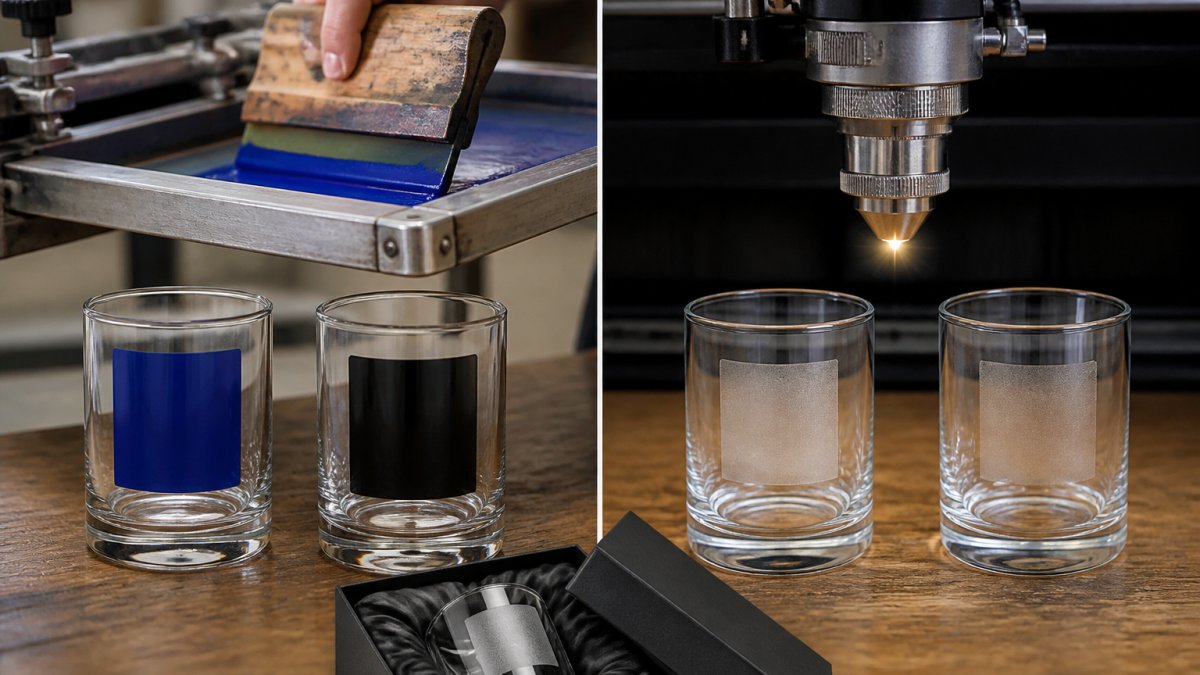
Screen printing applies coloured ink directly to glass, creating vibrant multi-colour designs. Laser engraving uses a focused beam to remove the top layer, leaving a permanent mark fused into the material. Both deliver professional results in different scenarios.
Comparison Table
| Feature | Screen Printing | Laser Engraving |
|---|---|---|
| Colour capability | Full colour, gradients, photos | Monochrome (black/white) |
| Durability | Good with proper curing; fades over time | Permanent; won't fade or peel |
| Precision | Sharp for logos; limited fine detail | Excellent for intricate designs |
| Setup time | Requires screens; slower initial setup | Minimal setup; quick turnaround |
| Small batch cost | Higher per-unit cost | More cost-effective |
| Large volume cost | Becomes very affordable | Consistent per-unit pricing |
| Dishwasher safe | Yes, but gradual fading after 100+ cycles | Yes, indefinitely |
How Screen Printing on Glassware Works
Screen printing transfers ink through a mesh screen onto glass, creating crisp, colourful designs at scale.
Process and Setup
Screen printing requires a separate screen for each colour. Artwork is separated into colour layers, each coated onto its own mesh screen. Glass passes under each screen in sequence, with ink pushed through onto the surface.
Screen creation typically requires 3-5 working days. Once made, production moves quickly, making screen printing ideal for larger runs where setup cost spreads across hundreds or thousands of units.
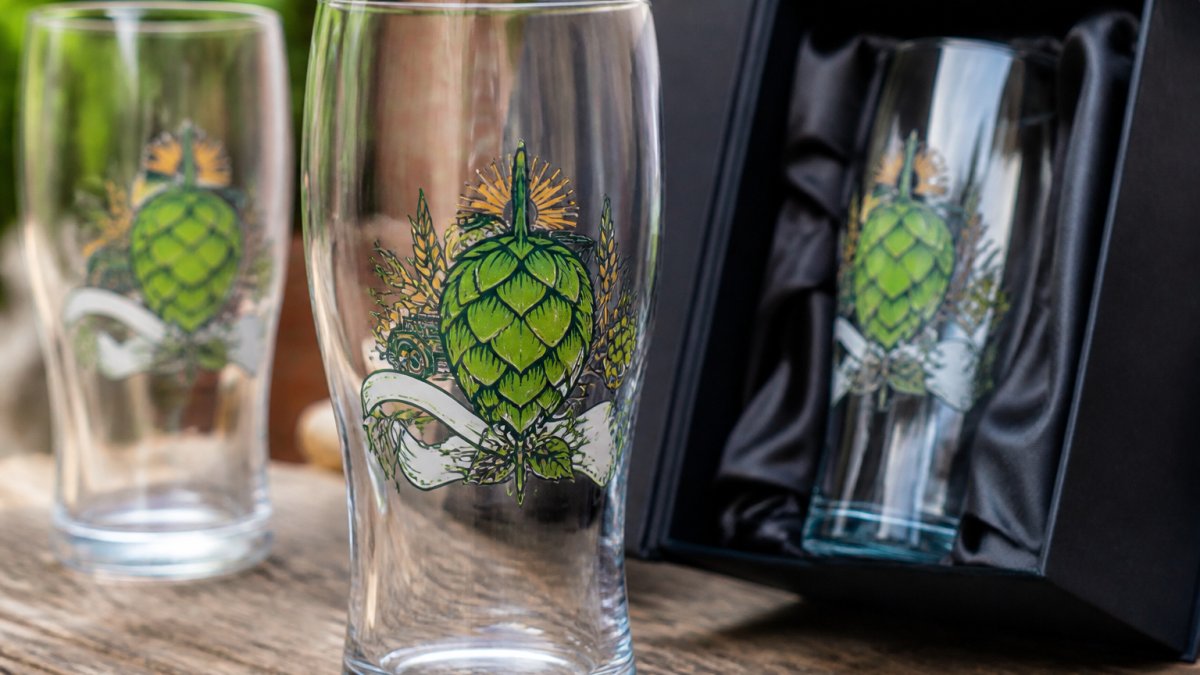
Colour, Gradients, and Visual Appearance
Screen printing excels at full-colour photographs, gradients, and multi-colour logos. If your brand identity relies on specific Pantone colours or complex artwork, screen printing delivers exactly what you approve.
The ink sits on top of the glass, creating vibrant, bold colours ideal for merchandise that needs shelf impact. Metallic and specialty inks add shimmer or texture that laser engraving cannot match.
Screen-printed ink fades gradually after 100+ dishwasher cycles, which matters in high-use environments like commercial kitchens or hospitality venues.
How Laser Engraving on Glass Works
Laser engraving uses a computer-controlled beam to vaporise a thin glass layer, creating a permanent mark fused into the material. It cannot peel, fade, or wear away.
Precision and Detail Capability
Laser engraving excels at intricate detail, fine lines, small text, and complex artwork come through with clarity screen printing struggles to match.
Every glass receives an identical mark with no variation. For corporate clients needing consistency across large orders, this precision matters.
The trade-off is colour. Laser engraving produces a monochromatic mark, typically a frosted or clear appearance depending on the glass type. You cannot reproduce full-colour designs or gradients. If your brand identity depends on specific colours, laser engraving limits you.
Production Speed and Scalability
Laser engraving has minimal setup, artwork goes directly into the laser software and production begins, making it faster for small orders and rush jobs.
For large volumes, laser engraving's per-unit cost remains constant, while screen printing becomes cheaper at scale.
Laser engraving offers faster turnaround for small orders; screen printing's screen-creation step takes longer initially.
Durability: Screen-Printed Glassware vs Laser-Engraved Glass
This is where the methods diverge most significantly. If longevity is your priority, laser engraving wins decisively.
Wear Resistance and Dishwasher Performance
Laser-engraved marks are permanent and fused into the glass. After 500 dishwasher cycles, they look identical to day one.
Screen-printed designs fade gradually with repeated washing and heat exposure. Most remain vibrant for 100-150 dishwasher cycles; in daily-use hospitality settings, this translates to 3-6 months.
For occasional-use corporate gifts, fading doesn't matter. For operational glassware in restaurants, bars, or breweries, durability is a cost consideration.
Long-Term Appearance and Fading
Screen-printed designs fade unevenly, creating a patchy appearance. In busy commercial kitchens, logos look worn by month six or seven.
Laser-engraved designs don't fade and remain crisp for years, which matters for brand perception in hospitality settings.
Cost Considerations by Order Size
The cost equation flips based on volume: screen printing has high upfront setup but low per-unit production cost, while laser engraving has minimal setup but consistent per-unit cost.
Setup and Tooling Costs
Screens can be reused for reprints, but the initial investment must be justified by order volume.
Laser engraving has no tooling cost, eliminating the setup barrier and making it accessible for small, urgent, or one-off orders.
Per-Unit Production Cost
Screen printing's per-unit cost drops sharply with volume.
Laser engraving's per-unit cost remains stable across volumes, with no consumables that scale with volume.
Break-Even Analysis by Volume
Small orders (50-200 units): Laser engraving wins. Screen printing's setup cost is not justified by such a small run. Laser engraving's minimal setup means you pay only for production time.
Medium orders (300-1,500 units): The methods approach parity.
Large orders (2,000+ units): Screen printing becomes significantly cheaper per unit. The setup cost is now spread across thousands of glasses, reducing its impact to pennies per unit. Screen printing's per-unit production cost is lower than laser engraving's, so the total cost advantage grows with volume.
Additional Cost Factors
Colour complexity: Each additional colour in screen printing requires a separate screen. A five-colour design costs more to set up than a one-colour design. Laser engraving's cost is unaffected by colour complexity because it produces monochromatic marks.
Design detail: Intricate designs with fine lines may require higher-quality screens or slower laser production, affecting cost. Screen printing struggles with very fine detail, potentially requiring a premium screen or multiple passes. Laser engraving handles fine detail without cost penalty.
Rush fees: Laser engraving's minimal setup makes it ideal for rush orders. Screen printing's screen-creation step cannot be rushed without significant cost premiums. If you need delivery in under two weeks, laser engraving is often the only economical option.
Repeat orders: If you plan to reorder the same design in future, screen printing becomes more attractive. The screens can be stored and reused, eliminating setup cost on the second and subsequent runs. Laser engraving has no reuse advantage; each order incurs the same per-unit cost.
Recommendation Framework
For your specific order, calculate total cost (setup + per-unit production × quantity) for both methods. Most suppliers can provide quotes quickly. If you're uncertain whether to choose screen printing or laser engraving, order size is often the deciding factor.
The Glassware Company can assess your order volume, design complexity, and timeline, and recommend the most cost-effective method for your project. We also offer custom-manufactured gift boxing for etched and branded glassware, with an approximate 28 working day turnaround, creating a premium presentation option that elevates your branded items and justifies the investment in high-quality glassware.
Custom Branded Glassware: Which Method Fits Your Use Case
The right choice depends on your specific situation, not on which method is "better" in abstract terms.
Corporate Gifts and Client Appreciation
For corporate gifts, screen printing typically wins. You want colour, visual impact, and immediate brand recognition. A beautifully screen-printed wine glass or beer stein makes a memorable impression on a client's desk or bar.
Durability is less critical because the glass will be used occasionally or displayed. The vibrant colours matter more than long-term fade resistance. Screen printing delivers the premium look and feel that corporate clients expect.
Hospitality, Events, and Merchandise
For items used in hospitality settings, bars, restaurants, breweries, wineries, laser engraving is the practical choice. These glasses are washed daily and handled frequently. Screen-printed designs won't survive the operational environment.
Laser engraving ensures your branding remains crisp and professional month after month. Event merchandise benefits similarly. If you're producing branded glasses for a conference or festival, laser engraving guarantees the design stays pristine through the event and beyond.
Material Compatibility and Substrate-Specific Outcomes
Not all glass responds identically to both methods. Clear glass accepts both techniques well. Coloured or tinted glass can complicate screen printing because the ink colour interacts with the glass tint. Laser engraving produces consistent results on any glass colour, the frosted mark appears the same whether the glass is clear, blue, or amber.
Tempered glass (heat-treated for strength) can be laser engraved but is more challenging to screen print because the coating can be affected by the curing heat. If you're using tempered glass, laser engraving is often the safer choice.
Environmental and Operational Considerations
Screen printing requires chemical inks and solvents for cleanup. The environmental footprint is higher, though responsible manufacturers manage waste properly. Setup and cleanup also add operational complexity.
Laser engraving produces no chemical waste. The process is cleaner from an operational standpoint. For businesses prioritising environmental responsibility, laser engraving aligns better with those values.
Operationally, laser engraving requires less space and fewer consumables. Screen printing requires screens, inks, and solvents stored on-site. If you're outsourcing production, this matters less, but it's worth considering for in-house operations.
Making Your Final Decision
Choose screen printing if you need full colour, visual vibrancy, and the design will be used occasionally or displayed. It's ideal for corporate gifts, event merchandise, and items where immediate visual impact matters.
Choose laser engraving if durability, precision, and long-term appearance are priorities. It's essential for operational glassware, high-use items, and designs requiring fine detail.
For order sizes under 500 units, laser engraving is typically more cost-effective. For orders over 2,000 units, screen printing becomes the more economical choice. At The Glassware Company, our team can assess your specific requirements, design complexity, order volume, intended use, and timeline, and recommend the method that delivers the best result for your budget and goals.
Choosing between screen printing and laser engraving isn't about picking the "best" method, it's about matching the technique to your specific need. We ensure your artwork is on point and your branded glassware makes a striking impression. Get an online quote today and let us help you choose the right approach for your custom glassware project.
Frequently Asked Questions
Which lasts longer on glassware: screen printing or laser engraving?
Laser engraving typically lasts longer because it removes material from the glass surface, creating a permanent mark that cannot fade or peel. Screen-printed designs can fade or wear away with repeated dishwashing and use over months or years. For commercial dishwasher environments or high-traffic settings, laser engraving offers superior durability and a more permanent branding solution.
Can screen-printed or laser-engraved glassware be washed in a dishwasher?
Both methods can withstand dishwashing, but with different outcomes. Laser-engraved glassware performs exceptionally well in commercial dishwashers since the mark is etched into the glass itself. Screen-printed glassware can be dishwasher-safe, but repeated high-temperature cycles may gradually fade or wear the printed design. For items used frequently or in hospitality settings, laser engraving provides more reliable long-term appearance.
Can screen printing and laser engraving reproduce coloured logos on glass?
Screen printing excels at reproducing full-colour logos with gradients and vibrant hues. Laser engraving creates monochromatic marks (typically black or frosted appearance depending on glass type) and cannot produce colour. If your logo requires multiple colours or gradients, screen printing is the better choice. For single-colour or monochromatic branding, laser engraving delivers precision and durability.
Which method is better for detailed logos on glassware?
Laser engraving offers superior precision for intricate details, fine lines, and small text. The focused laser beam can reproduce complex artwork with exceptional clarity. Screen printing works well for bold, solid designs but may struggle with very fine detail or thin lines. For logos with intricate artwork, small text, or fine linework, laser engraving is the stronger choice.
What are the disadvantages of screen printing on glassware?
Screen printing requires setup time and preparation for each design. The ink-based process can fade over time with repeated washing and UV exposure. Screen printing is less precise for fine details and cannot reproduce extremely intricate artwork. Additionally, colour consistency across multiple production runs can vary, and the process generates more consumables waste than laser engraving.