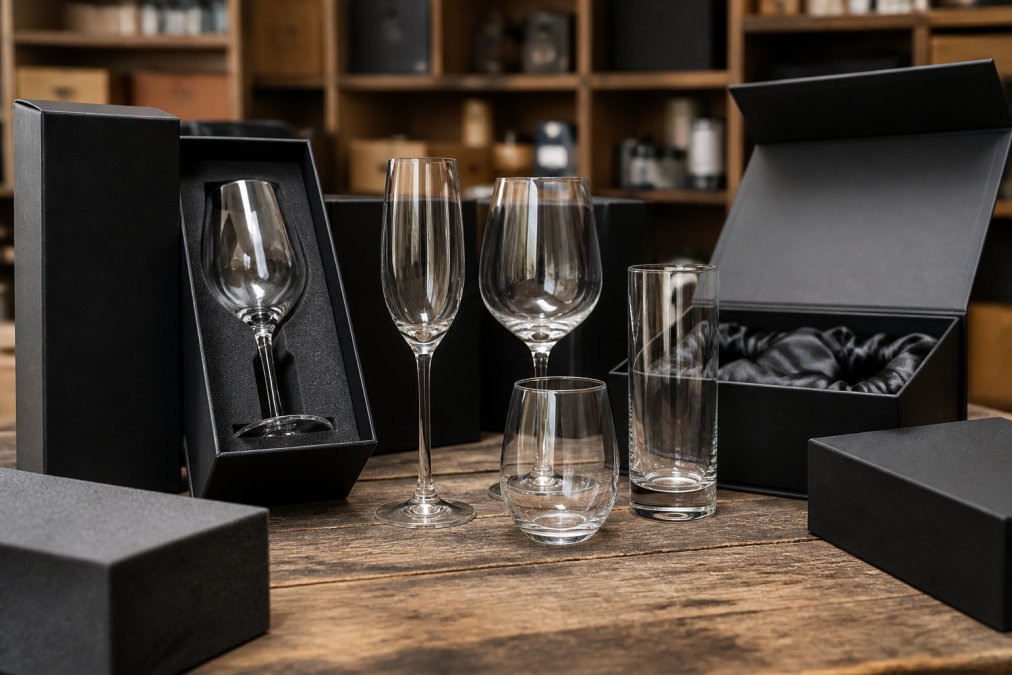
 comparison
Promotions247 Alternative for Branded Drinkware in 2026
Table of Contents
- Why Brands Outgrow Promotions247 for Drinkware
- Where Mass-Market Promotional Suppliers Fall Short
- Promotions247 Alternative for Branded Drinkware: Quick Comparison
- Custom Etched Glassware for Corporate Events
- Bespoke Glassware Engraving Services Explained
- Corporate Gift Packaging Solutions That Lift Perceived Value
- Calculating ROI on Branded Drinkware Gifts
- Frequently Asked Questions
Last Updated: September 19, 2026
Why Brands Outgrow Promotions247 for Drinkware
Branded drinkware is one of the few promotional products people keep, use daily, and display to clients. That staying power is why so many marketing managers start with a general promotional supplier, then hit a wall. This guide from The Glassware Company explains why mass-market suppliers stop delivering once drinkware becomes core to your brand strategy, and what to look for in a Promotions247 alternative for branded drinkware.
Where Mass-Market Promotional Suppliers Fall Short
Mass-market promotional suppliers excel at one thing: getting a printed logo onto large volumes of low-cost items quickly. That works for giveaways, but falls apart when the item must represent your brand for years. The most common complaints we hear follow a pattern:
- Fading and peeling. Screen-printed logos on drinkware wear down with regular washing, especially in commercial dishwashers.
- Generic blanks. The same tumbler appears in dozens of catalogues, so your "custom" gift looks like everyone else's.
- Thin packaging. Items arrive in plain cartons, which undercuts the moment of giving.
- Inconsistent reorders. Colours and placements drift between batches, so a quarterly reorder never matches the original run.
Promotions247 Alternative for Branded Drinkware: Quick Comparison
The right alternative depends on what you need: permanent branding, premium presentation, or bulk volume at the lowest unit cost. Here's how the main supplier types compare.
| Supplier Type | Branding Method | Durability | Best For | Packaging |
|---|---|---|---|---|
| Specialist etcher/engraver | Laser etching, engraving | Permanent | Corporate gifts, wineries, breweries | Custom gift boxing available |
| General promotional supplier | Screen print, pad print | Fades with washing | High-volume giveaways | Standard cartons |
| Online print platform | Digital print | Moderate | Small business basics | Basic packaging |
| Wholesale bulk supplier | Screen print, sublimation | Varies by method | Trade shows, mass events | Bulk cartons |
Matching Drinkware to Your Marketing Goal
Before comparing quotes, decide what the item is for. The same glassware brief produces very different answers depending on the goal.
- Client retention and appreciation: Choose a glass style the recipient will use often and a branding method that survives washing. Etched crystal or lead-free glass in a fitted gift box signals considered selection rather than bulk ordering.
- Hospitality service ware: Venues need glassware that withstands commercial dishwashers and repeated handling. Etching or engraving is the only method that holds up to that cycle without fading.
- Trade shows and mass events: Volume and speed matter more than longevity. A printed item at a low unit cost is often the rational choice when the goal is reach, not retention.
- Internal recognition: Staff-facing gifts benefit from personalisation. Etched names or milestone dates alongside the logo turn a generic item into a keepsake.
Material Choice and How It Affects Branding
Material determines which branding methods work and how the finished item feels.
- Crystalline and lead-free glass: Takes etching cleanly and shows fine detail well. Best for logos with small text or crests.
- Borosilicate glass: More resistant to thermal shock, which suits double-walled tumblers and coffee glasses. Etching works, but the mark reads differently on a curved double wall.
- Recycled glass: An increasingly common choice for sustainability-led campaigns. Colour variation between batches is normal, so approve a production sample before a large run.
- Stainless steel and vacuum-insulated vessels: Durable and popular for tumblers, but etching removes the protective coating on some finishes. Laser engraving is usually the better method here.
Pricing Models at a Glance
Pricing depends on quantity, artwork complexity, glassware style, and delivery, so no single figure applies. What you can compare is the model each supplier uses:
- Quote-based (specialist): Priced per project, factoring in etching method, glass style, and packaging. Best for considered, lower-volume runs.
- Per-unit (online platforms): A published rate per item, with discounts at higher volumes. Best for simple, fast orders.
- Wholesale/bulk: Tiered pricing that drops sharply at high quantities. Best for large events where unit cost dominates.
Custom Etched Glassware for Corporate Events
Custom etched glassware for corporate events uses a laser or abrasive process to cut your logo permanently into the glass surface. Unlike ink, the mark is part of the material, surviving commercial dishwashing and years of handling. A printed logo is applied to the glass; an etched logo becomes part of it, for a client appreciation gift or winery tasting room, that difference is everything.
Etching vs Screen Printing: Which Lasts Longer
Etching lasts longer by a wide margin. Screen printing sits on the surface and wears away with abrasion and washing; etching removes or fuses material, so there's no ink layer to fade.
Choose based on how the item will be used:
- Etching or engraving: Best for gifts, hospitality service ware, and anything washed repeatedly.
- Screen printing: Fine for one-off event giveaways where the item is a keepsake, not daily-use ware.
Bespoke Glassware Engraving Services Explained
Bespoke glassware engraving services cover the full process: artwork preparation, proofing, production, and batch-matched reorders. Service quality sits in the proofing, not just the engraving, a supplier that shows a digital proof and confirms placement before production won't surprise you at delivery.
Proofing, Artwork Approval and Batch Consistency
Batch consistency is the quiet killer of long-term branding. A logo that shifts in size or position between reorders looks careless, even when each piece is well made.
Protect yourself with a simple process:
- Submit vector artwork (not a screenshot or low-resolution file).
- Approve a digital proof showing exact logo size and placement.
- Request a pre-production sample for large or repeat orders.
- Ask the supplier to archive your artwork file for future reorders.
- Confirm that reorders pull from the same saved file, not a fresh setup.
Corporate Gift Packaging Solutions That Lift Perceived Value
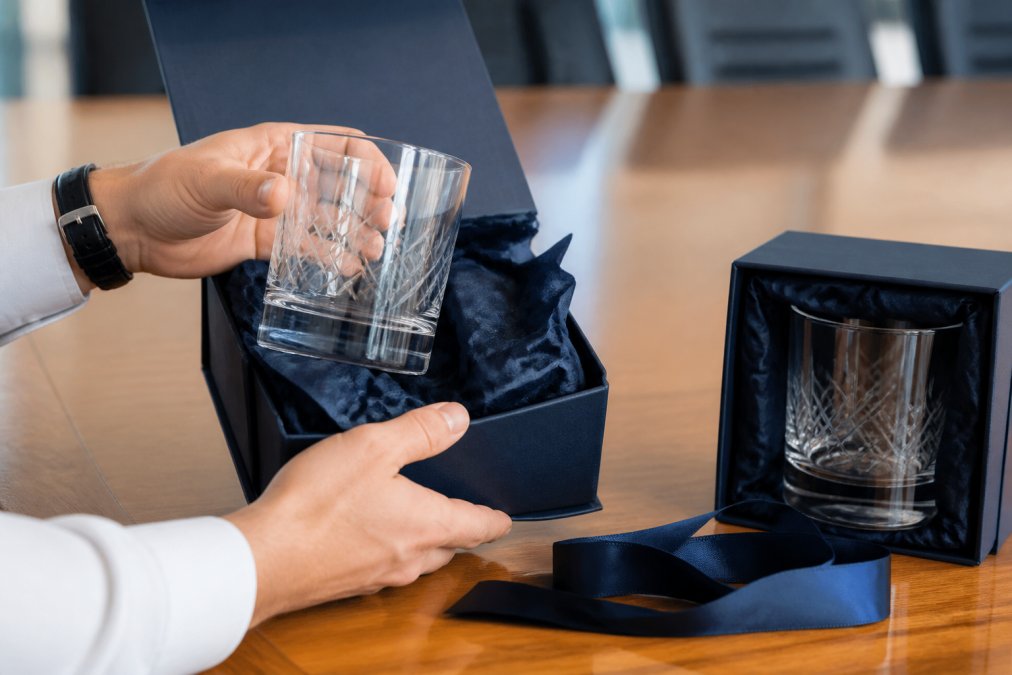
Corporate gift packaging solutions change how a branded gift is received. The same etched glass feels noticeably more premium in a purpose-built box than a plain carton.
Calculating ROI on Branded Drinkware Gifts
Calculating ROI on branded drinkware comes down to cost-per-impression: the item's cost divided by the number of times it's seen. A printed tumbler that fades in six months generates a handful of impressions before it's retired; an etched glass that stays on a desk or bar for years keeps generating them. Unit cost is higher, but cost-per-impression can be far lower.
A Simple Cost-Per-Impression Framework
You don't need precise data, just consistent assumptions applied to every option. Work through four inputs:
- Unit cost, all-in. Include branding, packaging, and delivery, not just the item price. A custom gift box adds to the unit cost but changes how the gift is received and how long it's kept.
- Expected lifespan. How many years will the item realistically stay in use? Etched glassware kept on a desk or bar often lasts five years or more. Printed items washed commercially may show fading within months.
- Usage frequency. Daily-use items accumulate impressions far faster than occasional ones. A water glass used at a desk every workday generates far more visibility than a champagne flute brought out twice a year.
- Audience per use. A gift kept at home reaches a different audience than service ware in a hospitality venue. A tasting-room glass may be seen by hundreds of visitors a year; a desk tumbler by a handful of colleagues.
Worked Example: Printed Tumbler vs Etched Glass
Assume two options for a 100-unit client gifting program.
Option A, printed tumbler: Lower unit cost, but the logo fades with commercial washing. Assume a one-year lifespan, used a few times a week by the recipient, seen by a small household audience.
How Drinkware Compares to Other Promotional Items
Drinkware has an advantage over many promotional categories because it's used repeatedly and in public. A branded pen or tote bag may be kept, but a glass on a desk or tasting-room shelf is seen by the same audience again and again. The comparison that matters isn't drinkware versus no drinkware, it's durable versus disposable drinkware. A cheap printed item discarded after a few months generates a burst of impressions and then nothing; a durable etched item keeps working for years, so the cost-per-impression gap widens over time.
Measuring Impact Beyond Impressions
Cost-per-impression is a useful planning tool, but not the only measure. For client gifting, track qualitative signals alongside it:
- Recipient acknowledgement. Do clients mention the gift in follow-up conversations? A gift that prompts a reply has done more than generate passive impressions.
- Repeat orders. If a client requests the same glassware for their own event, the gift has crossed from marketing into product preference.
- Internal reuse. If your team asks to reorder for a new cohort, the item is working as recognition, not just promotion.
Frequently Asked Questions
What should I look for when choosing a branded drinkware supplier?
Check four things: how the branding is applied (etching and engraving are permanent, while some prints can fade after repeated commercial washing), whether the supplier offers a proofing step before production, what minimum order quantities apply, and realistic lead times. Ask about batch consistency if you reorder quarterly, and confirm whether premium presentation options such as custom gift boxing are available. Pricing depends on quantity, artwork complexity and delivery, so request a written quote rather than relying on website estimates.
How does custom engraving compare to screen printing for corporate gifts?
Screen printing lays ink on the surface, which suits high-volume runs on ceramic mugs and tumblers at lower unit costs. Laser engraving and etching remove or fuse material into the glass itself, so the mark does not peel or wash away. For glassware used in hospitality settings with frequent commercial dishwasher cycles, etching holds up better. Print methods still win on very large, simple runs where speed and per-unit price matter more than longevity.
What is the typical lead time for high-quality etched glassware?
Turnaround depends on the range chosen, order size and whether gift boxing is included. Standard etched glassware runs are usually quicker than premium presentation options; custom manufactured gift boxing adds roughly 28 working days to the schedule. If your event is six weeks out, confirm production and delivery windows in writing before approving artwork, and ask whether a rush option exists for your specific order.
Are there Australian suppliers that offer premium gift boxing for glassware?
Yes. The Glassware Company manufactures custom gift boxes to match etched and branded glassware, which lifts the perceived value of corporate gifts and client appreciation packs. The boxing is produced to fit the specific glassware range, so the presentation stays consistent across reorders. Because the boxes are custom made, factor the extra production window into your planning and order well ahead of event dates.
How can branded glassware improve corporate brand recognition?
Glassware stays in circulation. A branded tumbler sits on a desk, an etched wine glass appears at client dinners, and a beer stein is used weekly in a taproom, giving repeated brand visibility without further spend. Because etching is permanent, the logo keeps working through years of washing and handling. That long repeat exposure is why glassware often delivers a stronger cost-per-impression than disposable marketing collateral.