 comparison
Crystal vs Standard Glass for Winery Tasting Rooms
Last Updated: October 26, 2026
Quick Summary
Selecting premium glassware for winery tasting rooms means comparing crystal and standard glass on annual cost per cover, not unit price alone. Crystal wins on aroma and presentation, while standard glass wins on breakage tolerance, dishwasher friendliness and budget.
- Crystal offers a finer rim and more expressive aroma but breaks at a higher rate than standard glass.
- Standard glass is thicker, dishwasher friendly and better suited to high-volume cellar doors and casual flights.
- Calculate annual cost per cover as unit price times replacements per year plus washing labour.
- Track breakage by style and week, and keep buffer stock so a broken set never stalls a tasting.
- Custom etched glassware with gift boxing, around a 28 working day turnaround, suits retail and club gifts.
Table of Contents
- What Winery Tasting Rooms Actually Need From Glassware
- Crystal vs Standard Glass: The Comparison That Decides the Order
- The Best Wine Glasses for Wine Tasting: Shape, Bowl and Rim
- Stemmed vs Stemless Wine Glasses in a Tasting Room
- Durable Wine Glasses for Hospitality: Cleaning, Breakage and Storage
- Custom Branded Wine Glasses and Gift Boxing as a Premium Option
- Request a Quote for Your Tasting Room Glassware
- Frequently Asked Questions
What Winery Tasting Rooms Actually Need From Glassware
Selecting premium glassware for winery tasting rooms is a balancing act between presentation and practicality, and the stakes are higher than most buying guides admit. Industry data shows wineries entered 2026 averaging 1,585 wine-club members each, a net gain of roughly 16 members year on year, according to the WineBusiness Monthly 2026 Tasting Room Survey Report. Every one of those members passes through your cellar door and lifts a glass. At The Glassware Company, we see how much that first physical impression matters.
Here is the tension most guides skip: a glass that flatters a shiraz in a marketing photo may not survive a commercial dishwasher three times a day. The best wine glasses for wine tasting are the ones your team can serve consistently, wash reliably and replace affordably.
Service Consistency and the Case for One Glass
Consistent glassware makes a tasting room feel intentional rather than improvised, and that principle sits at the heart of selecting premium glassware for winery tasting rooms. A mismatched set of glasses signals a venue that hasn't thought about the guest experience, even when the wine is excellent, as GoFoodservice's tasting room guidance notes.
A universal glass is the simplest route to that consistency. Food & Wine's 2026 tasting panel named a 19-ounce universal glass among its top picks for both red and white wines, and King Estate describes the universal format as an all-purpose option. One glass style means one washing protocol, one storage rack and one reorder item.
Crystal vs Standard Glass: The Comparison That Decides the Order
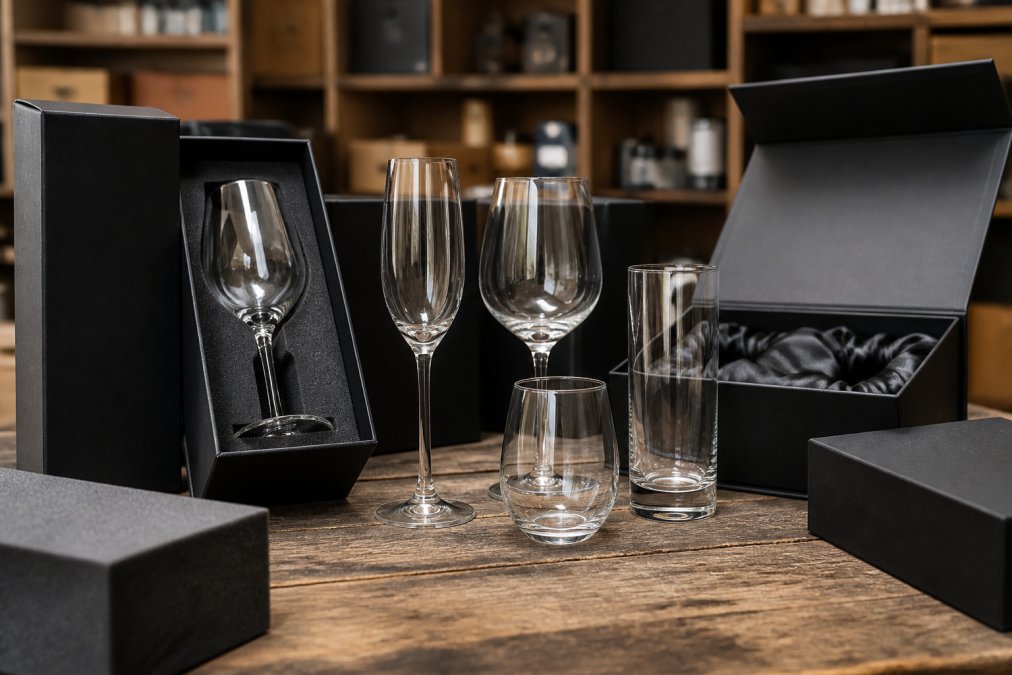
Crystal wins on aroma and presentation; standard glass wins on breakage and budget. The real decision is which trade-off your tasting room can live with across a full season of service, and that means pricing the whole lifecycle, not just the unit.
Crystal's lead content, or lead-free formulation, gives it a finer wall and a thinner rim, which many tasters say sharpens the perception of bouquet and texture. Standard glass is thicker, heavier and far more forgiving when a guest knocks a glass off a barrel. The question isn't which is better in the abstract, it's which suits your pour volume and your replacement rate.
| Factor | Crystal | Standard Glass |
|---|---|---|
| Aroma and bouquet | Finer rim, more expressive | Muted but adequate |
| Breakage tolerance | Lower | Higher |
| Washing demands | Hand wash preferred | Dishwasher friendly |
| Replacement cost per unit | Higher | Lower |
| Best for | Premium seated tastings | High-volume cellar door |
The Commercial Comparison Most Guides Skip
A consumer guide stops at the table above. A tasting room has to defend the order to a finance manager, so compare the two materials on the measures that actually drive cost per pour:
- Breakage rate. Crystal breaks at a higher rate than standard glass, and the difference compounds across a season. Ask suppliers for a realistic annual breakage assumption rather than a best-case figure, and multiply it by your weekly covers.
- Expected lifespan. Standard glass often survives more wash cycles before clouding or chipping; crystal may need retiring sooner even when it isn't dropped. A shorter lifespan raises the effective annual cost.
- Replacement availability. A glass style that is discontinued mid-season forces a full reorder and a mismatched set. Confirm the supplier keeps the line in stock and can repeat the order.
- Washing throughput. Crystal that must be hand washed consumes labour hours a commercial dishwasher would otherwise absorb. Factor the labour into the comparison, not just the glass.
- Storage footprint. Thinner crystal needs more careful racking and more shelf space per cover; standard glass stacks more densely.
A Simple Total Cost of Ownership Model
You don't need a spreadsheet to make the call, but you do need four inputs: unit price, expected breakage rate, expected lifespan in wash cycles, and the labour cost of washing. Multiply unit price by the number of replacements per year (breakage plus retirement), then add the washing labour. The material with the lower annual cost per cover is the defensible order, and it is often not the cheaper glass.
Where Standard Glass Wins
Standard glass wins whenever volume, breakage and turnover dominate the decision.
Best for: high-volume cellar doors and casual tasting flights. Skip if: your brand positioning depends on a premium, fine-dining-style experience.
If you're weighing specific designs for a cellar door, our guide to 10 unique wine glass designs for cellar doors covers the shapes worth shortlisting.
The Best Wine Glasses for Wine Tasting: Shape, Bowl and Rim
The best wine glasses for wine tasting are those whose bowl shape, rim thickness and capacity suit the wines you actually pour, not the ones in a textbook. Shape drives how aroma reaches the nose; rim thickness drives how the wine meets the lips; capacity drives pour size and how much headspace the wine has to breathe.
A Masters of Wine research paper investigated whether glassware shape affects perceptions of red and white table wines, confirming the industry's long-held view that the vessel changes the tasting experience. For a tasting room, that means matching bowl shape to your core range: a wider bowl for reds, a narrower one for whites, and a dedicated flute or tulip for sparkling.
If you're weighing specific designs for a cellar door, our guide to 10 unique wine glass designs for cellar doors covers the shapes worth shortlisting.
Stemmed vs Stemless Wine Glasses in a Tasting Room
Our pick: stemmed for seated tastings and premium flights, stemless for standing events and merchandise.
Durable Wine Glasses for Hospitality: Cleaning, Breakage and Storage
Durable wine glasses for hospitality are those built to survive commercial washing, stacked storage and the occasional dropped tray. Durability is a specification, not a feeling: it comes down to wall thickness, rim finish and how the glass is tempered.
The Operational Requirements Most Guides Ignore
Consumer guides treat durability as a single quality. A tasting room has to plan for it across four operational fronts:
- Service speed. A glass that is awkward to rack or polish slows the team down on a busy Saturday. Standardised glassware lets staff set a flight without hunting for a matching shape.
- Breakage and replacement. Track breakage by style and by week. A style that breaks above your baseline is costing you more than its unit price suggests, and a discontinued line forces a full reorder. Keep a buffer stock of your core service glass so a broken set never stalls a tasting.
- Dishwashing capacity. Confirm your glasswasher's rack height and cycle time suit the glass. Crystal that must be hand washed consumes labour a commercial machine would absorb; standard glass that stacks densely keeps throughput high.
- Storage. Racks that hold glasses by the base reduce knocks, and shelf space per cover matters when you store hundreds of glasses between services.
Accessibility and Inclusive Service
A premium tasting room serves guests of all ages and abilities, and delicate stemware is not always the most comfortable choice. Stemless designs and slightly heavier, wider-based glasses are easier to grip and more stable on a table, which suits guests who find fine stems difficult to hold. Offering a stemless option alongside the standard flight is a small change that widens who can enjoy the tasting comfortably, and it reduces the risk of a dropped glass mid-flight.
Sustainability and Supply Continuity
For a curated shortlist, see our roundup of the best durable wine glasses for commercial use, and if you're equipping events, our guide to selecting durable stemware for catering events goes deeper on high-volume service.
Custom Branded Wine Glasses and Gift Boxing as a Premium Option
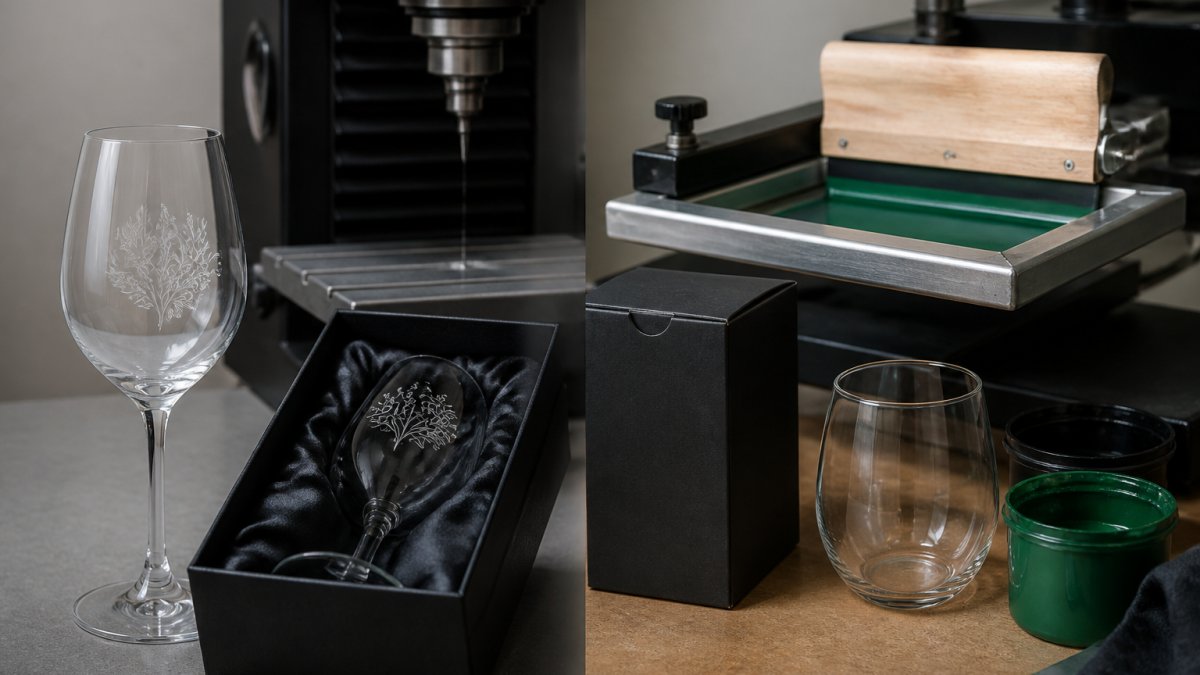
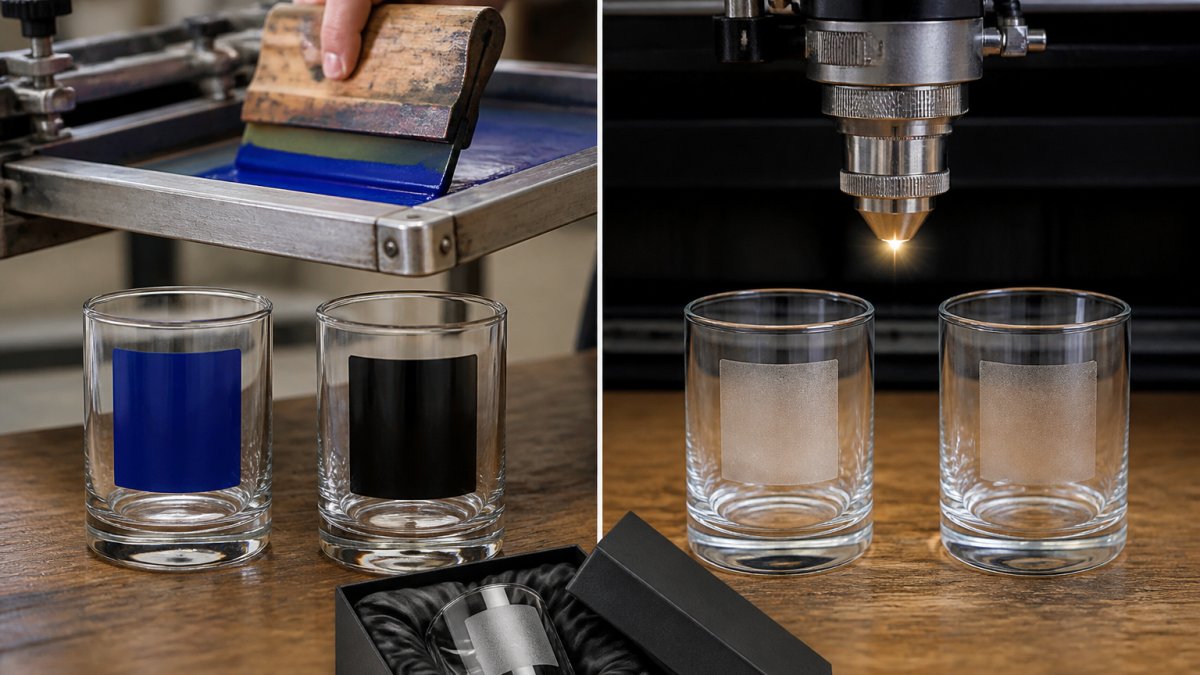
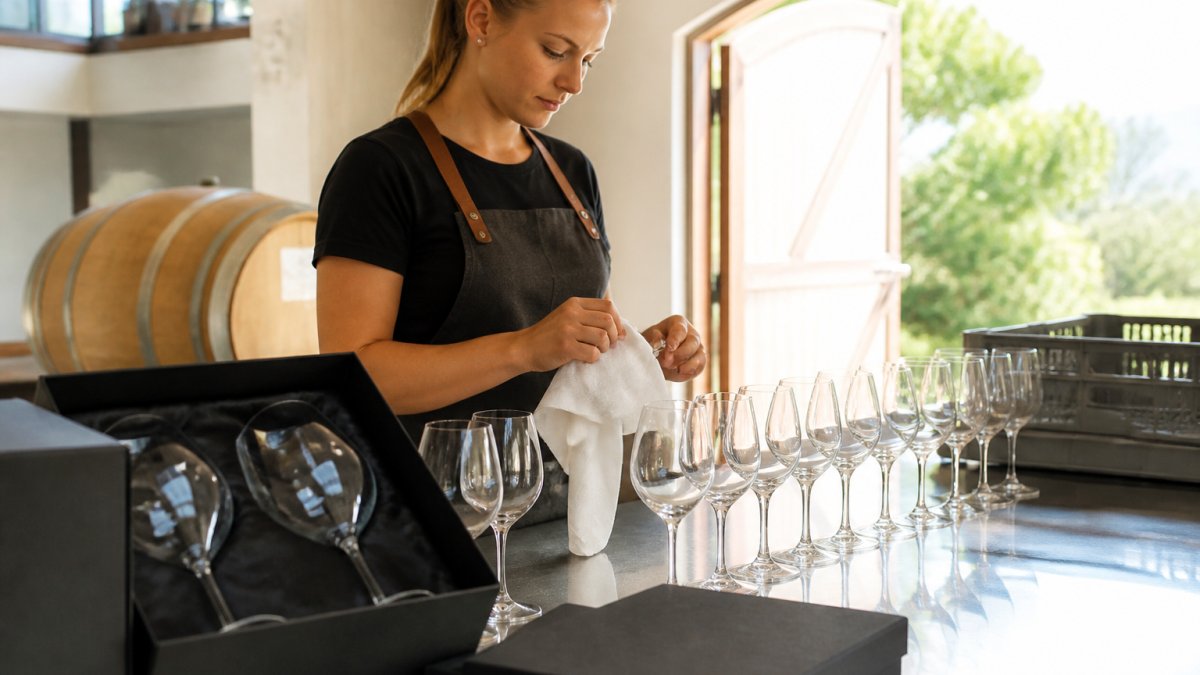
Custom branded wine glasses can serve as keepsakes, and pairing them with premium gift boxing presents them as a premium offering. Etched or engraved glassware carries your logo or artwork, and a branded glass presented in a gift box can make a memorable impression.
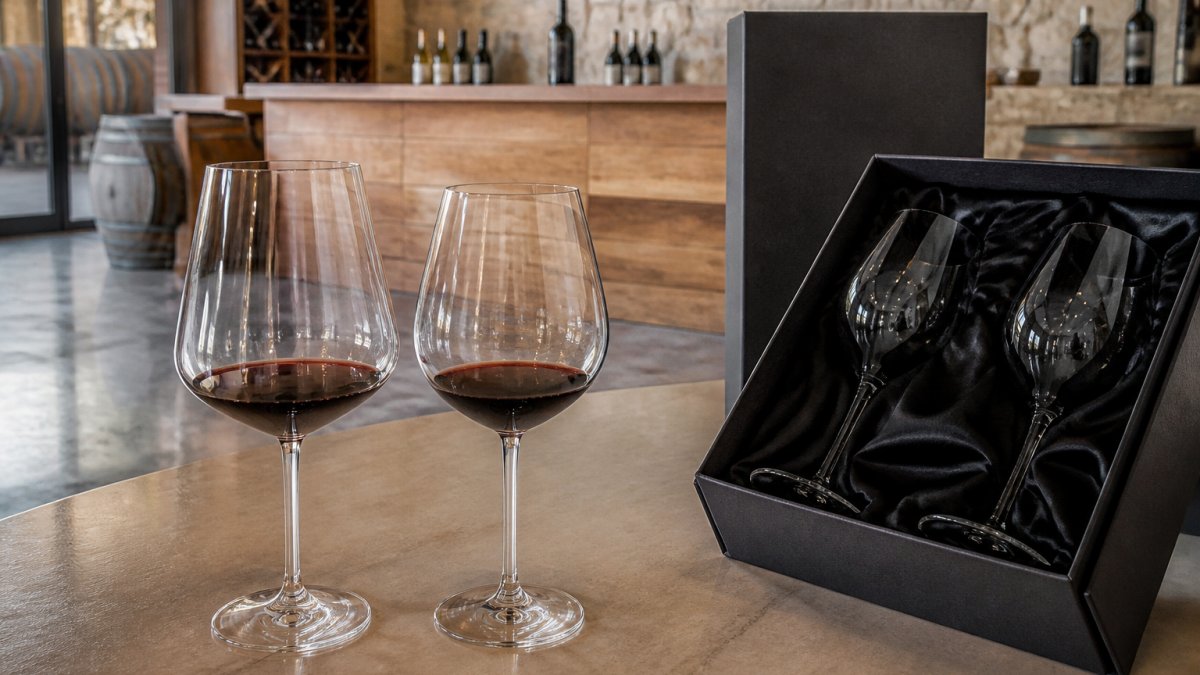
At The Glassware Company, we etch and engrave logos and artwork directly onto glassware across a large range of styles, from tasting glasses to champagne flutes. Our custom manufactured gift boxing service for etched and branded glassware, with roughly a 28 working day turnaround, is designed to present the glass as a premium item rather than an afterthought. It suits cellar door retail, club member gifts and corporate hospitality.
If you're planning a branded run, our guide to custom gift boxing for etched glassware walks through the presentation options.
Best for: cellar door retail, wine club gifts and corporate gifting. Skip if: you only need plain service glassware with no branding.
Request a Quote for Your Tasting Room Glassware
Selecting premium glassware for winery tasting rooms involves considering how you serve. Customise glassware with your logo or artwork, and consider gift boxing as a premium presentation option.
Pricing depends on quantity, styles and delivery timing, so request a quote tailored to your menu and volumes. For a step-by-step walkthrough, read our guide to ordering custom glassware.
Frequently Asked Questions
What type of glass is best for wine tasting?
There is no single best type, which is why universal glasses have become popular in winery tasting rooms. A universal glass with a tulip-shaped bowl handles reds, whites and most aromatic styles reasonably well, so a tasting room can serve a whole flight without swapping glassware. Varietal-specific glasses can sharpen the presentation of one wine, but they multiply stock, storage and breakage. Start with a universal shape and add specialist glasses only where your menu demands them.
Are stemmed or stemless glasses better for winery tastings?
For a tasting room, stemmed glasses usually win. The stem keeps hands away from the bowl, so the wine stays at a stable temperature and fingerprints stay off the glass, which matters when guests are judging colour and clarity. Stemless glasses are harder to knock over and pack more easily for events, but they warm the wine and smudge more. Many venues run stemmed glasses for seated tastings and keep stemless for outdoor or high-traffic service.
Can wine glasses be etched or branded with a winery logo?
Yes. The Glassware Company offers bespoke glassware etched or engraved with a winery's logo or artwork. Custom branded wine glasses can be used as retail items and client gifts. The Glassware Company offers a custom manufactured gift boxing service for etched and branded glassware with roughly a 28 working day turnaround, which presents a branded glass as a premium item.
How should wineries compare glassware suppliers?
Compare on more than the unit rate. Consider whether the supplier offers bespoke glassware etched or engraved with your logo or artwork, and ask for a quote against your actual volumes. Pricing depends on quantity, style and delivery.
Equipping a tasting room means getting glassware that looks the part and survives the season. The Glassware Company offers etching and engraving onto a large range of glassware styles, with artwork matched to your brand and a custom gift boxing service for a premium finish. Get started with The Glassware Company and request an online quote for your tasting room glassware today.