 how-to
How to Order Custom Glassware: 2026 Guide
Table of Contents
- Define Your Custom Glassware Needs
- Laser Engraved Glassware vs Screen Printed
- Prepare Your Custom Glassware Design Requirements
- Understanding Custom Glassware Lead Times Australia
- Place Your Order and Manage Delivery
- Ensure Durability and Long-Term Performance
- Conclusion
Last Updated: August 10, 2026
Define Your Custom Glassware Needs
Ordering custom glassware requires clarity on your actual needs before contacting a supplier. Most organisations pick a vendor first, then figure out requirements, a backwards approach that results in unsuitable stock or budget shock.
Start by identifying the glassware type matching your purpose. A wine tasting room needs different vessels than a brewery taproom. A corporate gift set demands different durability standards than event-use drinkware. Your choice determines decoration method, lead time, minimum order quantity, and cost.
Choose the right glassware type
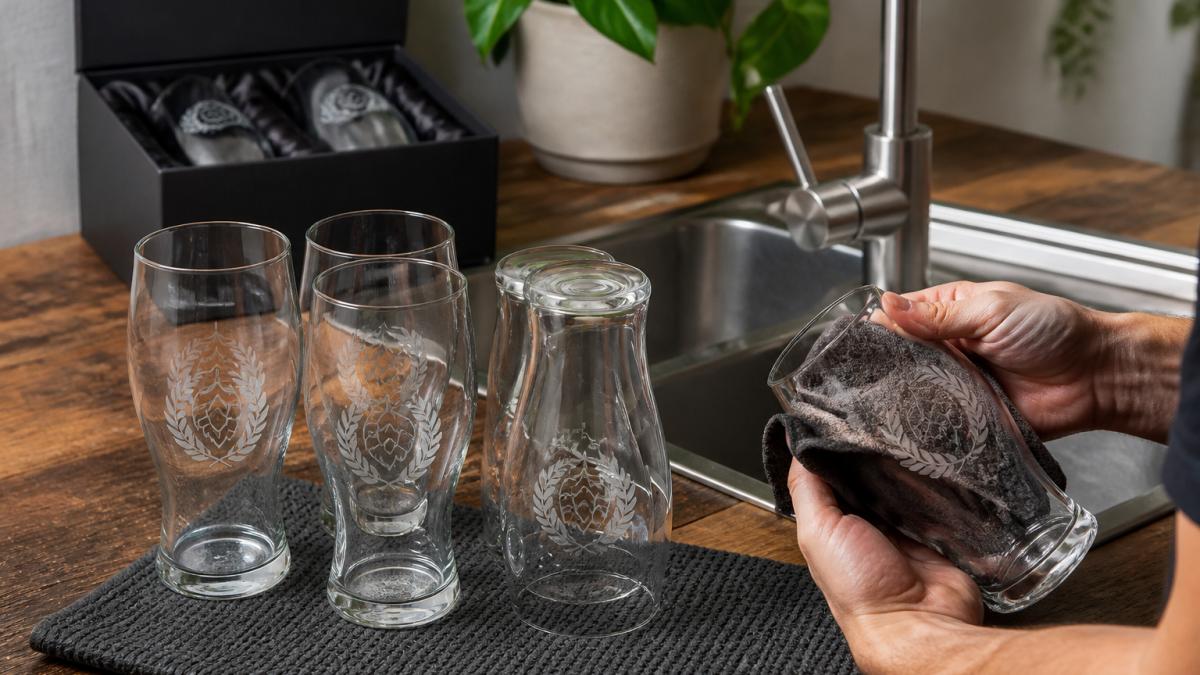
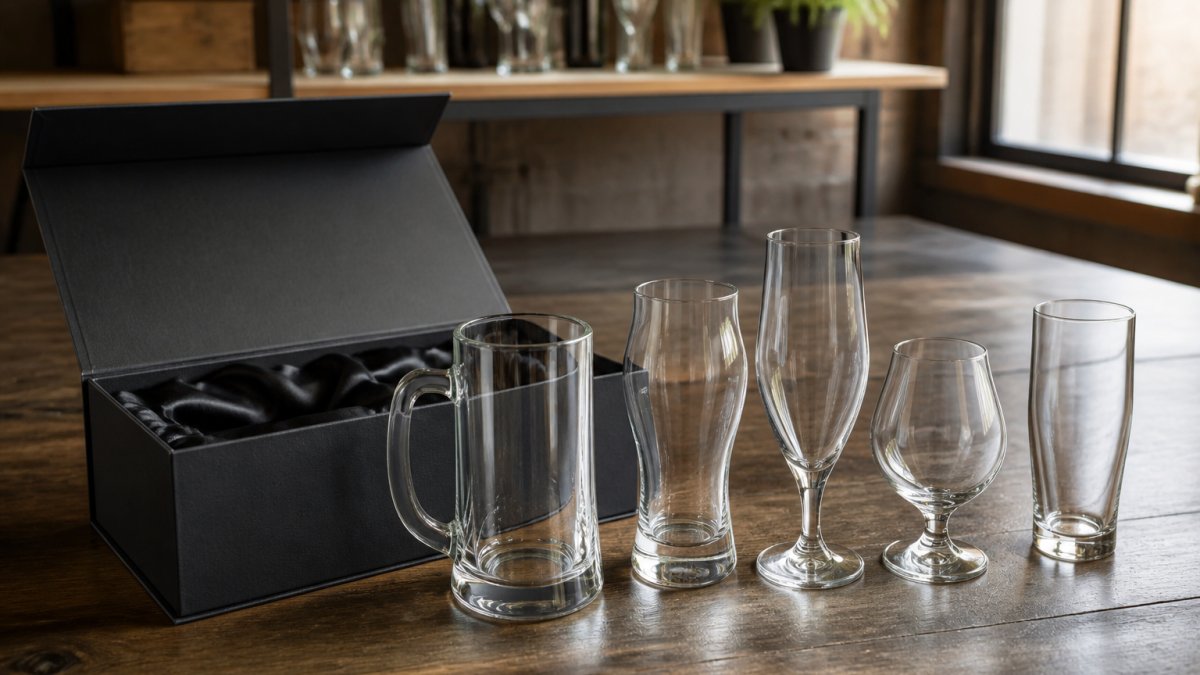
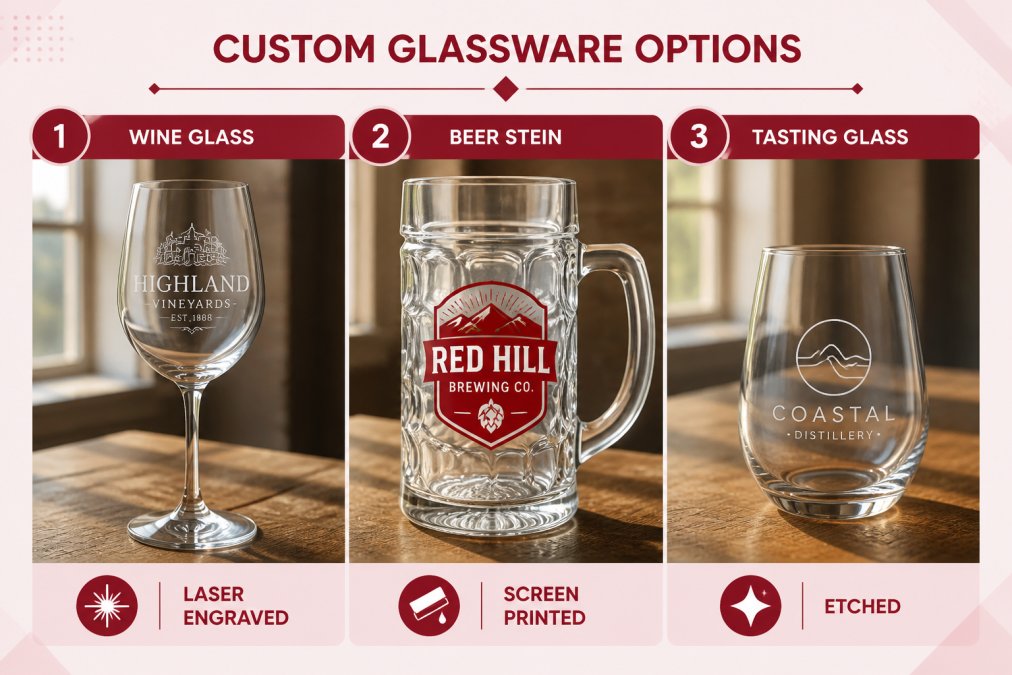
Beer steins project permanence and tradition. They're heavy, durable, and ideal for breweries, pubs, and hospitality venues, holding 500ml-1 litre and working well for laser engraving and screen printing.
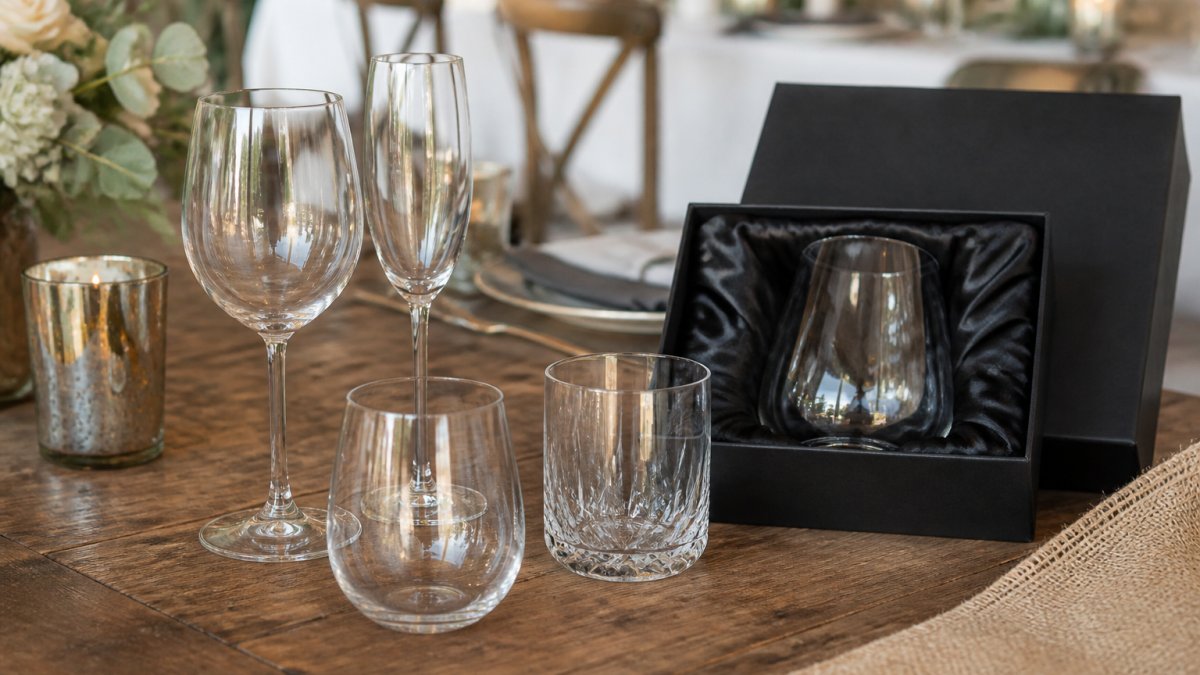
Wine glasses signal sophistication. Wineries, restaurants, and upscale events favour these delicate vessels. Laser engraving produces fine detail; screen printing works but appears less refined on curved surfaces.
Tasting glasses (brandy snifters, whisky tumblers, shot glasses) suit spirits producers and tasting events. These smaller, cost-effective vessels work beautifully with laser engraving for sharp logo detail.
Pint glasses and highballs are workhorses for hospitality, withstanding commercial dishwashers and rough handling in high-volume environments.
Champagne flutes and cocktail glasses appeal to event planners and premium hospitality as statement pieces.
The Glassware Company stocks all these styles and advises on which suits your specific use case. Your choice affects not just aesthetics but how durable your custom decoration will be over months of use.
Determine your order quantity and budget
Order quantity and budget are inseparable. Larger orders reduce per-unit costs; smaller orders incur higher setup fees.
Most custom glassware suppliers impose minimum order quantities, typically ranging from 24 units for small runs to 500+ for bulk orders. Setup costs are fixed, whether you order 25 glasses or 250, the supplier invests the same time in artwork preparation, proofing, and machine calibration. Spreading that cost across more units makes per-unit pricing viable.
Budget considerations include glassware, decoration costs, setup fees, and shipping. Custom glassware is an investment in brand presence. When you calculate cost-per-impression over the glassware's lifespan, the value becomes clear.
The Glassware Company works with businesses of various sizes. Discuss your volume constraints and budget range early, premium glassware with detailed laser engraving costs more than basic screen-printed options.
Laser Engraved Glassware vs Screen Printed
Your decoration method fundamentally changes how your logo appears, its durability, and cost. These techniques are not interchangeable.
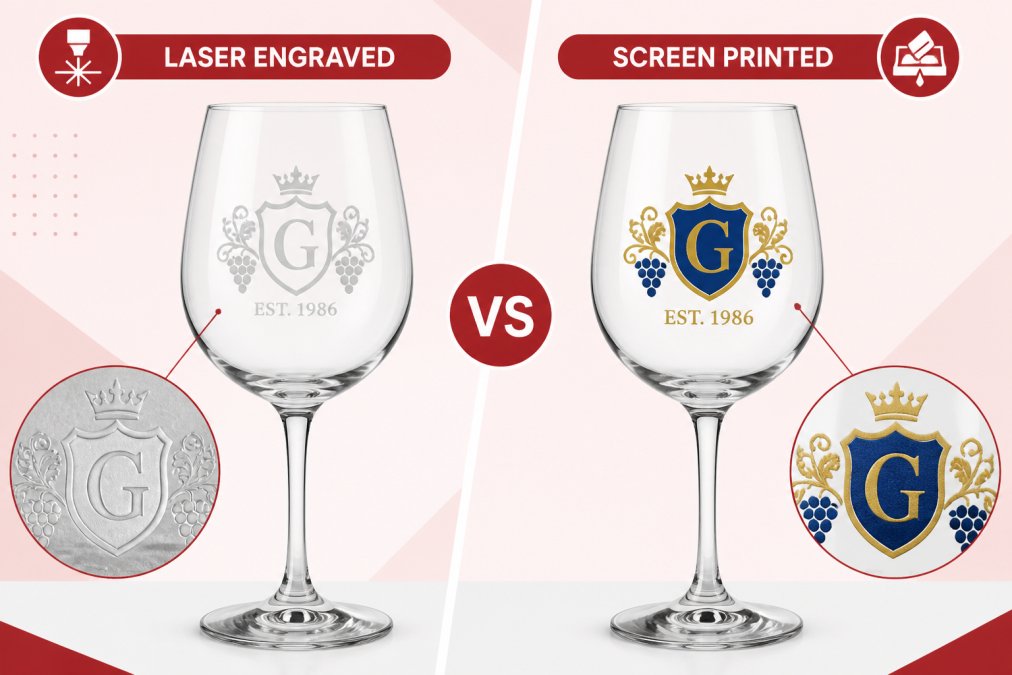
Laser engraving uses focused heat to remove a micro-thin glass layer, creating a permanent monochromatic mark that catches light. Screen printing applies ink in layers, producing vibrant, multi-colour branding on the surface.
When to choose laser engraving
Laser engraving wins on permanence. Because the mark is created by removing glass itself, it cannot fade, chip, or wash away. It survives commercial dishwashers indefinitely and decades of use, why wineries favour it for wine glasses.
Laser engraving excels at fine detail. Thin lines, small text, and intricate logos render sharply with a sophisticated, understated effect. The trade-off is colour: laser engraving is monochromatic. If your brand identity requires full-colour reproduction, laser engraving alone won't deliver it.
Laser engraving requires precise vector artwork with clean lines. Setup costs are moderate, and per-unit costs decrease with volume. Even small runs (50-100 units) remain reasonable. Lead times are typically 2-3 weeks for standard orders.
When to choose screen printing
Screen printing delivers colour and visual impact. If your logo is multi-colour or your brand identity demands vibrant reproduction, screen printing is the right choice.
The technique builds ink in layers, allowing full-colour designs with accurate Pantone colour matching. Screen printing handles photographic images and complex artwork in ways laser engraving cannot.
Screen printing is cost-effective for large orders. Setup costs are front-loaded, but per-unit costs drop significantly at volume. An order of 500 units is substantially cheaper per piece than 50.
The limitation is durability. Screen-printed ink sits on the glass surface. Over time, with heavy dishwasher use, ink can fade, chip, or wear. Quality screen printing, with proper ink adhesion and curing, lasts far longer than poor-quality work. The Glassware Company's screen printing process ensures ink bonds properly to glass, extending lifespan significantly. Setup takes 1-2 weeks, and production cycles are quick. If you need custom glassware within 4-6 weeks, screen printing is more achievable.
Prepare Your Custom Glassware Design Requirements
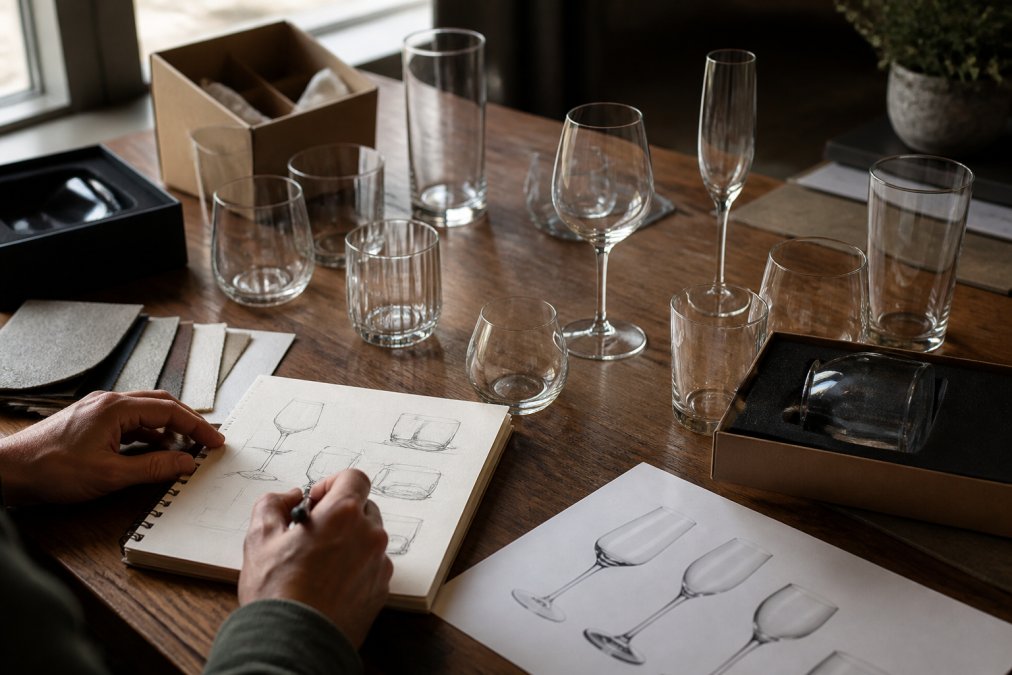
Your artwork is the foundation of the entire order. Poor file preparation leads to delays, reprinting, or final products that don't match your vision.
File formats and artwork submission
Vector artwork is the gold standard for custom glassware decoration. Vector files (Adobe Illustrator .ai, .eps, or PDF) contain scalable shapes and text and can be enlarged or reduced without losing quality, critical when your logo appears on a small shot glass or large beer stein.
Raster files (JPEG, PNG, TIFF) are pixel-based with fixed resolution. When enlarged, they become blurry; when reduced, they lose detail. Vector is essential for logos and text.
The Glassware Company accepts vector files and provides guidance on specifications: typically 300 dpi resolution, CMYK colour mode, and file size limits. Artwork submission happens through an online portal or email.
Common artwork issues include text too small to reproduce clearly, colours in RGB instead of CMYK, fonts embedded incorrectly, and artwork placed too close to the glass edge.
The supplier provides a digital proof showing how your artwork will appear on the actual glassware. Review carefully and request adjustments before production begins.
Logo placement and colour matching
Where your logo sits on the glassware matters significantly. Poor placement makes branding invisible or awkward to view.
For wine glasses and stemmed drinkware, logos typically appear on the bowl. For beer steins and tumblers, logos wrap around the body, position them where they're visible when held. For pint glasses, logos occupy the upper third, staying above the liquid line.
The supplier advises on optimal placement based on glassware type and shows you a digital proof. Request adjustments at the proof stage; changes are simple then, expensive later.
Colour matching is critical for brand consistency. Pantone colour matching is the industry standard. You provide a Pantone number or physical swatch, and the supplier matches their ink to that specification. Digital proofs show colour appearance, but digital screens display colour differently than printed glass. Request a physical sample if colour accuracy is critical.
Understanding Custom Glassware Lead Times Australia
Lead time, the interval between order placement and delivery, is frequently underestimated. Missing a deadline because you ordered too late is entirely preventable.
Standard production cycles and rush orders
Standard lead times for custom glassware typically range from 3 to 6 weeks, depending on decoration method, complexity, and supplier workload.
Laser engraving generally takes 4-6 weeks. Artwork approval, machine setup, engraving, quality inspection, and packing all require time. During busy seasons (October-November for corporate gifts, June-July for events), lead times extend.
Screen printing typically takes 3-4 weeks. Setup is faster than laser engraving, and production runs quickly once screens are ready.
Some suppliers offer expedited options, rush orders completed in 2-3 weeks, but these cost more. The Glassware Company provides clear lead time estimates upfront.
Shipping adds 1-2 weeks domestically within Australia. International orders add 3-6 weeks depending on destination. Plan backwards from your event or deadline. If you need glassware for a corporate event on 1 November, place your order by mid-August at the latest.
Quality control and digital proofs
Before your glassware ships, it undergoes quality control. The supplier inspects samples from the batch for decoration quality, durability, and defects.
Digital proofs are your first checkpoint. You'll receive a digital image showing how your artwork appears on the glassware. Review proofs carefully for logo size, placement, colour accuracy, text legibility, and overall appearance.
If you request changes at the proof stage, the supplier revises and resubmits within 1-2 business days. Approval at this stage is critical; once production begins, changes are costly and time-consuming.
Physical samples are sometimes available. Some suppliers send a sample unit before full production begins, letting you inspect actual decoration quality, ink adhesion, and overall finish. Quality standards vary between suppliers. The Glassware Company maintains rigorous QC processes. Every batch is inspected, and defective units are replaced, ensuring your final product meets professional standards.
Place Your Order and Manage Delivery
Once artwork is approved and timeline confirmed, you're ready to place the order. This involves finalising quantities, confirming decoration details, arranging payment, and coordinating delivery.
Minimum order quantities and pricing
Minimum order quantities exist because setup costs are fixed. A supplier invests the same time in artwork preparation, proofing, and machine setup whether you order 25 units or 250.
MOQs vary by supplier and glassware type. Common minimums are 24-50 units for small glassware, 50-100 units for standard glassware, and 100-500 units for large orders. The Glassware Company works with businesses of different sizes and may accommodate smaller initial orders if future reorders are anticipated.
Pricing depends on glassware type, decoration method, artwork complexity, quantity, and market conditions. Larger orders reduce per-unit cost. Request a formal quote providing your glassware type, quantity, decoration method, and artwork. The quote itemises costs: glassware, setup fees, decoration, and additional services. Clarify payment terms before committing.
Shipping logistics and safe delivery
Custom glassware is fragile. Shipping requires proper packaging to prevent breakage.
Quality suppliers pack glassware in protective materials, foam inserts, bubble wrap, or custom-fitted boxes. Each unit is individually wrapped, boxes are reinforced, and fragile stickers are applied.
Shipping within Australia typically takes 1-2 weeks via standard courier. Express options are available but cost more. International shipping takes 3-6 weeks depending on destination.
Track your shipment using the tracking number provided. Upon delivery, inspect the package immediately for external damage. Open the box and inspect several units for breakage or decoration defects. If damage is apparent, document it with photos and contact the supplier immediately. Reputable suppliers have damage policies and will replace broken units.
The Glassware Company includes shipping logistics support, arranges courier pickup, and provides tracking. They stand behind their product, if glassware arrives damaged due to packaging failure, they address it.
Ensure Durability and Long-Term Performance
Your investment in custom glassware only pays off if the product lasts. Durability depends on glassware quality, decoration method, and how the glassware is used and maintained.
Durable finishes and quality assurance standards
Laser-engraved glassware is inherently durable. The mark is part of the glass itself and cannot fade, chip, or wear away. It survives commercial dishwashers, years of use, and rough handling.
Screen-printed glassware requires quality execution to be durable. Poor-quality screen printing fades within months. Quality screen printing, with proper ink formulation and curing, lasts years even in heavy-use environments. Premium suppliers use ink specifically formulated for glass and cure it properly through high-temperature baking, bonding ink to glass. The Glassware Company's screen-printed glassware holds up in commercial dishwashers because the ink is bonded, not merely sitting on the surface.
Quality assurance standards vary. Some suppliers conduct minimal QC; others inspect every batch. The Glassware Company tests samples from every production run for decoration quality, ink adhesion, colour consistency, and durability. Ask your supplier about their QC process and defect rate.
Glassware maintenance and care instructions
How recipients care for the glassware affects how long the branding lasts. Providing care instructions extends the product's lifespan and reflects well on your brand.
For laser-engraved glassware, care is straightforward. The engraving is permanent, so dishwasher use, hot water, and aggressive scrubbing won't damage it.
For screen-printed glassware, recommend hand-washing in warm (not hot) water with mild detergent, avoiding abrasive scrubbing pads, air-drying rather than heat-drying, and avoiding prolonged soaking. These practices extend ink durability significantly.
Include care instructions with the shipment. A simple card or label inside the box signals that you've invested in quality and reduces the likelihood of damage due to improper care.
Ordering custom glassware is a multi-step process, but each step is manageable when you know what to expect. Start by defining your needs clearly: glassware type, quantity, and budget. Choose your decoration method based on durability and colour requirements. Prepare artwork properly and review proofs carefully. Understand lead times and plan backwards from your deadline. Confirm shipping and packaging details. Finally, educate recipients on care to maximise the product's lifespan.
The Glassware Company handles each step professionally. From initial consultation through final delivery, they guide you through the process, answer questions, and ensure your custom glassware meets professional standards. Whether you're sourcing promotional gifts, event drinkware, or branded merchandise, their expertise in custom glassware decoration, laser engraving and screen printing, and commitment to quality make them a reliable partner. Get a quote today and see how custom glassware can elevate your brand presence.
Frequently Asked Questions
What is the minimum order quantity for custom glassware in Australia?
Minimum order quantities vary depending on the glassware style, decoration method, and supplier. Most custom glassware providers in Australia offer flexible MOQs starting from small runs suitable for small events and breweries, though larger orders typically offer better per-unit pricing. Contact The Glassware Company for a quote tailored to your specific order size, they can advise whether your quantity qualifies for standard pricing or if setup fees apply.
How long does it take to receive custom glassware in Australia?
Custom glassware lead times in Australia typically range from 2-4 weeks for standard orders, depending on production complexity, decoration method, and current demand. Rush orders are often available at an additional cost for tighter timelines. Always confirm your specific delivery date when placing an order, and factor in shipping time to your location. The Glassware Company can provide exact lead times based on your design and quantity.
What file formats are required for custom glassware logos?
Most custom glassware suppliers accept vector artwork files (AI, EPS, PDF) for best results, as these scale cleanly without quality loss. High-resolution raster files (PNG, JPG at 300 DPI minimum) are also acceptable. Avoid low-resolution images, as they will print or engrave poorly. Your supplier will provide a digital proof before production, allowing you to verify artwork placement, size, and colour matching before any glassware is decorated.
How do you guarantee custom glassware etching or engraving will hold up in a commercial dishwasher?
Quality laser engraving and screen printing create durable finishes designed to withstand repeated commercial dishwashing. Laser-engraved designs are permanent because they remove a thin layer of glass surface, making them fade-resistant. Screen-printed finishes use industrial-grade inks and curing processes that bond to the glass. Always request durability information from your supplier and ask about their quality assurance process. Proper glassware maintenance, avoiding abrasive cleaners and extreme temperature changes, also extends the life of decorated finishes.
This article was written using GrandRanker