 comparison
Etched vs Printed Glassware Durability: A 2026 Comparison
Table of Contents
- Etched vs Printed Glassware: Key Differences
- Durability Comparison: Etched vs Printed Glassware
- Dishwasher Safe Custom Glassware: What You Need to Know
- Best Durable Wine Glasses for Commercial Use
- Screen Printed Glassware Maintenance and Care
- Cost-Effectiveness and Design Flexibility
- Which Method Should You Choose?
- Conclusion
Last Updated: August 21, 2026
Etched vs Printed Glassware: Key Differences
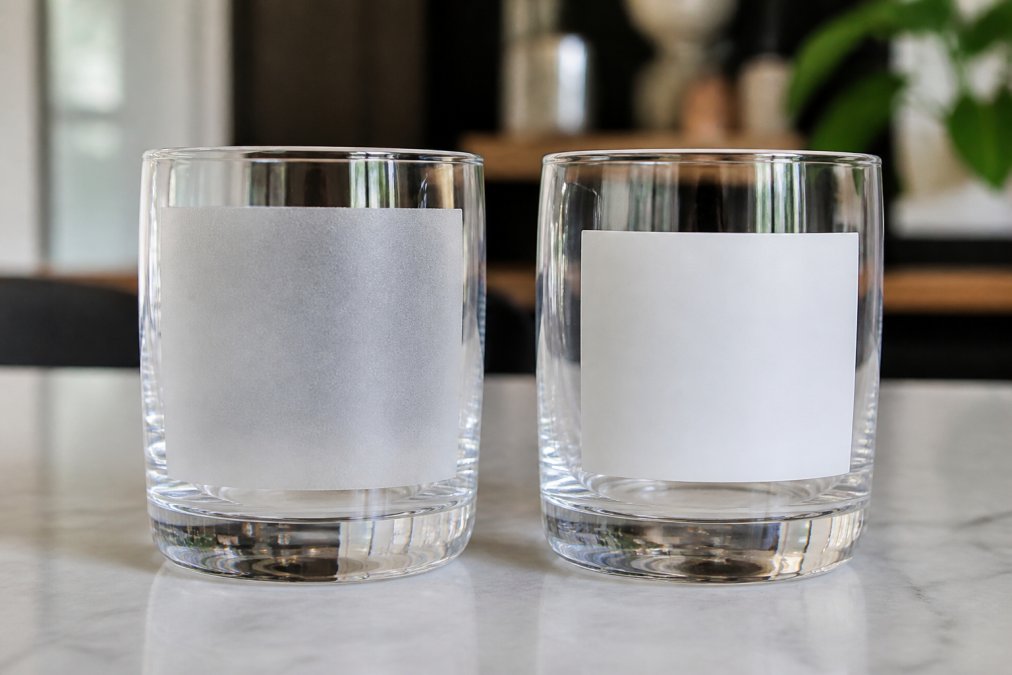
When sourcing custom glassware for corporate gifts, hospitality venues, or branded merchandise, the choice between etched and printed designs fundamentally affects durability, cost, and long-term brand appearance. Etched glassware creates a permanent mark by removing a thin layer of glass surface, leaving a frosted finish. Printed glassware applies ink or ceramic coating to the surface, creating vibrant colour and fine detail. Both can produce striking results, but they behave very differently under real-world conditions.
How Etching Works
Etching removes glass material to create the design using two primary techniques: chemical etching and sandblast engraving.
Chemical etching uses acid or alkaline solutions to dissolve the glass surface where the design sits, producing consistent frosted finishes. Sandblast engraving fires fine abrasive particles at the glass under high pressure, creating a deeper, more tactile frosted texture with pronounced three-dimensional quality. Both methods are permanent, the design is literally part of the glass, not sitting on top of it. This permanence is why etched glassware is the industry standard for long-term corporate branding and hospitality venues that cycle glassware through commercial dishwashers hundreds of times per year.
How Printing Works
Printing applies ink or ceramic coating directly to the glass surface. Common techniques include pad printing, screen printing, rotary printing, and sublimation printing. Pad printing uses a silicone pad to transfer ink from an etched plate onto the glass. Screen printing forces ink through a mesh screen, ideal for bold designs and cost-effective for larger volumes. Rotary printing wraps designs around the glass continuously. Sublimation printing uses heat to transfer dye, producing photographic-quality images.
The key difference: printed designs sit on the glass surface. They're not part of the material itself, which matters enormously for durability and longevity.
Durability Comparison: Etched vs Printed Glassware
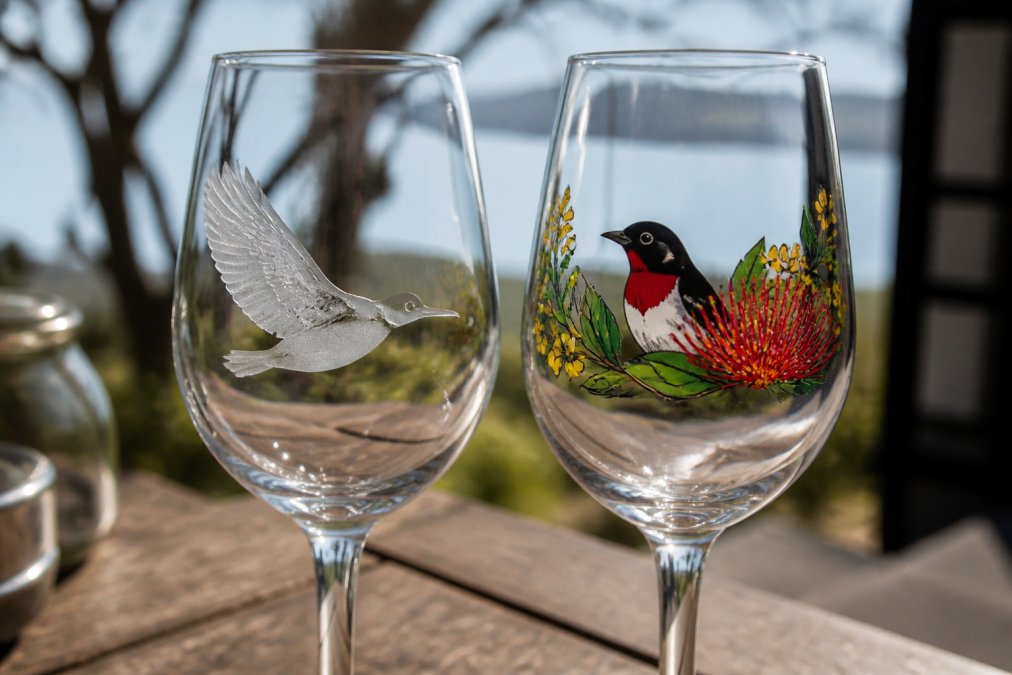
Etching wins decisively on durability. Etched designs are permanent because they're structural, you cannot wash away part of the glass. Commercial dishwashers running at 60-80°C with alkaline detergents and thermal shock won't touch an etched design (the CDC). The frosted appearance may become slightly more matte over years of heavy use, but design integrity remains absolute.
Printed designs face genuine wear mechanisms. Dishwasher detergents can break down ink adhesion over time. Repeated thermal cycling creates stress at the ink-glass interface. High-quality ceramic inks perform better than standard inks, but even premium printing fades or peels after 200-500 dishwasher cycles in commercial settings. For hospitality venues running 50+ glasses per service through industrial dishwashers, etched glassware typically outlasts printed glassware by a factor of 5-10 in terms of design visibility (the NIH).
Resistance to Dishwashing and Commercial Use
Etched glassware is dishwasher safe indefinitely. The frosted finish may accumulate mineral deposits from hard water, but the design remains readable and permanent. Commercial venues report no design degradation after 5+ years of daily use.
Printed glassware requires more care. High-quality ceramic inks resist fading better than standard inks, but they're not immune to wear. In commercial dishwasher environments, printed designs typically remain vibrant for 1-3 years before visible fading or edge wear becomes noticeable (peer-reviewed research). Some printed glassware shows peeling at corners where the ink-glass bond weakens under thermal stress.
Fading, Peeling, and Long-Term Wear
Etched designs don't fade, peel, or wear conventionally. The frosted surface may accumulate slight discolouration from mineral deposits in hard water, easily reversible with a mild acid cleaner. The design itself is permanent.
Printed designs experience genuine degradation. Fading occurs as UV light, heat, and chemical exposure break down ink molecules. Peeling happens when the ink-glass bond weakens, often at edges. Colour shift can occur if different ink batches are used across reorders, causing visible inconsistency in branded glassware. For long-term branding consistency, etching provides absolute certainty.
Dishwasher Safe Custom Glassware: What You Need to Know
Both etched and printed glassware can be labelled dishwasher safe, but the term means different things.
Etched glassware is dishwasher safe without qualification. The design is permanent and poses zero risk to standard detergents, water temperature, and drying cycles. Printed glassware is dishwasher safe if ceramic inks (vitrified inks) are used. These bond chemically to the glass and withstand standard dishwasher conditions. Standard inks may fade or peel within months.
For corporate gifts or event glassware that recipients will wash at home, both methods work fine. For hospitality venues, breweries, or high-volume commercial dishwasher use, etched glassware is the safer choice. The Glassware Company specifies ceramic inks for all printed glassware and recommends etching for clients prioritising absolute durability.
Best Durable Wine Glasses for Commercial Use
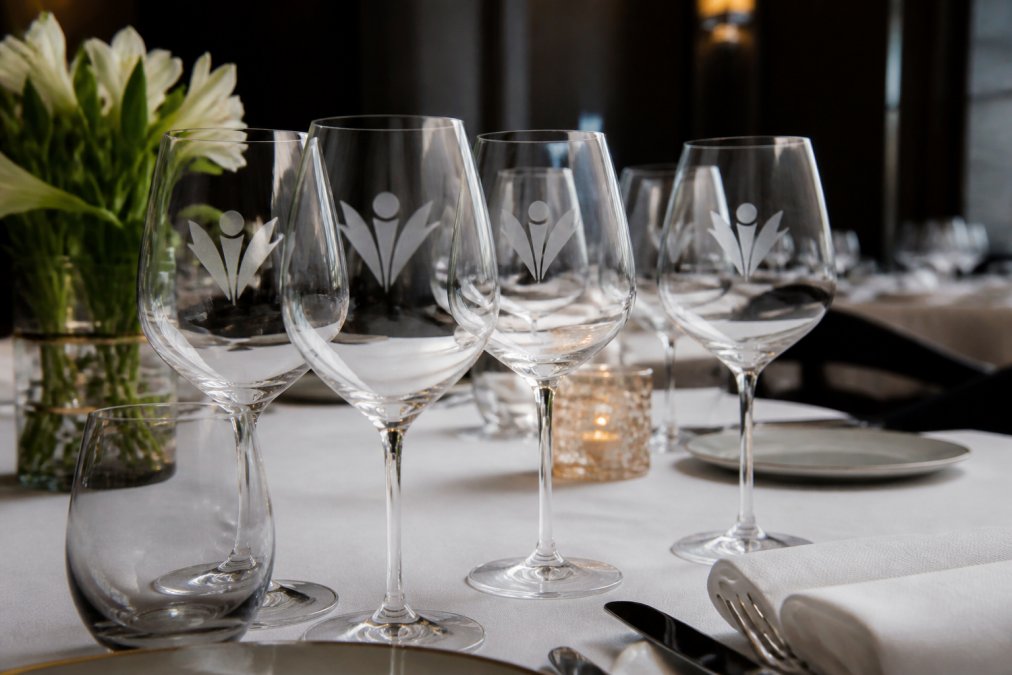
For commercial wine service, etched wine glasses are the industry standard. They combine durability, elegance, and brand permanence in a way printed glassware cannot match.
Premium etched wine glasses feature deep, tactile frosting that catches light beautifully. Sandblast engraving produces the most refined finish, deeper, more textured, and more elegant than chemical etching. A wine glass etched with a winery logo becomes a keepsake rather than disposable merchandise. Customers take them home, use them for years, and the brand message remains intact.
Durability is absolute. A wine glass etched with your logo will look identical after 500 dishwasher cycles or 10 years of daily use. For venues reordering the same design quarterly or annually, consistency is guaranteed. Etched wine glasses also command a perception premium, guests perceive etched glassware as higher quality than printed alternatives, reinforcing brand positioning.
The trade-off: etched wine glasses are more expensive upfront, and designs are limited to frosted tones. If your brand requires full-colour graphics, printing is necessary. For logos, text, and tonal designs, etching is superior for commercial wine service.
Screen Printed Glassware Maintenance and Care
Screen printed glassware requires more active maintenance than etched alternatives, but with proper care, it can remain vibrant for years.
Immediate care matters. Hand-wash when possible, especially immediately after use. Dried residue requires aggressive scrubbing, which stresses the ink-glass bond. Rinse promptly and air-dry.
Dishwasher use. Modern dishwashers with ceramic-ink printed glassware are generally safe, but lower temperatures and gentler cycles extend ink life. Avoid the hottest settings and place printed glassware in the upper rack where water pressure is gentler.
Avoid thermal shock. Don't move printed glassware directly from hot to cold water or vice versa. Temperature extremes stress the ink-glass interface.
Storage and stacking. Stack carefully to avoid scratching the printed design. Velvet-lined storage or soft cloth between glasses extends the design's life.
Chemical exposure. Avoid prolonged contact with strong detergents, bleach, or acidic cleaners. Use standard dishwashing detergent and rinse thoroughly.
For hospitality venues, these maintenance demands make screen printed glassware less practical than etched alternatives. The labour involved in careful handling, combined with inevitable fading over time, makes etching more cost-effective for high-volume commercial settings.
Cost-Effectiveness and Design Flexibility
The cost comparison between etching and printing depends on volume, design complexity, and how long you plan to use the glassware.
Etching Costs and Minimum Orders
Etching typically involves higher setup costs but lower per-unit costs at scale. Setup includes creating the etching template or programming equipment. This fixed cost is spread across the entire order. choosing long-lasting kitchenware.
Minimum orders for etching vary depending on the design and specific requirements. Per-unit etching costs decrease significantly with volume. For businesses planning to reorder the same design multiple times, the cost advantage of etching grows with each subsequent batch. Reordering the same design guarantees consistency, no colour shifts, no batch variations.
Printing Costs and Volume Pricing
Screen printing typically has lower setup costs than etching but similar or higher per-unit costs at small volumes. The per-unit cost remains relatively flat across volumes, making printing more cost-effective for small orders.
Printing offers design flexibility that etching cannot match. Full-colour logos, photographic images, gradients, and complex artwork are possible. If your brand identity requires these elements, printing is the only option. Etching is limited to tonal, frosted designs.
Reordering printed designs introduces a variable: colour consistency. Different ink batches or screen conditions can produce slightly different colours across batches. For branded merchandise that needs to look identical across reorders, this inconsistency is problematic. Etching eliminates this risk entirely.
The Glassware Company provides quotes based on your specific volume, design complexity, and reorder expectations. For businesses planning long-term use and multiple reorders, etching typically offers better total cost of ownership. For one-off events or designs requiring full colour, printing is more cost-effective.
Which Method Should You Choose?
The decision hinges on four factors: durability requirements, design complexity, volume, and reorder consistency.
Etching: Best for Premium, Long-Term Branding
Choose etching if durability is your priority. If your glassware will be used in commercial dishwashers, handled roughly, or kept for years, etching is the clear winner. The design is permanent with no fading, peeling, or colour shifts across reorders.
Etching is ideal for premium branding. Etched glassware conveys quality and sophistication. Wineries, upscale restaurants, and corporate clients seeking to impress use etched glassware for this reason. Recipients perceive etched designs as more valuable and are more likely to keep the glassware as a keepsake.
Etching works best for logos, text, geometric designs, and tonal artwork. The Glassware Company specialises in etched glassware for exactly these reasons. Our expertise in chemical and sandblast etching ensures your design is executed with precision and permanence.
Printing: Best for Vibrant Designs and Larger Volumes
Choose printing if your design requires full colour, photographic imagery, or complex gradients. Printing delivers visual impact that etching cannot match. Bold logos, multi-colour artwork, and detailed designs are possible.
Printing is also more cost-effective for very small volumes or one-off events. If you're ordering glassware for a single conference, wedding, or promotional campaign with no plans to reorder, printing's lower setup costs make it practical.
However, printing introduces maintenance demands and durability uncertainty. In commercial settings with heavy dishwasher use, printed designs fade faster. Colour consistency across reorders is not guaranteed. For long-term branding or high-volume hospitality use, printing is riskier than etching.
Conclusion
Etched glassware wins on durability, consistency, and premium perception. Printed glassware wins on design flexibility and small-volume economics. For corporate clients, hospitality venues, and wineries seeking custom glassware that will represent their brand for years, etching is the professional standard.
The Glassware Company offers both methods, specialising in etched and engraved glassware, chemical etching, sandblast engraving, and precision detailing across wine glasses, beer steins, champagne flutes, and custom drinkware. Our expertise ensures your artwork is executed with absolute precision, your design remains permanent through thousands of dishwasher cycles, and your brand makes a striking impression on guests and clients. Get started with The Glassware Company and create custom glassware that performs as beautifully as it looks.
Frequently Asked Questions
Can etched glassware go in the dishwasher?
Yes, etched glassware is fully dishwasher safe and can withstand repeated commercial washing cycles. The etching process creates a permanent mark by removing a thin layer of glass, making it highly resistant to fading or wear. Unlike printed designs, etched logos won't peel or fade from heat, detergents, or thermal shock. This makes etched glassware ideal for hospitality venues and corporate settings where durability matters.
Does printed ink fade on glassware over time?
Printed designs can fade with repeated washing, particularly if lower-quality inks are used. High-quality ceramic inks applied through professional printing methods offer better durability and scratch resistance for commercial use. However, printed glassware generally won't last as long as etched designs under constant dishwashing. For venues requiring maximum longevity, etching provides superior permanence, though quality printing remains suitable for moderate hospitality use.
What's the difference between laser etching and screen printing on glass?
Laser etching creates a frosted appearance by vaporising the glass surface with precision, producing a subtle, high-end aesthetic suitable for monochrome designs. Screen printing applies coloured ink to the surface, allowing vibrant, multi-colour branding but with less permanence than etching. Laser etching offers better durability for dishwasher-safe custom glassware, while screen printing excels at bold, detailed artwork. The choice depends on your design complexity and durability requirements.
Which branding method is more cost-effective for high-volume hospitality?
The cost-effectiveness for high-volume hospitality depends on various factors. Screen printing can be cost-effective for large volumes due to potentially lower per-unit setup costs and faster production. Etching involves more labour-intensive processes and higher initial costs, making it more economical for smaller, premium batches. For corporate gifts or wine glass branding requiring longevity and sophistication, etching justifies the investment despite higher unit costs. The Glassware Company provides quotes based on your specific volume, design complexity, and reorder expectations.
This article was written using GrandRanker