 how-to
Corporate Gifting Strategy for Small Businesses
Table of Contents
- Define Your Corporate Gifting Objectives
- Set a Realistic Gifting Budget and Procurement Plan
- Choose Between Client Gifts and Employee Recognition Program Ideas
- Select Branded Corporate Gift Ideas That Reflect Your Brand
- Understand Tax Deductible Corporate Gifts and Compliance
- Plan Timing, Personalisation, and Unboxing Experience
- Measure ROI and Refine Your Gifting Strategy
- Frequently Asked Questions
Last Updated: September 29, 2026
Define Your Corporate Gifting Objectives
A strong corporate gifting strategy starts with clarity, and your corporate gifting strategy shapes everything that follows. Before you pick a single gift, know what you're trying to achieve. Are you building client relationships? Rewarding employees? Increasing brand awareness? Your answer shapes everything that follows.
Define your objectives first:
- Client retention: Gifts that remind clients why they chose you
- Employee recognition: Tokens that acknowledge real contributions
- Lead generation: Gifts that introduce prospects to your brand
- Event hospitality: Branded items guests take home and use
- Brand recall: Gifts so useful they sit on desks or shelves for months
At The Glassware Company, we work with businesses that use branded glassware to achieve these exact goals. A custom-etched glass becomes a conversation starter. Every time a client reaches for it, they remember your brand.
Start by asking: What behaviour do I want this gift to encourage? What will make the recipient think of my business weeks or months later? Your answer is your objective.
Set a Realistic Gifting Budget and Procurement Plan
Budget determines scale. It shapes which gifts you can afford, how many people you can reach, and how often you can gift.
Spreading a fixed budget too thin across too many people means everyone gets something forgettable. Concentrate spend on fewer, higher-quality gifts instead.
Consider this approach:
- Total annual gifting budget: How much can you spend without straining cash flow?
- Budget per recipient: Divide by the number of people you're gifting to
- Frequency: One large gift, or several smaller ones throughout the year?
- Procurement timeline: Quality items need lead time. Rush orders cost more.
Lead times matter. Custom-etched glassware, for instance, requires lead time for manufacturing and delivery. If your event is in six weeks, you need to order now. If you wait until three weeks before, you're paying rush fees or missing your deadline entirely.
Work backwards from your event date. Know your budget. Then find suppliers who can deliver within your timeframe.
Choose Between Client Gifts and Employee Recognition Program Ideas
Client gifts and employee gifts serve different purposes. Mixing them up wastes budget.
Client gifts build external relationships. They say: "We value your business. We're thinking of you." Clients appreciate gifts that feel premium and personal. They expect something they'd rarely buy for themselves.
Employee recognition gifts acknowledge internal contributions. They say: "We see your work. It matters." Employees value gifts that feel genuine, not generic. A one-size-fits-all approach feels hollow.
The key differences:
| Aspect | Client Gifts | Employee Gifts |
|---|---|---|
| Purpose | Build loyalty, deepen relationships | Recognise effort, boost morale |
| Timing | Strategic moments (anniversaries, milestones) | Regular recognition, milestone events |
| Personalisation | Often customised with company logo | Can be generic or role-specific |
| Perceived value | Should feel premium, thoughtful | Should feel authentic, earned |
| Frequency | Occasional, memorable | More frequent, lower per-item cost |
Client gifts work best when tied to a moment, closing a deal, contract start, or holiday season. Random gifts feel like clutter.
Employee recognition works best when consistent. Monthly recognition, anniversaries, or milestones build a culture where people feel seen.
Select Branded Corporate Gift Ideas That Reflect Your Brand
Your gift should reinforce your brand identity. A luxury brand sending cheap pens damages credibility; a casual startup sending formal crystal feels misaligned.
Think about what your brand says and who receives it:
- Hospitality businesses: Glassware that guests use during their experience. Custom beer steins for breweries. Wine glasses for wineries. Branded mugs for cafes.
- Professional services: Items that sit on desks or in homes. Etched glasses that feel premium. Drinkware that lasts years.
- Tech and creative: Gifts that feel thoughtful, not corporate. Personalised items. Functional pieces that get daily use.
- Retail and e-commerce: Items that promote repeat interaction. Branded drinkware customers use at home.
Branded glassware works across industries because it's functional, visible, and long-lasting, every use reinforces your brand.
The Glassware Company specialises in custom-etched and engraved glassware. Quality etching lasts for years; poor etching fades or looks cheap.
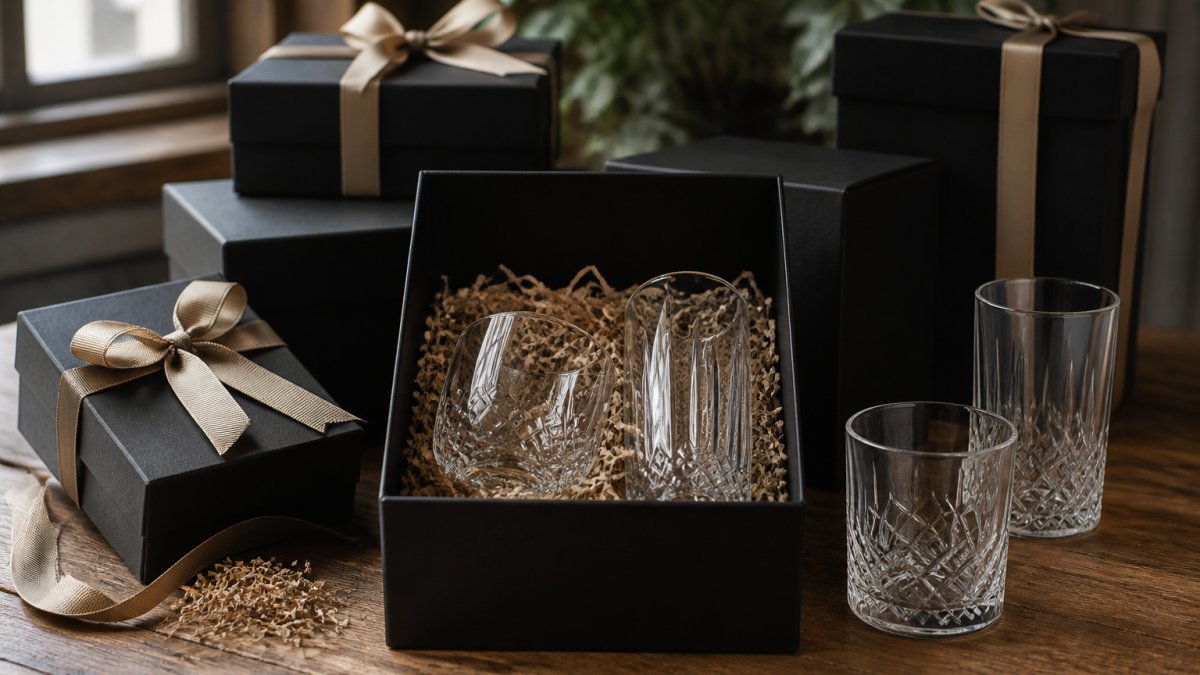
The unboxing experience matters. A glass in custom gift boxing elevates the impression and signals attention to detail.
Understand Tax Deductible Corporate Gifts and Compliance
This is where many businesses stumble. Not all corporate gifts are tax-deductible, and the Australian Taxation Office (ATO) has specific rules that differ depending on who receives the gift and what you're claiming.
Gifts to clients and business contacts are tax-deductible if the recipient is a genuine business contact, the cost is below the ATO's annual threshold, it is not cash or a voucher, it is given in connection with your business, and it is not promotional merchandise.
Thresholds and rules change annually, so verify the current limit with the ATO or your accountant before claiming.
Gifts to employees are generally not tax-deductible unless they qualify as work-related gifts (long-service awards, achievement bonuses, safety awards) under strict ATO conditions.
The gift vs promotional merchandise distinction matters for tax treatment. A single etched glass to a key client is likely deductible; 500 glasses at a trade show may be classified as promotional expense. Context, quantity, and intent all factor in.
For branded glassware: a custom-etched glass to an individual client is likely deductible; the same glass to 100 prospects may be promotional merchandise; employee glassware is generally not deductible unless it qualifies as a work-related gift.
Documentation is essential. Keep records of the recipient's name and relationship, date given, cost (including packaging and delivery), business purpose, and personalisation details.
A spreadsheet or simple log is sufficient, but it must be contemporaneous, recorded at the time of gifting, not months later.
When in doubt, consult your accountant. Tax rules are complex and change.
Plan Timing, Personalisation, and Unboxing Experience
Timing shapes impact. A gift arriving at the right moment feels intentional; arriving randomly feels like an afterthought.
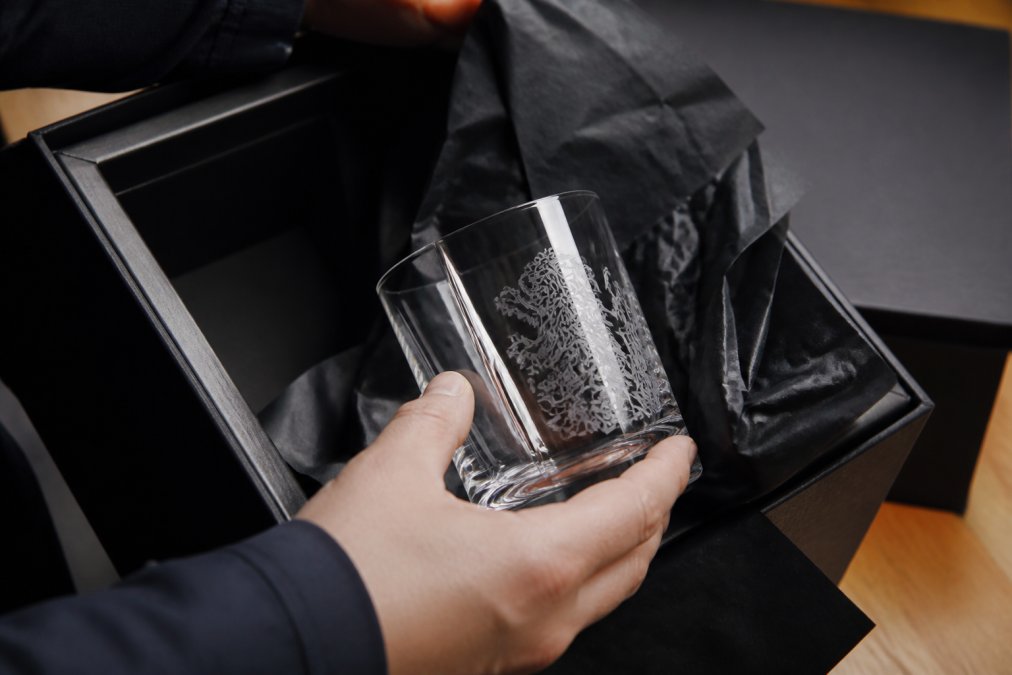
Strategic gifting moments include:
- Contract anniversaries: Recognise one year, five years, ten years of partnership
- Seasonal occasions: Year-end holidays, spring launches
- Milestone events: New office opening, product launch, company anniversary
- After major wins: Closing a deal, hitting a target, successful project completion
Measure ROI and Refine Your Gifting Strategy
Measurement doesn't require complex analytics, it requires a system. Integrate gifting into your CRM so it becomes automated, consistent, and measurable.
Define what success looks like first:
-
Client retention: Did clients who received gifts renew contracts? At what rate compared to non-gifted clients?
-
Relationship deepening: Did gifting lead to upsells, referrals, or new opportunities?
-
Employee engagement: Did recognised employees stay longer, perform better, or refer candidates?
-
Brand recall: Did recipients mention your business to others? Did they use the gift and display it visibly?
-
Event impact: Did attendees who received gifts follow up, engage, or convert?
-
Contract anniversary trigger: CRM flags renewal dates and prompts gifting 4-6 weeks before
-
Client milestone trigger: Automatically log gifting tasks when clients reach spending thresholds
-
Employee tenure trigger: System reminds you at 1, 5, and 10 year milestones
-
Seasonal trigger: November task for year-end gifts with lead time for 28 working day custom-etched glassware turnaround
-
Post-event trigger: Auto-send thank-you gifts to engaged event attendees
Measure outcomes with practical methods:
-
Survey recipients: Follow up asking if they received the gift and how it made them feel
-
Track contract renewals: Compare renewal rates for gifted vs non-gifted clients
-
Monitor referrals: Ask new clients how they heard about you and track referrals from gifted contacts
-
Use unique codes: Include QR codes in custom gift packaging to track engagement
-
Observe usage: Ask clients if they're using branded glassware in follow-ups
-
Track employee metrics: Monitor retention and engagement for employees who received gifts
-
Which gifts generated the most positive response?
-
Which timing (contract anniversary, seasonal, post-event) drove the most engagement?
-
Which recipient segments (top-tier clients, long-term employees, prospects) showed the strongest ROI?
-
Did personalisation (etched names, custom packaging) increase perceived value?
-
Did premium packaging (custom gift boxing) improve the unboxing experience and brand recall?
-
January: Employee recognition for previous year achievements
-
March-April: Spring client appreciation gifts
-
June: Mid-year milestone recognition
-
September-October: Prepare for year-end gifting (order early to meet turnaround times)
-
November-December: Year-end client and employee gifts
Frequently Asked Questions
What are the tax implications of corporate gifting for small businesses?
In Australia, corporate gifts are generally tax-deductible as a business expense under the Australian Taxation Office (ATO) guidelines, provided they are genuine business gifts and not personal in nature. You should keep detailed records of recipients, dates, and business purposes. Consult your accountant to ensure compliance with current ATO rules, as thresholds and conditions can vary depending on your industry and specific circumstances.
How do you choose appropriate corporate gifts for clients versus employees?
Client gifts should emphasise your brand value and strengthen business relationships, premium items like custom-etched glassware work well for hospitality, wine, or professional sectors. Employee gifts should reflect appreciation and reinforce company culture; consider branded items that employees will use regularly. For both, personalisation matters: engrave names, logos, or meaningful dates. The key difference is intent: client gifts are relationship investments; employee gifts build internal loyalty and recognition. Quality over quantity applies to both.
What makes branded corporate gift ideas more effective than generic options?
Branded gifts create lasting impressions because they combine utility with brand recall. Custom-etched glassware, for example, serves a practical purpose while keeping your logo or message visible every time it's used. This dual benefit, function plus brand visibility, increases the perceived value and likelihood of recipient engagement compared to generic items. Personalised gifts also signal genuine effort and thoughtfulness, strengthening emotional connection to your brand or workplace culture.
How long does it take to produce and deliver custom branded glassware for a corporate gifting campaign?
Turnaround times vary depending on quantity, design complexity, and delivery location. If you require custom-manufactured gift boxing alongside your glassware, a premium presentation option, allow approximately 28 working days for that component. For urgent campaigns, discuss rush options with your supplier, though expedited orders may affect pricing. Always confirm timelines early to avoid last-minute delays.