 listicle
Custom Etched Wine Glasses for Wineries: 2026 Guide
Table of Contents
- Why Custom Etched Wine Glasses Matter for Wineries
- Etched vs Printed Wine Glasses: Which Technique Lasts
- Bulk Branded Wine Glasses: Ordering for Your Winery
- Glass Styles for Wine Tasting Rooms and Events
- How to Customise Your Order: Design to Delivery
- Durability and Care: Making Your Etching Last
- Branding Strategy: ROI for Wineries
- Sourcing Sustainable and Quality Glassware
Last Updated: August 13, 2026
Why Custom Etched Wine Glasses Matter for Wineries
Custom etched wine glasses transform functional drinkware into a marketing asset. When a guest holds a glass bearing your vineyard's name or logo, they're holding a tangible connection to your business that lasts long after they've finished their wine, appearing in social media photos and sparking conversations about your wines.
The choice between etching techniques, glass styles, and bulk ordering approaches determines whether your custom glassware becomes a memorable brand touchpoint or an expensive mistake. At The Glassware Company, we've worked with wineries to create custom etched wine glasses that withstand both commercial dishwasher service and the scrutiny of discerning wine enthusiasts. The difference between a poorly executed order and a professional one often comes down to understanding technical details: which engraving method holds up to commercial dishwashers, what minimum quantities make economic sense, and how to ensure colour consistency across batches.
This guide walks you through every decision you'll face when sourcing custom etched wine glasses for your winery, from selecting the right engraving technique to managing bulk orders and maintaining quality across reprints.
Etched vs Printed Wine Glasses: Which Technique Lasts
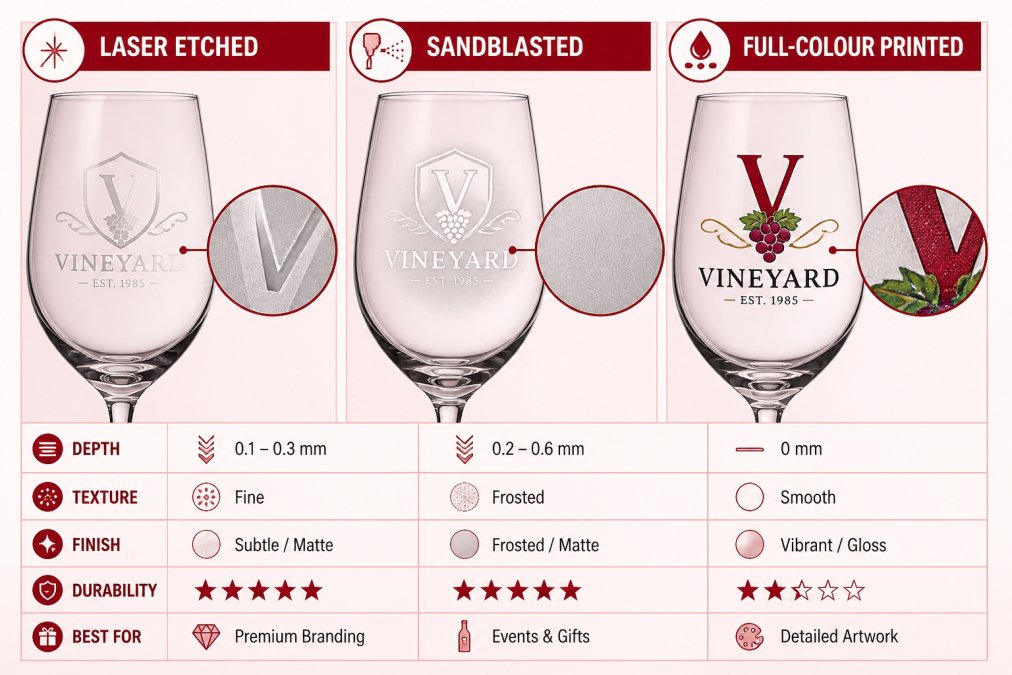
The fundamental choice is between permanent etching methods (laser and sandblast engraving) and full-colour printing. Laser engraving creates a permanent mark by removing a thin layer of glass surface, producing a frosted or clear-edged design. Sandblast engraving uses pressurised sand to create a deeper, more textured frosted finish. Full-colour printing applies ink or ceramic coatings to the glass surface, allowing for photographic images and complex colour work. The critical difference: etching is permanent and dishwasher-safe indefinitely, whilst printing can fade or chip with repeated washing.
Laser Engraving for Permanent Results
Laser engraving delivers speed and precision. The process uses a focused beam to vaporise a micro-thin layer of glass, leaving a permanent, crisp mark that won't fade regardless of dishwasher cycles. For wineries, this means your vineyard name or logo remains sharp and visible for years.
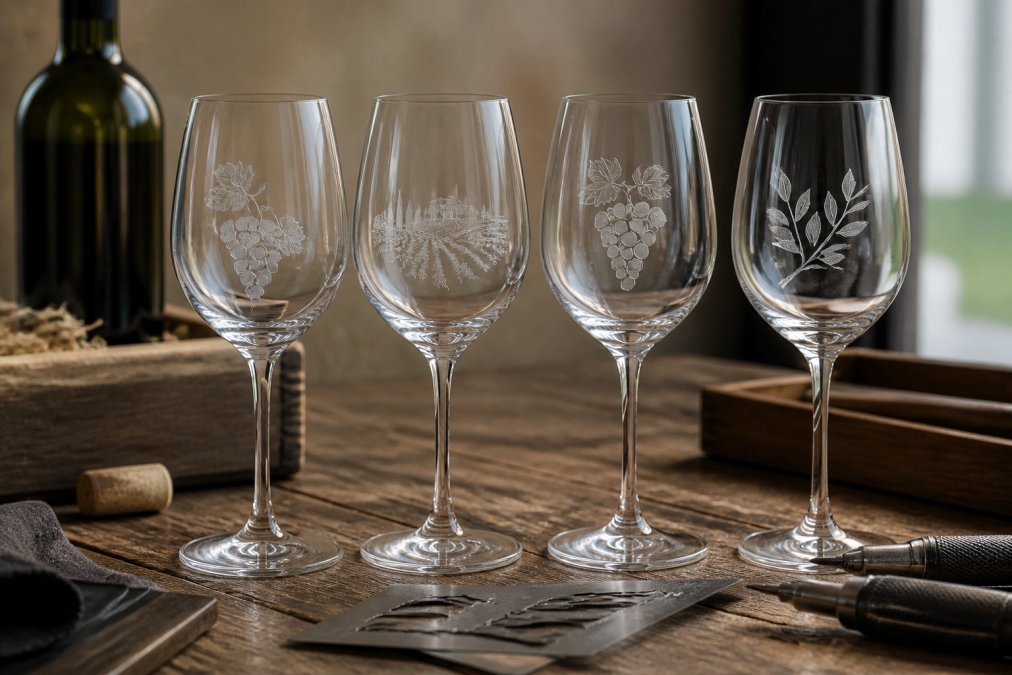
Laser marks appear as frosted lines on clear glass, which works beautifully for simple logos, text, and line art. Photographic engraving produces grayscale results with limited tonal range. Turnaround times are typically fast, and setup costs are generally lower than sandblast methods because the laser doesn't require custom stencils.
Sandblast Engraving for Premium Finishes
Sandblast engraving creates a deeper, more three-dimensional frosted effect by forcing abrasive particles against the glass surface under high pressure. The result looks more premium than laser engraving, the etching appears bolder, more tactile, and catches light differently. For high-end wineries positioning their glassware as luxury merchandise, this finish justifies a higher price point.
The process requires a custom stencil for each design, adding setup time and cost. The deeper etch means the design remains intact even if the glass edge chips. For tasting rooms where glasses experience heavy use, this durability advantage matters. Sandblast engraving works equally well on stemmed and stemless glasses, crystal and standard glass.
Full-Colour Printing: When to Use It
Full-colour printing allows photographic images, gradients, metallic inks, and complex multi-colour designs. For wineries wanting to showcase vineyard photography or intricate label artwork on glassware, this is the only option that delivers visual complexity. Colours remain vibrant for 12-18 months of regular use.
The catch is durability. Printed designs fade with repeated dishwasher cycles. Most manufacturers recommend hand-washing printed glassware, which is impractical for commercial tasting rooms. Full-colour printing makes sense for limited-edition event glasses or premium gift sets where guests understand the glassware is decorative. For core tasting room glassware, etching is the more practical choice.
Bulk Branded Wine Glasses: Ordering for Your Winery
Bulk ordering is where custom glassware becomes economically viable for wineries. Small orders (under 50 glasses) carry high per-unit costs due to setup fees. Once you commit to 100+ glasses, the per-unit price drops substantially, making the total investment reasonable as a marketing expense.
Minimum Order Quantities and Setup Fees
Minimum order quantities and setup fees vary depending on the engraving method and glass style. Laser engraving typically has lower minimums because setup is faster. Sandblast engraving often requires higher minimums due to stencil creation. Full-colour printing typically requires a specific minimum. Setup fees vary widely. Some producers bundle setup into a per-unit price that decreases with volume. Others charge a flat setup fee applied once per order. When evaluating pricing, always ask whether the quoted per-unit price includes setup or if it's additional. For ongoing orders of the same design, many producers waive or reduce setup fees on repeat runs.
Turnaround Times and Rush Orders
Standard turnaround for laser-engraved glasses is typically 1-10 working days from artwork approval. Sandblast engraving typically takes 5-15 working days. Full-colour printing falls in the 5-14 working day range. These timelines don't include delivery time, which adds 2-10 working days depending on your location. Rush orders are possible but come at a cost. Expedited production typically adds a surcharge to the total order cost. Plan your ordering around your busiest seasons, placing orders well in advance to avoid rush fees and ensure stock arrives well before you need it.
Glass Styles for Wine Tasting Rooms and Events
The glass style you choose affects both the visual presentation of your wines and the practical experience of your guests.
Stemmed vs Stemless Options
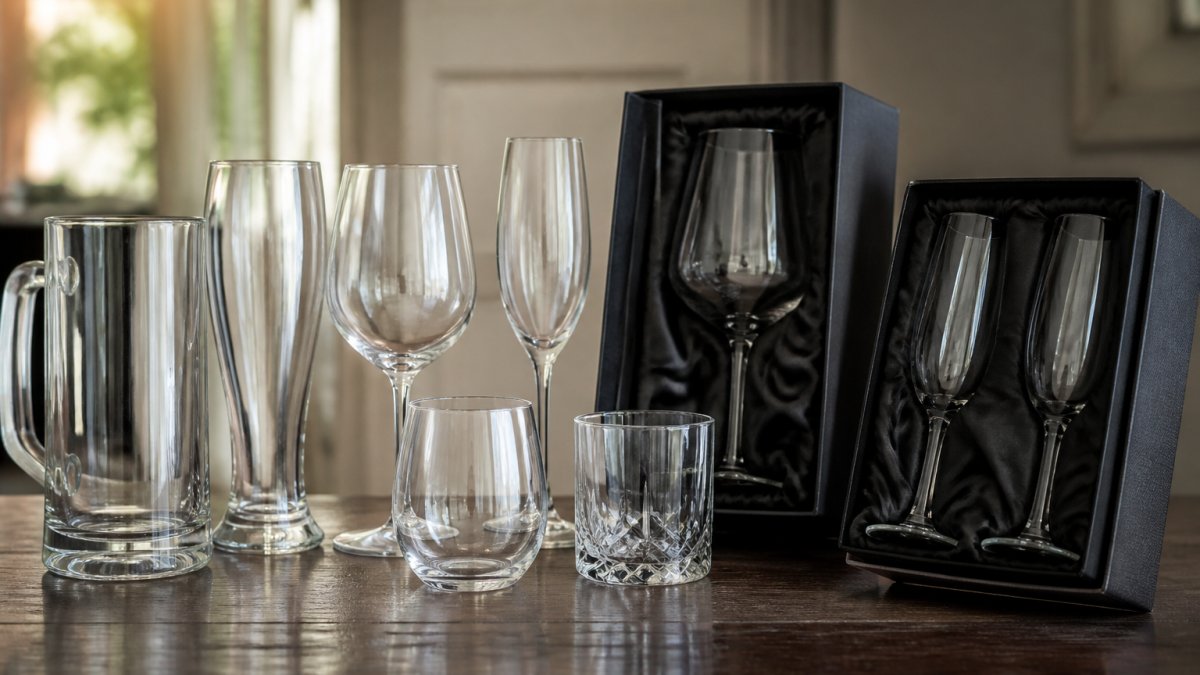
Stemmed wine glasses are the traditional choice. The stem keeps guests' hands away from the bowl, preventing hand warmth from affecting wine temperature, a genuine consideration for serving white wines properly. Stemmed glasses also feel more formal and offer more surface area for engraved designs.
Stemless wine glasses are increasingly popular in casual tasting environments and for events where breakage is a concern. They're more stable, less prone to tipping, easier to transport, and take up less storage space. For high-volume events or outdoor tastings, stemless designs are practical. For a winery tasting room aiming to project sophistication, stemmed glasses are the stronger choice.
Premium Crystal vs Standard Glass
Premium crystal (typically 24% lead crystal or higher) has superior clarity, weight, and refractive properties. When light passes through crystal, it sparkles more noticeably than standard glass and feels heavier and more luxurious in hand. For high-end wineries, crystal glassware reinforces positioning.
Standard soda-lime glass is perfectly adequate for wine service and significantly less expensive than crystal. It's also more durable, crystal is more prone to chipping and cracking if dropped. For tasting rooms where glasses experience heavy use and occasional breakage is expected, standard glass is the practical choice. The engraving process works identically on both materials.
How to Customise Your Order: Design to Delivery
The customisation process determines whether your glassware arrives exactly as envisioned or whether you're disappointed by the final product.
Submitting Your Logo and Artwork
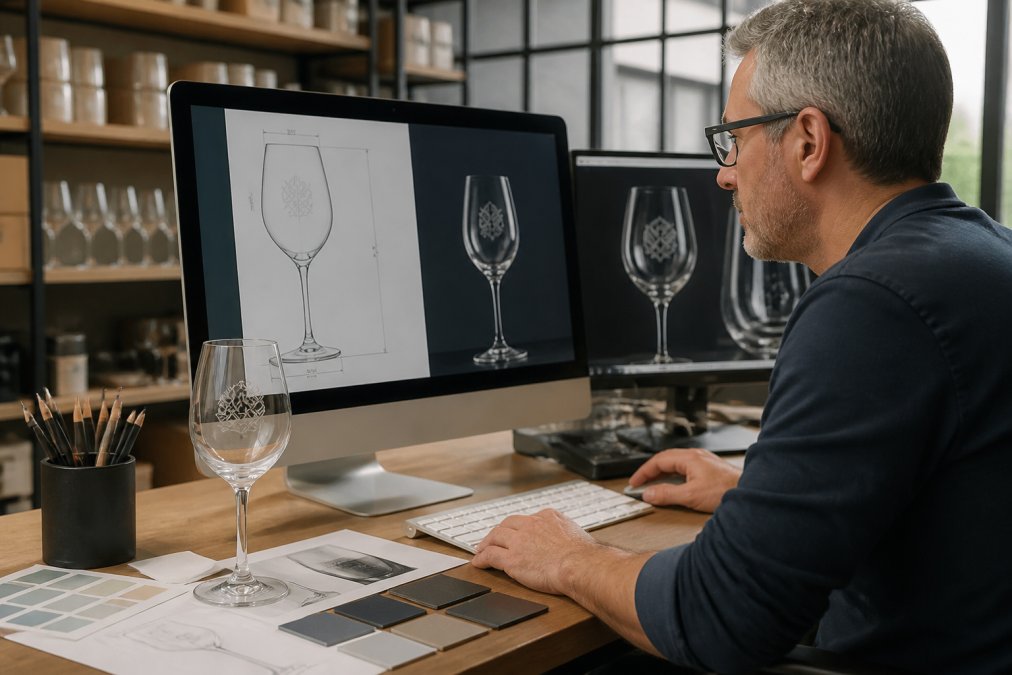
Most producers accept artwork in standard formats: PDF, AI (Adobe Illustrator), or high-resolution PNG/JPG files. For best results, provide vector artwork (AI or PDF) rather than rasterised images. Vector files scale without losing quality, which matters because your logo might appear at different sizes across different glass styles.
If you're submitting a rasterised image, ensure it's at least 300 DPI and sized appropriately for the glass. For colour printing, provide artwork in CMYK colour mode (not RGB), as this matches how the printer will render colours on the final product. Include a brief design brief with your submission: where on the glass should the logo appear? Should it be a single colour or multi-colour?
Proofing and Quality Assurance
After you submit artwork, the producer creates a digital proof or a physical sample. Request a physical sample before committing to a large order. The cost is typically $20-$50 per sample, but it's insurance against discovering design issues after hundreds of glasses have been produced. Check the sample for clarity of the design, placement accuracy, colour accuracy, depth of engraving, and overall finish quality.
Once you approve the sample, the producer creates a production run using that sample as the reference standard.
Batch Consistency and Colour Matching
For large orders split across multiple production batches, consistency is the challenge. Laser engraving is highly consistent because the process is digitally controlled. Sandblast engraving is also consistent, though minor variations in frosted depth can occur.
Full-colour printing is where consistency issues emerge. Ink colours can shift between batches due to variations in ambient temperature, humidity, glass surface preparation, or ink formulation. If you're ordering large quantities and need guaranteed colour consistency, specify this in your initial brief. Some producers will run the entire order in a single production batch to maintain consistency, though this may extend turnaround time. For reorders of the same design, ask your producer to retain the original production specifications so repeat orders match the original as closely as possible.
Durability and Care: Making Your Etching Last
Your custom etching or printing is only as durable as your care and your guests' behaviour.
Dishwasher Safety and Commercial Use
Laser-engraved and sandblast-engraved designs are completely dishwasher-safe. The engraving is part of the glass itself and won't fade, chip, or wash away regardless of temperature, detergent, or cycle type. This is the primary advantage of etching over printing for commercial tasting room use.
Full-colour printed designs fade with repeated dishwasher exposure. Most printed glassware remains vibrant for 12-18 months of regular washing. Some manufacturers offer ceramic-coated printing that extends durability to 24-30 months, but it still eventually fades. Hand-washing printed glasses extends their lifespan significantly.
Preventing Fading and Damage
Etched designs don't fade, but they can accumulate mineral deposits or hard-water staining if your dishwasher uses mineral-heavy water. Using a rinse aid in your commercial dishwasher prevents mineral buildup and keeps engraved designs looking sharp.
For printed glassware, avoid exposing glasses to direct sunlight for extended periods. UV light accelerates ink fading. Thermal shock (sudden temperature changes) can cause any glassware to crack, so don't move glasses directly from a hot dishwasher to a cold water rinse. Train your tasting room staff to wash printed glassware with soft cloths or soft-bristle brushes, not scouring pads.
Branding Strategy: ROI for Wineries
Custom etched wine glasses function as a branding tool with measurable return on investment. A winery serving 200 guests per week in a tasting room uses approximately 1,000 glasses monthly. If each guest uses 3-4 glasses during a tasting, custom glassware ensures your brand appears in front of 12,000+ brand impressions monthly during a positive experience.
For event-based ROI, consider a harvest festival where you serve 500 guests. Custom etched glasses cost approximately $3-$8 per unit depending on style and engraving method. At $5 per glass, 500 glasses cost $2,500. Those 500 guests leave with a branded glass they'll use at home, generating multiple impressions as friends and family see it. If even 10% of those glasses result in one additional winery visit or wine purchase, the ROI is positive.
The secondary benefit is merchandise revenue. Wineries often sell branded glassware in their cellar door shop or online. A glass costing $5 to produce can be retailed for $15-$25, creating a margin that covers the initial investment and generates profit. Consistency matters for branding ROI, wineries that maintain consistent branded glassware across multiple seasons build stronger brand recognition.
Sourcing Sustainable and Quality Glassware
Environmental impact and material quality increasingly influence purchasing decisions, particularly for premium wineries positioning sustainability as part of their brand identity.
Most glassware is produced from recycled glass, which reduces energy consumption compared to virgin glass production. Standard soda-lime glass typically contains 30-50% post-consumer recycled content. When sourcing glassware, ask your producer about recycled content percentages and environmental certifications (ISO 14001 or equivalent).
Glass durability is inherently sustainable. A wine glass used for 20 years has a far lower environmental impact per use than disposable alternatives. Local production reduces shipping emissions. Sourcing sustainable glassware aligns your tasting room operations with your brand values.
Custom etched wine glasses are an investment in your winery's brand presence and guest experience. The decision between engraving techniques, glass styles, and bulk ordering approaches directly affects the durability, appearance, and cost-effectiveness of your glassware. The Glassware Company brings years of experience working with wineries to ensure your custom glassware arrives exactly as intended, withstands commercial use, and creates the striking impression your brand deserves. Get started with The Glassware Company today and transform your tasting room glassware into a powerful marketing asset that guests will remember long after their visit.
Frequently Asked Questions
How durable are etched wine glasses in a commercial dishwasher?
Laser-etched and sandblasted custom etched wine glasses are highly durable in commercial dishwashers when properly applied. The engraving becomes part of the glass surface rather than a coating, so it won't fade like printed designs. However, quality matters: premium etching techniques like sandblasting create deeper, more permanent finishes than basic laser methods. Always follow care instructions provided by your supplier, and avoid abrasive scrubbing. Most quality providers guarantee their etching will withstand regular commercial washing for years.
What's the difference between laser engraving and sandblast engraving for wine glasses?
Laser engraving uses heat to mark the glass surface, creating a fine, precise line with a frosted appearance. Sandblast engraving uses high-pressure sand to carve deeper into the glass, producing a more textured, premium frosted finish. Sandblast engraving is generally more durable and visually striking, especially for luxury brands, but takes longer and costs more. Laser engraving is faster, ideal for detailed logos, and sufficient for most commercial applications. Both are permanent; the choice depends on your brand image and timeline.
Do you have minimum order quantities for custom etched wine glasses?
Minimum order quantities vary by supplier and customisation method. Some providers require 24-150 units for bulk branded wine glasses, while others offer no minimum for corporate logo etching. Setup fees may apply for custom designs, so smaller orders can be less cost-effective per unit. Contact your supplier directly to discuss your specific volume needs, many will work with smaller breweries and wineries to find a solution that fits your budget and timeline.
How do I ensure my artwork looks correct before production starts?
Request a digital proof or physical sample before full production. Most reputable suppliers provide a digital mockup showing exactly how your logo will appear on the glass, including size, placement, and colour. Ask about their proofing process upfront: some offer free proofs, others charge a fee. Provide your artwork in high resolution (vector format preferred) and discuss placement options, top, bottom, or wraparound. Review the proof carefully for text clarity, logo proportion, and any colour adjustments needed. Don't approve until you're fully satisfied.
Will my reorders maintain the same design quality across batches?
Consistency across batches depends on your supplier's quality control processes. Ask how they ensure colour matching and engraving depth remain identical between orders. Reputable providers maintain digital records of your design specifications and use standardised engraving settings to guarantee batch-to-batch consistency. Request samples from your first order to establish a quality baseline, then compare future batches against those samples. Written specifications and regular communication with your supplier help prevent the colour or depth variations that can occur with less rigorous vendors.
This article was written using GrandRanker