 how-to
Custom Glassware Small Batch Orders: A Complete Guide
Table of Contents
- Why Custom Glassware Works for Small Batches
- Types of Custom Glassware for Small Orders
- Minimum Order Quantity for Custom Glassware
- Laser Engraved Glassware vs Screen Printed
- Custom Glassware Lead Times and Production Steps
- How to Order Custom Glassware: Step-by-Step Process
- Cost Factors for Small Batch Custom Glassware
- Conclusion
Last Updated: August 15, 2026
Why Custom Glassware Works for Small Batches
Custom glassware small batch orders let you order exactly what you need without committing to massive production runs. Modern customisation techniques have eliminated unrealistic minimum order quantities, making it possible to order 50 pint glasses for a brewery's limited merchandise line or 100 engraved wine glasses for a corporate event without financial risk.
Small batch custom glassware delivers brand presence, creates memorable gifts, and works for any budget. Laser engraving and screen printing techniques have matured enough that setup costs no longer force unrealistic minimums.
Types of Custom Glassware for Small Orders
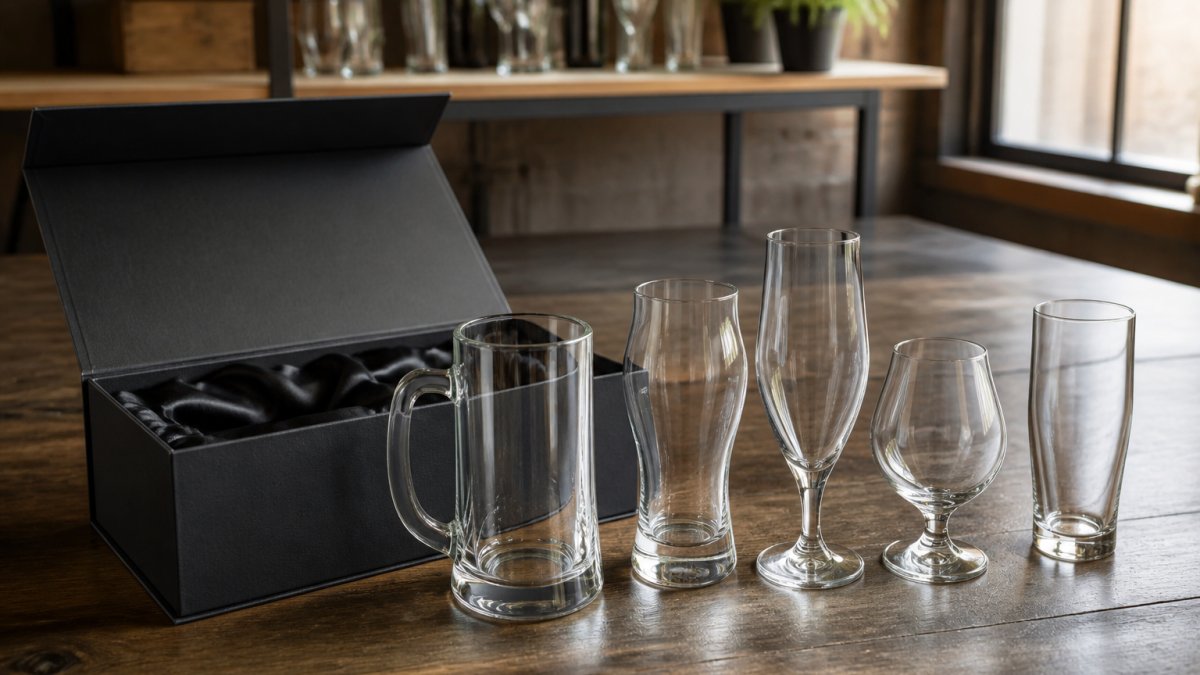
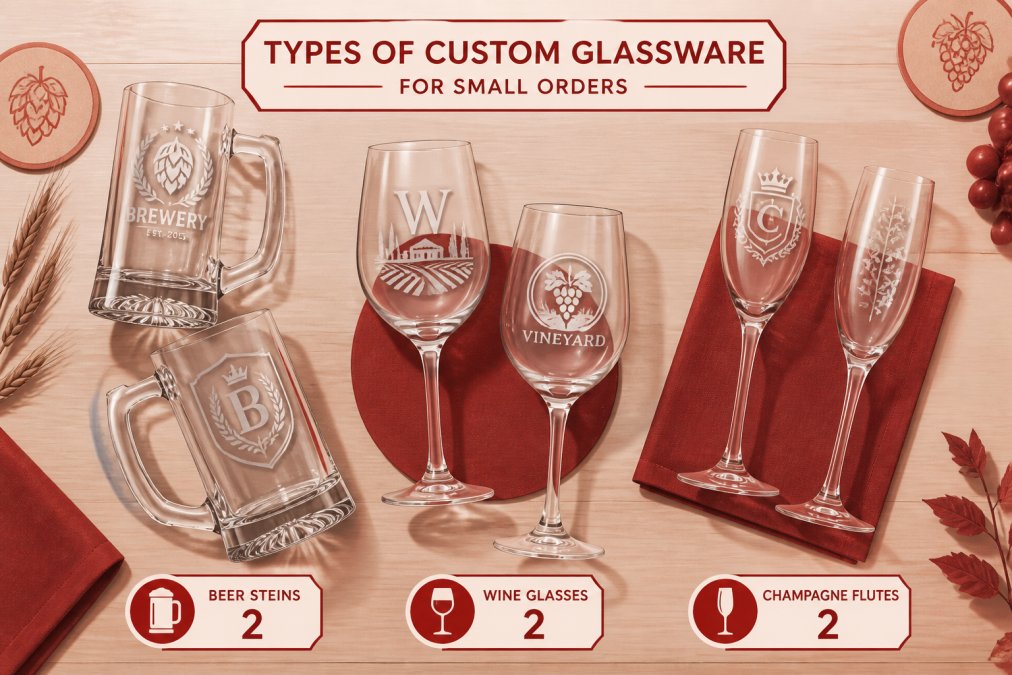
Your choice of glassware depends on the beverage type, occasion, and how it fits into your brand narrative. Most custom glassware suppliers, including The Glassware Company, stock styles suited to different markets and purposes.
Beer steins and mugs
Beer steins and custom mugs are durable workhorses in promotional glassware. A brewery ordering 80 personalised beer steins for merchandise sees repeated brand exposure every time a customer reaches for a drink. Glass steins typically range from 500 ml to 1 litre capacity. Laser engraving creates a frosted effect that's both durable and visually striking. For small batch orders, the per-unit cost remains reasonable even at 50-100 units.
Wine glasses and champagne flutes
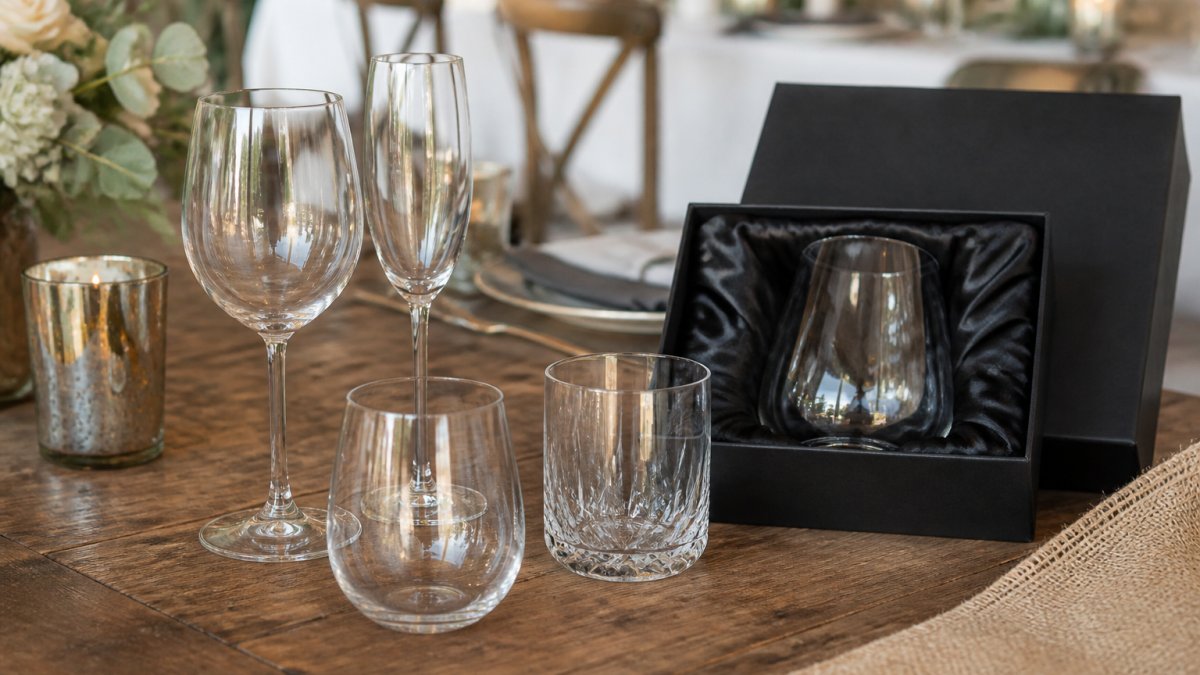
Wine glasses and champagne flutes occupy the premium end of custom glassware. A winery ordering 150 custom-etched wine glasses for its tasting room creates an experience that generic glassware cannot match. Champagne flutes work particularly well for small batches because the narrow profile makes engraving visible from every angle. For small batches, universal wine glass profiles minimise complexity while keeping per-unit costs manageable.
Pint glasses and tumblers
Pint glasses and tumblers are everyday workhorses suited to high-volume usage in bars, restaurants, and casual hospitality settings. A pub ordering 200 custom pint glasses gets daily brand reinforcement at a reasonable cost per unit. Tumblers are increasingly popular for non-alcoholic branding in coffee shops, juice bars, and corporate offices. Both work exceptionally well for small batch orders because they're high-volume products with established production processes and low setup costs.
Minimum Order Quantity for Custom Glassware
The minimum order quantity for custom glassware small batch orders directly affects cost per unit, setup feasibility, and whether an order makes financial sense. Traditional suppliers historically set MOQs at 500 or 1,000 units, but modern customisation techniques have lowered those barriers significantly.
Laser engraving requires no physical setup, the system reads your artwork file and engraves directly onto each glass. Screen printing requires a screen, but that can be produced quickly for smaller runs. Today, some suppliers accept orders as small as 25 units for laser-etched glassware, while others set minimums at 100 or 150.
The Glassware Company understands that your order size shouldn't force you into a decoration method that doesn't suit your design.
Laser Engraved Glassware vs Screen Printed
The choice between laser engraved glassware and screen printed options is consequential. Both produce professional results but differ in durability, cost, visual impact, and design suitability.
Durability and longevity
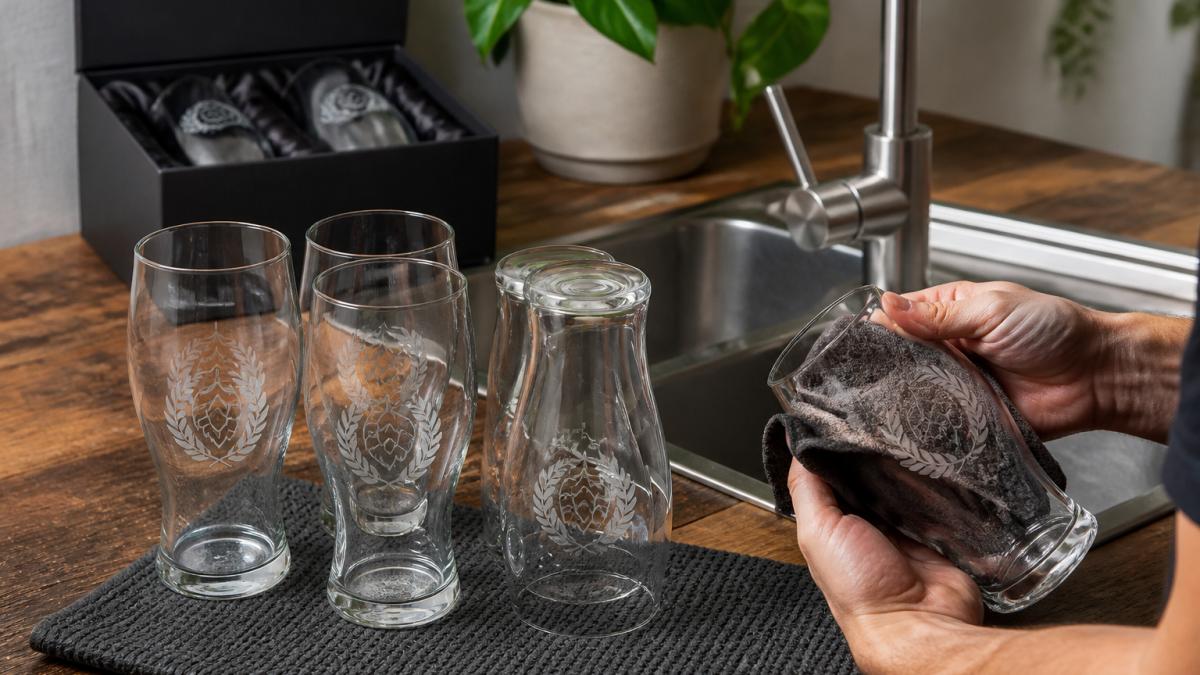
Laser engraving vaporises a thin layer of the glass surface, creating a permanent frosted mark that's physically part of the glass and cannot fade, peel, or wash away. A laser-etched beer stein used daily in a commercial kitchen for five years will show no degradation.
Screen printing deposits ink onto the glass surface and adheres through heat treatment, but it remains a coating. In heavy commercial use, gradual fading can occur over 12-24 months. This durability difference matters most for hospitality venues, bars, and restaurants where glasses see constant use.
Cost considerations for small batches
Screen printing typically has a lower per-unit cost once the screen is made. Laser engraving has a lower setup cost but a slightly higher per-unit cost because each glass requires time on the laser system. The break-even point typically falls between 150 and 250 units. Below that range, laser engraving usually wins on total cost. Above it, screen printing becomes more economical.
Visual quality and detail
Laser engraving produces a frosted, etched appearance where fine details render sharply and the monochromatic look suits sophisticated designs. Screen printing can reproduce full-colour designs, photographic images, and gradients. If your artwork includes multiple colours or photorealistic elements, screen printing is necessary.
Custom Glassware Lead Times and Production Steps
Understanding the production timeline for custom glassware small batch orders helps you plan realistically. Lead times vary based on order complexity and current production capacity, but the process is consistent.
Artwork submission and file requirements
The process begins with your artwork. You'll need a digital file, typically a vector file (Adobe Illustrator, EPS, or PDF) for best results. Vector files are resolution-independent and scale cleanly without pixelation. For laser engraving, your file should be single-colour. For screen printing, your file can be multi-colour, but each colour requires a separate screen layer, which increases cost.
The Glassware Company provides artwork guidelines to ensure your file is production-ready. Common issues include fonts that are too thin to engrave cleanly and designs with very small details that don't render well at actual size.
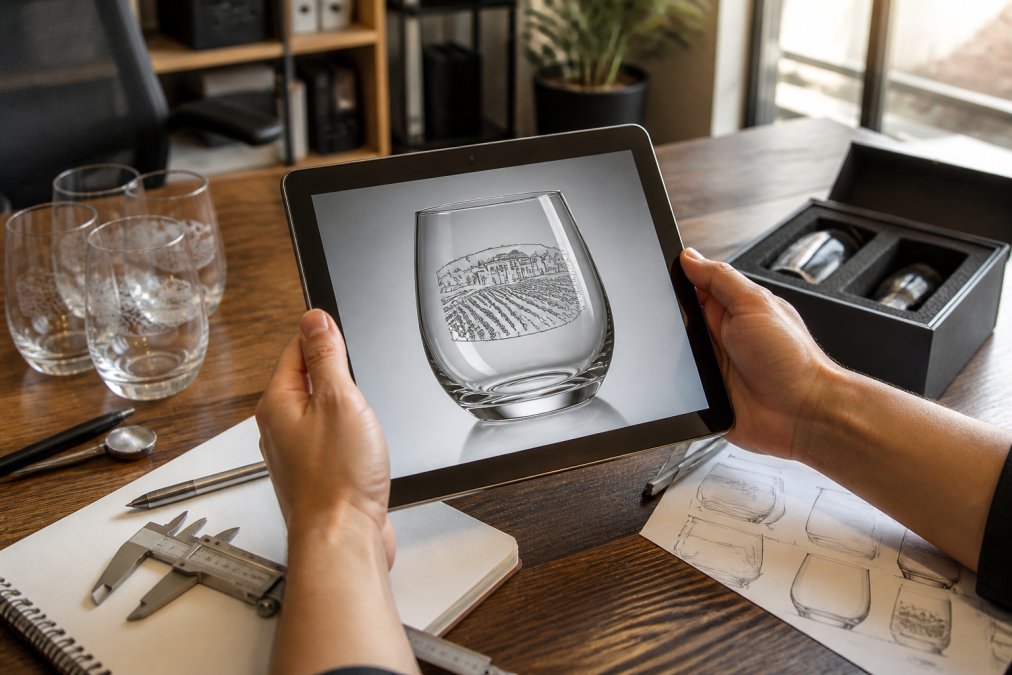
Digital proofing and approval
Once your file is submitted, the supplier creates a digital proof showing how your design will appear on the actual glassware. The proofing process typically takes 2-3 business days. You'll receive a digital image showing your design on the glassware style you've chosen. Most suppliers allow one or two rounds of revisions during proofing. Once you approve the proof in writing, production begins.
Production and quality control
After approval, your custom glassware moves into production. Lead times depend on current queue and order complexity. A straightforward 100-unit laser-engraved order might take 7-10 business days. A 250-unit screen-printed order with multiple colours could take 14-21 days. Rush options exist but typically add 20-40% to the cost.
During production, the supplier runs quality checks on a sample of units from your batch to verify that engraving depth is consistent, screen printing coverage is complete, and colours match the approved proof.
How to Order Custom Glassware: Step-by-Step Process
Ordering custom glassware small batch orders follows a predictable sequence.
Step 1: Select your glassware style and quantity
Choose the glassware type that fits your purpose. Are you ordering beer steins for merchandise, wine glasses for an event, or tumblers for a corporate gift? Next, decide on quantity. This decision affects both cost per unit and decoration method viability. A 50-unit order might favour laser engraving. A 300-unit order might make screen printing more economical. Most suppliers provide pricing at multiple quantity tiers so you can see how cost per unit changes.
Step 2: Prepare your artwork and submit files
Create or gather your artwork. If you don't have a vector file, work with a graphic designer or ask your supplier if they offer design services. Prepare your file according to the supplier's specifications and submit it through their online portal or email with details about logo placement, size preference, and how the design should appear.
Step 3: Review and approve your digital proof
Within 2-3 business days, you'll receive a digital proof showing your design on the selected glassware. Review it carefully for placement, size, and colour accuracy. If adjustments are needed, request revisions. Most suppliers allow 1-2 rounds of changes at no extra cost. Once you're satisfied, approve the proof in writing to trigger production.
Step 4: Confirm production timeline and delivery
After you approve the proof, confirm the production timeline and expected delivery date. Ask about production lead time, shipping timeline, and any special handling requirements. Once production is underway, most suppliers provide a tracking update when your order ships.
Cost Factors for Small Batch Custom Glassware
Several variables influence the total cost of custom glassware small batch orders.
Glassware style and base cost. Pint glasses and basic tumblers are the least expensive base product. Champagne flutes and wine glasses cost more per unit.
Order quantity. Larger orders reduce the per-unit cost because setup costs are amortised across more units.
Decoration method. For small batches, laser engraving is often more economical. For larger batches, screen printing wins.
Design complexity. A simple single-colour logo costs less than intricate multi-colour artwork.
Customisation level. Personalisation, such as adding individual names to each glass, increases labour and production time.
Turnaround time. Rush orders typically cost 20-40% more than standard lead times.
The Glassware Company provides transparent pricing based on these factors.
Conclusion
Custom glassware small batch orders solve a real problem: they let you create branded, memorable drinkware without the financial risk of massive production runs. Whether you're a brewery testing merchandise, a winery building brand presence, or a corporate client creating event-specific gifts, small batches deliver quality and control.
The production process, from artwork submission through digital proofing to final quality control, is designed to catch issues before they become expensive mistakes. Laser engraving and screen printing both work; your choice depends on design complexity, durability needs, and order size. Lead times are predictable, and costs are transparent when you know what to ask for.
The Glassware Company brings years of industry experience to every custom glassware project, from initial design consultation through final delivery. With expertise in engraving and etching, a comprehensive range of glassware styles, and a commitment to quality control, we ensure your artwork is on point and your brand makes the impression you intend. Get a quote from The Glassware Company today and see how custom glassware small batch orders can elevate your brand presence.
Frequently Asked Questions
What is the minimum order quantity for custom glassware?
Minimum order quantities vary by supplier and decoration method, but small batch providers typically accept orders starting from 12 to 50 units for screen-printed or laser-etched designs. Some suppliers offer even lower minimums for specific glassware styles or may charge a one-time setup fee for smaller runs. Contact your supplier directly for their current MOQ thresholds, as these often depend on whether you're ordering branded glassware for a single event or building inventory for ongoing use.
Is screen printing or laser engraving better for small batches?
Laser engraving is generally superior for small batches because it requires no setup fees and handles intricate detail well, making per-unit costs lower on small runs. Screen printing becomes more cost-effective at higher volumes (typically 100+ units) because the setup cost spreads across more items. For durability, laser-etched glassware resists fading and dishwasher damage better than screen-printed designs, which can wear over time with regular washing in commercial settings.
How long does it typically take to receive custom glassware?
Custom glassware lead times typically range from 2 to 4 weeks, depending on order size, decoration complexity, and current production schedules. This includes time for artwork approval, production, quality checks, and packaging. Rush options may be available for an additional fee if your event is approaching. Always confirm exact timelines with your supplier when placing your order, especially for time-sensitive events like corporate conferences or weddings.
What file formats do I need to submit for custom glass branding?
Most suppliers accept vector artwork files (PDF, AI, EPS) as these scale without losing quality and are ideal for etching and engraving. High-resolution raster files (PNG, JPEG at 300 DPI minimum) work for screen printing. Avoid low-resolution or compressed files, as these may appear blurry on the finished glassware. Your supplier will provide specific file requirements and may offer design assistance if your artwork needs adjustment for the decoration method you've chosen.
This article was written using GrandRanker