 how-to
How to Avoid Glassware Setup Fees: 7 Proven Strategies
Table of Contents
- Understanding Glassware Setup Fees and Why They Exist
- Negotiate Setup Fees Directly With Your Vendor
- Custom Beer Glass Minimum Order Requirements and How They Affect Fees
- How to Prepare Artwork for Glassware and Reduce Design Charges
- Explore Alternative Branding Methods to Cut Setup Costs
- Branded Glassware Cost Breakdown: Where Setup Fees Fit
- Plan Repeat Orders Strategically to Eliminate Future Setup Fees
- Conclusion
Last Updated: August 20, 2026
Understanding Glassware Setup Fees and Why They Exist
Setup fees cover the initial design work, tooling, and preparation required before production begins. Every custom glassware order requires vendor preparation: creating digital files, calibrating equipment, and testing designs on samples. Most vendors recoup this investment through a one-time setup charge rather than spreading it across unit costs.
Setup fees typically cover artwork digitisation, design proofs, equipment calibration, and initial tooling for etching or screen printing. The more complex your branding method, the higher the fee. Laser etching requires less tooling than screen printing, which requires less than custom die charges for embossing.
The key insight is that setup fees are negotiable. The vendor's willingness to reduce or waive them depends entirely on your order size, timeline, and willingness to ask.
Negotiate Setup Fees Directly With Your Vendor
The most straightforward way to avoid glassware setup fees is to ask for a reduction or waiver. Many businesses never attempt this, assuming the quoted fee is non-negotiable. In practice, vendors have significant flexibility.
When a vendor quotes a setup fee, respond with a clear question: "What order volume would qualify for a waived or reduced setup fee?" Most vendors have internal policies that allow them to waive setup fees for orders above a certain quantity, typically 200 to 500 units, depending on the branding method.
Volume is your primary leverage. A 500-unit order generates far more revenue than a 100-unit order, making the vendor willing to absorb the setup cost. If you're ordering fewer units, mention your intent to place repeat orders. A vendor who believes you'll reorder the same design quarterly will often waive the initial setup fee because they'll recoup it through future orders without additional setup charges.
Timing also matters. If you're flexible on your delivery date, you can negotiate lower fees. An order that fits into an existing production run costs the vendor less to set up. If you can extend your timeline by even two weeks, you may unlock a lower setup fee or a complete waiver.
Be direct about your budget constraints. A vendor who understands you're price-sensitive may offer alternatives: a simpler design requiring less setup work, a reduced setup fee in exchange for longer lead times, or a tiered discount structure where the setup fee decreases as order volume increases.
Custom Beer Glass Minimum Order Requirements and How They Affect Fees
Minimum order requirements are directly tied to setup fees. Understanding how these minimums work gives you leverage to reduce or eliminate setup charges.
Most vendors set minimum order quantities based on their production method. Screen-printed glassware typically has minimums of 48 to 100 units per design. Laser-etched glassware often has lower minimums, sometimes as few as 24 units. Hand-engraved pieces may have no minimum at all but carry significantly higher per-unit costs.
Here's the critical insight: minimums and setup fees are negotiable together. If a vendor quotes a 100-unit minimum with a £200 setup fee, you might negotiate this down to a 75-unit minimum with a £100 setup fee, or even a 50-unit minimum with a waived setup fee.
Custom beer glass minimums are particularly flexible because beer glasses have massive market demand. If your design fits into an existing production schedule, the vendor may reduce the minimum or waive the setup entirely.
Ask your vendor directly: "What's your minimum order without a setup fee?" or "At what volume does the setup fee disappear?" These questions reveal the vendor's internal economics and thresholds.
Consider ordering slightly above the minimum that waives setup fees. If the threshold is 200 units and you need 150, ordering an extra 50 units might cost less than paying the setup fee, especially if your per-unit cost drops at higher volumes.
How to Prepare Artwork for Glassware and Reduce Design Charges
Poor artwork preparation is one of the most common reasons setup fees stay high. By preparing professional artwork upfront, you can negotiate lower setup fees or eliminate them entirely.
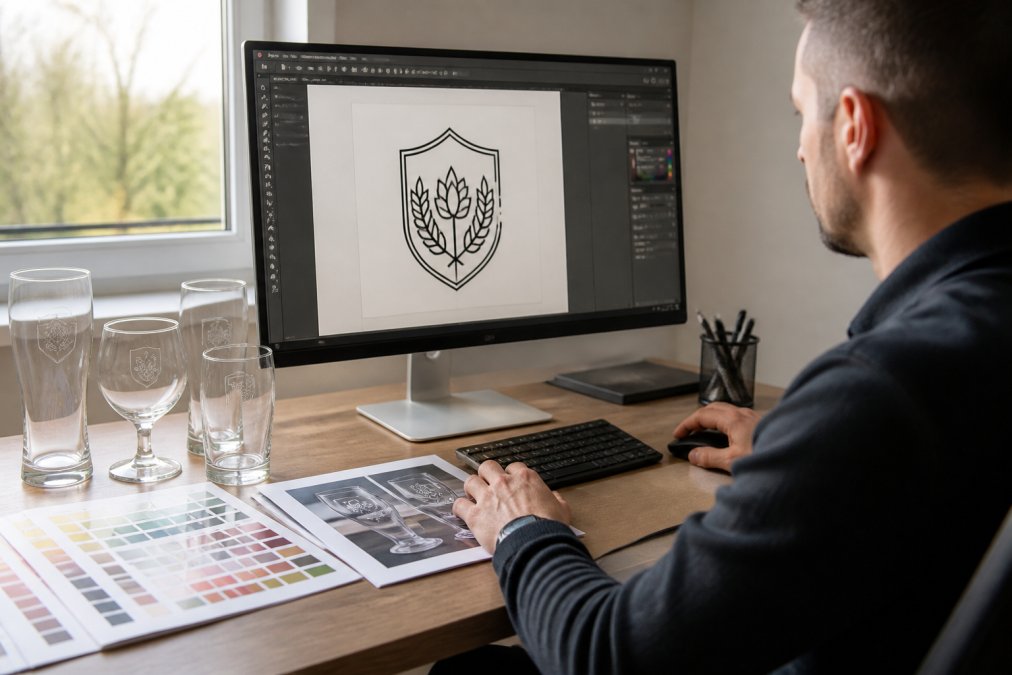
Start with vector artwork, not raster images. Vector files (AI, EPS, or PDF) scale infinitely without losing quality, whereas raster images (JPG, PNG) become pixelated when enlarged. Vendors prefer vector files because they require minimal rework. If you provide a raster image, the vendor must redraw your logo as a vector, which adds cost and time.
Your artwork should be production-ready before submission: only the elements you want on the glass, no background elements, no design notes, no multiple colour versions crammed into one file. Clean files reduce the vendor's setup time dramatically. We've seen setup fees drop by 30 to 50% when clients provide properly prepared artwork compared to messy, unclear files.
Colour separation is critical for screen printing. If your design uses multiple colours, the vendor must create a separate printing plate for each colour. By limiting your design to two or three colours, you reduce the number of plates required and lower the setup fee. Sometimes a single-colour design with strategic placement creates the same visual impact as a multi-colour design at a fraction of the setup cost.
Provide a clear brief alongside your artwork: exact location on the glass, desired size, branding method, and any special requirements. A vendor who understands your vision upfront requires less back-and-forth communication and fewer design revisions.
Request a digital proof before production begins. Most vendors provide this at no charge if you ask. A proof shows exactly how your design will appear on the actual glass, allowing you to catch errors before setup charges are finalised.
Explore Alternative Branding Methods to Cut Setup Costs
Different branding methods have vastly different setup fees. By exploring alternatives, you may discover a method that eliminates setup charges entirely or reduces them dramatically.
Laser etching is often the cheapest option for setup fees. Laser systems require minimal preparation; the vendor simply programs the design into the laser software and runs a test on a sample glass. There's no physical tooling, no printing plates, no die charges. Setup fees for laser etching typically range from nothing to a small digitisation charge.
Screen printing requires more setup because the vendor must create physical printing plates for each colour. However, screen printing produces vibrant, durable results that many businesses prefer. If you're ordering in volume or committing to repeat orders, vendors frequently waive screen printing setup fees.
Hand engraving is labour-intensive but often has no setup fee because there's no tooling involved. However, hand engraving costs significantly more per unit than screen printing or laser etching, so the total cost may be higher despite the absent setup fee.
Print-on-demand glassware is an emerging option that eliminates setup fees almost entirely. Some vendors now offer direct-to-glass printing using specialised equipment. The setup is minimal because there's no tooling or plate creation. You pay only for the glasses and printing.
Compare the total cost, not just the setup fee. Calculate the break-even point: at what order volume does the method with the setup fee become cheaper? Get quotes from the same vendor using laser etching, screen printing, and hand engraving. Compare total costs, not individual line items.
:::takeaway The cheapest branding method isn't always the one with the lowest setup fee. Calculate total cost per unit across your entire order quantity, then compare methods.
Branded Glassware Cost Breakdown: Where Setup Fees Fit
Understanding the full cost structure of branded glassware helps you negotiate setup fees more effectively. A typical branded glassware order includes the base glass cost (raw material and production), the branding cost (labour and materials for your design), the setup fee (one-time preparation costs), and any finishing or packaging costs.
For a 200-unit screen-printed beer glass order, the cost breakdown might look like this: base glass cost represents 40 to 50% of the total, branding labour represents 30 to 40%, and the setup fee represents 10 to 20%. In absolute terms, if your total order costs £1,000, the setup fee might be £150 to £200.
The percentage of setup fees decreases as your order volume increases. A 50-unit order might have a setup fee that represents 25% of the total cost. A 500-unit order might have the same setup fee representing only 5% of total cost. This is why volume is such powerful leverage.
Request an itemised invoice that separates the base glass cost, branding cost, and setup fee. This transparency makes it easier to identify where you can negotiate and helps you compare quotes from different vendors accurately.
Plan Repeat Orders Strategically to Eliminate Future Setup Fees
The most powerful way to avoid glassware setup fees is to plan repeat orders strategically. Once you've paid a setup fee for a design, subsequent orders for the same design should have zero setup fees.

When you place your first order, discuss future reorders explicitly with your vendor. Ask: "If we reorder this exact design in six months, will there be another setup fee?" Most vendors will confirm that repeat orders of the same design have no setup fee because the artwork is already prepared and the equipment is already calibrated. Lock this commitment in writing on your original quote or purchase agreement.
You can say to your vendor: "I'm willing to accept a higher setup fee on this first order if you guarantee zero setup fees on repeat orders for the next two years." Many vendors will take this deal because they know they'll recoup the setup cost through repeat business.
Plan your initial order volume strategically. If you know you'll reorder quarterly, order slightly less in your first batch than you think you need. This reserves budget for future orders and ensures you'll place repeat orders.
Consistency matters. If you reorder the same design with identical specifications each time, the vendor's setup time is literally zero. However, if you request design changes, colour variations, or different glassware types, the vendor may charge a setup fee for the new design work.
Store your approved artwork files and production specifications in a central location accessible to your team. When it's time to reorder, you can provide the exact same files and specifications, eliminating any ambiguity.
Avoiding glassware setup fees requires a combination of negotiation, strategic planning, and smart decision-making. The single most effective approach is to order in volume. A 300-unit order with a waived setup fee costs less overall than a 100-unit order with a setup fee, even if the per-unit price is slightly higher. If volume isn't an option, explore alternative branding methods, prepare professional artwork upfront, and commit to repeat orders.
The Glassware Company specialises in custom-branded glassware for corporate clients, breweries, wineries, and hospitality venues. Our team can walk you through cost-saving strategies specific to your order, discuss which branding methods deliver the best value for your design, and help you plan a repeat order schedule that eliminates future setup fees. Request an online quote today and let us show you how to maximise your investment in branded glassware.
Frequently Asked Questions
What are glassware setup fees and why are they charged?
Setup fees cover the cost of preparing your artwork, creating printing plates or engraving dies, and configuring production equipment for your custom design. These are one-time charges that apply regardless of order quantity. Vendors charge them because custom glassware requires individual tooling and labour before the first unit is produced. Understanding this helps you negotiate or avoid fees by bundling orders, choosing simpler branding methods, or committing to repeat orders.
Are setup fees negotiable for bulk glassware orders?
Yes. Vendors often waive or reduce setup fees for larger bulk orders because the per-unit cost becomes more profitable. If you're ordering 500+ units, request a fee waiver as part of your quote. Present your order volume upfront and ask what threshold qualifies for reduced or no setup charges. Building a relationship with your vendor and committing to repeat orders also strengthens your negotiating position.
Do custom beer glass minimum order requirements affect setup fees?
Absolutely. Minimum order quantities directly influence setup fee structures. Vendors set minimums to justify tooling costs. A 50-unit minimum may carry a higher per-unit setup cost than a 500-unit minimum. Smaller minimums often mean higher setup fees spread across fewer units. When evaluating vendors, compare their minimum order requirements alongside setup fees, a higher minimum with lower or waived fees may offer better value than a lower minimum with steep charges.
What file formats and artwork preparation help avoid additional design charges?
Submit vector artwork (Adobe Illustrator .ai or .eps files) rather than raster images (JPG, PNG). Vector files scale perfectly without quality loss and require minimal vendor adjustment. Provide artwork at the correct size and orientation, already separated by colour if needed for screen printing. Include a detailed brief with your vision. Clean, production-ready files reduce the vendor's design labour, often qualifying you for lower or waived setup fees.
This article was written using GrandRanker