 ultimate-guide
Best Beer Glass Styles for Craft Breweries: 2026 Guide
Table of Contents
- Why Beer Glass Styles Matter for Craft Breweries
- Quick Comparison: Top Beer Glass Types
- Beer Glass Types and Flavour Enhancement: How Shape Changes the Sensory Experience
- Custom Branded Beer Glasses for Breweries: Building Taproom Identity
- Durable Glassware for Hospitality Venues: Reducing Breakage and Costs
- Commercial vs. Home Use: What Changes for Breweries
- Sustainability and Storage: Practical Considerations
- Conclusion
- Frequently Asked Questions
Last Updated: September 14, 2026
Why Beer Glass Styles Matter for Craft Breweries
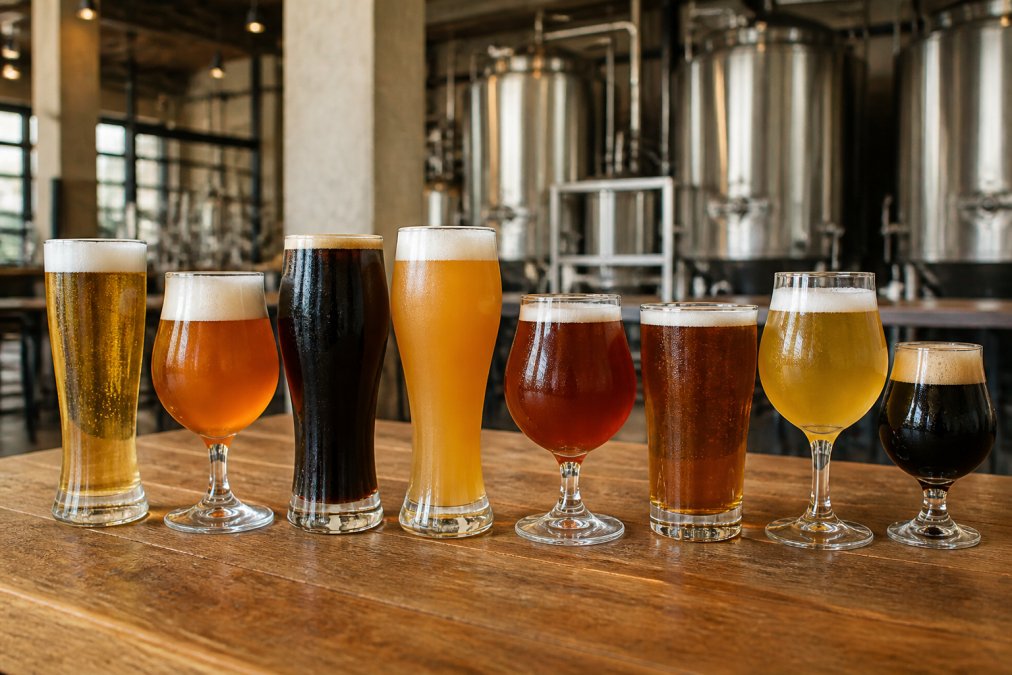
The right glass does more than hold beer: it shapes aroma, preserves head retention, and signals what kind of brewery you are. Choosing the best beer glass styles for craft breweries is a commercial decision as much as an aesthetic one. Choosing the best beer glass styles for craft breweries is a commercial decision as much as an aesthetic one.
Glassware is a sensory tool. The wrong vessel flattens a hop-forward pale ale or lets a barrel-aged stout go flat; the right one concentrates volatiles, directs carbonation, and frames your beer's colour. Below, we break down the major beer glass styles for a working taproom.
Quick Comparison: Top Beer Glass Types
| Glass Style | Best For | Aroma Focus | Durability |
|---|---|---|---|
| Tulip | Ales, stouts, saisons | High | Medium |
| IPA glass | Hop-forward IPAs | Very high | Medium |
| Snifter | Barleywine, strong ales | High | High |
| Pilsner | Lagers, pilsners | Low | Medium |
| Stange | Kölsch, Altbier | Low | High |
| Pint | High-volume service | Low | High |
Beer Glass Types and Flavour Enhancement: How Shape Changes the Sensory Experience
Glass shape changes how you experience beer through three mechanisms: aroma concentration, carbonation release, and thermal conductivity (pubmed.ncbi.nlm.nih.gov). A tapered rim funnels volatiles toward your nose; a wide bowl lets them dissipate. Nucleation points at the base drive effervescence and head retention, while glass thickness affects how quickly your hand warms the beer.
Tulip Glass: The Versatile All-Rounder
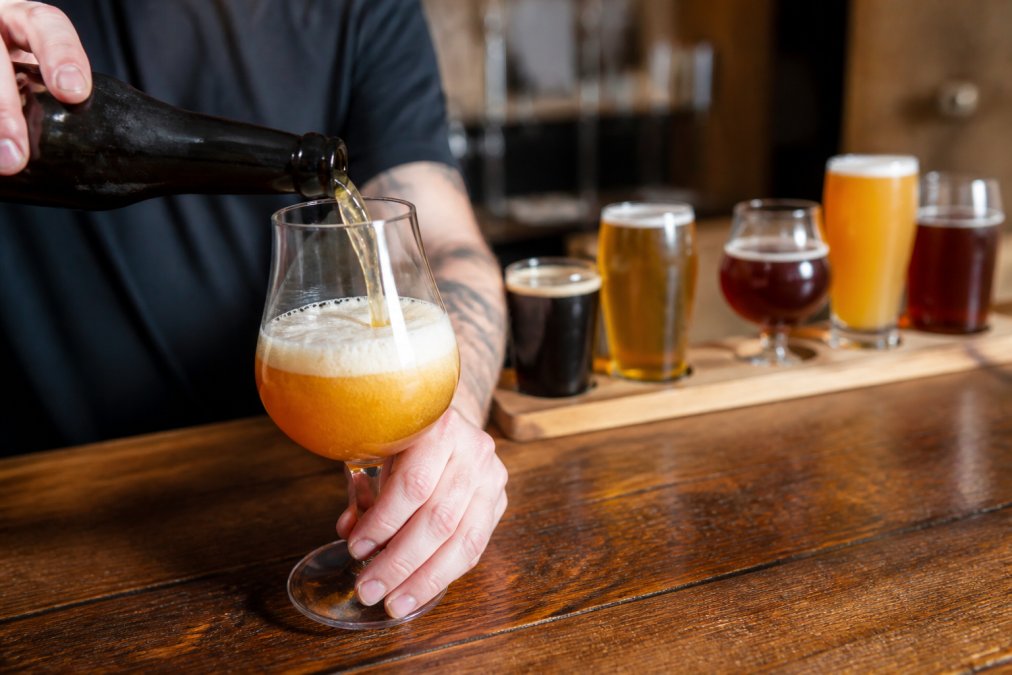
The tulip is the workhorse of craft beer service: a bulbous bowl releases aroma, the tapered neck traps a foam head and focuses volatiles, and a short stem keeps your hand off the bowl. It also handles a flight well, pour a saison, a stout, and a sour into three tulips and the shape flatters all of them. The trade-off is fragility, so high-volume venues should look for a reinforced base.
IPA Glass: Engineered for Hops
The IPA glass was developed with brewers to showcase hop character. A ridged base creates nucleation points that keep carbonation alive and push aromatics upward, and the wide mouth engages your olfactory senses fully (pubmed.ncbi.nlm.nih.gov).
This shape is superb for NEIPAs and West Coast IPAs, and poor for almost everything else. Buy them for your hop-forward lineup, not your full taplist.
Snifter Glass: For High-ABV Sipping
A snifter is a wide-bowled, short-stemmed glass built for slow sipping. The broad surface area encourages volatiles to rise, and the narrow opening concentrates them. Cupped in the hand, it gently warms a high-ABV beer to release complexity.
Serve barrel-aged stouts, barleywines, and strong Belgian ales in a snifter. Avoid it for anything highly carbonated and light: the wide bowl lets the head collapse fast.
Pilsner and Stange: Clarity and Tradition
The pilsner glass is tall, tapered, and clear, built to showcase the sparkle and pale colour of a well-made lager. The taper supports head retention and keeps effervescence visible from base to rim, though its height makes it more prone to tipping. The stange is its opposite: a straight, narrow cylinder that focuses the drinker on purity rather than aroma, suits delicate styles like Kölsch and Altbier, and stacks and cleans easily. Neither delivers the aromatic lift of a tulip, and that's the point.
Custom Branded Beer Glasses for Breweries: Building Taproom Identity
Custom branded beer glasses for breweries turn every pour into a marketing impression: a logo etched into the bowl travels home with the customer, appears in their photos, and reinforces your identity long after the visit. The Glassware Company etches or engraves your logo or artwork across a large range of styles.
Ask your supplier to walk you through their proofing process before production: a proper proof shows exactly how your artwork will sit on the curve of the glass. For quarterly reorders, consistency across batches matters as much as the first run.
Durable Glassware for Hospitality Venues: Reducing Breakage and Costs
Durable glassware for hospitality venues is about matching the glass to the service environment, not buying the thickest option. A heavy-duty pub tumbler survives a packed Friday night but flattens aroma; a thin-walled tasting glass flatters the beer but shatters on the first tray drop. The answer is usually a mixed inventory: strong glassware for general service, premium stemmed glass for flights and special releases.
Where breakage actually happens
Most taproom breakage isn't caused by customers dropping glasses. It clusters in three predictable places:
- The wash cycle. Thermal shock and rack collisions cause more losses than the bar floor (Introduction to pressure equipment). Glasses too tall for the rack, or sitting loose in the pegs, chip at the rim and base over repeated cycles. Check that your chosen shapes fit your existing glasswasher racks before ordering.
- The pass and the tray. Stemmed glasses fail at the bowl-stem joint when they're carried on crowded trays. Stemless tumblers and short-stemmed tulips reduce this failure point because there's no thin joint to shear.
- The stack. Glasses stored rim-down on hard shelves chip invisibly. Glasses stacked bowl-in-bowl without a mat or liner abrade the base, dulling the nucleation etch and degrading head retention.
Reading a durability specification
When you compare quotes, ask suppliers to specify:
- Base weight and centre of gravity. A weighted base resists tipping on a wet bar top, but too much feels clumsy and slows service. Balance matters more than maximum weight.
- Rim thickness. A slightly thicker rim survives commercial handling better, but a very thick rim interferes with the drinking experience. A middle-ground rim works best for general service; reserve thinner rims for tasting flights.
- Annealing and tempering. Properly annealed glass resists thermal shock from commercial wash cycles far better than cheaply formed glass. If a supplier can't explain their annealing, that's a warning sign.
- Dishwasher suitability. Confirm the maximum wash temperature the glass is rated for. Glasses rated below your machine's cycle temperature will fail early, regardless of thickness.
Modelling cost per serve, not cost per unit
A cheap glass is only cheap if it lasts. The number that matters is cost per serve:
cost per serve = unit price ÷ (expected washes before failure)
A glass that costs more but survives several times as many commercial washes can be cheaper per pour than a budget alternative replaced every few months. Track replacement rate by shape for a quarter, most venues find one or two shapes account for the majority of breakage.
A practical mixed inventory
A workable default for a working taproom:
- General service: a robust stemless tumbler or short-stemmed tulip for high-volume pours.
- Tasting flights and special releases: thin-walled stemmed glassware, stored and handled separately.
- High-ABV sipping: a snifter with a solid base, which also tends to be one of the more durable shapes because of its proportions.
The Glassware Company supplies hospitality and event clients with styles built for regular commercial use.
Commercial vs. Home Use: What Changes for Breweries
Buying for a brewery is nothing like buying for a home bar. Commercial service means dozens of washes a day, high breakage rates, and limited storage. Home buyers can prioritise aesthetics; you have to prioritise throughput.
Three things change at commercial scale. First, glassware hygiene becomes a daily process: residual detergent kills head retention faster than any shape flaw. Second, breakage is a line item, so durability and replacement cost matter as much as the pour. Third, storage drives the buying decision, stackable designs like a stemless tumbler hold more stock in the same cupboard.
Sustainability and Storage: Practical Considerations
Most glassware guides stop at 'buy recycled' and 'store carefully'. For a working taproom, sustainability and storage are operational problems with measurable answers.
Sustainability: the durability equation does most of the work
For glassware, the biggest environmental lever isn't the material, it's how long each glass lasts. A glass that survives hundreds of commercial washes has a far lower footprint per serve than a cheaper one replaced every few months, because emissions and energy are concentrated in manufacturing and transport, not washing.
That gives you a clear hierarchy:
- Buy for longevity first. Durability specifications (see above) are sustainability specifications. Reducing replacement rate is the highest-impact change most venues can make.
- Ask about recycled content. Recycled glass cullet reduces the energy needed to melt raw materials, so higher recycled content generally means a lower manufacturing footprint.
- Consider local manufacturing. Glass is heavy, and transport is a meaningful share of its footprint. Sourcing closer to your venue reduces freight emissions and shortens your supply chain.
- Plan for end of life. Broken glass is generally recyclable, but mixed colours and contaminated loads are harder to process.
Storage and space optimisation
Storage is the quieter cost of a diverse glassware collection. Tall pilsner glasses need vertical clearance, stemmed glasses need racking that protects the bowl, and wide snifters eat shelf space fast. In a small taproom, storage-efficient shapes aren't a compromise, they're the practical choice.
A few principles that hold up in real venues:
- Match shape to shelf, not the other way around. Measure vertical clearance before choosing a tall glass. A pilsner glass that doesn't fit your shelving ends up stored where it gets knocked over.
- Stack where the shape allows. Straight-sided stanges and stemless tumblers stack efficiently and clean easily. Stemmed and bowl-heavy shapes generally shouldn't be stacked at all.
- Use modular racking. Adjustable racking that reconfigures as your taplist changes beats fixed shelving, because your glassware mix shifts with seasonal releases.
- Keep a small 'premium' zone. Reserve a protected, low-traffic area for thin-walled and stemmed glassware used for flights and special releases. Separating premium glass from general service glass reduces breakage more than any single product choice.
- Standardise where you can. Fewer distinct shapes means simpler storage, simpler ordering, and less staff confusion about which glass goes with which beer. A tight core range plus one or two speciality shapes beats a dozen one-off designs.
Conclusion
Matching glassware to your beer styles, service volume, and storage reality is one of the highest-return decisions a taproom makes: get it right and every pour tastes better and markets your brand at once.
Choosing the right glassware for your brewery means balancing aroma, durability, and brand identity, and that's where The Glassware Company can help. We offer expert etching and engraving onto a large range of glass styles, customisation with your own logo or artwork, and years of experience supplying breweries and hospitality venues. Our team walks you through proofing before production so your artwork is on point every time. Get started with The Glassware Company and request an online quote for custom-branded glassware that makes a striking impression on every guest.
Frequently Asked Questions
What is the best shape for a beer glass?
There is no single best shape, as the ideal glass depends on the beer style. A tulip glass is the most versatile for ales, stouts, and saisons because its bulbous bowl traps aroma while the narrow neck supports head retention. For hop-forward beers like IPAs, a specialised IPA glass with a ridged base aerates the beer with each sip. High-ABV beers like barleywine benefit from a snifter, which concentrates complex volatiles.
How does glass shape influence the flavour profile of craft beer?
Glass shape affects aroma, mouthfeel, and carbonation. A tapered rim directs beer to the centre of your tongue, while a wide mouth spreads it across the palate. The bowl's shape controls how volatiles reach your olfactory senses. Nucleation points, like those in an IPA glass's ridged base, trigger continuous effervescence and head retention. Stemmed glasses prevent hand-warming, keeping serving temperature stable.
What are the essential glassware styles every craft brewery should stock?
Most taprooms need at least three or four styles. A standard tulip glass covers ales, stouts, and saisons. A pint glass handles high-volume service for lagers and standard ales. A pilsner glass showcases clarity and carbonation for light lagers. For high-ABV offerings, a snifter enhances the sensory experience. Custom branded beer glasses for breweries can combine several of these styles with your logo for merchandise and taproom identity.
Are there specific Australian standards for glassware volume and measurement?
Yes, glassware used for trade in Australia must comply with national measurement laws. The National Measurement Act 1960 and associated regulations govern trade measurement, ensuring stated volumes are accurate. For breweries, this means glasses used for serving beer by volume should be verified or marked accordingly. Always check with your supplier that glassware meets these requirements for commercial service.