 how-to
Prevent Dishwasher Etching on Branded Glassware
Table of Contents
- Understanding Dishwasher Etching vs. Film Buildup
- Step 1: Test and Adjust Your Water Hardness Level
- Step 2: Select the Best Dishwasher Detergent for Delicate Glassware
- Step 3: Load and Position Glassware Correctly
- Step 4: Optimise Cycle Settings to Protect Etching
- How to Remove Cloudy Film from Glassware
- Why Dishwasher Age and Seal Integrity Matter
- Conclusion
Last Updated: August 16, 2026
Understanding Dishwasher Etching vs. Film Buildup
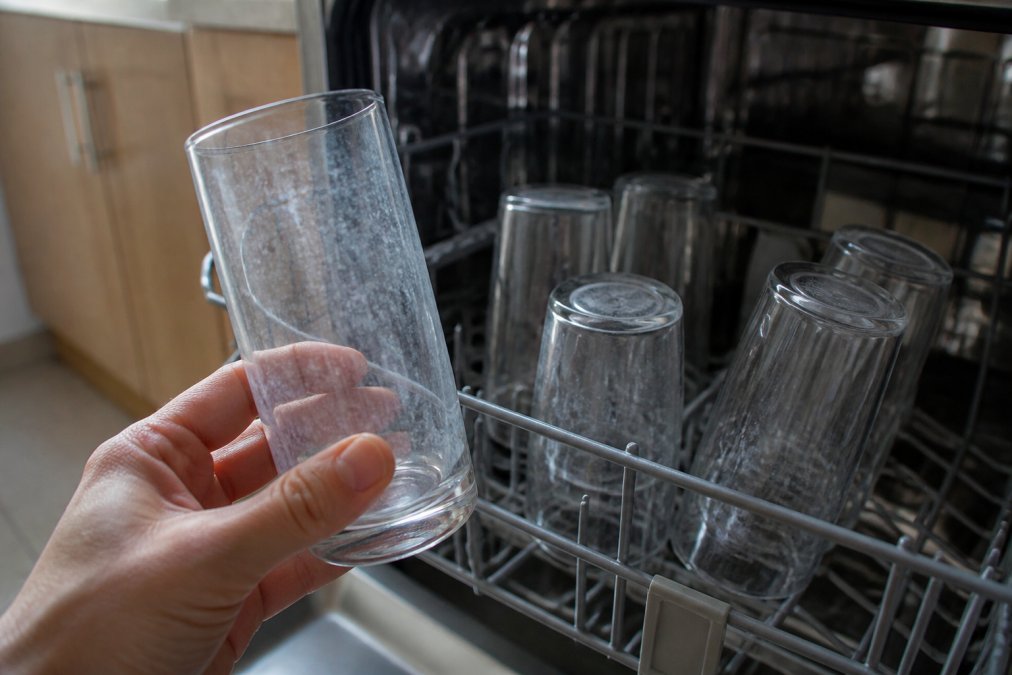
Dishwasher etching on branded glassware is permanent cloudiness caused by chemical erosion of the glass surface, not a removable film. Dishwasher etching glassware damage happens when alkaline detergents and soft water interact with glass at high temperatures, dissolving the silica bonds that give glass its clarity. Once etched, the surface degradation cannot be fully reversed, only prevented.
Film buildup sits on top of the glass and can be cleaned away. It's caused by mineral deposits, soap residue, or detergent imbalances. Most people mistake etching for film, then waste time trying to polish away permanent damage.
Branded glassware suffers more visibly because custom etching or engraving creates microscopically rough surfaces where water and detergent pool longer. These micro-abrasions accelerate corrosion. This is why The Glassware Company emphasises proper care instructions for custom pieces, the investment in bespoke glassware demands protection.
What causes permanent cloudiness
Permanent cloudiness results from a specific chemical process. When water hardness is low (soft water), the detergent's alkalinity attacks the glass matrix directly. Hard water contains calcium carbonate and other minerals that buffer this erosion. In soft water, the pH of the wash solution becomes too aggressive, and the glass surface gradually dissolves at the molecular level.
Temperature accelerates this process. High-temperature cycles, especially sanitising cycles above 65°C, increase the reaction rate. The glass becomes optically cloudy as the outer layer loses its smooth structure and scatters light instead of transmitting it clearly.
Why mineral deposits form differently on branded glassware
Custom-etched or engraved glassware has intentional surface texture. Mineral deposits settle into these grooves, making cloudiness appear worse and more stubborn. Standard smooth glass allows minerals to sit on the surface, where they're easier to remove. Branded pieces trap minerals deeper, and deposits bond more strongly to the roughened surface.
The etching process itself can leave microscopic debris in the grooves. When combined with hard water minerals, this creates compounded buildup that looks more opaque than it actually is.
Step 1: Test and Adjust Your Water Hardness Level
Water hardness is the single most important factor in preventing dishwasher etching on branded glassware. If your water is soft, etching will occur regardless of detergent choice or cycle settings.
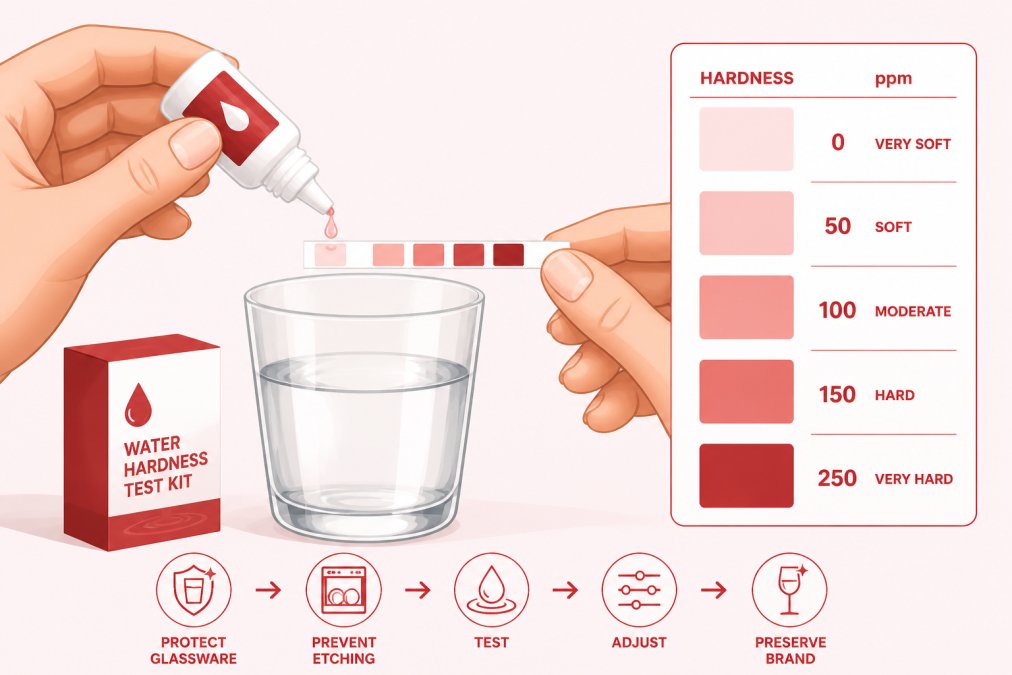
Measuring hardness with DIY testing kits
Inexpensive water hardness test strips are available online and in hardware stores. Fill a clean glass with cold tap water, dip the test strip, and compare the colour change to the chart on the kit packaging. Results are measured in milligrams per litre (mg/L) or degrees of hardness (dH).
Most Australian water supplies fall into the soft to moderately hard range, typically 50-150 mg/L. For dishwasher use, you want hardness above 100 mg/L to protect glass. If your reading is below 100 mg/L, your water is too soft and will cause etching unless you add water softening salt to your dishwasher's ion exchange system.
Test the cold water tap you use most often for filling glasses, that's your baseline.
Adjusting ion exchange and water softening salt
Most modern dishwashers have a built-in ion exchange resin that softens water before the wash cycle begins. This system works by swapping sodium ions for calcium and magnesium ions, reducing hardness. You control this by adjusting the dishwasher's water softness setting and refilling the salt reservoir regularly.
If your water is naturally soft (below 100 mg/L), set your dishwasher's hardness dial to the lowest setting and add water softening salt. The ion exchange system needs salt to regenerate. Without it, the resin becomes saturated and stops working.
Refill the salt reservoir every 2-4 weeks depending on your water hardness and dishwasher use frequency. A full reservoir holds enough salt for approximately 40-80 wash cycles.
For naturally hard water (above 150 mg/L), you may not need to add salt at all. Check your dishwasher manual. Some manufacturers recommend setting the hardness dial higher and skipping salt addition when water is naturally hard, which protects the ion exchange resin from over-softening.
Step 2: Select the Best Dishwasher Detergent for Delicate Glassware
Detergent alkalinity and concentration are critical variables. The wrong detergent will etch glassware even in hard water.
Detergent concentration and alkalinity balance
Powder detergents give you direct control over concentration. Liquid detergents come pre-measured but often contain higher alkalinity. Detergent pods cannot be adjusted, you use the full dose regardless of soil level.
For branded glassware, powder detergent is the safest choice. Use half the recommended dose for lightly soiled loads and three-quarters dose for normally soiled loads. Never use the full scoop unless your dishwasher is heavily loaded. Excess detergent increases alkalinity, which accelerates etching.
Alkalinity is measured as pH. Dishwasher detergents typically range from pH 10 to pH 13. Lower pH (closer to 10) is gentler on glass. Some brands market "glass-safe" formulations with reduced alkalinity. Avoid detergents containing bleach or oxidising agents, which are harsher on glass and can damage etched artwork over time.
Avoiding pre-rinse and chemical erosion
Pre-rinsing dishes before loading accelerates etching. When you pre-rinse, you remove food soil but also leave a thin film of water on the glass. During the wash cycle, this water layer prevents the detergent from making full contact with the glass surface, making the detergent more concentrated in the remaining water and increasing alkalinity locally.
Pre-rinsing also extends the wash cycle duration as the dishwasher compensates for the lack of soil. Longer exposure to alkaline solution means more chemical erosion. Load your glassware with light food residue still on it.
If you're concerned about dried-on food, soak the glass in cold water for 10 minutes before loading, then place it directly into the dishwasher without rinsing.
Step 3: Load and Position Glassware Correctly
Physical placement inside the dishwasher affects both water circulation and thermal shock risk. Branded glassware requires deliberate positioning to prevent both etching and mechanical damage.
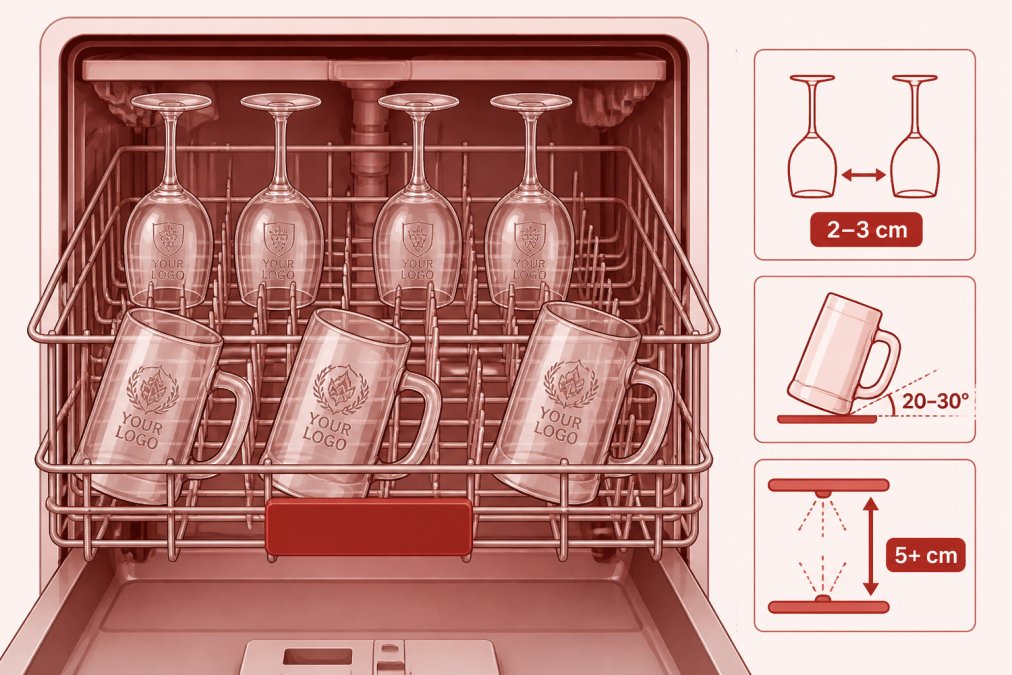
Top rack placement and thermal shock prevention
Always load branded glassware on the top rack. The top rack is farther from the heating element and experiences lower water temperatures, reducing both chemical erosion and thermal shock risk.
Position glasses upright or at a slight angle, never inverted. Inverted glasses trap water inside, creating a closed environment where alkalinity concentrates and etching accelerates.
Space glasses at least 2 centimetres apart. Crowded loading reduces water circulation, creating pockets of stagnant water where mineral deposits and detergent concentrate. Avoid placing glasses directly under spray arms, where high-velocity water can cause micro-abrasions on delicate etching.
Spacing and water circulation for custom pieces
Custom-etched glassware is more vulnerable to uneven etching because etched areas collect minerals differently than smooth surfaces. Ensure each piece has a clear path for water to flow over all surfaces.
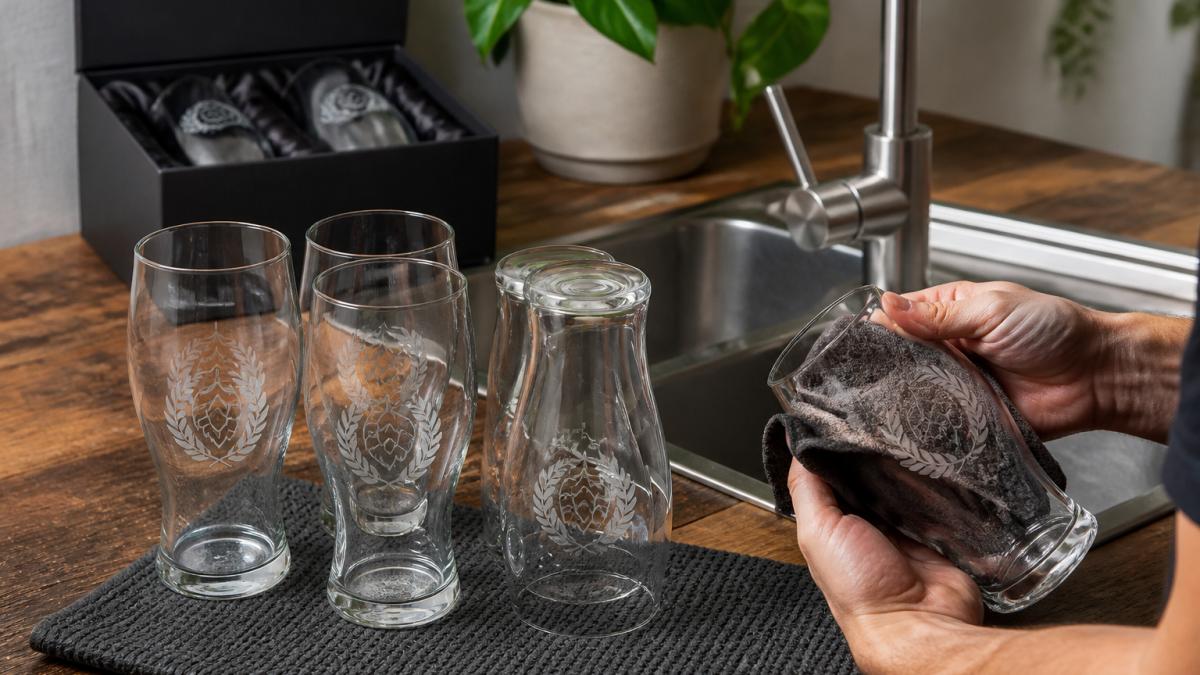
For very delicate or high-value branded glassware, consider hand washing. A two-minute hand wash with lukewarm water and a soft cloth removes soil safely without the chemical and thermal stresses of a dishwasher cycle.
If you must use the dishwasher, load branded pieces separately from standard glassware. This allows you to customise cycle settings specifically for delicate items.
Step 4: Optimise Cycle Settings to Protect Etching
Dishwasher cycle selection directly impacts etching risk. Different cycles use different water temperatures, durations, and detergent concentrations.
Water temperature and sanitising cycles
Standard wash cycles typically use 55-60°C water. This temperature is hot enough to dissolve grease and activate detergent without excessive chemical aggression on glass. Use the standard cycle for most loads.
Avoid sanitising cycles (65°C and above) for branded glassware. Sanitising cycles use high temperature to kill bacteria, which accelerates the alkaline attack on glass. Unless your glassware is visibly soiled, the standard cycle provides adequate cleaning.
Eco cycles use lower temperatures (45-50°C) and longer durations. For branded glassware, eco cycles are preferable to standard cycles. The lower temperature reduces chemical erosion, and the extended duration allows gentler water circulation to achieve the same cleaning result.
Heat drying and dishwasher maintenance schedules
Disable heat drying if your dishwasher has this option. Heat drying raises the final temperature to 70°C or higher, which can cause thermal shock as glass cools rapidly afterward. Instead, open the dishwasher door halfway at the end of the cycle and let glassware air-dry.
Dishwasher maintenance directly affects water quality inside the machine. Clean the filter monthly by removing any visible debris. Run a cleaning cycle with a commercial dishwasher cleaner every 3 months to dissolve mineral deposits inside the machine.
Check the door seal annually. A worn seal allows water to leak during the cycle, reducing pressure and circulation. If the seal shows cracks or discolouration, replace it before the problem worsens.
How to Remove Cloudy Film from Glassware
If your branded glassware is already showing cloudiness, the first step is determining whether you're dealing with removable film or permanent etching. Film responds to cleaning; etching does not.
Methods for reversing surface degradation
For mineral film buildup, soak the glassware in white vinegar for 30 minutes. Vinegar's acidity dissolves calcium carbonate and other mineral deposits. Use a soft cloth to gently wipe the surface, avoid abrasive scrubbing, which can damage etching. Rinse thoroughly with distilled water and air-dry.
For stubborn film, make a paste of baking soda and water. Apply it to the cloudy areas and let it sit for 10 minutes. Wipe gently with a soft cloth, then rinse.
If the cloudiness doesn't improve after vinegar treatment, you're dealing with etching, not film. Etching is permanent. A commercial glass polish designed for etched glassware can restore some optical clarity by filling micro-abrasions with a protective coating. These polishes don't reverse etching but make the surface appear less cloudy. Results are temporary and fade after several wash cycles.
Material-specific care for crystal versus standard glass
Lead crystal glassware is more vulnerable to etching than standard soda-lime glass. If you have branded crystal pieces, hand washing is strongly recommended.
If crystal must go in the dishwasher, use the shortest available cycle, the lowest temperature setting, and half the normal detergent dose. Load crystal on the top rack only, with maximum spacing.
Standard glass is more forgiving but still requires the protections outlined above. For branded glassware made from borosilicate glass (heat-resistant laboratory-style glass), etching risk is slightly lower because borosilicate has stronger silica bonds. However, the same preventive measures still apply.
Why Dishwasher Age and Seal Integrity Matter
An older dishwasher with worn seals and degraded spray arms is a hidden cause of etching. Even if you optimise detergent and water hardness, a poorly functioning machine will etch glassware faster than a well-maintained newer model.
Dishwashers lose effectiveness over time as mineral deposits accumulate inside the machine. The spray arms become clogged, reducing water pressure and circulation. The door seal degrades, allowing water to escape and reducing internal pressure.
If your dishwasher is more than 10 years old and you're seeing widespread etching despite following all preventive steps, the machine itself may be the problem. Cleaning the spray arms takes 10 minutes. If these maintenance tasks don't improve results, a newer dishwasher with better water circulation and temperature control will protect branded glassware far more effectively.
The Glassware Company recommends that customers with valuable branded glassware consider their dishwasher's age and condition as part of their care strategy.
Preventing dishwasher etching on branded glassware requires attention to water chemistry, detergent selection, and machine maintenance. Test your water hardness, choose low-alkalinity detergents, load strategically, and use gentle cycle settings. When you need bespoke glassware that will withstand years of use, The Glassware Company's expertise in etching and engraving ensures your branded pieces are designed to last. Get started with a quote today and discover how our custom glassware can make a striking impression while maintaining its clarity and beauty.
| Prevention Strategy | Primary Benefit | Implementation Time |
|---|---|---|
| Water hardness testing and salt adjustment | Eliminates alkaline chemical erosion | 15 minutes initial setup, 10 minutes monthly |
| Low-alkalinity detergent selection | Reduces glass surface degradation | 5 minutes to research and purchase |
| Top rack placement with spacing | Improves water circulation and reduces thermal shock | 2 minutes per load |
| Standard or eco cycle selection | Lowers temperature exposure | 1 minute per cycle |
| Heat drying disabled | Prevents thermal shock stress | One-time setting change |
| Dishwasher maintenance (filter, seals, cleaning cycles) | Maintains water pressure and circulation | 30 minutes quarterly |
Frequently Asked Questions
Can dishwasher etching be reversed on branded glassware?
Permanent dishwasher etching cannot be fully reversed because it involves actual glass corrosion at the molecular level. However, you can remove temporary cloudy film caused by mineral deposits using white vinegar soaks or commercial glass cleaners. The key is prevention: controlling water hardness, using appropriate detergent, and adjusting cycle settings stops etching from forming in the first place. For valuable branded glassware, hand washing is the safest option.
Why does my branded glassware look cloudy after washing?
Cloudiness results from two different causes. Hard water mineral deposits (calcium carbonate) create a removable film on the glass surface. True dishwasher etching is permanent glass corrosion caused by alkaline detergent reacting with hot water and soft water conditions. The etching appears as micro-abrasions that scatter light, creating a frosted look. Distinguishing between the two helps you address the root cause: film requires better rinsing or vinegar treatment, whilst etching requires adjusting water hardness and detergent selection.
Does water hardness contribute to dishwasher etching?
Counterintuitively, soft water actually accelerates etching more than hard water. Soft water lacks minerals that buffer alkaline detergent, allowing the chemical to attack glass more aggressively. Hard water mineral deposits protect glass surfaces by creating a barrier, though they cause unsightly film. The solution is balancing both: use your dishwasher's water softening salt to maintain moderate hardness levels (typically 40-60 ppm), add rinse aid to improve drying, and select detergent formulated for your water conditions.
Is it safe to put crystal or fine branded glassware in the dishwasher?
Hand washing is recommended for high-end crystal and fine branded glassware. Crystal is more porous than standard glass and susceptible to both etching and thermal shock from temperature changes. If you must use a dishwasher, place delicate pieces on the top rack only, use a gentle cycle with cooler water, select low-alkalinity detergent, and ensure the dishwasher's seals and spray arms are in good condition. For branded promotional glassware designed for commercial use, follow the manufacturer's care instructions and test a sample piece before washing an entire batch.
This article was written using GrandRanker