 How-to
How to Conduct Employee Recognition Surveys That Get Results
Last Updated: November 26, 2026
Quick Summary
To conduct recognition surveys that get results, set clear objectives, keep questions short and behaviour-based, protect anonymity with a minimum reporting group size, and publish findings within a few weeks of closing. Close the loop visibly by naming an owner and date for each change, then repeat the same indicators next round to measure movement.
- Ask what someone received last time rather than what they like to learn more.
- Run a short pulse every quarter plus one longer annual survey.
- Send one reminder, not five, and name realistic close and reporting dates.
- Group findings into what you will change now, review later, and cannot change.
- Keep question wording identical between rounds so results can be compared.
Table of Contents
- Why Recognition Surveys Fail Before They Start
- Employee Recognition Survey Questions That Reveal Real Preferences
- Using an Employee Recognition Survey Template Without Sounding Generic
- Employee Recognition Survey Examples From Different Workplaces
- Employee Recognition Survey Tools and Administration
- Turning Survey Results Into Visible Action
- Presenting Recognition Findings With Custom Glassware Awards
- Request a Quote for Branded Recognition Awards
- Frequently Asked Questions
Why Recognition Surveys Fail Before They Start
Most employee recognition surveys fail for one reason: nobody acts on the answers. Staff take time to respond, then hear nothing back. The next survey gets fewer replies, and the one after that gets ignored.
A recognition survey is a structured set of questions that asks employees how they prefer to be recognised, how often, and by whom. It is not a satisfaction poll. It is a planning tool.
At The Glassware Company, we supply etched glassware for companies running recognition programs. Below, we show you how to conduct employee recognition surveys that produce real answers and real change.
Here is what most guides get wrong. They hand you a question bank and stop there. Question design is only one part of the job. The rest is privacy, analysis, and visible follow-up.
Employee Recognition Survey Questions That Reveal Real Preferences
Good questions ask about behaviour, not opinions. Ask what someone received last time, and you learn more than asking what they like.
Rating scales versus open-ended questions
Use both, but for different jobs.
- Rating scales measure how strongly people agree. They are fast to answer and easy to compare.
- Open-ended questions explain the reason behind a score. They take longer but surface detail a scale cannot.
A common mistake is filling the survey with open-ended prompts. Response rates drop when people face ten blank boxes.
Question categories to cover
Every survey should include these areas:
- Preference: vouchers, extra leave, public praise, or a physical award
- Frequency: weekly, monthly, or at project milestones
- Source: manager, peer, or leadership recognition
- Fairness: whether recognition is spread evenly across teams
- Awareness: whether staff know the program exists and how to nominate
Keep the survey short. Short surveys tend to be completed, and completed surveys give you data.
Using an Employee Recognition Survey Template Without Sounding Generic
A template saves time, but a copied one reads as corporate filler. Staff spot it and answer accordingly.
Adapt the wording to how your people actually talk. If your team says "shout-out" rather than "recognition", use their word. Add one question specific to your workplace, such as how a recent project was marked.
If you are building the wider program around the survey, our guide on how to implement employee recognition programs in Australia shows where the survey fits. Readers designing questions about what staff value will also find useful context in our corporate gifting for employee morale guide.
Employee Recognition Survey Examples From Different Workplaces
The right survey depends on the setting. Here are employee recognition survey examples shaped to three workplaces.
| Workplace | Focus question | Why it works |
|---|---|---|
| Warehouse team | "Which matters more to you: a paid day off or a public thank-you at the shift briefing?" | Answers are concrete and easy to act on |
| Professional services firm | "When did you last feel your work was noticed by someone outside your team?" | Surfaces gaps in cross-team recognition |
| Hospitality venue | "How would you like a long shift to be marked by your manager?" | Fits shift patterns and on-the-floor culture |
Notice that none of these ask "do you feel valued?" That question invites a yes or no, and tells you nothing you can use.
Employee Recognition Survey Tools and Administration
Most guides stop at a question bank. Administration is where surveys actually succeed or fail, so treat it as a plan with five stages: set objectives, choose a cadence, communicate, distribute, and close the loop.

Set objectives before you pick a tool
Write down what decision the survey will inform. "Understand recognition preferences" is too vague. "Decide whether to shift budget from annual awards to peer nominations" is usable. Every question should map to a decision, or it should be cut. Once the decision is clear, define what peer-to-peer recognition programs would need to change and ask only questions that help determine whether that shift fits employees’ preferences.
Choose a cadence you can sustain
A common pattern is a short pulse every quarter plus one longer annual survey. Quarterly pulses catch drift; the annual survey gives a fuller picture. Avoid running a survey you cannot analyse and act on before the next one lands, since a backlog of unactioned results can erode trust.
Communicate before, during, and after
Tell staff why the survey is running, who sees the results, and when they will hear back. Name a realistic close date and a realistic reporting date. Send one reminder, not five. A short message from a senior leader can carry more weight than a generic system notification.
Distribute through a neutral channel
Many free online form tools can handle workplace surveys. The bigger decision is how you protect anonymity. Running the survey from a manager's personal inbox signals that replies are not private. Use a neutral account or an anonymous form link, and say plainly which one you are using.
Privacy, anonymity, and response-rate safeguards
Promise anonymity, then keep the promise.
- Collect no names unless you offer an opt-in follow-up, and make the opt-in a separate field so the main answers stay unattributed.
- Set a minimum reporting group size. If a team has four people, do not report results by team, the answers become obvious. A common practice is to set a minimum group size before reporting results.
- Group results so no answer can be traced to one person, and suppress free-text comments that identify individuals.
- Decide data retention up front. Keep raw responses only as long as needed to analyse and report, then delete or aggregate them.
- Share the headline findings with everyone who took part, including a plain statement of what you cannot change and why.
Watch out: promising "complete anonymity" while collecting department, role, and tenure in a small organisation can re-identify people. Either widen the reporting groups or drop the demographic questions.
Accessibility and inclusive participation
Recognition means different things across roles, shifts, locations, and cultures. Consider offering the survey in accessible formats, and allow shift-based staff time to respond during working hours. Ask whether public praise is welcome, some people find it uncomfortable, so the program does not default to extrovert-friendly recognition only.
Turning Survey Results Into Visible Action
Results mean nothing until staff see them. Publish a short summary within a few weeks of closing the survey, and treat analysis as a structured step rather than a reading of the headline scores.
Analyse before you announce
Segment responses responsibly. Compare by team, role, tenure, and shift pattern only where the reporting group is large enough to protect anonymity. Look for patterns rather than outliers: a single harsh comment is a data point, not a finding. Separate what people want (preferences) from what is broken (awareness, fairness, timeliness).
Prioritise and assign owners
Group the findings into three lists:
- What you will change now
- What you will review later
- What you cannot change, and why
That third list matters. People accept a clear "no" far better than silence. For each item on the first list, name an owner and a date. An action without an owner is a wish.
Close the loop visibly
Then act. If most staff prefer peer recognition, launch a simple peer nomination. If they want timely thanks, ask managers to acknowledge good work within days, not at the annual event. Bespoke gifts also help here, and our article on how bespoke corporate gifts improve employee retention explains how recognition moments turn into loyalty.
Measure again
Pick a small set of indicators and repeat them on the next survey so you can see movement: awareness of the program, participation rate, perceived fairness, and timeliness of recognition. Keep the wording identical between rounds, or you cannot compare results. Report the change back to staff alongside the actions taken.
Present the outcome with custom glassware awards
A survey tells you what people value. The award is how you show you listened. Etched glassware works well for this because it lasts. A trophy sits in a cupboard; a branded glass or award piece stays on a desk or in a display cabinet. We etch logos and artwork directly into the glass, so the design does not peel or wash off.
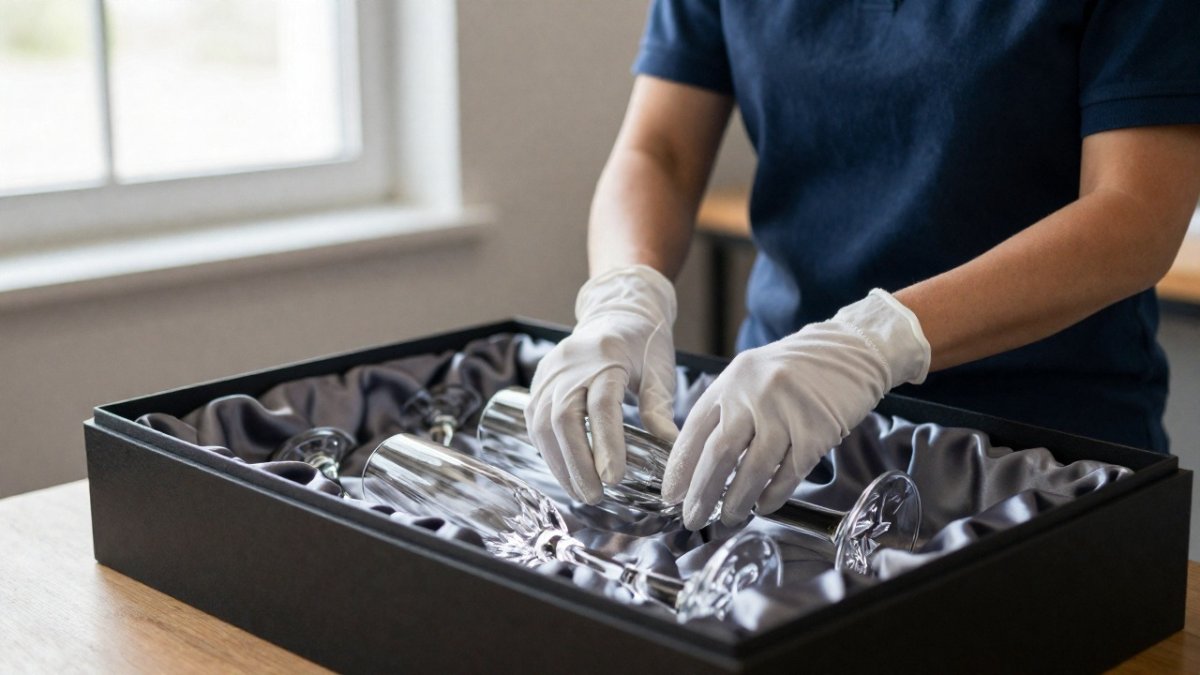
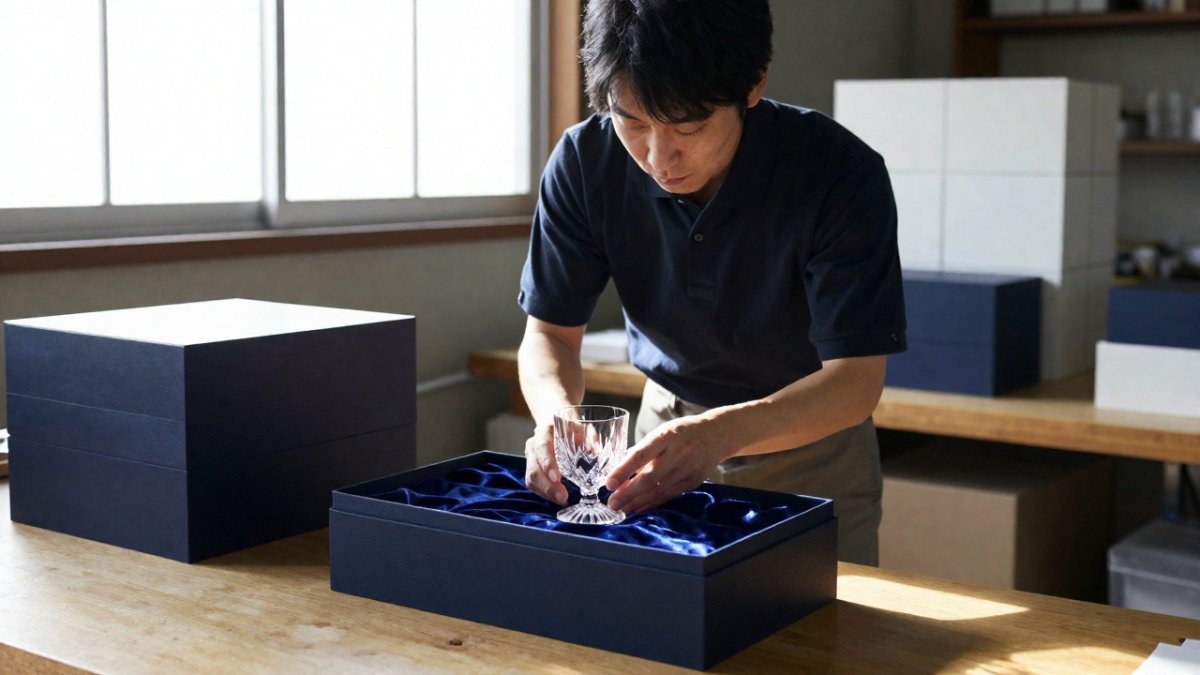
For milestone moments drawn from survey findings, our corporate gifts for employee milestone recognition guide covers options by occasion. If you want to lift the presentation, we also offer custom manufactured gift boxing for etched and branded glassware, with roughly a 28 working day turnaround. It turns a glass into a gift worth handing over at a staff meeting.
Best for: formal award moments and long-service recognition. Skip if: you need something for a same-week team shout-out.
Presenting Recognition Findings With Custom Glassware Awards
A survey tells you what people value. The award is how you show you listened.
Etched glassware works well for this because it lasts. A trophy sits in a cupboard; a branded glass or award piece stays on a desk or in a display cabinet. We etch logos and artwork directly into the glass, so the design does not peel or wash off.
For milestone moments drawn from survey findings, our corporate gifts for employee milestone recognition guide covers options by occasion. If you want to lift the presentation, we also offer custom manufactured gift boxing for etched and branded glassware, with roughly a 28 working day turnaround. It turns a glass into a gift worth handing over at a staff meeting.
Best for: formal award moments and long-service recognition. Skip if: you need something for a same-week team shout-out.
Request a Quote for Branded Recognition Awards
Running a survey is the easy part. Acting on it, and marking the result with something people keep, is where programs succeed or fade.
We can help with that second step. Our team etches or engraves your logo or artwork onto a large range of glassware styles, from beer steins to champagne flutes.
Get started with The Glassware Company and turn your next recognition round into awards your team actually keeps.
Frequently Asked Questions
What questions should you ask in an employee recognition survey?
Cover four areas: what recognition people currently receive, which forms they value most (tangible rewards, gift cards, public praise, time off), how timely and fair it feels, and how well it matches organisational values. Include a rating scale for comparison across teams and at least two open-ended questions so staff can describe preferences in their own words. Keep the whole survey to around 10 to 15 questions.
Should employee recognition surveys be anonymous?
Offer anonymity by default, especially for questions about fairness and manager behaviour. Anonymous surveys tend to draw more honest feedback, but you lose the ability to follow up with individuals. A workable compromise is to make demographic questions optional, report results only for groups of five or more, and state clearly in the introduction how responses will be stored and who will see them.
How often should you run a recognition survey?
A short pulse survey each quarter, plus one longer annual survey, gives you enough data to spot trends without survey fatigue. Frequency matters less than follow-through: if staff complete a survey and hear nothing back, response rates drop on the next round. Publish a summary of what you heard and what will change within a few weeks of closing the survey.
How do you analyse recognition survey results and act on them?
Compare average scores by team, tenure and role rather than looking only at the overall number. Read every open-ended response and group the comments into themes such as timing, fairness or preferred reward types. Pick two or three changes you can make within a quarter, assign an owner to each, and report progress in your next survey so employees can see the loop close.