 How-to
How to Restore Cloudy Wine Glasses to Sparkling Clarity
Last Updated: November 25, 2026
Quick Summary
To restore cloudy wine glasses, first soak one glass in white vinegar for five minutes: if the haze lifts, you have a removable mineral film, which you can clear with an equal-parts white vinegar and warm water soak for 15 to 30 minutes. If nothing changes, the glass is permanently etched and cannot be restored.
- Bicarbonate of soda paste gently lifts stubborn residue that vinegar alone will not shift.
- Dishwasher heat and alkaline detergent slowly dissolve the glass surface, causing permanent etching.
- Hand wash crystal by holding the bowl, never the stem, and never twist the bowl against the stem.
- Dry every glass immediately with a clean lint-free cloth, since air drying leaves mineral spots.
- Keep wine glasses out of the dishwasher and reserve it for everyday tumblers.
Table of Contents
- First, Work Out What Is Clouding Your Wine Glasses
- How to Remove Hard Water Stains from Glassware
- Why You Get Cloudy Glasses After the Dishwasher
- Hand Washing Delicate Crystal and Etched Glassware
- How to Prevent Cloudy Wine Glasses Between Uses
- When Cloudiness Cannot Be Removed
- Request a Quote for Etched Glassware and Gift Boxing
- Frequently Asked Questions
First, Work Out What Is Clouding Your Wine Glasses
Cloudy wine glasses are almost always caused by one of two things: a removable mineral film or permanent glass etching. The fix depends entirely on which one you have, so diagnose before you clean.
Here's the problem. Most advice online jumps straight to a vinegar soak.
Hard-water buildup is the usual suspect. Water carries dissolved calcium and magnesium.
Dishwasher clouding is the other common cause. Hot water, harsh detergent and soft glass don't mix well over hundreds of cycles.
The Water Quality Australia resources on hardness and dissolved minerals explain why some areas leave far more mineral residue than others.
The Vinegar Test: Mineral Film or Permanent Etching?
This is the test most guides skip, and it's the one that saves you time.
Soak one cloudy glass in white vinegar for five minutes, then rinse and dry it. If the haze lifts, even partly, you have mineral deposits. If nothing changes, the glass surface is etched.
Etching is physical damage. The dishwasher's heat and detergent have slowly eaten into the glass, leaving a permanent rough texture that scatters light. No cleaner reverses that.
Here's a quick comparison:
| Sign | Mineral Film | Permanent Etching |
|---|---|---|
| Vinegar soak lifts the haze | Yes | No |
| Haze feels chalky or rough | Sometimes | Always rough |
| Pattern follows water spots | Yes | Uniform or streaky |
| Appears after one bad wash | Yes | After many cycles |
Try the vinegar test first. It costs you a splash of vinegar and five minutes.
How to Remove Hard Water Stains from Glassware
Hard water stains come off with acid, patience and gentle handling. Vinegar is the safest acid for delicate glass, and it works on most mineral film.
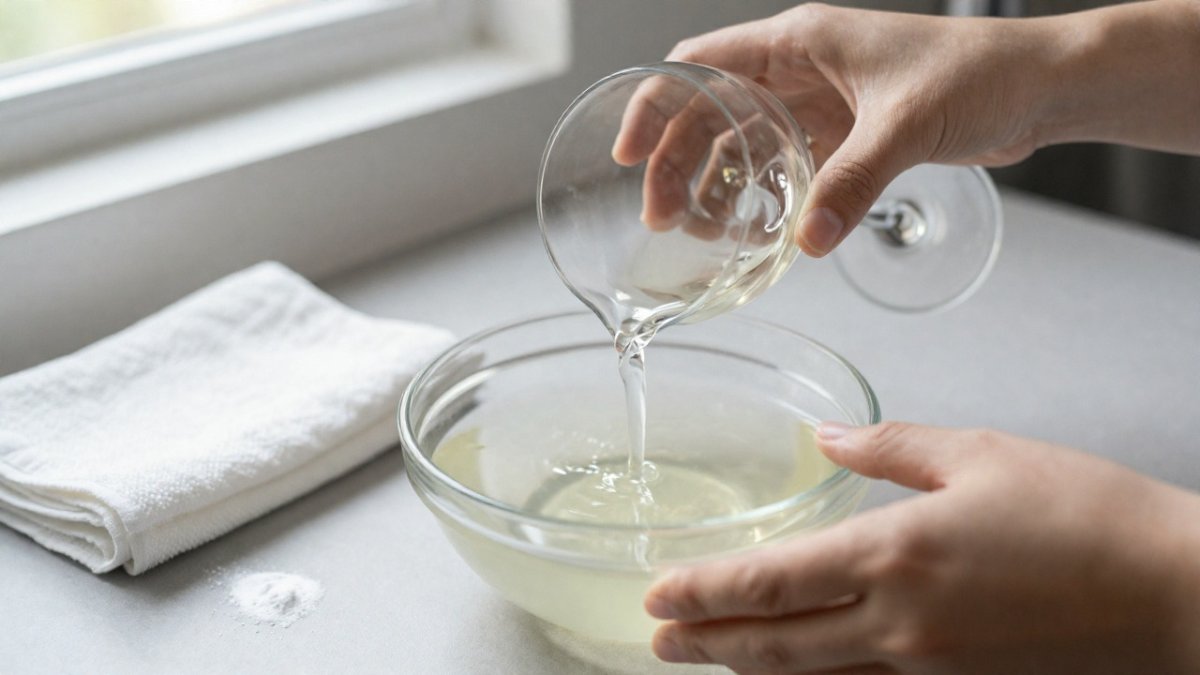
Follow these steps:
- Fill a bowl with equal parts white vinegar and warm water.
- Lower the glass in and let it soak for 15 to 30 minutes.
- Lift it out and rinse under warm running water.
- Dry immediately with a lint-free cloth.
Skip the hot water. Very hot water can crack delicate crystal, especially thin rims. Warm is enough.
Vinegar Soak and Warm Water Rinse
For light haze, a short soak does the job. For heavier limescale, leave the glass in the solution longer and check it every ten minutes.
Rinse thoroughly afterwards. Vinegar residue left to dry can leave its own faint film.
Bicarbonate of Soda for Stubborn Residue
Bicarbonate of soda handles stubborn residue that vinegar alone won't shift. Make a soft paste with bicarbonate of soda and a little water.
Apply it with your fingertips and rub gently in circles. Keep the pressure light.
Rinse well, then dry straight away. For more on protecting printed or branded glasses, see our guide to protect logo prints on glassware.
Why You Get Cloudy Glasses After the Dishwasher
Cloudy glasses after dishwasher cycles are the single biggest cause of permanent damage we see. The machine is convenient, but it is harsh on delicate glass, and the haze it leaves is often a mix of two different problems: a removable detergent or mineral film, and irreversible etching of the glass surface itself.
Three mechanisms drive the damage:
- Hot water and alkaline detergent slowly dissolve the glass surface. Over hundreds of cycles the surface becomes pitted and scatters light.
- Soft water is more aggressive on glass than hard water in some respects, because it is more corrosive to the silica network once detergent is added. Soft water also makes dosing errors more punishing.
- Poor loading lets glasses knock together, trap water in the bowl, and sit close to heating elements.
Detergent residue adds to the problem. If the rinse cycle does not clear it fully, it dries into a film that looks like cloudiness but wipes away with a damp cloth.
Dishwasher Troubleshooting Checks
Before you blame the glass, run through these checks.
- Rinse aid. Check the reservoir is filled and the dispenser setting is appropriate for your water. A missing or exhausted rinse aid is the most common cause of fresh spotting and filming.
- Detergent quantity. More is not better. Overdosing leaves residue that dries as haze; underdosing leaves food and grease that redeposit on glass. Follow the detergent maker's dose for your water hardness and load size.
- Water hardness. If your supply is hard, mineral scale will build up on glasses and inside the machine. If it is very soft, reduce detergent and check that the machine's water-softening setting (if fitted) is correct.
- Loading. Place glasses so they do not touch each other or the cutlery basket, and angle them so water drains from the bowl. Stemmed glasses should sit securely on the rack rather than being wedged.
- Wash temperature and cycle. A hot wash with a long drying phase is harder on delicate glass. Use the lowest temperature and most delicate cycle the machine offers, and open the door at the end of the cycle to let steam escape rather than relying on heated drying.
- Salt and filter. Keep the salt reservoir topped up if your machine uses one, and clean the filter regularly. A clogged filter recirculates debris and film.
Watch out: never mix dishwasher detergent with a hand-washing acid such as vinegar in the same cycle.
Our advice: reserve the dishwasher for everyday tumblers. A gentle hand wash is safer for delicate glass, and the same care helps when cleaning vintage vases with Alice V.
The wrong rack matters too. Our article on the best dishwasher rack for delicate glassware covers safe loading in detail.
Hand Washing Delicate Crystal and Etched Glassware
Hand washing is the only safe routine for crystal and etched wine glasses. It takes two minutes and adds years to the glass.
Here's how we'd do it:
- Line the sink with a rubber mat.
- Fill with warm water and a small amount of mild soap.
- Hold the glass by the bowl, never the stem.
- Wipe gently with a soft sponge.
- Rinse under warm water.
- Dry immediately with a lint-free cloth.
Never twist the bowl against the stem. That's how stems snap.
Avoid abrasive cleaners and anything with chlorine. Both attack the glass surface and any etched design.
For a deeper routine on printed custom wine glasses, follow our step-by-step care guide.
How to Prevent Cloudy Wine Glasses Between Uses
Prevention beats restoration every time. A few habits keep glass clarity intact for years, and the detail matters more than the headline advice.
Drying and Cloths
Air drying is the enemy of clarity. As water evaporates, dissolved minerals stay behind and form spots and film. Dry every glass immediately with a clean, lint-free cloth.
- Use a cloth reserved for glassware. Tea towels that have washed with detergent or fabric softener can leave a film of their own.
- Change the cloth often. A damp, dirty cloth spreads residue rather than removing it.
- Hold the glass by the bowl and dry the stem and base last, so you are not gripping a wet bowl.
Water Temperature and Rinsing
Rinse glasses in warm water straight after use, before residue sets. Very hot water can crack delicate crystal, especially thin rims, so warm is enough. If your water is hard, a final rinse with a little distilled or filtered water reduces the mineral load left to dry.
Storage Conditions
Storage matters more than people think. Damp cupboards and closed cabinets trap moisture, which encourages mineral film and a musty smell.
- Store glasses upright in a dry cupboard, not on a damp shelf or in a sealed cabinet that never airs.
- Leave a little space between glasses so air can circulate and rims do not knock.
- Avoid storing glasses near a dishwasher, kettle or sink where steam collects.
Material and Finish Care
Different glasses need different handling:
- Crystal and lead-free crystal are softer than everyday glass and more prone to etching. Hand wash only, and avoid sudden temperature changes.
- Thin-stemmed glasses are vulnerable at the joint. Hold the bowl, never the stem, and never twist the bowl against the stem when drying.
- Decorated or coated glass can lose its finish to abrasives and harsh chemicals. Avoid abrasive powders and anything with chlorine, and follow the maker's care guidance.
Routine Care
- Rinse glasses straight after use, before residue sets.
- Dry immediately rather than air drying, which leaves water spots.
- Use a rinse aid if your water is hard and you use a dishwasher for everyday tumblers.
- Keep wine glasses out of the dishwasher.
If you want to know how to prevent cloudy wine glasses in a commercial setting, the same rules apply at scale. Train staff to hand wash and dry promptly, and keep a separate glassware cloth supply so damp cloths are not reused across a shift.
For branded glassware, presentation matters as much as clarity. Our custom manufactured gift boxing service for etched and branded glassware, with an approximate 28 working day turnaround, is a premium presentation option alongside the glassware itself.
When Cloudiness Cannot Be Removed
Some cloudiness cannot be removed. If the vinegar test changed nothing and the surface feels rough, the glass is etched, and no cleaning method will bring it back.
That's not a cleaning failure. It's wear.
At that point, replacing the glassware is the practical answer. If the glasses carried your logo or branding, choose a decoration method built for repeated washing. Our guide to commercial dishwasher safe branding options explains which finishes hold up.
Request a Quote for Etched Glassware and Gift Boxing
Replacing etched glasses is a chance to upgrade, not just repeat.
We also offer custom manufactured gift boxing for etched and branded glassware, with an approximate 28 working day turnaround, as a premium presentation option alongside the glassware itself.
Tell us your quantity, style and deadline, and we'll put together a quote.
Cloudy glasses rarely fix themselves, and etched ones never do.
Frequently Asked Questions
How do you restore cloudy wine glasses?
Start by identifying the cause. Soak the glass in equal parts white vinegar and warm water for 30 minutes, then rinse and dry immediately with a lint-free cloth. If the haze lifts, it was mineral film from hard water. If the cloudiness stays in the same pattern after two soaks, the glass surface has been etched and cannot be restored. For stubborn residue, make a paste of bicarbonate of soda and water, rub gently with a soft sponge, and rinse thoroughly.
Why do wine glasses go cloudy in the dishwasher?
Dishwasher clouding usually comes from three things: hard water leaving mineral deposits, too much detergent leaving residue, and hot drying cycles baking water spots onto the glass. Over time, repeated exposure to high heat and alkaline detergent can permanently etch the surface. Use a rinse aid, load glasses so they do not touch other items, and choose a low-temperature or delicate cycle where available.
Can vinegar remove cloudiness from wine glasses?
White vinegar removes mineral film and limescale, which is the most common cause of removable haze. Soak glasses in a mix of equal parts white vinegar and warm water for 30 minutes, then rinse in warm water and dry immediately. Vinegar will not fix permanent etching, where the glass surface itself has been corroded. If two vinegar soaks make no difference, the damage is etched rather than deposited.
How do you prevent cloudy wine glasses?
Rinse glasses in warm water immediately after use, hand wash delicate crystal with a mild detergent, and dry straight away with a lint-free cloth rather than letting them air dry. Store glasses upright in a dry cupboard away from moisture. If you use a dishwasher, add a rinse aid and keep water hardness in mind. For branded or etched glassware used regularly, a quick hand wash protects both clarity and the etching.