 how-to
7 Steps to Care for Printed Custom Wine Glasses
Last Updated: October 25, 2026
Quick Summary
Printed custom wine glasses require gentle hand washing in warm water with mild dish soap, soft cloths only, and careful storage away from heat and direct sunlight to preserve the decoration. Most surface prints and decals are not dishwasher safe, though some fired-on decorations may tolerate delicate cycles if the maker confirms it.
- Allow printed custom wine glasses to cure for 24-48 hours after delivery before first use or washing.
- Hand wash with warm water, mild dish soap and a soft microfibre cloth or natural sponge; never scrub or use abrasive cleaners.
- Store glasses upright in a cool, dry, shaded place away from heat sources and direct sunlight to prevent fading.
- Avoid prolonged soaking, microwaves, bleach-based cleaners and heated dishwasher drying, which accelerate print wear.
- If dishwasher use is confirmed by the maker, use only the delicate cycle, upper rack placement, and no heated drying.
Table of Contents
- Why Printed Custom Wine Glasses Need Special Care
- Step 1: Cure Your Glasses Before First Use
- How to Wash Printed Wine Glasses by Hand
- Are Printed Wine Glasses Dishwasher Safe?
- How to Prevent Wine Glass Print from Fading
- Wine Glass Drying and Storage Tips
- Common Mistakes to Avoid When Cleaning Printed Glassware
- Order Custom Printed Wine Glasses with Confidence
- Frequently Asked Questions
Why Printed Custom Wine Glasses Need Special Care
Printed custom wine glasses are not ordinary drinkware. Whether etched, engraved, or applied as a decal, the decoration needs a different approach than plain glass.
Think of printed custom wine glasses like artwork, you wouldn't scrub a painting with a scouring pad.
This guide covers the complete care process, from curing before first use to safe storage, so your promotional gifts or event glassware keep their striking appearance.
Step 1: Cure Your Glasses Before First Use
New printed custom wine glasses need time to set before washing, allowing the print or etching to bond fully with the glass.
Most printed glassware should cure for 24-48 hours after delivery before you use or wash it. During this time, avoid:
- Dishwashers
- Soaking in water
- Exposure to extreme temperature changes
After curing, rinse each glass gently under lukewarm water to remove packaging dust or residue, pat dry with a soft cloth, and they're ready for regular use.
If your order includes custom gift boxing, a premium presentation option with approximately 28 working day turnaround, allow the glasses to cure before packaging them for gifting or events.
How to Wash Printed Wine Glasses by Hand
Hand washing is the safest method for printed custom wine glasses, giving you complete control over temperature, pressure, and cleaning agents.
Gather your supplies
You'll need:
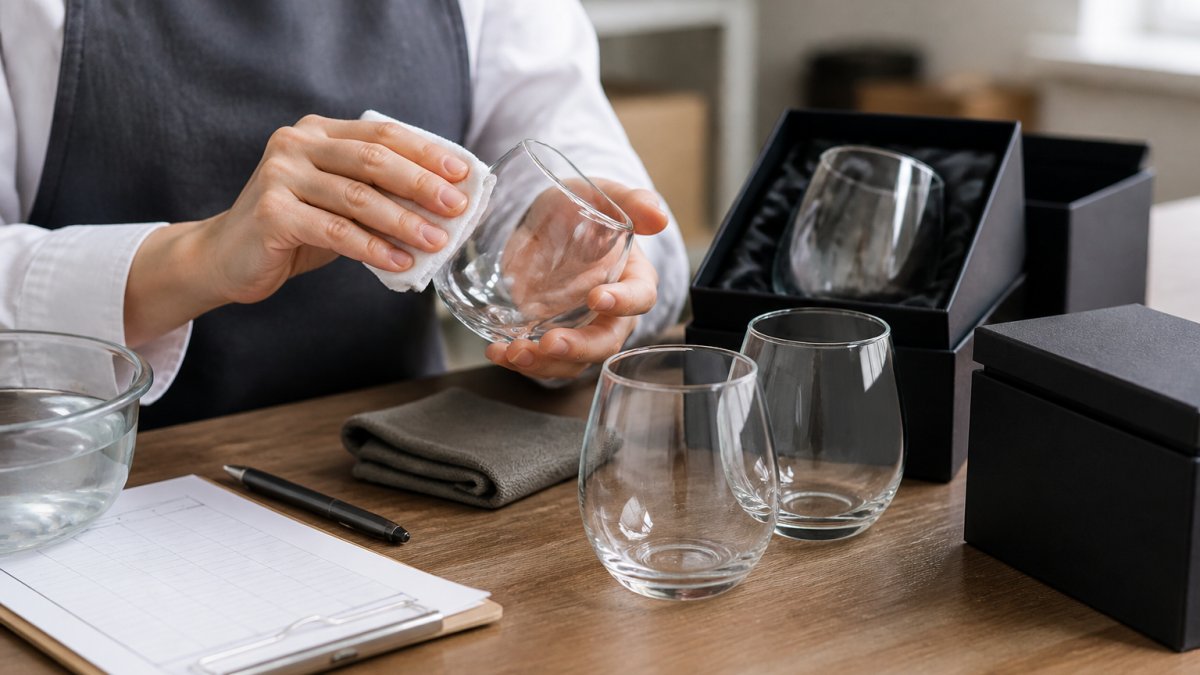
- Soft microfibre cloth or soft natural sponge
- Mild, odourless dish soap
- Warm water (not hot)
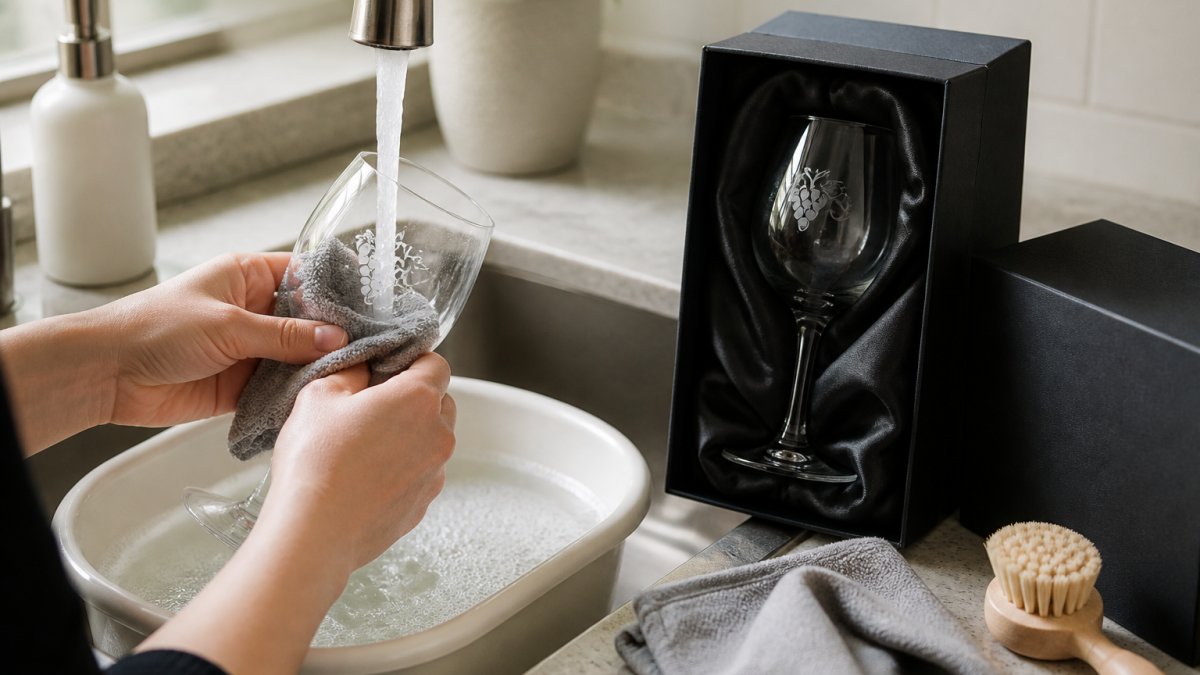
Wash with warm soapy water
Fill a basin with warm, comfortable-to-touch water and a small amount of mild dish soap. Avoid harsh detergents or anything labelled "abrasive" or "heavy-duty."
Submerge each glass and gently wipe the exterior and interior with your soft cloth or sponge.
Rinse thoroughly under warm running water until all soap residue is gone; leftover soap can cloud the surface and dull the print.
Rinse thoroughly and inspect
After rinsing, inspect the print for spots or residue. For water spots, buff with a lint-free cloth lightly dampened with white vinegar, this removes mineral deposits without damaging the decoration.
Set the glass aside on a clean cloth, ready for drying.
Are Printed Wine Glasses Dishwasher Safe?
Not all printed custom wine glasses are dishwasher safe. It depends on the decoration method, the ink or film system, and the dishwasher settings. Most care guides stop at 'hand wash when in doubt', this section covers the settings and placement that matter when the maker does permit machine washing.
Why the decoration method matters
Decoration methods behave differently in a dishwasher:
- Surface printing (screen or pad printed): the ink sits on top of the glass. Heat, detergent and water pressure can gradually dull or lift the print, especially on the rim and bowl where jets hit directly.
- Decals: a fired-on decal is more durable than an unfired one, but the edge of the decal is still a weak point. Repeated hot cycles can cause lifting or crazing at the edges.
- Engraving and etching: the mark is cut into or fused with the glass, so it is generally the most dishwasher-tolerant decoration. Even so, harsh detergents can leave a haze in the etched channels over time.
Before loading anything, confirm the decoration method with the maker or check the care card. If it's not stated, treat the glassware as hand-wash only.
If the maker confirms dishwasher suitability
Use these settings and placement rules as a starting point, deferring to any specific instructions supplied with your order:
- Cycle: choose the most delicate cycle available, usually labelled 'delicate', 'glass' or 'eco'. Avoid 'intensive', 'pots and pans' or any cycle with a pre-wash at high temperature.
- Temperature: keep the main wash at or below about 50-55°C if your machine allows a temperature adjustment. Standard cycles often run hotter (60-70°C), which is where most print damage occurs.
- Drying: switch off heated drying. Residual heat drying or air drying is gentler on prints and reduces the risk of thermal shock to the glass.
When to hand wash instead
Hand wash if any of the following apply:
- The decoration method is unknown or dishwasher suitability is unconfirmed.
- The print includes fine detail, metallic inks or multiple colours.
- The glasses have gold or platinum rims or hand-painted accents.
Hand washing takes a few minutes and removes the main variables, heat, pressure and contact, that damage prints. For most printed custom wine glasses, it remains the most reliable method.
If your order includes custom manufactured gift boxing for etched or branded glassware (approximately 28 working day turnaround), keep the glasses out of the dishwasher entirely so they arrive and stay presentation-ready.
How to Prevent Wine Glass Print from Fading
Fading and wear look similar but have different causes, and the right response depends on the decoration method. Here's what accelerates print degradation, how to tell normal wear from a fault, and what to do if damage appears early.
Know your decoration method first
Care advice only works if it matches the print type:
- Surface printing: the most vulnerable to abrasion, solvents and heat. Fading usually shows as overall dulling or colour loss across the printed area.
- Decals: wear typically starts at the edges, where the film can lift, crack or discolour. Fading may appear patchy rather than uniform.
- Engraving and etching: the mark does not 'fade' in the same way, but the etched area can trap detergent residue or hard-water minerals and look cloudy. This is a cleaning issue, not print loss.
If you're unsure which method was used, ask the maker before changing your cleaning routine.
What accelerates fading and wear
- Abrasion: scouring pads, abrasive sponges, brush bristles and even stiff cloths wear away surface print. Use only soft microfibre or a soft natural sponge.
- Harsh chemicals: bleach-based cleaners, ammonia, oven cleaners and heavy-duty degreasers can attack inks and decal films. Mild dish soap is sufficient for normal cleaning.
- Heat: hot water, hot dishwasher cycles and heated drying stress the bond between print and glass. Warm, comfortable-to-touch water is the target.
Troubleshooting early fading, peeling or damage
If wear appears sooner than expected, work through these steps first:
- Stop and identify the symptom. Even dulling, edge lifting, cracking or cloudiness each point to a different cause.
- Review your cleaning routine. Check water temperature, detergent, cloth or sponge, soaking time and dishwasher settings against the maker's instructions.
- Rule out residue. Cloudiness on engraved or etched glass is often mineral or detergent residue, not print loss. Try a cloth lightly dampened with white vinegar, then dry immediately with a lint-free cloth.
- Check for physical damage. Inspect rims, stems and the printed area for chips or scratches, damage to the glass usually means the print deteriorates faster.
- Contact the seller if wear is premature. If the glasses were cared for per instructions and the print fails within a short period, ask about warranty, replacement or a production fault. Keep your order details and note the cleaning products and settings used.
- Do not keep cleaning a failing print. Continued washing of a lifting or peeling print can worsen it and may affect any claim.
A quick care card you can share
Print or copy this checklist and keep it with the glasses, especially if they're being gifted or used by staff:
- Hand wash in warm, not hot, water with mild dish soap.
- Use a soft microfibre cloth or soft sponge, never scour or scrub the print.
- Rinse thoroughly and dry with a lint-free cloth, or air dry upright.
For detailed guidance on assessing print durability, visit [internal link to check print durability article]. You can also [internal link to logo fading prevention article] for specific techniques tailored to your glassware type.
These factors accelerate print degradation and should be avoided or minimized during regular use and storage.
| Factor | Effect on Print | How to Prevent |
|---|---|---|
| Abrasion | Wears away surface print | Use only soft microfibre or soft natural sponge |
| Harsh chemicals | Attacks inks and decal films | Use mild dish soap only |
| Heat | Stresses bond between print and glass | Use warm, comfortable-to-touch water |
| Prolonged soaking | Softens decal edges and drives moisture under print | Wash and rinse within a few minutes |
| UV light | Fades prints gradually | Store in cabinet or shaded area |
| Microwave use | Heats unevenly and stresses print and glass | Do not microwave printed glassware |
| Physical damage | Exposes print edges to moisture and air | Handle stems and rims carefully, avoid stacking |
Wine Glass Drying and Storage Tips
How you dry and store printed custom wine glasses matters as much as washing.
If you must hand dry, use a soft, lint-free cloth. Microfibre cloths work well. Pat gently rather than rubbing.
Store upright in a cool, dry place. Avoid stacking horizontally, which increases breakage risk and traps moisture against the print.
Keep away from heat sources. Do not store printed glassware near radiators, ovens, or direct sunlight.
Common Mistakes to Avoid When Cleaning Printed Glassware
The most damaging habits happen during cleaning. Here's what to watch out for.
Mistake 1: Using the dishwasher on a standard cycle. High heat and pressure fade or peel prints.
Mistake 2: Scrubbing the print. Pressure and abrasive sponges wear away the decoration.
Mistake 4: Using bleach or harsh chemicals. These damage both the print and the glass surface.
Mistake 5: Storing glasses in direct sunlight. UV exposure fades prints gradually.
Order Custom Printed Wine Glasses with Confidence
When you order printed custom wine glasses, you're investing in branded items that represent your business or event. Proper care ensures that impact lasts for years.
Before ordering, understand the care requirements for your decoration method.
The Glassware Company provides detailed care guidance with every order.
For a complete overview of the ordering process, including design approval and production timelines, explore our custom glassware ordering guide.
Frequently Asked Questions
Can printed wine glasses go in the dishwasher?
Most printed custom wine glasses are not recommended for the dishwasher. Heated cycles and abrasive jets can damage the printed decoration, causing fading or peeling. Always check the care instructions provided with your glasses. Hand washing with mild detergent and warm water is the safest method to preserve the print and extend the life of your custom glassware.
How do you dry wine glasses without damaging the print?
Air dry your printed wine glasses whenever possible by placing them upside down on a lint-free cloth. If you prefer to hand dry, use a microfiber cloth and avoid rubbing the printed area directly. Pat gently rather than wipe, and allow the glasses to dry completely before storing. This prevents water spots and streaks while protecting the decoration from friction damage.
How can you prevent printed designs from fading or peeling?
Avoid abrasive cleaners, scouring pads, and rough cloths that can scratch or lift the print. Never soak printed glasses for extended periods, and keep them away from extreme temperature changes. Use only mild, odourless soap and warm water. Store in a cool, dry place away from direct sunlight. Following the manufacturer's care instructions ensures your custom printed glassware maintains its vibrant appearance for years.
What is the best way to hand wash wine glasses?
Fill a basin with warm soapy water using mild detergent, then gently place the glass in the water. Use a soft cloth or sponge to clean the bowl and stem, avoiding vigorous scrubbing. Rinse under warm running water until all soap residue is gone. Handle the glass by the bowl rather than the stem to prevent breakage. Inspect the print for any debris before drying.
Printed custom wine glasses deserve care that matches their quality. Start with proper curing, wash by hand with mild soap and warm water, and store in a cool location away from sunlight. Follow these steps and your glassware will remain vibrant and intact, making a lasting impression on every guest who holds one.