 how-to
Corporate Gifting Budget for the Fiscal Year
Last Updated: October 22, 2026
Quick Summary
A corporate gifting budget is the amount of money your organisation allocates for giving branded or customised gifts to employees, clients, and business partners throughout the year. Planning a structured corporate gifting budget for the fiscal year lets you set clear spending limits, align gifts with key business moments, and order in volume for better quality and customisation.
- Map every gifting occasion across your fiscal year with recipient counts to create your spending roadmap.
- Allocate budget across quarters: 15-20% Q1, 20-25% Q2, 20-25% Q3, and 30-35% Q4.
- Create gift tiers with different per-recipient budgets based on relationship importance to your business.
- Plan 8-12 weeks ahead for custom glassware orders to allow proper customisation and delivery time.
- Track actual spending against budget and measure impact through recipient feedback and business outcomes.
Table of Contents
- Why Corporate Gifting Budget Planning Matters
- Setting a Total Corporate Gifting Budget
- Business Gift Budget Allocation Across the Fiscal Year
- Calculating Per-Recipient and Per-Gift Budgets
- Corporate Gift Ideas for Employees and Clients
- Corporate Gifting Best Practices for Budget Success
- Using a Corporate Gift Budget Template
- Conclusion
- Frequently Asked Questions
Why Corporate Gifting Budget Planning Matters
A corporate gifting budget is the amount of money your organisation allocates for giving branded or customised gifts to employees, clients, and business partners throughout the year.

Most organisations approach gifting reactively. They wait until an event arrives, scramble to find something suitable, and overspend because they haven't planned ahead.
Planning a structured corporate gifting budget for the fiscal year changes this entirely.
At The Glassware Company, we've worked with corporate clients across hospitality, events, and business services.
This guide walks you through building a corporate gifting budget that works.
Setting a Total Corporate Gifting Budget
Start by asking: how much should your organisation spend on gifts each year?
The answer depends on three factors: your company size, your relationship strategy, and your industry norms. A software company with 200 employees and 500 active clients will spend differently from a boutique consulting firm with 20 staff and 50 key relationships.
Begin with this framework:
- Small organisations (under 50 people): Budget for gifts to your core client relationships and key team milestones. Start with a modest allocation and adjust based on results.
- Mid-sized organisations (50-500 people): Factor in employee recognition, client appreciation, and seasonal events. This usually requires a more structured approach.
- Large organisations (500+ people): Develop tiered budgets for different departments, client segments, and occasions. Centralise approval to maintain consistency.
Next, identify your key gifting moments throughout the year. These might include client appreciation events, employee milestones, seasonal holidays, conference sponsorships, or onboarding kits for new team members. List them all.
For each moment, estimate how many recipients you'll have.
Once you know your recipient count, you can work backwards. If your total budget is AUD 5,000 and you're buying 250 gifts, that's roughly AUD 20 per gift before customisation and shipping.
The key is to set a number you can actually stick to. An ambitious budget that gets cut mid-year creates chaos.
Business Gift Budget Allocation Across the Fiscal Year
Quarterly allocation and timing
Don't dump your entire corporate gifting budget into one quarter. Spread it strategically across the year to match your business calendar and key relationship moments.
Most organisations work in quarters. Here's how to think about allocation:
Q1 (January-March): New Year recognition and onboarding. This is when new clients and employees join. Budget 15-20% of annual gifting spend here for welcome kits and relationship-building gifts.
Q2 (April-June): Mid-year client touchpoints and internal milestones. Budget 20-25% here. This covers relationship maintenance and any spring events.
Q3 (July-September): Conference season and summer events. Budget 20-25% for sponsorship gifts, event hospitality, and summer appreciation moments.
Q4 (October-December): Holiday gifting and year-end appreciation. Budget 30-35% here. This is your largest spend period.
This isn't rigid. Adjust based on your actual business calendar. If your industry has peak seasons at different times, move the percentages around.
The critical step is to identify occasions and milestones you'll gift against. This prevents last-minute scrambling.
Identifying occasions and milestones
Map out every moment in your fiscal year when a gift makes sense:
- Client occasions: Contract anniversaries, project completions, referral thank-yous, seasonal appreciation
- Employee occasions: Promotions, work anniversaries, team milestone celebrations, onboarding
- Business occasions: Conference sponsorships, event hospitality, partnership launches, office openings
- Seasonal occasions: Holiday gifts, summer appreciation, New Year recognition
For each occasion, note the expected recipient count. A client appreciation event might involve 40 people. A company-wide holiday gift covers all 200 staff. A conference sponsorship might include 500 attendees.
This list becomes your spending roadmap. You now know exactly what you're budgeting for, not guessing.
Calculating Per-Recipient and Per-Gift Budgets
Once you've allocated your annual spend and identified occasions, you need to calculate how much you can actually spend on each gift.
Start with your total corporate gifting budget and divide by total recipient count. If you're spending AUD 12,000 and giving 300 gifts, that's AUD 40 per gift on average.
But gifts aren't uniform. Different recipients deserve different spending levels based on their importance to your business.
Create gift tiers:
- Tier 1 (Premium): Your top 10% of clients or key executives. Budget AUD 80-120 per gift.
- Tier 2 (Standard): Regular clients and mid-level employees. Budget AUD 40-60 per gift.
- Tier 3 (Accessible): Broader audience, event attendees. Budget AUD 15-30 per gift.
This tiered approach lets you stretch your budget while maintaining perceived value. A client receiving a premium gift feels valued.
Remember: the per-gift budget includes the item itself, customisation (engraving or etching), packaging, and shipping.
Corporate Gift Ideas for Employees and Clients
Creating gift tiers for different recipient groups
Your gift choice should reflect your recipient tier. Here's how to think about it:
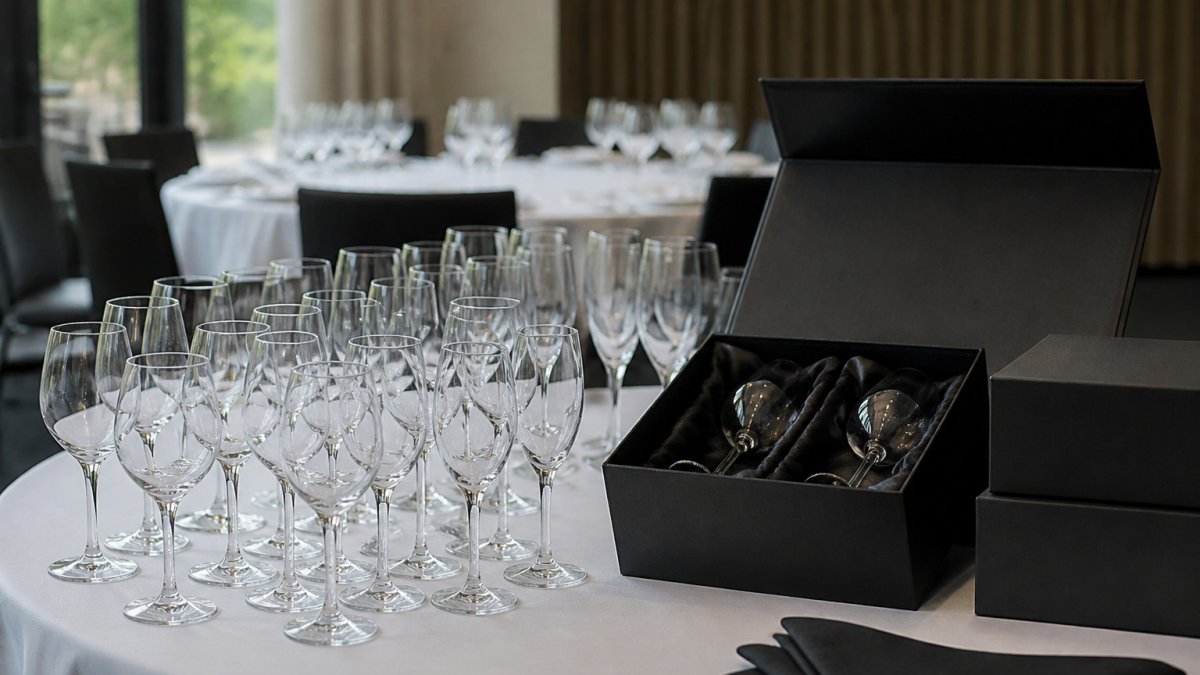
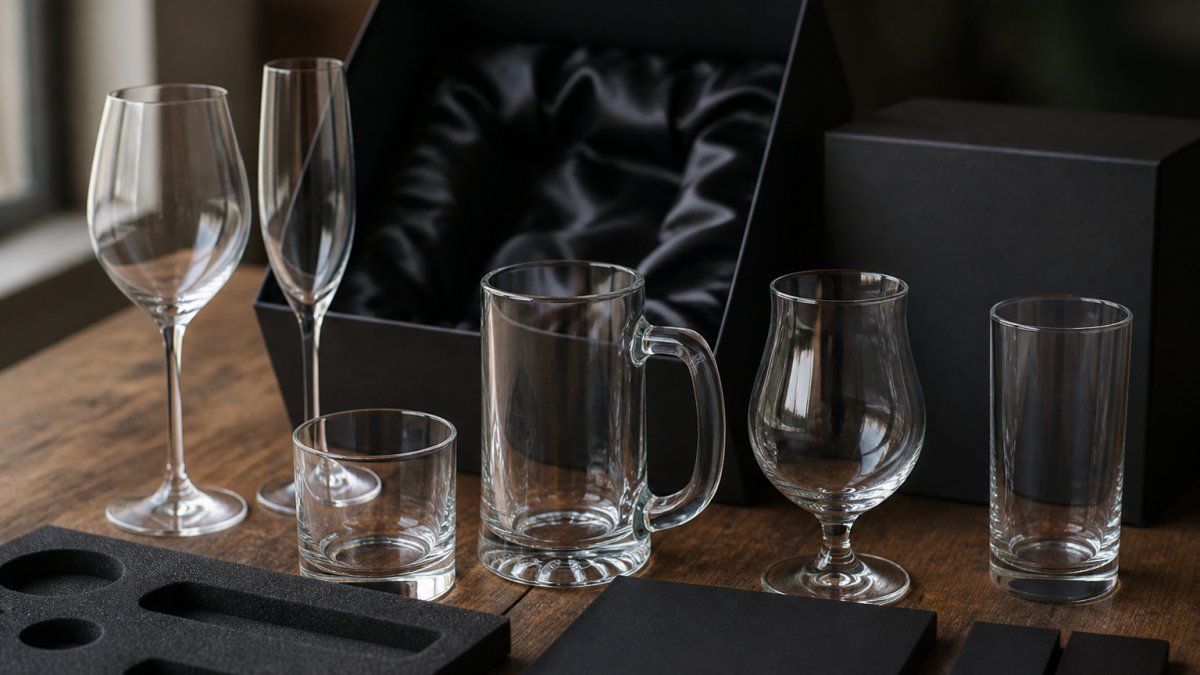
For Tier 1 (Premium clients or senior staff): Choose gifts that feel luxurious and memorable. Custom glassware with professional etching, such as engraved wine glasses, champagne flutes, or whisky tumblers, creates a lasting impression. These gifts sit on desks or in home bars. They're used regularly. They remind recipients of your relationship every time they reach for them.
The Glassware Company offers bespoke custom glassware with expert etching that transforms standard drinkware into branded keepsakes. When you choose quality glassware, you're not just giving a functional item; you're creating a conversation piece that reflects your brand's attention to detail.
For Tier 2 (Regular clients and employees): Select gifts that balance quality and cost-effectiveness. Branded beer steins, coffee mugs, or water bottles work well. They're practical, widely appreciated, and customisable.
For Tier 3 (Event attendees or broader audience): Choose simpler items that still feel intentional. Branded pens, notepads, or small drinkware work here. The goal is to create a positive brand touchpoint without overextending budget.
Customisation and perceived value
Here's what most organisations get wrong about gifting: they assume expensive equals impressive. It doesn't. A AUD 25 gift that feels personally chosen and beautifully presented often outperforms a AUD 50 generic option.
Customisation is your secret weapon. Adding a recipient's name, a meaningful date, or your company logo transforms a standard item into something that feels bespoke.
The presentation matters equally. The Glassware Company offers custom gift boxing with approximately 28 working day turnaround, allowing you to present your branded glassware in packaging that matches the quality of the item itself.
When a client opens a beautifully boxed, professionally etched glass with their name or company logo, they feel valued. That moment of opening is when the gift creates its strongest impression.
Corporate Gifting Best Practices for Budget Success
Planning ahead and managing timelines
The single biggest mistake organisations make is waiting until two weeks before an event to source gifts. This forces rushed decisions, limits customisation options, and inflates costs.
Plan at least 8-12 weeks ahead for any significant gifting moment. This timeline allows you to:
- Research and compare options thoroughly
- Request samples and proofs before committing
- Customise items properly
- Account for shipping and delivery
- Adjust quantities if needed
For custom glassware with engraving or etching, factor in production time. The Glassware Company typically requires 28 working days for custom manufactured gift boxing alongside the glassware. Plan your ordering around this timeline so your gifts arrive when you need them, not after.
Create a gifting calendar. Map every planned occasion across the fiscal year with order deadlines. Share it with your finance and procurement teams. This prevents surprises and ensures budget stays on track.
Measuring outcomes and tracking spend
You can't improve what you don't measure. Track two things: actual spending and perceived impact.
Spending tracking:
- Record every gift purchase, customisation cost, shipping fee, and packaging expense
- Compare actual spend against your budgeted amount by quarter
- Note which occasions went over or under budget and why
- Use this data to refine next year's allocation
Impact measurement:
- Ask recipients for feedback. A simple survey works: "Did you appreciate the gift? Would you recommend our company based on this gift?"
- Track client retention rates for accounts that received gifts versus those that didn't
- Monitor employee satisfaction scores after company-wide gifting moments
- Note whether gifting correlates with increased referrals or repeat business
This data doesn't need to be complex. A simple spreadsheet tracking spend and a brief post-event survey give you enough to see patterns. Over time, you'll know which gifting moments deliver real relationship value and which ones feel obligatory.
Using a Corporate Gift Budget Template
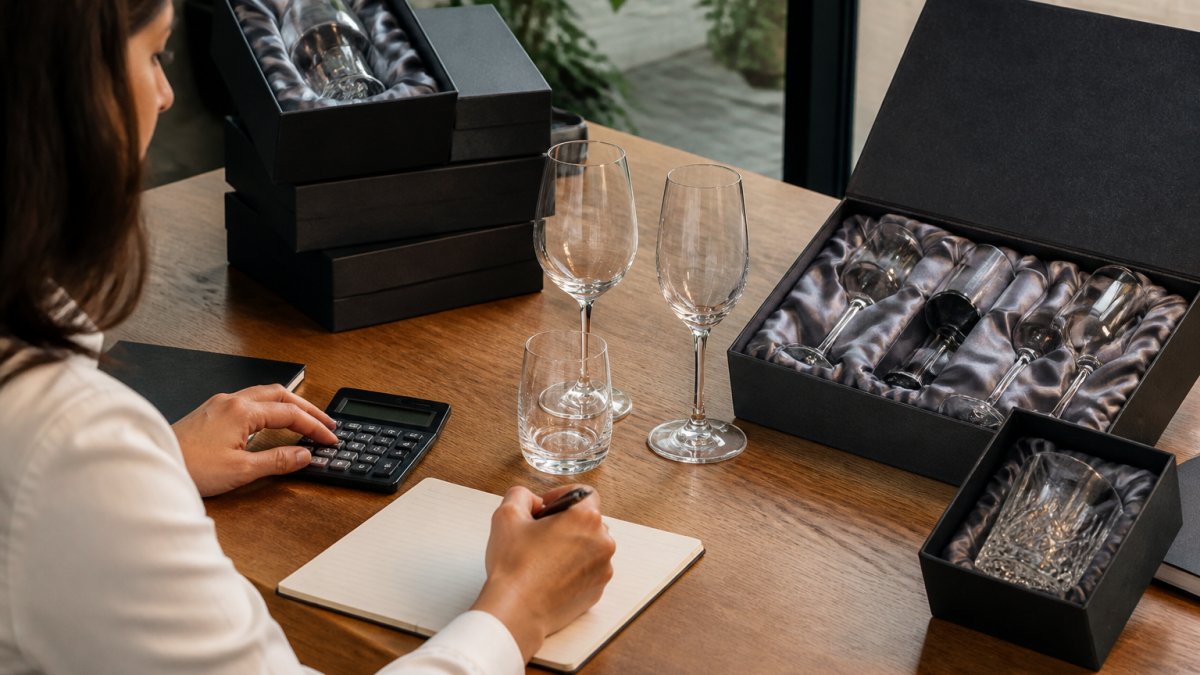
Create a simple spreadsheet to manage your corporate gifting budget throughout the year. Here's what to include:
| Occasion | Recipient Count | Per-Gift Budget | Total Spend | Customisation | Shipping | Actual Cost | Status |
|---|---|---|---|---|---|---|---|
| Q1 Client Onboarding | 25 | AUD 50 | AUD 1,250 | AUD 300 | AUD 150 | AUD 1,700 | Complete |
| Q2 Relationship Gifts | 40 | AUD 45 | AUD 1,800 | AUD 250 | AUD 200 | AUD 2,250 | In Progress |
| Q3 Conference Sponsorship | 100 | AUD 30 | AUD 3,000 | AUD 400 | AUD 500 | Pending | Ordered |
| Q4 Holiday Gifts | 150 | AUD 35 | AUD 5,250 | AUD 600 | AUD 750 | Pending | Planning |
This template keeps you accountable. You can see at a glance whether you're on track, where costs are running high, and which moments need attention.
Update it monthly. When you place an order, log the date and expected delivery. When gifts arrive and are distributed, mark them complete and record actual costs. This creates a record you can reference for next year's planning.
Conclusion
A well-planned corporate gifting budget for the fiscal year does more than control spending. It transforms gifting from a reactive scramble into a strategic relationship-building tool. You choose better gifts because you plan ahead. Your recipients feel valued because they receive something thoughtful and beautifully presented.
The process is straightforward: set your total spend, allocate across quarters and occasions, calculate per-recipient budgets, choose gifts that match your tiers, and track outcomes. Over time, you'll refine the approach based on what actually works for your business.
When you're ready to source custom glassware for corporate gifting, The Glassware Company offers bespoke etching and engraving on many styles, from wine glasses to beer steins.
Frequently Asked Questions
How do you set a corporate gifting budget for the fiscal year?
Start by defining your total annual gifting spend based on business goals and recipient counts. Break this into quarterly allocations aligned with key occasions (holiday gifting, client appreciation, employee milestones). Account for all costs: the gift itself, customisation or engraving, packaging, and shipping. Work backwards from your budget ceiling to determine per-recipient limits, then select gifts that deliver perceived value within those constraints. Review and adjust quarterly to stay on track.
What should a corporate gifting budget include?
Your budget must cover the base cost of gifts, customisation (engraving or etching), premium packaging options, shipping and fulfillment, and contingency for replacements or rush orders. For branded glassware, factor in the cost of custom manufacturing and premium gift boxing if you want to enhance recipient experience. Don't forget approval and procurement costs if your approval workflow requires sign-offs. Include a small buffer for price variations across batches or unexpected volume changes.
How should a business allocate its annual gifting budget across the year?
Divide your total budget by quarters or key business events. Typically, Q4 sees higher spending for holiday gifting and year-end client appreciation. Q1 may focus on onboarding kits and new-hire gifts. Q2 and Q3 can cover mid-year recognition, milestone celebrations, and summer events. Align allocations with your annual business plan and sales calendar. Plan early, custom glassware with engraving requires lead time, so confirm orders well in advance to avoid rush fees or delays.
How far in advance should a business plan its corporate gifts?
Plan at least 8-12 weeks ahead for custom-branded glassware. Custom manufacturing, engraving, and premium gift boxing typically require significant lead time. For seasonal gifting (holiday season), begin planning in July or August. For major events or client appreciation campaigns, confirm orders 6-8 weeks prior. Early planning also allows you to lock in volume discounts and avoid premium shipping costs. A 28 working day turnaround for custom-manufactured gift boxing means you need to factor this into your timeline when selecting presentation options.