 how-to
How Should You Store and Display Branded Beer Glasses?
Last Updated: October 24, 2026
Quick Summary
Store branded beer glasses upright as the default, never stack decorated glasses inside each other, and keep them out of direct sun and away from heat. For display, face the logo outward, light it from the side, and rotate the front row every few months so wear spreads across the set.
- Reserve upside-down storage for undecorated glasses only, since friction wears metallic rims and decoration.
- Allow at least 50 mm of headroom above the tallest glass so you can lift it out.
- A standard 250 mm to 300 mm shelf suits most pint and tulip glasses.
- Dust open shelving weekly with a dry microfibre cloth, not a damp rag.
- Custom gift boxing for etched and branded glassware has an approximate 28 working day turnaround.
Table of Contents
- Why Branded Beer Glasses Need a Proper Storage and Display Plan
- How to Store Glassware in a Bar: A Step-by-Step System
- Beer Glass Racks and Shelves: Which Storage Solution Fits Your Space
- Beer Glass Display Ideas That Keep the Brand Front and Centre
- How to Clean Etched Glassware Without Damaging the Logo
- Protecting Rims, Preventing Chips and Controlling Dust
- Presenting Branded Beer Glasses as Gifts and Merchandise
- Request a Quote for Etched Glassware and Gift Boxing
- Frequently Asked Questions
Why Branded Beer Glasses Need a Proper Storage and Display Plan
Branded beer glasses are custom-etched or printed glasses carrying a brewery, venue or business logo, and they need a storage and display plan because the handling that keeps plain glass intact can quietly destroy the branding.
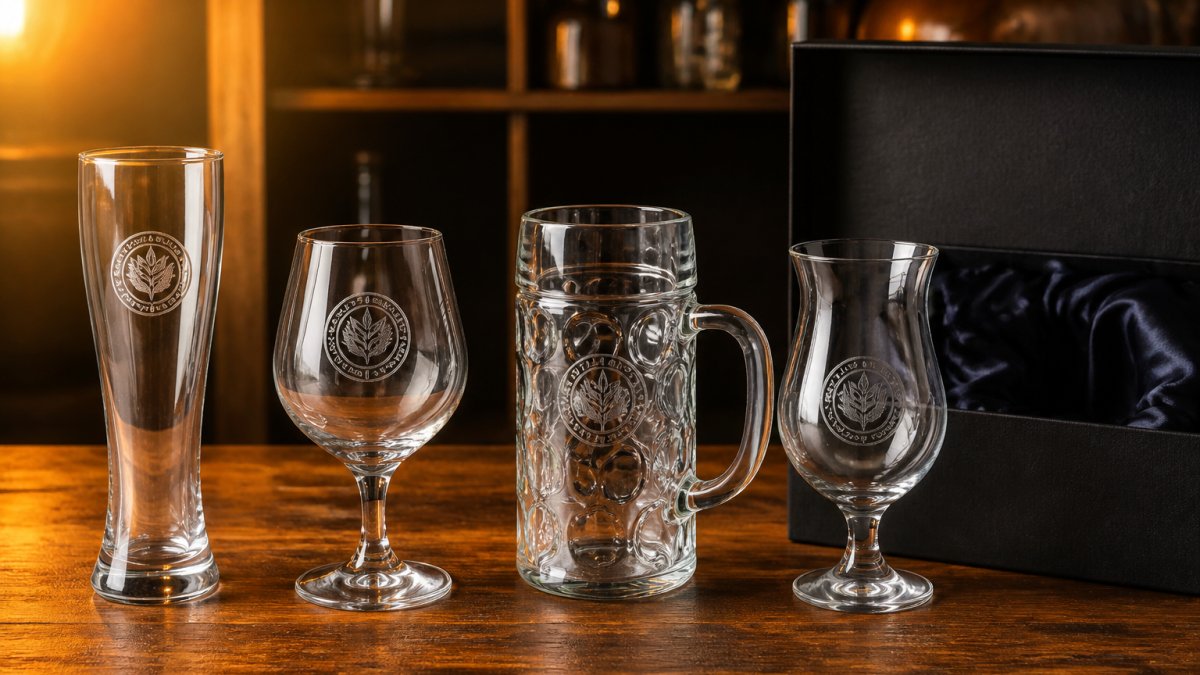
The market is moving in the same direction. Grand View Research put the global beer-glassware market at US$383.4 million in 2023, with a projected 8.0% compound annual growth rate through 2030 (Grand View Research beer glassware market report).
Storage is the difference between a logo that reads clearly on a bar shelf for years and one your own staff stop reaching for.
What Wear Actually Does to Etching and Print
Etching wears from the surface down; print wears from the edge in. Etched glass is physically abraded, so hard surfaces and harsh detergents soften the contrast between frosted logo and clear glass. Printed decoration sits on top of the surface and fails first at the edge of the artwork, where friction and detergent get underneath.
If you want the full breakdown of how fading happens and how to slow it, read our guide on how to prevent logo fading on glassware.
How to Store Glassware in a Bar: A Step-by-Step System
Storing glassware in a bar comes down to four decisions: upright or inverted, open or enclosed, single layer or stacked, and near or far from heat and light. Get those right and the rest is routine:
- Store glasses upright as the default. Rim up keeps the decorated surface away from shelf contact and stops stale smells collecting in the bowl.
- Reserve upside-down storage for undecorated glasses only. One BeerAdvocate community contributor stores glasses upside down except those with gold or silver rims, citing friction wearing the decoration, the logic holds for any metallic finish.
- Never stack decorated glasses inside each other. Contact between rims and bowls is where chips start.
- Keep a single layer per shelf. Two layers means someone lifts one glass over another, every service.
- Line shelves with a soft, non-slip mat. It absorbs knocks and stops glasses sliding when the shelf is bumped.
- Keep glass out of direct sun and away from heat sources. Both age the look of the glass and the decoration.
- Rotate stock so the same six glasses are not always the ones in use. Spreads wear across the set.
Match Storage to Glass Shape
Shape decides the storage method more than any other factor. A tall, narrow glass tips easily and needs a deeper shelf or a rack with a raised lip. A wide, stemmed glass needs clearance above it and should never be inverted.
Not sure which shapes you are storing? Our guide to beer glass styles for craft breweries identifies each style so you can match the shelf to the glass rather than guessing.
Beer Glass Racks and Shelves: Which Storage Solution Fits Your Space
Beer glass racks and shelves split into four types, and the right one depends on your space, how visible you want the branding, and what shapes you are storing.
| Storage type | Best for | Main trade-off |
|---|---|---|
| Wall-mounted rack | Tight spaces, high visibility | Fixings must suit the wall |
| Open shelving | Easy access, strong display | Dust settles constantly |
| Glass-door cabinet | Dust protection, premium look | Costs more, limits access |
| Padded storage boxes | Seasonal or backup stock | Not display-friendly |
Match the Storage Method to the Glass Shape
Work through your collection by shape before you buy a bracket.
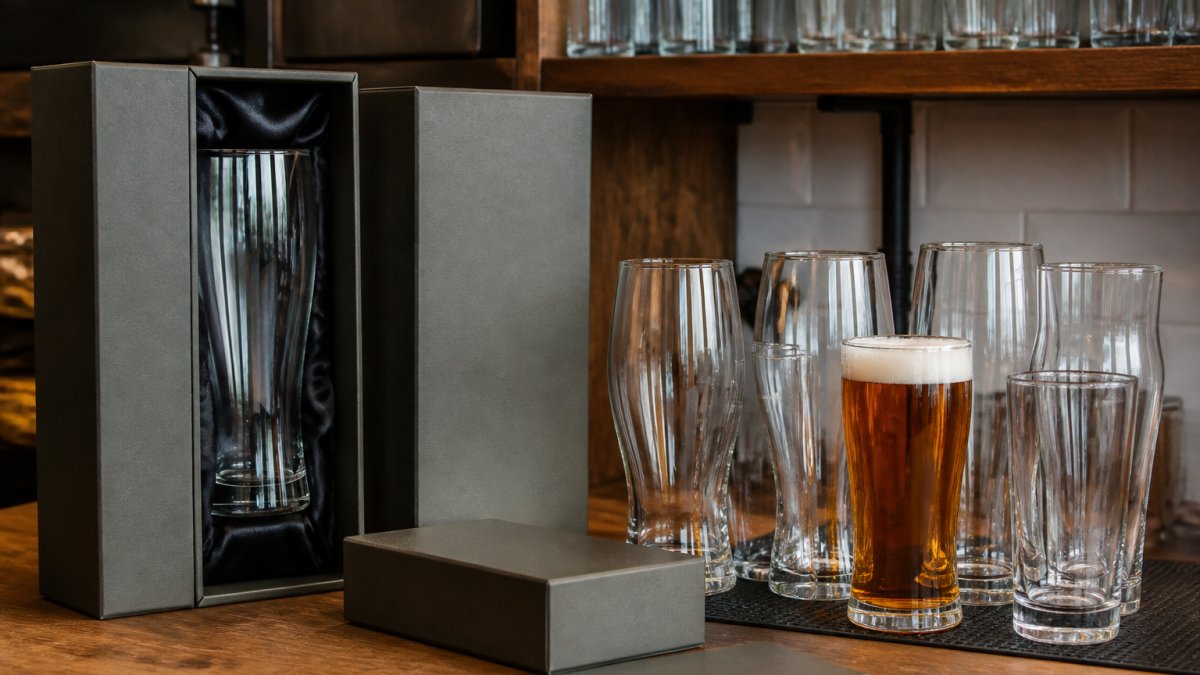
- Pint and nonic glasses. The most forgiving. Store upright on a shelf with a raised lip, or in a base-holding rack, leaving a finger-width gap so rims cannot knock.
- Tulip and snifter glasses. The wide bowl and narrow rim make them top-heavy. Store upright on a deeper shelf, never inverted, away from the front edge.
- Stemmed glasses. These need clearance above the rim and should never be inverted, because the stem carries the load and the foot can crack. A shallow groove or non-slip mat stops the foot sliding.
Measure Before You Buy or Build
Measure the collection, not the shelf you wish you had.
- Count the glasses by shape and height. A shelf that fits pints may not fit a tall pilsner or a stemmed glass with clearance above the rim.
- Allow shelf depth. A standard 250 mm to 300 mm shelf suits most pint and tulip glasses; stemmed and taller shapes need more depth or a base-holding rack.
- Leave headroom. Allow at least 50 mm above the tallest glass so you can lift it out without catching the shelf above.
- Check the weight capacity. A loaded shelf of heavy steins can weigh more than a shelf of pints; check the bracket rating and spread heavy glasses across lower shelves.
- Mark the fixings on the wall. Confirm there is a stud or suitable anchor at each point before you drill.
Safe Mounting and Household Conditions
Safe mounting starts with the wall, not the bracket. Plasterboard needs proper anchors rated for the load; brick and timber studs are more forgiving. Spread the load across at least two fixing points.
Humidity and heat matter too. A shelf above a dishwasher or beside an oven cycles glass through expansion and contraction daily, and that stress shows up as chips at the rim. Keep displayed glasses away from direct sun and high-traffic walkways.
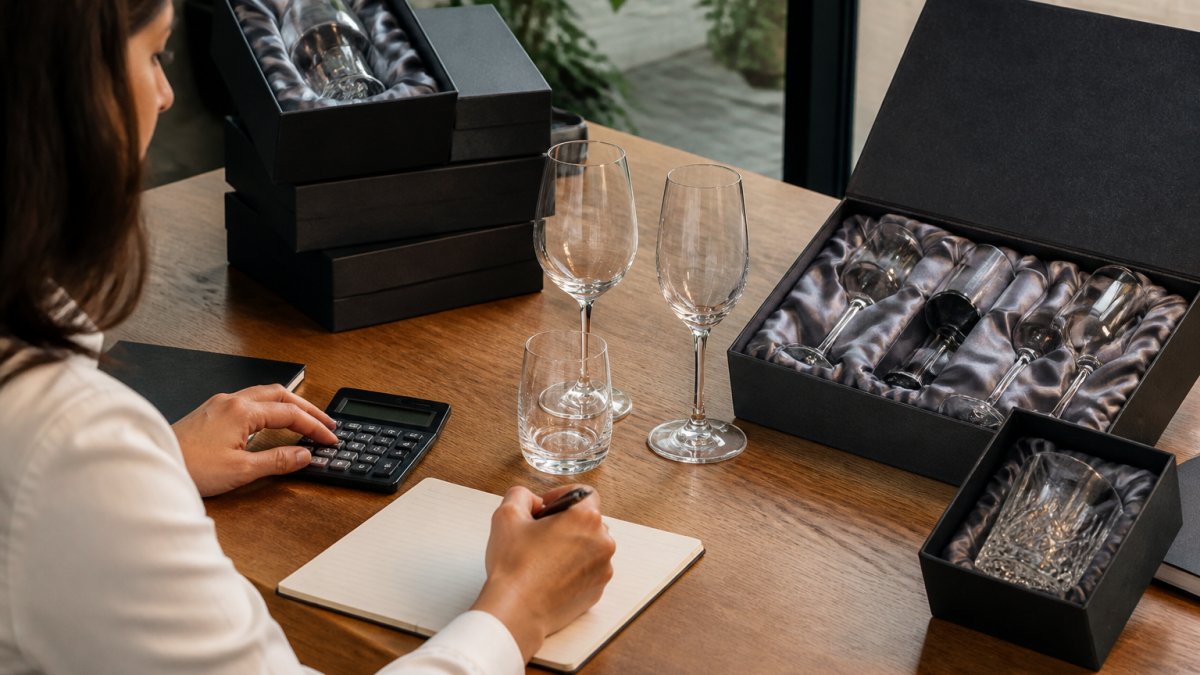
If the glasses are being given as gifts rather than displayed at home, our custom manufactured gift boxing for etched and branded glassware, with an approximate 28 working day turnaround, is a premium presentation option that protects the glass in transit and makes the branding part of the unboxing.
Beer Glass Display Ideas That Keep the Brand Front and Centre
Beer glass display ideas work best when the logo faces out and the lighting comes from the side. Backlighting washes out etched contrast; side light picks up the frosted texture and makes the artwork read across a room.
Four display approaches that hold up in practice:
- Stagger heights so the eye moves along the shelf instead of stopping at one glass.
- Group by brand rather than by shape, so a collection reads as intentional.
- Leave gaps. A crowded shelf hides the artwork you paid to have etched.
Preserve the Branding While It Is on Display
A display that fades the logo defeats the purpose. Printed decoration fails first at the edge of the artwork, where friction and detergent get underneath; etched decoration wears from the surface down, so hard surfaces soften the contrast between frosted logo and clear glass.
- Keep displayed glasses out of direct sun. UV exposure fades printed decoration, and a shelf beside a window is the worst place for a logo you want to last.
- Dust with a dry microfibre cloth, not a damp rag. A damp cloth can leave a film that dries into the etching and dulls it.
- Handle by the base or bowl, not the decorated panel. Finger oils and friction on the print wear the edge of the artwork.
Open Shelving or Enclosed Cabinet?
Open shelving wins on access and visibility; an enclosed cabinet wins on dust and light. The answer depends on whether the glasses are display pieces or daily users.
- Open shelving suits glasses you use often. Dust weekly with a dry microfibre cloth, and accept that the front row will need more cleaning than the back.
- A glass-door cabinet suits rare or collectible branded glasses. It keeps dust off, limits light exposure and protects the decoration from knocks, at the cost of access and a higher purchase price.
- A mixed approach works well: daily users on open shelves, collectible or limited-edition branded glasses behind glass.
Whichever you choose, clean glasses before they go on display. A glass put away with detergent film or water spots dries with those marks baked on, and the decoration looks dull from day one.
A Simple Rotation and Cataloguing System
A repeatable system stops the same glasses taking all the wear.
- Catalogue by brewery, style or use. A simple list or photo log on your phone is enough. Note the shape, the decoration type and where it is stored.
- Assign a front row and a reserve. The front row is for display and daily use; the reserve is boxed or on a back shelf.
- Rotate on a set schedule. Swap the front row every few months so wear and light exposure spread across the set.
- Check rims by hand each time you rotate. A chip you catch early is a glass you can retire before it fails in service.
- Retire damaged glasses from display. A chipped rim is a safety issue and a poor advertisement for the branding.
Planning a Display Wall Before You Drill
Plan the display wall on paper first: measure the available height and width, mark where fixings will land, and decide how many glasses each shelf holds before you buy anything. A study indexed on ResearchGate found that glass shape can influence consumer expectations of different craft beers (study on visual expectation of craft beers in glass shapes), which is a good reason to put your best shapes at eye level.
If the glasses are destined for a client or event rather than your own shelf, our custom manufactured gift boxing for etched and branded glassware, with an approximate 28 working day turnaround, presents the branding as a premium piece from the moment the box is opened.
How to Clean Etched Glassware Without Damaging the Logo
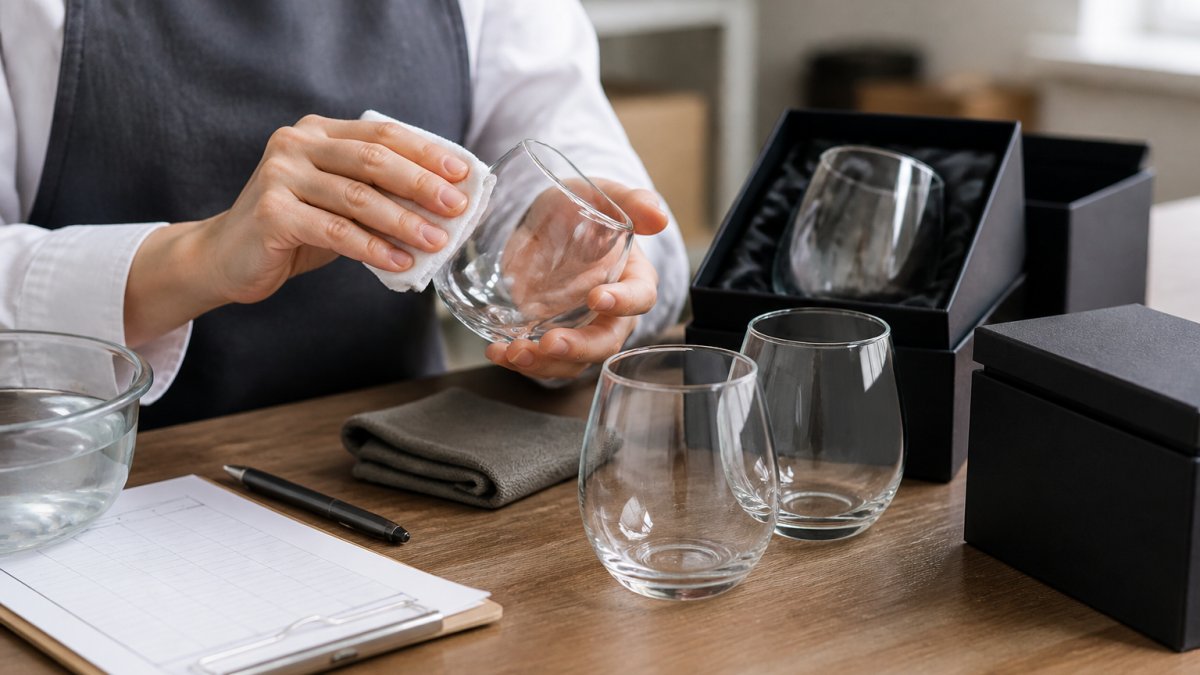
Cleaning etched glassware safely means warm water, a mild detergent and a soft cloth, with no abrasive pad and no harsh cycle. Rinse promptly, dry with a lint-free cloth, and put the glass away dry.
- Wash by hand where the logo matters most.
- Use warm, not hot, water and a small amount of mild detergent.
- Skip scouring pads and gritty cleaners entirely.
- Rinse thoroughly so no detergent film dries on the etching.
- Dry immediately with a soft cloth.
- If using a commercial dishwasher, choose the gentlest cycle available.
For a deeper walkthrough, see our article on how to maintain custom printed beer glasses.
Protecting Rims, Preventing Chips and Controlling Dust
Rim damage and dust are the two failures that show up first on a displayed collection. Chips come from contact; dust comes from open air.
- Store rim up so the rim is not bearing weight.
- Keep a gap between glasses so they cannot knock together.
- Use a glass-door cabinet where dust is heavy.
Presenting Branded Beer Glasses as Gifts and Merchandise
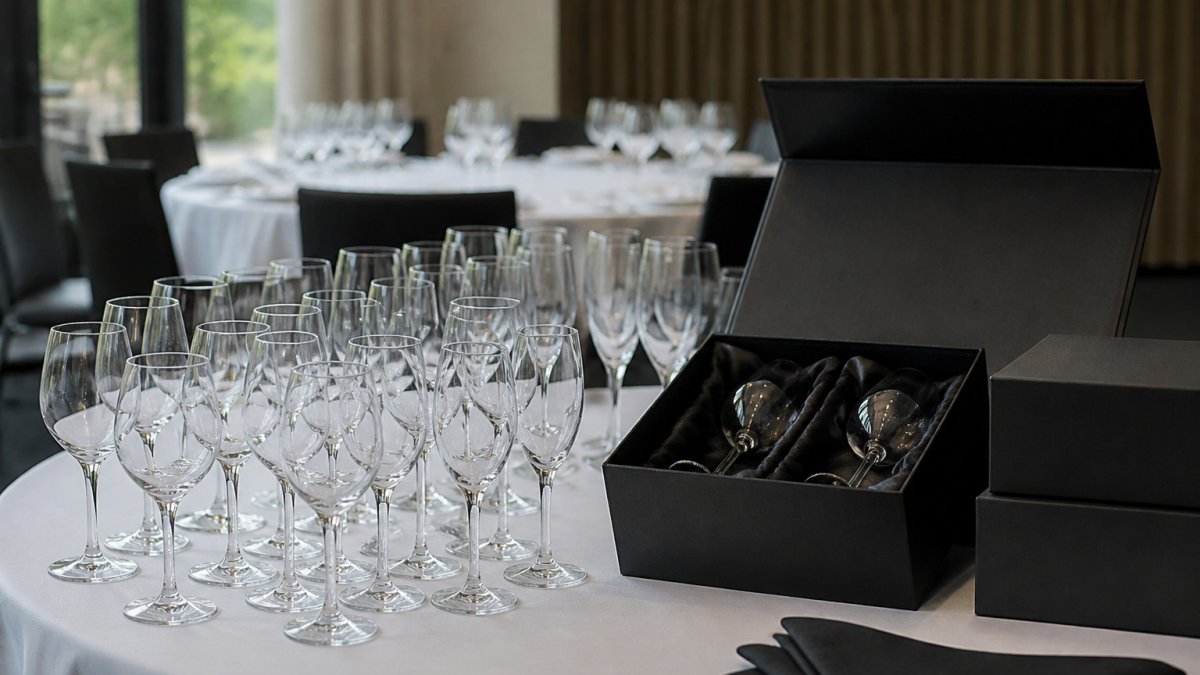
Presentation changes how a branded glass is received. A glass handed over loose reads as merchandise; the same glass in a fitted box reads as a gift. Our custom manufactured gift boxing for etched and branded glassware, with an approximate 28 working day turnaround, means the box and the glass arrive as one considered piece, most valuable for client appreciation, corporate events and wedding or conference gifting, where the unboxing is part of the impression.
For the full options, see our guide to custom gift boxing for etched glassware.
Request a Quote for Etched Glassware and Gift Boxing
Getting storage and display right starts with glass that can take it. If you are choosing glassware now, our guide on how to choose durable custom beer glasses covers what to look for before you commit to a storage plan.
At The Glassware Company, we etch and engrave your logo or artwork onto a large range of glass styles, from beer steins to champagne flutes, and back it with a customer-focused team that keeps your artwork on point.
Get started with The Glassware Company and request an online quote for etched glassware and gift boxing that holds up in service and looks right on the shelf.
Frequently Asked Questions
Should branded beer glasses be stored upright or upside down?
Store them upright, rim up. Upside-down storage lets dust settle inside the bowl and puts the rim in constant contact with the shelf surface, which is where chips start. A BeerAdvocate community contributor who stores glasses upside down makes an exception for those with gold or silver rims, citing concern that repeated friction wears the decoration. That is one person's reported practice rather than formal care guidance, but it points the same way: keep decorated rims off hard surfaces and store branded beer glasses upright.
How do you clean etched glassware without damaging the logo?
Wash by hand in warm water with a small amount of mild detergent, using a soft sponge rather than an abrasive pad, then rinse and dry immediately with a lint-free cloth. Etched and engraved marks sit in the glass surface itself, so they tolerate normal washing well, but printed colour sits on top and wears faster under harsh scrubbing or very hot cycles. If your glasses go through a commercial dishwasher, confirm the decoration type with your supplier first and ask how the marking is applied before committing to daily machine washing.
How can a brewery display branded beer glasses without risking breakage?
Use enclosed storage for backstock and reserve open display for the glasses you want seen. Wall-mounted racks keep glasses off the bench, cabinet storage with glass doors keeps dust off, and shelf liners reduce the small knocks that cause chips. Avoid stacking decorated glasses inside each other, and keep display shelves away from doorways and high-traffic corners. If you are showing off a limited release, a short run on a dedicated shelf with a printed card draws more attention than a crowded full wall.
Where can I buy branded beer glasses with custom etching?
Order directly from a specialist that etches or engraves your artwork onto the glass. The Glassware Company produces custom beer steins, mugs and glassware with your logo or artwork, offers a large range of styles, and can present the finished glasses in custom manufactured gift boxes, which take around 28 working days. Ask to see a proof before production so you know the artwork matches what you approved, and request an online quote with your quantity and event date so turnaround can be confirmed.