 How-to
How to Prevent Water Spots on Drinking Glasses
Last Updated: November 26, 2026
Quick Summary
To prevent water spots on drinking glasses, remove the minerals before the water dries or dry the glass before they can settle. Wash in warm water with a few drops of mild dish soap, rinse thoroughly, shake off excess water, and dry immediately with a clean, lint-free cloth instead of letting glasses air dry.
- Water spots are mineral deposits left when water evaporates and leaves dissolved calcium and magnesium salts on the glass.
- Hard water worsens spotting, and too much dish soap leaves residue that looks like spots.
- Air drying is a major cause of spotting because every drop that dries leaves its minerals behind.
- In dishwashers, keep rinse aid topped up so the final rinse sheets off glass instead of forming droplets.
- Etched and branded glassware is slightly porous, so handwash it, dry immediately, and keep vinegar treatments brief.
Table of Contents
- Why Water Spots Form on Drinking Glasses
- Step-by-Step: Handwashing Drinking Glasses Without Spots
- How to Remove Hard Water Stains from Drinking Glasses
- How to Clean Glasses Without a Dishwasher
- Dishwasher Water Spots on Glasses: Settings and Maintenance
- How to Dry Wine Glasses Without Water Spots
- Preventing Spots on Etched and Branded Glassware
- Request a Quote for Custom Etched Glassware and Gift Boxing
- Frequently Asked Questions
Why Water Spots Form on Drinking Glasses
Water spots on drinking glasses are mineral deposits left behind when water evaporates and leaves dissolved salts on the glass surface.
The cause is simple chemistry. Water carries calcium and magnesium. When it dries in the open air, the water leaves but the minerals stay. What remains is a chalky ring or a scatter of white dots.
Hard water makes this worse.
Hard Water and Mineral Deposits
Hard water is water with a high concentration of dissolved calcium and magnesium. Those minerals are invisible while the water is wet. They only show up once the water evaporates.
A few things speed up spotting:
- Warm drying conditions that evaporate water fast
- Leaving glasses to air dry in a rack
- Rinsing in the same hard water the glasses were washed in
- Using too much dish soap, which leaves residue behind
The fix is not complicated. You need to remove the minerals before the water dries, or dry the glass before they can settle.
Water Spots vs Permanent Glass Etching
Not every white mark is a water spot, and this is where most cleaning advice fails. Some cloudiness is permanent etching, and no amount of vinegar will fix it.
Here is a quick test:
| Feature | Water Spots | Permanent Etching |
|---|---|---|
| Feel | Smooth, slightly chalky | Rough or dull |
| Removes with vinegar | Yes | No |
| Appearance | White dots or rings | Overall haze |
| Cause | Mineral deposits | Surface damage |
| Fix | Clean and dry properly | Cannot be reversed |
If a vinegar soak does nothing, you are likely looking at etching rather than spotting. For a deeper walkthrough, read our guide on how to restore cloudy wine glasses to sparkling clarity.
Step-by-Step: Handwashing Drinking Glasses Without Spots
Handwashing is the most reliable way to prevent water spots, because you control every step. Here is the method we recommend.
- Fill the sink with warm water. Hot water can crack thin glass, and cold water does not cut grease well. Warm is the sweet spot.
- Add a small amount of dish soap. A few drops is enough. Too much soap leaves residue that looks like spots.
- Wash one glass at a time. Hold the glass by the base, not the rim, and use a soft sponge.
- Rinse in warm running water. Rinse thoroughly until the water runs clear and no suds remain.
- Shake off excess water. A quick shake removes most of the water before it can dry.
- Dry immediately with a clean towel. Use a soft, lint-free cloth or a glass-polishing cloth.
- Polish while slightly damp. Buff the glass with a dry section of the cloth for a streak-free finish.
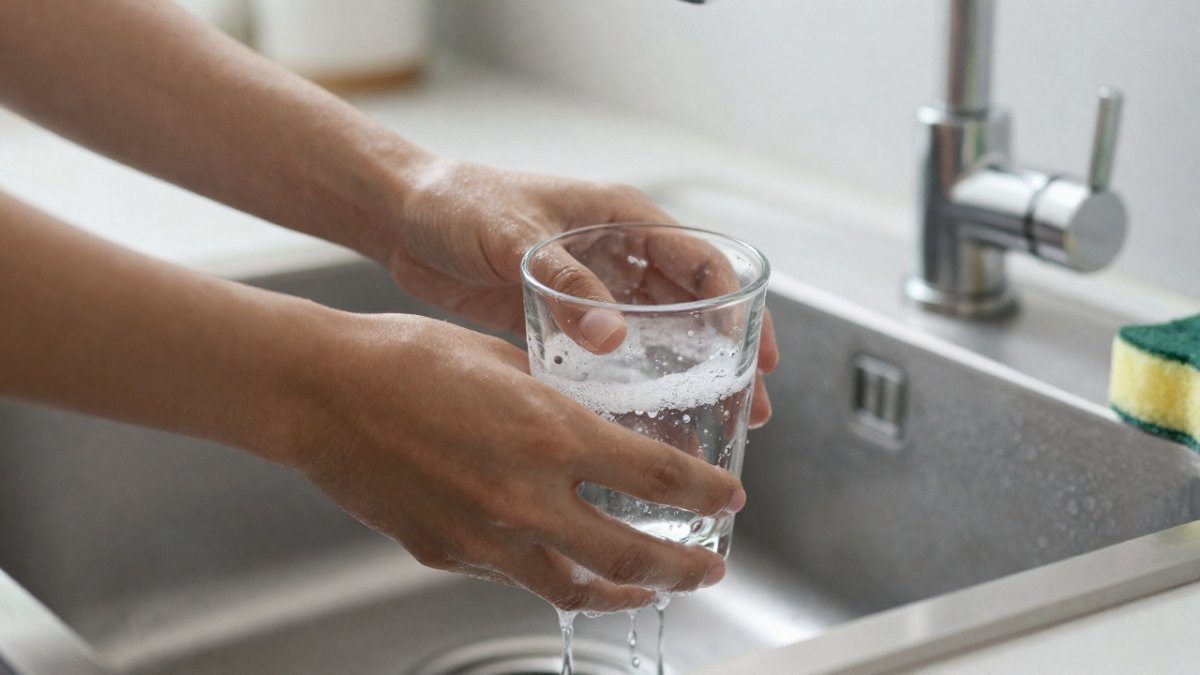
Air drying is a major cause of spotting, because every drop that dries leaves its minerals behind.
How to Remove Hard Water Stains from Drinking Glasses
Hard water stains that have already set can usually be removed with a mild acid.
Start with the gentlest method that can work:
- Mix equal parts white vinegar and warm water. Use a glass or ceramic bowl, not metal, so the acid does not react with the container.
- Soak the glass for 10 to 15 minutes. Fully submerge the spotted area. For a stubborn ring, wrap the glass in a vinegar-soaked cloth and leave it for up to 30 minutes.
- Wash as normal with a few drops of mild dish soap. Do not scrub hard; a soft sponge is enough.
- Rinse thoroughly in warm running water. Any vinegar left behind can leave its own residue once dry.
- Dry immediately with a clean, lint-free cloth. Do not let the glass air dry after treatment.
If the stain lifts, it was a mineral deposit.
A few cautions:
- Test first on decorated or etched glass. Vinegar can affect some metallic prints, coloured coatings, and delicate decorations. Apply a small amount to an inconspicuous area and check after a minute.
- Never mix vinegar with bleach. The combination produces chlorine gas, which is hazardous in a kitchen.
- Avoid abrasive scrubbers and scouring powders. They scratch the surface, and scratched glass traps minerals and looks cloudy even when clean.
- Skip hydrogen peroxide unless the manufacturer says otherwise. It is not a standard glassware treatment and can affect some finishes.
- Do not use vinegar on glasses with gold or silver rims or hand-painted decoration without checking the maker's care advice first.
For heavier mineral build-up, a commercial descaler formulated for glassware or a citric-acid-based cleaner can be used according to the label.
Watch out: if a vinegar soak removes some marks but leaves an overall haze, you are likely seeing a mix of removable deposits and permanent etching.
If your glasses are etched or branded, keep any acid treatment brief and rinse thoroughly afterwards. Careful handling also matters after the acid treatment, so take care when cleaning engraved details to preserve the glass, as SignatureME Designs explains.
How to Clean Glasses Without a Dishwasher
No dishwasher is no problem. The handwashing method above works for every glass type, but a few extras help when you are cleaning glasses without a dishwasher.
Use two sinks if you have them: one for soapy washing, one for clean rinsing water. If you only have one sink, rinse under running water rather than dunking in the soapy water again.
Keep a dedicated glass-polishing cloth on hand. Microfibre works well and does not leave lint. Wash your cloths regularly, because a dirty towel just moves residue around.
For wine glasses and other delicate shapes, hold the bowl rather than the stem to avoid snapping it.
Dishwasher Water Spots on Glasses: Settings and Maintenance
Dishwasher water spots on glasses usually come down to four things: rinse aid, water temperature, detergent dose, and how the glasses are loaded. Most advice stops at "use rinse aid", but the settings and upkeep around it are what separate a spotted load from a clear one.
Rinse aid is the most underrated fix. It works by lowering the surface tension of the final rinse water so it sheets off the glass instead of forming droplets.
Check these settings and habits:
- Use the hottest wash cycle your glassware can handle. Hotter water cleans better and helps the final rinse drain more completely. Delicate decorated glasses may need a gentler cycle, so check the maker's advice.
- Select a heated drying setting if your machine has one. Residual moisture is the enemy; a heated dry or an auto-open door feature reduces the time water sits on the glass.
- Load glasses upside down and at an angle so water runs off rather than pooling in the base.
- Keep glasses away from the detergent dispenser so undiluted detergent does not splash onto them during the wash.
- Do not overcrowd. Glasses that touch each other trap water and can chip.
Maintenance matters as much as settings:
- Clean the filter regularly. A clogged filter recirculates food residue and minerals, which shows up as spots and grit.
- Wipe the door seal and rinse-aid cap so residue does not drop onto glasses during the cycle.
- Run a maintenance wash with a dishwasher cleaner every few months to remove scale and grease build-up inside the machine.
- Check the salt level if your machine has a water-softening salt compartment. In hard-water areas, a topped-up salt reservoir reduces the mineral load reaching the glasses in the first place.
Watch out: harsh dishwasher detergent can slowly etch glass over years of use, and that damage cannot be undone.
The rack matters too. Our article on the best dishwasher rack for delicate glassware covers what to look for.
If you are dealing with persistently hard water, a whole-house softener or a filtered final rinse can make a noticeable difference.
How to Dry Wine Glasses Without Water Spots
Learning how to dry wine glasses without water spots comes down to one rule: do not let them air dry.
After rinsing, shake the glass gently and dry it immediately with a soft, lint-free cloth. Hold the bowl in one hand and the cloth in the other.
A glass-polishing cloth gives the best finish. Steam the glass lightly and buff it for a crystal-clear shine.
Preventing Spots on Etched and Branded Glassware
Etched and printed glassware needs gentler care than plain glass. The etched surface is slightly porous, so minerals cling to it more easily, and harsh detergents can wear down the design over time.
Here is what we tell our customers:
- Handwash etched and branded glasses where possible
- Use warm water and mild soap, never abrasive cleaners
- Dry immediately with a soft cloth
- Avoid soaking for long periods
- Keep vinegar treatments brief and rinse well after
For a full routine, see our guide on 7 steps to care for printed custom wine glasses. If your glasses carry a logo, our care and washing guide for logo prints covers how to protect the design while keeping the glass spot-free.
Presentation matters as much as care. For corporate gifts and event glassware, we offer custom manufactured gift boxing for etched and branded glassware, with an approximate 28 working day turnaround.
Request a Quote for Custom Etched Glassware and Gift Boxing
We etch and engrave your logo or artwork onto a large range of styles, from beer steins to champagne flutes.
Send us your design and we will put together a quote. Read more about custom gift boxing for etched glassware before you order.
Getting branded glassware that still looks sharp after months of washing starts with the right glass and the right finish.
Frequently Asked Questions
How do you stop water spots from forming on drinking glasses?
Stop water spots by removing minerals before they dry. Wash glasses in warm water with a small amount of dish soap, rinse thoroughly in clean water, and dry immediately with a soft microfiber or glass-polishing cloth. If your tap water is hard, a final rinse with filtered water or a splash of white vinegar helps. Never let glasses air dry upright, because droplets leave mineral deposits as they evaporate. For dishwasher loads, use a rinse aid and check the salt level if your machine has a water softener.
Why do my drinking glasses have water spots after washing?
Water spots appear when water droplets evaporate and leave behind dissolved minerals, mainly calcium and magnesium. Hard water contains more of these minerals, so spots form faster. Other causes include using too much dish soap, which leaves residue, and rinsing in dirty water. Air drying makes it worse because droplets sit on the glass for longer.
Can vinegar prevent water spots on drinking glasses?
White vinegar can help prevent spots when used as a final rinse or added to rinse water, because its acidity helps dissolve mineral deposits before they dry. For existing hard-water stains, soak glasses in a mixture of white vinegar and water, then wash and dry as normal. Vinegar is not a fix for permanent etching, though. If the cloudiness does not lift after soaking, the glass surface has likely been damaged and no cleaning agent will restore it. Always rinse vinegar off thoroughly before drying.
Is it better to air-dry or hand-dry drinking glasses?
Hand-drying is better for preventing water spots. Air drying leaves droplets on the glass, and as the water evaporates, minerals stay behind as spots or streaks. A clean, soft microfiber cloth or glass-polishing cloth absorbs the water before it can dry. If you must air dry, place glasses upside down on a clean rack and dry them with a cloth while still slightly damp. For wine glasses, hand-dry the bowl and stem separately and polish with a lint-free cloth to keep the glass clear.