 how-to
Bespoke Corporate Gifts Improve Employee Retention
Table of Contents
- Why Bespoke Corporate Gifts Improve Employee Retention
- How Personalisation Creates Emotional Connection and Loyalty
- Employee Recognition Ideas That Actually Strengthen Engagement
- Employee Retention Strategies Through Thoughtful Gifting
- Employee Recognition Programme Examples and Implementation
- Corporate Gifting Best Practices for Meaningful Impact
- Measuring the Retention Impact of Your Gifting Programme
- Frequently Asked Questions
Last Updated: October 17, 2026
Why Bespoke Corporate Gifts Improve Employee Retention
Bespoke corporate gifts employee retention strategies work by creating a tangible symbol of appreciation that employees remember long after receiving them. When a company invests in custom-etched glassware or personalised drinkware, it sends a clear message: your contribution matters enough to warrant something thoughtful and unique.
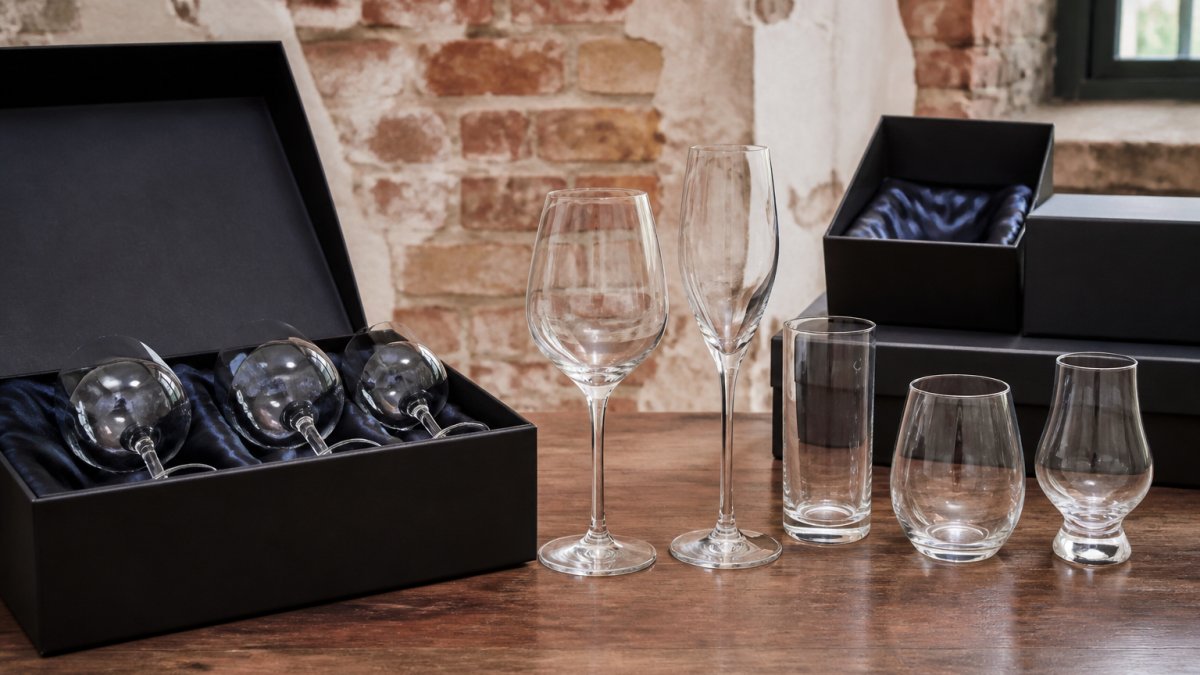
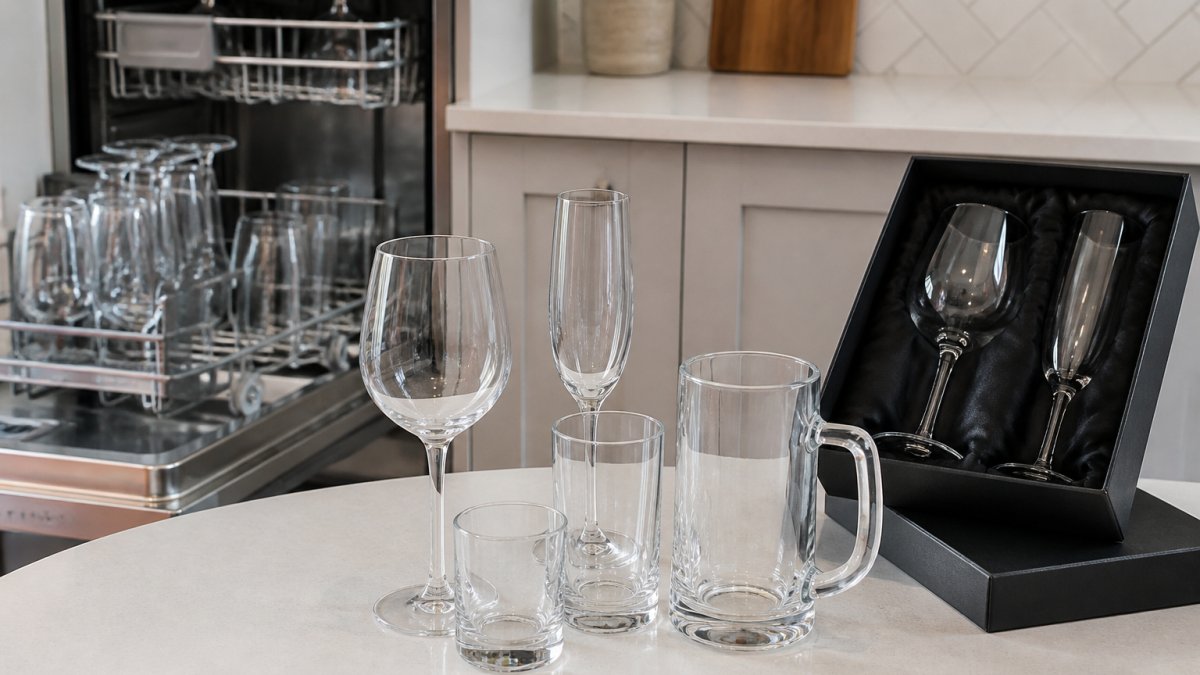
The most effective employee recognition programmes move beyond generic gifts. They demonstrate genuine understanding of individual preferences and company values. Custom-branded glassware, whether champagne flutes for milestone celebrations or beer steins for team events, becomes a lasting reminder of belonging to something meaningful.
The connection between thoughtful gifting and retention runs deeper than sentiment. When employees feel recognised through a gift that reflects their role or achievement, they're more likely to stay engaged with the organisation. This isn't about expense; it's about intentionality.
How Personalisation Creates Emotional Connection and Loyalty
Personalisation transforms a gift from an obligation into an experience. But the difference between bespoke and generic gifting is not just emotional, it plays out across perceived value, usefulness, scalability, and cost. Understanding those trade-offs is what separates a recognition programme that employees remember from one they quietly re-gift.

Bespoke versus generic: a direct comparison
| Dimension | Generic corporate gift | Bespoke etched or branded glassware |
|---|---|---|
| Personalisation | Logo only; identical for every recipient | Name, tenure date, achievement, or team etched into the item |
| Perceived value | Low, often seen as promotional merchandise | Higher, reads as a considered, lasting object |
| Usefulness | Variable; frequently discarded | Functional drinkware used regularly at home |
| Scalability | Easy to bulk-order at short notice | Requires artwork setup and production lead time |
| Cost per recipient | Lower unit cost, higher waste | Higher unit cost, lower waste and stronger recall |
| Retention signal | Weak, feels like marketing | Strong, feels like recognition |
The mechanism behind the loyalty effect is specificity. A generic branded mug acknowledges the role; a custom beer stein etched with an employee's name and tenure date acknowledges the individual. That specificity creates a possession the employee cannot get anywhere else, which is what anchors the emotional connection.
Why the presentation matters as much as the glassware
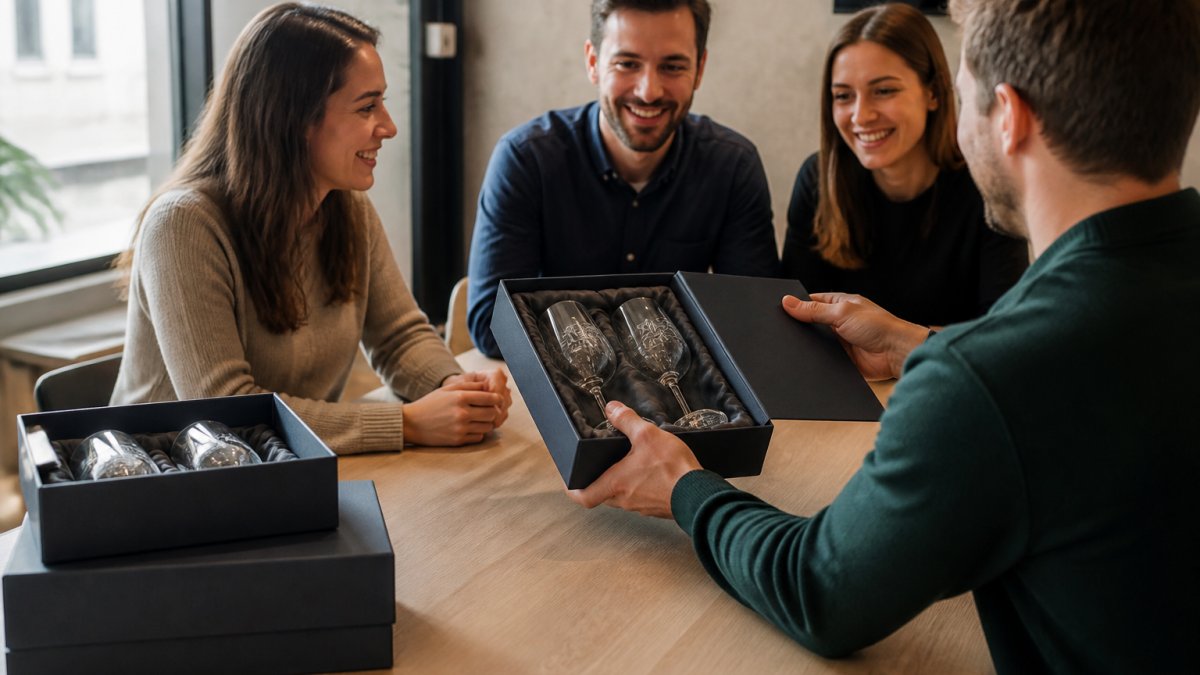
A bespoke item delivered in a plain courier box loses much of its impact. Pairing custom glassware with our custom-manufactured gift boxing service, approximately 28 working day turnaround, turns the handover into a moment rather than a transaction. The presentation reinforces the quality of the recognition and gives the recipient something worth keeping, not just using.
Where personalisation can go wrong
Bespoke does not automatically mean better. A personalised item that misses the recipient's preferences, a champagne flute for someone who does not drink, or a style that clashes with their taste, can feel more dismissive than a neutral generic gift because the effort is visible but misjudged. The fix is opt-in preference collection: ask employees which glassware styles they would use, and let them choose within a curated range. This preserves the bespoke feel while avoiding intrusive data gathering or unwanted gifts.
A common pattern among practitioners is to offer curated options per recognition tier, each with the employee's name and achievement etched in. The recipient gets choice; the employer gets consistency; the gift stays genuinely personal.
Employee Recognition Ideas That Actually Strengthen Engagement
Effective employee recognition goes beyond annual awards. It should happen consistently throughout the year, tied to specific achievements or milestones.
Recognition that strengthens engagement typically includes:
- Service anniversaries: Custom-etched glassware marking 5, 10, or 15 years of service
- Project completions: Branded drinkware celebrating successful campaign launches or major deliverables
- Team milestones: Personalised champagne flutes for departmental achievements
- Individual performance: Custom gifts acknowledging standout contributions or skill development
- Promotion celebrations: Premium glassware marking career progression
The key is making recognition visible and specific. Rather than a generic "thanks for your hard work" message, tie the gift to a concrete achievement. This approach strengthens engagement because it shows leadership actually pays attention to what employees accomplish.
Timing matters too. Recognising an achievement within days of it happening carries more weight than recognising it months later. The freshness of the recognition reinforces the value of the accomplishment.
Employee Retention Strategies Through Thoughtful Gifting
Bespoke corporate gifts employee retention strategies work best when integrated into a broader recognition framework. Gifting alone won't retain talent, but it amplifies other retention efforts.
Effective strategies combine custom gifting with clear communication about why the gift was given. When an employee receives custom-etched glassware, they should understand exactly what they're being recognised for. This clarity reinforces the behaviour or achievement you want to encourage.
Consider these implementation approaches:
- Quarterly recognition: Identify top performers each quarter and present them with custom drinkware
- Milestone celebrations: Mark work anniversaries with personalised glassware that employees can display or use
- Team bonding: Create custom glassware for team events that remind employees of their group identity
- Client appreciation: Use branded glassware to thank employees who've driven client satisfaction
- Onboarding: Present new hires with custom glassware featuring the company logo as a welcoming gesture
The retention impact comes from consistency. Employees who see their peers recognised through thoughtful gifts are more likely to feel valued themselves. This creates a culture where recognition is normalised and expected.
Employee Recognition Programme Examples and Implementation
A successful employee recognition programme built around custom gifting requires structure. Here's how to implement one:
Define your recognition categories. Decide which achievements or milestones warrant recognition. Service anniversaries, project completions, performance excellence, and safety records are common starting points.
Set a recognition schedule. Commit to recognising employees on a regular basis, monthly, quarterly, or at key company moments. Consistency signals that recognition is genuinely valued, not an afterthought.
Choose your gifting approach. Select glassware styles that align with your company culture and the recognition being given. Champagne flutes suit executive recognition. Beer steins work well for brewery or hospitality clients. Branded wine glasses appeal to formal corporate settings.
Communicate the reason. When presenting a gift, explain specifically why that employee or team is being recognised. This transforms the gift from a token into a meaningful acknowledgment.
Consider presentation quality. The unboxing experience matters. Our custom-manufactured gift boxing service with approximately 28 working day turnaround elevates the perceived value of the gift and creates a memorable moment.
Document and celebrate. Share recognition moments internally. Feature recognised employees in newsletters or team meetings. This amplifies the retention benefit by showing the entire organisation that contributions are noticed and valued.
Corporate Gifting Best Practices for Meaningful Impact
Meaningful corporate gifting requires attention to detail. A poorly chosen or hastily presented gift can feel dismissive rather than appreciative.
Best practices include:
- Know your audience. Understand employee preferences, dietary restrictions, cultural considerations, and personal interests before selecting a gift
- Prioritise quality. Cheap or flimsy gifts undermine the recognition message. Invest in items that will last and be used regularly
- Ensure inclusivity. Select gifts that work for diverse workforces. Custom glassware is inclusive because it's functional for most people, regardless of role or background
- Match the gift to the achievement. A small recognition warrants a modest gift. A major achievement deserves something more substantial
- Personalise where possible. Add names, dates, or achievement details to make the gift unique to the recipient
- Present thoughtfully. Deliver gifts in person when possible. The conversation around the gift matters as much as the gift itself
When working with a glassware provider, ensure your chosen styles align with your company's aesthetic and your employees' likely use cases. A custom-etched champagne flute for an employee who rarely drinks champagne misses the mark. A personalised beer stein for a brewery team member lands perfectly.
Measuring the Retention Impact of Your Gifting Programme
Most gifting articles stop at 'track your turnover rate'. That is not a measurement framework, it is a wish list. To know whether bespoke gifting is actually influencing retention, you need a before-and-after design, a small set of tracked metrics, and an honest treatment of correlation versus causation.
Step 1: Establish a baseline before you launch
Record your current figures for the twelve months before the programme begins. Without a baseline, any later improvement is unattributable. Capture:
- Voluntary turnover rate, the percentage of employees who resign in a year, excluding redundancies and contract ends
- Average tenure of departing employees
- Engagement or recognition sentiment scores from your existing pulse survey, if you run one
- Internal promotion rate
- Absence rate
Step 2: Track participation and sentiment, not just outcomes
Retention is a lagging indicator; it can take a year or more to move. Track leading indicators monthly or quarterly so you can course-correct:
- Participation rate, the proportion of eligible employees who received a bespoke gift in the period
- Recognition sentiment, add two or three questions to your pulse survey, such as 'I feel recognised for my contributions' and 'Recognition at this organisation feels genuine'
- Gift acceptance and use, where employees opt in to preference collection, note which styles are chosen and whether recipients report using the item
- Qualitative feedback, short, optional comments at the point of receipt
Step 3: Compare recognised versus non-recognised groups
The cleanest internal comparison is between employees who received bespoke recognition and those who did not, matched for tenure band and role level. If recognised employees show materially lower voluntary turnover over twelve to twenty-four months, that is a signal worth investigating, but it is not proof on its own.
Step 4: Use exit and stay interviews to test the mechanism
Ask departing employees, in a structured exit interview, whether recognition, or its absence, influenced their decision to leave. Ask stayers in one-to-one conversations what recognition moments they remember. This qualitative layer is how you distinguish a genuine gifting effect from a general engagement trend.
Step 5: Review annually and adjust
Set a twelve-month review point. Compare baseline and current figures, review participation and sentiment trends, and decide whether to adjust gift tiers, timing, or the preference-collection process. A programme that is measured and adjusted annually is far more credible than one launched and forgotten.
Frequently Asked Questions
How can employee recognition improve retention?
Recognition signals to employees that their work is valued and noticed. When staff feel appreciated through thoughtful gifts, especially bespoke items like custom-etched glassware, they develop stronger emotional ties to the organisation. This sense of belonging and acknowledgement directly reduces turnover. Employees who receive meaningful recognition are significantly more likely to stay, perform better, and recommend the company as an employer.
What are the top employee retention strategies?
Effective retention strategies combine competitive compensation, career development, workplace culture, and authentic appreciation. Bespoke corporate gifts fit into this framework as a tangible recognition tool. Pairing personalised gifts with clear career pathways, flexible work arrangements, and regular feedback creates a comprehensive retention approach. The key is consistency: employees need to see that recognition and appreciation are part of how the organisation operates, not one-off gestures.
How often should employers recognise employees with gifts?
Recognition should align with meaningful moments: service anniversaries, project milestones, promotion achievements, and team celebrations. Quarterly or annual gifting programmes work well for most organisations. The frequency matters less than authenticity, a single bespoke gift tied to genuine achievement carries more weight than frequent generic items. Custom-etched glassware works particularly well for milestone recognition, as it becomes a keepsake employees display and value long-term.
What makes a corporate gift feel personal and meaningful?
Personalisation is the core. Generic branded items feel transactional; bespoke gifts feel intentional. Customisation, whether through etching with the employee's name, a meaningful date, or a company value they embody, transforms an object into recognition. Bespoke glassware carries this weight because it's durable, displayable, and uniquely crafted for that individual. Presentation also matters: custom gift boxing elevates the experience and signals that care went into the selection and delivery.