 how-to
Promotional Glassware: 7 Common Ordering Mistakes
Table of Contents
- Why Promotional Glassware Orders Go Wrong
- Mistake 1: Skipping the Sample and Proof
- Mistake 2: Ignoring Logo Glassware Artwork Requirements
- Mistake 3: Getting the Custom Glassware Minimum Order Quantity Wrong
- Mistake 4: Underestimating Branded Glassware Lead Time
- Mistake 5: Choosing Glass That Doesn't Suit the Campaign
- Mistake 6: Forgetting Branded Glassware Packaging and Breakage
- Mistake 7: Chasing the Cheapest Unit Cost
- Frequently Asked Questions
Last Updated: October 17, 2026
Why Promotional Glassware Orders Go Wrong
Most promotional glassware orders go wrong before production even starts. The mistakes happen in the brief, the sample, the artwork file and the delivery date, not on the production line. This guide from The Glassware Company covers the seven errors we see most often, and how to avoid each one.
Here is the uncomfortable truth: a glass tumbler with your logo on it can sit on a client's desk for years. That is the upside. The downside is that every flaw is equally permanent. A misspelt word, a logo that sits too low, a colour that looked different on screen. None of it washes off.
Below, we walk through what to check at each stage, from sample approval to packaging and delivery.
Mistake 1: Skipping the Sample and Proof
The biggest mistake is treating a sample as optional. A physical sample and a signed proof are your only real protection against a bulk order you cannot use.
Screens lie. A logo that looks sharp on a monitor can look thin and washed out once etched into glass. A colour that reads as deep navy on your brand sheet can shift once it sits behind clear glass.
What to Check on a Physical Sample
- Hold the glass in the light you expect at the event
- Check the etch depth and edge sharpness of the logo
- Confirm the logo sits straight and centred
- Run it through a wash cycle if the item must survive daily cleaning
- Check the base sits flat and the glass feels balanced in the hand
- Compare the sample against your approved digital proof side by side
A common mistake is approving a digital proof only. Ask for a physical pre-production sample on any order you plan to reorder.
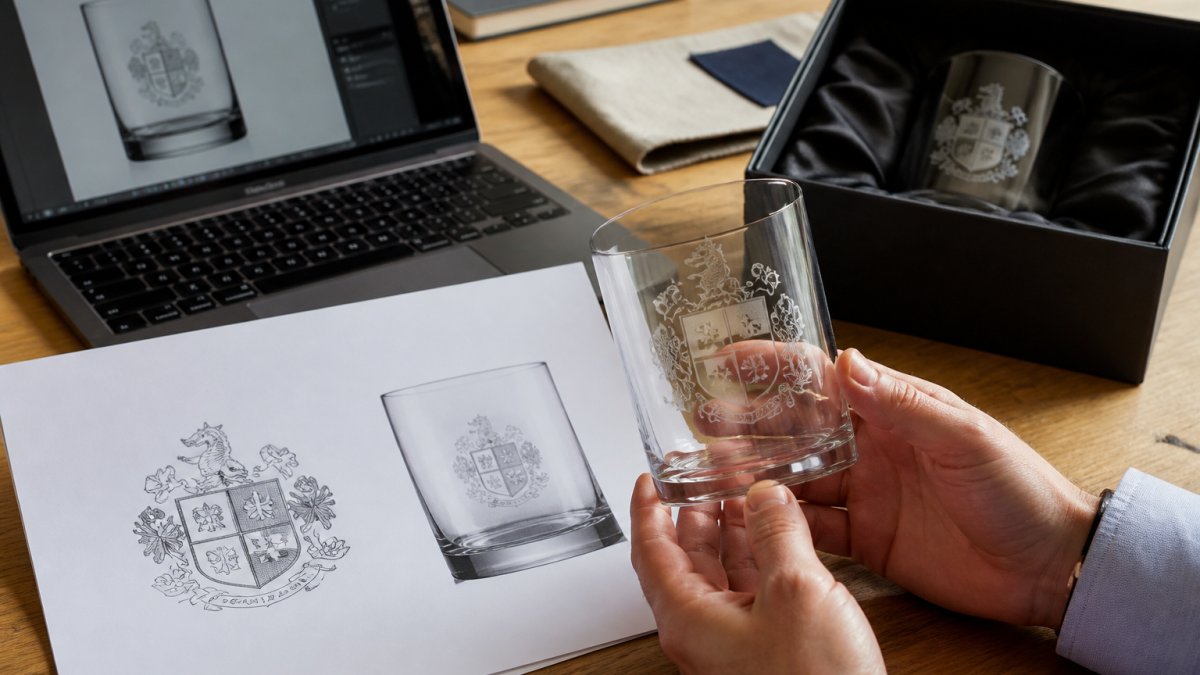
Mistake 2: Ignoring Logo Glassware Artwork Requirements
Logo glassware artwork requirements are stricter than most buyers expect. Glass is not paper, so a file that prints perfectly on a business card can fail on a tumbler.
Suppliers need clean vector artwork, not a screenshot or a low-resolution image pulled from a website. Vector files hold their edges at any size, which matters when a logo is etched at a small scale.
File Formats and Logo Placement
- Supply vector files such as AI, EPS, PDF or SVG
- Avoid JPGs and PNGs unless they are high resolution
- Convert all text to outlines so fonts do not shift
- Keep a clear margin around the logo so it does not crowd the rim
- Check spelling letter by letter, including any tagline
- Confirm the logo works on a curved surface, not just flat
Placement matters as much as the file. A logo placed too close to the rim can distort during etching, and a logo wrapped around a curve needs a wider margin than one on a flat face.
Mistake 3: Getting the Custom Glassware Minimum Order Quantity Wrong
Custom glassware minimum order quantity is where budgets quietly blow out. Order too few and you may pay setup costs twice. Order too many and you are storing boxes nobody wants.
Start with a realistic headcount, not a hopeful one. Add a buffer for breakage, staff, and the guests who ask for a second glass. Then check the leftover stock problem before you commit.
- Count confirmed guests, not invited ones
- Add a small buffer for breakage and spares
- Ask whether a smaller run avoids setup fees
- Check storage space before you over-order
- Confirm reorder terms so a second run matches the first
If the design is unproven, order a smaller first run and scale up once you see how recipients respond.
Mistake 4: Underestimating Branded Glassware Lead Time
Branded glassware lead time catches out more event planners than any other mistake. Etching and engraving add production days on top of standard delivery, and rush orders cost more.
Work backwards from the event date. Allow time for artwork approval, sample sign-off, production, and delivery. A six-week runway is tight once you factor in proofing rounds.
- Artwork approval: allow a few business days for revisions
- Sample sign-off: add a week if a physical sample is required
- Production: etching and engraving take longer than plain stock
- Delivery: add buffer for freight and handling
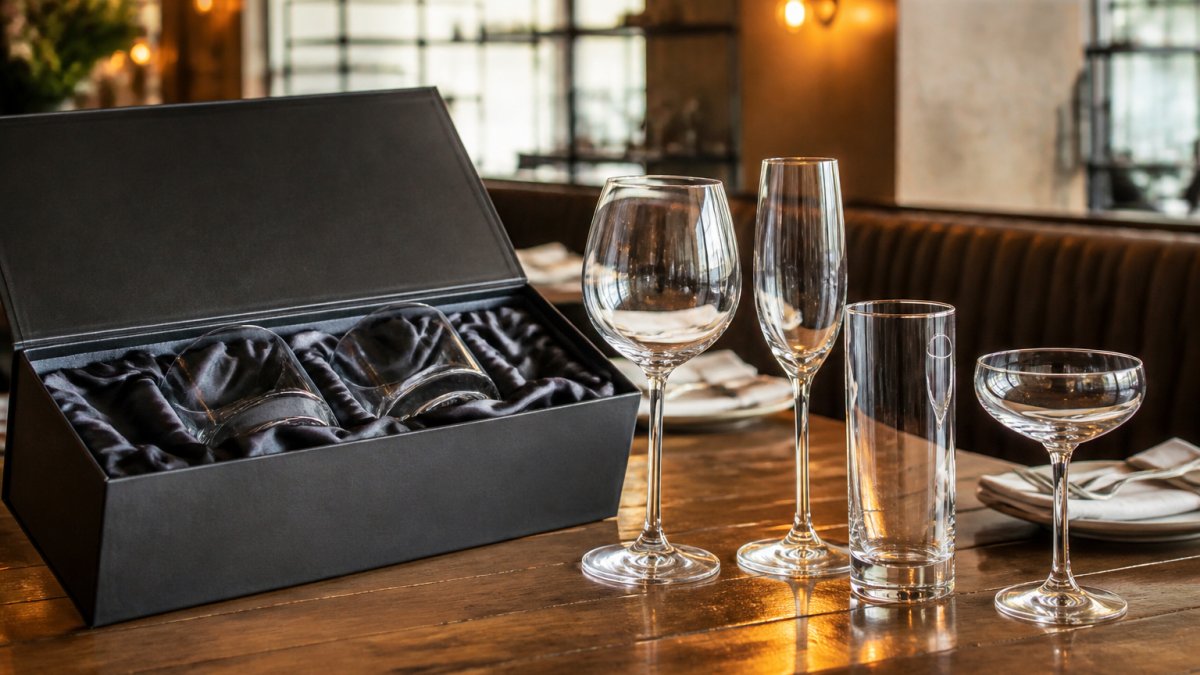
Our custom manufactured gift boxing service, which presents etched and branded glassware in a premium gift box, runs on roughly a 28 working day turnaround. Build that into your timeline if you want the presentation upgrade.
Mistake 5: Choosing Glass That Doesn't Suit the Campaign
The wrong glass undermines the whole campaign. A delicate flute at a rowdy sporting event, or a heavy stein at a formal board dinner, sends the wrong message about your brand. Most guides treat promotional items generically, but glassware is not one product. Tumblers, stemware, and reusable drinkware behave differently in use, decoration, and durability.
Match the Glass to the Audience and Setting
Start with where the glass will live and who will use it. A trophy on a desk needs a different glass from a workhorse in a busy taproom.
| Campaign type | Glass to consider | What matters most |
|---|---|---|
| Client appreciation | Etched tumblers or decanters | Premium feel and gift presentation |
| Winery or tasting room | Etched wine glasses | Logo clarity on a curved bowl |
| Brewery or taproom | Beer steins and mugs | Durability and stackability |
| Corporate events | Champagne flutes | Stable base and easy handling |
| Outdoor or family events | Unbreakable drinkware | Break resistance |
Glass Types Compared by Use Case
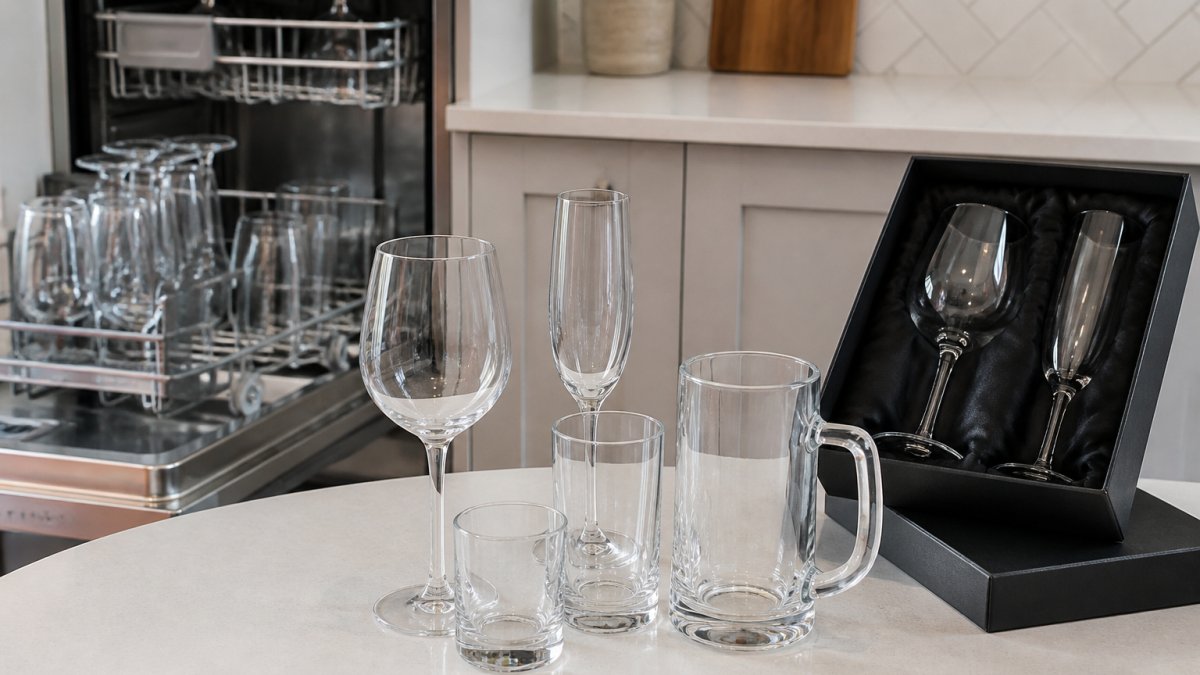
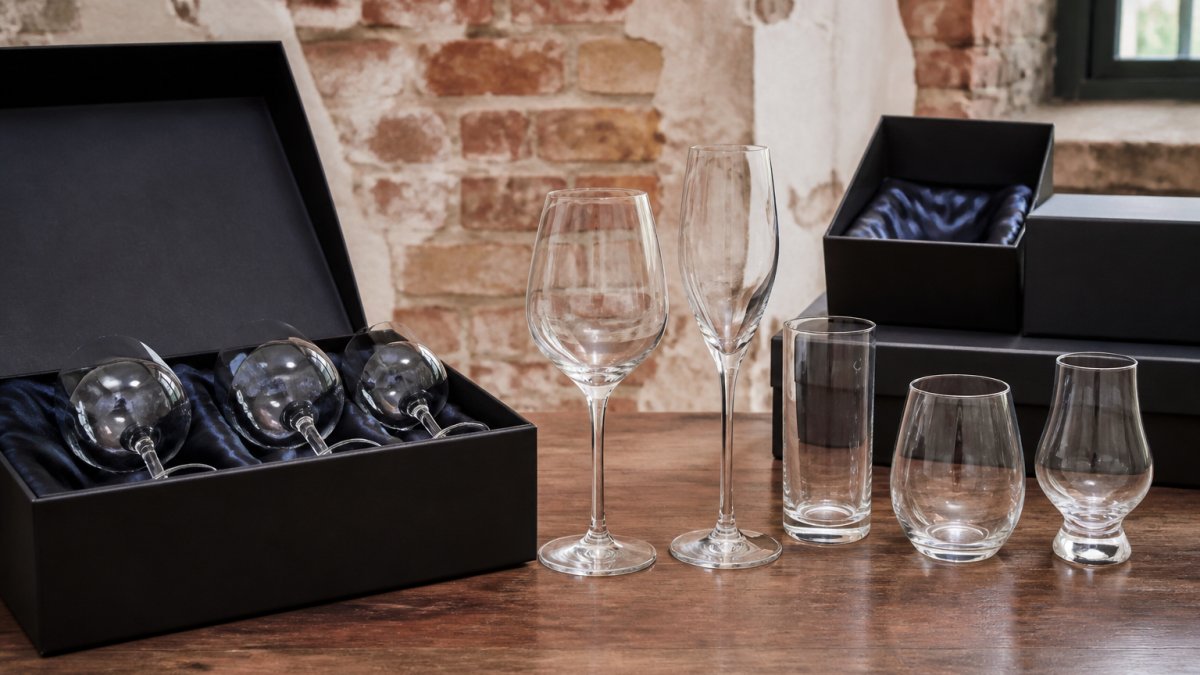
- Tumblers suit everyday use and desk display. They take etching well on a flat face and survive daily washing better than thin stemware.
- Stemware (wine glasses, flutes) signals occasion and premium positioning, but the stem is the weak point in transit and in busy settings. Check base stability and how the logo reads on a curved bowl.
- Beer steins and mugs favour durability and stackability. Heavier glass takes a deep etch and handles commercial washing, but check handle strength and stacking clearance.
- Reusable drinkware (bottles, travel cups) works for outdoor and family events where break resistance matters more than ceremony. Confirm the decoration method suits the material and shape.
Practical Checks Before You Choose
Match the glass to the audience and setting first. Then check the practical details: heat resistance, dishwasher safety, stackability, a stable base, and how easy it is to clean. Ask how the decoration method suits the glass shape, a wide logo wraps differently on a curved bowl than on a flat tumbler face.
Ask one question before you choose: where will this glass actually live? A trophy on a desk needs a different glass from a workhorse in a busy taproom. If the glass is a gift, consider presentation packaging alongside the glass itself, our custom manufactured gift boxing service presents etched and branded glassware in a premium gift box on roughly a 28 working day turnaround, so the presentation matches the glass inside.
Mistake 6: Forgetting Branded Glassware Packaging and Breakage
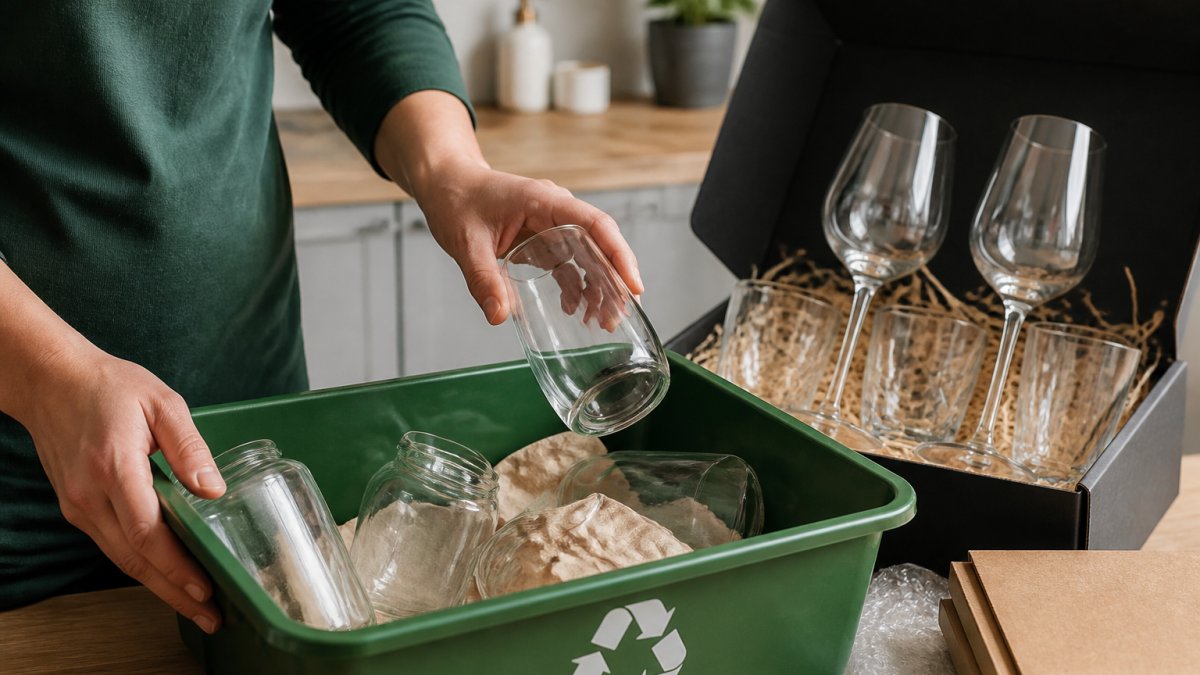
Branded glassware packaging is not an afterthought. Glass breaks, and a cracked delivery undoes months of planning. Most promotional-product guides stop at 'pack it well', but fragile glassware needs a breakage plan that covers packaging, transit, replacement allowances, and delivery logistics.
Why Glass Breaks in Transit
Breakage rarely comes from a single drop. It comes from glass-to-glass contact, pressure points, and vibration over long freight routes. A carton that feels solid in the warehouse can still arrive with chipped rims if each glass is not individually protected and separated.
- Glass-to-glass contact is the biggest cause of chips and cracks. Dividers or individual wraps stop glasses knocking together.
- Pressure points at the base and rim need foam, tissue, or moulded pulp protection.
- Vibration over road freight loosens packing; use void fill so nothing shifts inside the carton.
- Stacking weight crushes outer cartons if the board grade is too light for the load.
A Practical Packaging Checklist
- Wrap each glass individually before cartoning, tissue, foam sleeves, or moulded pulp all work
- Use dividers or cell partitions so glasses never touch
- Choose an outer carton rated for the stacked weight, not just the item weight
- Fill voids so the contents cannot move when the carton is tilted
- Label cartons 'fragile' and 'this way up', and tell the receiver to expect them
- Confirm who receives the delivery and where it will be stored before dispatch
- Unpack and inspect a carton on arrival, not the day before the event
- Keep spares set aside for replacements
Replacement Allowances and Delivery Logistics
Ask your supplier what replacement allowance they recommend for your order size and route. A common pattern is to add a small percentage of spares for breakage, staff, and last-minute replacements, but the right figure depends on how far the glass travels and how many hands it passes through.
Delivery logistics matter as much as packaging. Confirm the delivery address, access, and receiving hours. If the glass is going to multiple venues, plan a distribution list and keep cartons labelled by destination.
If the glass is a gift, presentation packaging does double duty as protection and brand impression.
Mistake 7: Chasing the Cheapest Unit Cost
The cheapest unit cost is rarely the best value. A low price per glass means nothing if the etch fades, the logo is crooked, or half the order arrives chipped.
Cheap products reflect poorly on your brand because the glass carries your name.
- Compare total cost, not just unit cost
- Factor in breakage, reorders, and setup fees
- Ask how the etch holds up in a commercial dishwasher
- Check consistency across repeat batches
- Weigh cost savings against brand risk
A glass that lasts years is cheaper per impression than a bargain that fades in months.
Ordering promotional glassware is really a test of preparation. Get the sample, artwork, quantity, timing, glass type, packaging and value right, and the order runs smoothly.
At The Glassware Company, we help corporate clients, wineries, breweries and venues get this right.
Get started with The Glassware Company and request an online quote for your next order.
Frequently Asked Questions
What should I check before ordering promotional glassware?
Check four things before you commit to a bulk order. First, approve a physical sample or a digital proof of the etched logo. Second, confirm the custom glassware minimum order quantity and whether setup fees apply to smaller runs. Third, lock in the branded glassware lead time against your event date. Fourth, agree on branded glassware packaging so pieces arrive intact. Skipping any one of these is where most promotional glassware orders run into trouble.
What artwork file is best for custom glassware?
Supply a vector file such as EPS, AI or PDF with all text converted to outlines. Vector artwork scales cleanly for etching and engraving, so thin lines and small lettering stay sharp. If you only have a raster image, send the highest-resolution version you have and expect the supplier to advise whether it will reproduce well. Always confirm logo glassware artwork requirements with your supplier before production begins.
How long does custom branded glassware take to produce?
Branded glassware lead time depends on the decoration method, order size and whether your artwork needs revision. Standard production typically runs several weeks from proof approval, and custom manufactured gift boxing adds roughly 28 working days for etched and branded glassware. Build a buffer before your event date and ask about rush options early, because compressed timelines usually limit which decoration methods are available.
Can custom glassware be supplied in gift boxes?
Yes. Custom manufactured gift boxing is available for etched and branded glassware and works well for client appreciation and corporate hospitality. It adds roughly 28 working days to your timeline, so plan it into the branded glassware packaging decision from the start rather than after the glasses are produced. Gift boxing also improves protection in transit, which reduces breakage on the way to your venue.