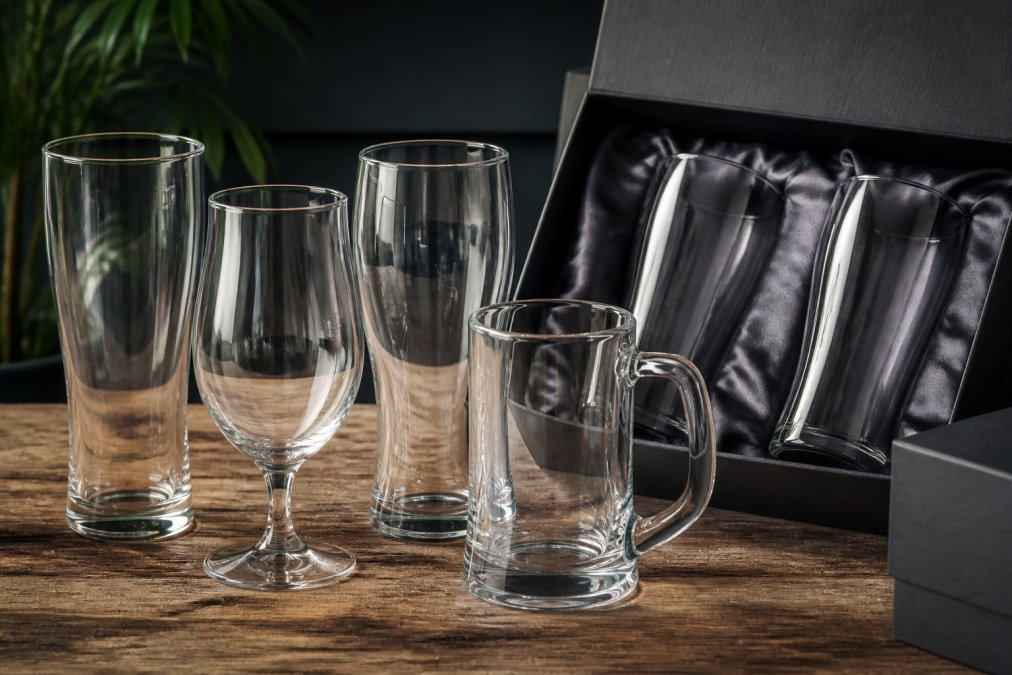
 how-to
How to Find High Quality Branded Beer Glasses
Table of Contents
- What Makes High Quality Branded Beer Glasses Stand Out
- Best Glassware Styles for Craft Beer
- Laser Engraving vs Screen Printing for Glassware
- Premium Glassware Presentation and Gift Boxing
- Key Specifications to Verify Before Ordering
- Glassware Maintenance for Venues and Hospitality
- Frequently Asked Questions
Last Updated: September 21, 2026
How to Find High Quality Branded Beer Glasses
Finding the right branded beer glasses for your brewery isn't just about picking a style you like. The glass you choose shapes how customers experience your beer. It affects aroma, flavour, head retention, and the overall impression your brand makes.
At The Glassware Company, we offer high-quality custom glassware that holds up under commercial use while showcasing your brand effectively.
Below, we'll walk you through the key factors that separate durable, professional glassware from options that fade, chip, or disappoint. We'll cover glass types, branding methods, and the specifications you need to verify before placing an order.
What Makes High Quality Branded Beer Glasses Stand Out
High-quality branded beer glasses combine three things: durable material, precise craftsmanship, and branding that lasts.
The glass itself matters most. Lead-free crystal resists thermal shock from cold beer and warm dishwashers. Standard soda-lime glass is cheaper but chips more easily and clouds after repeated washing.
Durability means your glassware survives commercial dishwashers, which run hotter and longer than home machines. Tempered glass is heat-treated to withstand extreme temperature changes without cracking.
Material and durability standards for commercial use
Lead-free crystal withstands thermal shock better than regular glass and maintains clarity through hundreds of wash cycles.
Tempered glass adds another layer of protection. It's treated at high temperatures to make it four to five times stronger than untreated glass. If it does break, it shatters into small, blunt pieces instead of sharp shards, which matters in hospitality settings.
For venues running high volume, dishwasher-safe ratings matter. Verify that your glassware is rated for commercial dishwashers. Some decorative glasses aren't, and they'll cloud or degrade quickly under those conditions.
Beer-clean glassware is essential. This means the glass is free from oils, residue, and any coating that affects head retention or flavour.
How glass shape affects aroma profile and mouthfeel
The shape of the glass controls how beer aromas reach your nose and how the liquid flows across your palate. A wider bowl releases more volatile compounds. A narrower rim concentrates aromas. The thickness of the glass rim affects mouthfeel directly.
Thicker rims are more durable. Thin rims chip more easily. For commercial settings, a medium rim thickness balances durability with the experience you want to create.
The base of the glass matters too. A weighted base reduces tipping and feels solid on the bar.
Best Glassware Styles for Craft Beer
Different beer styles perform best in different glasses. Matching the right glass to your beer maximises aroma, head retention, and flavour.
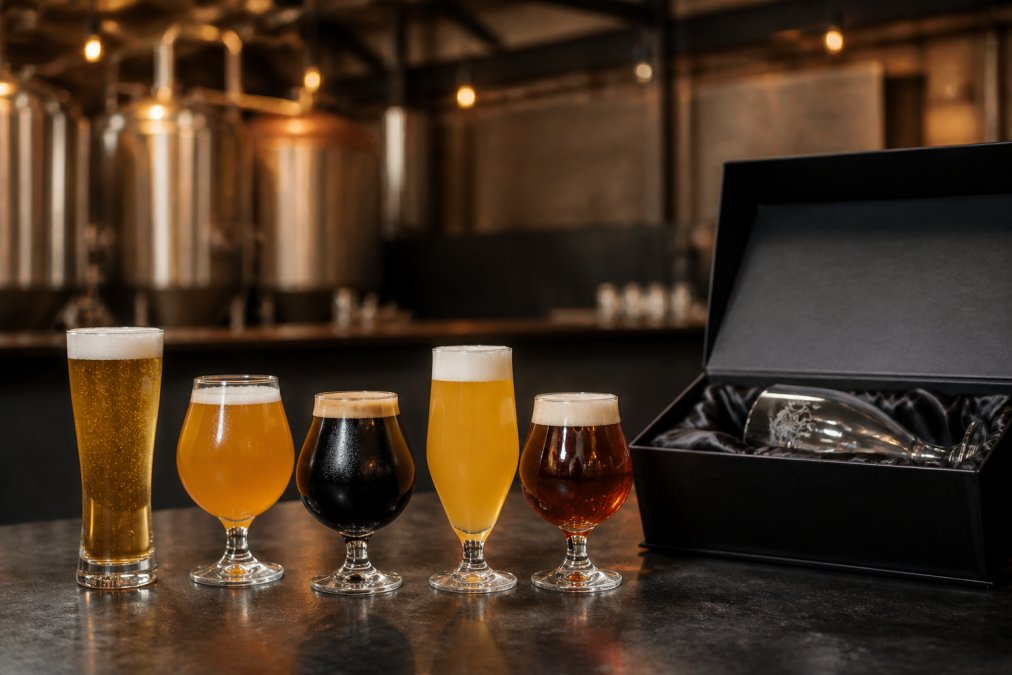
Pint glasses and schooners for everyday service
The pint glass is the workhorse of any brewery. It's versatile, durable, and instantly recognisable. A standard pint holds 568ml (20 fluid ounces) and works for most beer styles without embarrassing them.
Schooners are slightly smaller, holding around 425ml (15 fluid ounces). They're popular in casual settings and work well for sessions beers or when you want customers to order more frequently.
Both styles are tough. They survive drops, dishwashers, and years of daily use. They're also the most cost-effective to produce in bulk, which matters when you're ordering branded versions.
For branded pint glasses, screen printing is a common method. The logo sits on the lower third of the glass where hands grip it, keeping it visible but protected from wear.
Tulip and Teku glasses for specialty brews
Tulip glasses have a bowl that widens in the middle then narrows at the rim. This shape traps aromas while allowing a good head. They work beautifully for IPAs, Belgian ales, and any beer where aroma is central to the experience.
Teku glasses are newer to the market. They're designed specifically for craft beer evaluation. The shape maximises aroma release and allows you to appreciate the beer's full sensory profile. Breweries using Teku glasses signal that they take their product seriously.
Both styles are more delicate than pint glasses. They're better suited to tasting rooms and events than high-volume bar service. They also cost more to produce, so branded versions carry a premium.
Laser engraving works well on tulip and Teku glasses because the curved surfaces catch light and highlight the detail.
Snifters for high-alcohol and barrel-aged beers
Snifter glasses are short and wide, with a narrowing rim. They're designed to warm the beer in your hand and concentrate aromas. They're perfect for imperial stouts, barleywines, and anything aged in oak.
Snifters signal premium positioning. They're also less likely to be washed frequently, which means your branding stays crisp longer.
The wide bowl makes snifters suitable for intricate logo designs. Laser engraving shows off detail beautifully on snifter glass.
Laser Engraving vs Screen Printing for Glassware
Your branding method determines how long your logo lasts and how it looks over time.
Screen printing applies ink to the glass surface. Laser engraving removes a thin layer of glass to reveal the design underneath. Both methods work, but they have different strengths.
Durability and fade resistance in commercial dishwashers
Screen printing is vulnerable in commercial dishwashers. High heat and abrasive detergents gradually wear away the ink.
Laser engraving is permanent. The design is etched into the glass itself, so it can't fade or wash away.
For venues that wash glassware daily, laser engraving offers superior durability if you want your branding to last. Screen printing works better for promotional glasses that see occasional use or for event glassware that won't be washed repeatedly.
Logo clarity and design complexity considerations
Screen printing handles simple, bold designs well. Solid colours and thick lines reproduce cleanly. Fine details and gradients can blur or become muddy.
Laser engraving captures fine detail beautifully. Intricate logos, thin lines, and subtle shading all come through crisp and clear.
Colour is where screen printing wins. You can print full-colour designs. Laser engraving is monochromatic, it produces grayscale or silver tones depending on the glass colour.
For most brewery logos, laser engraving is a professional choice. It lasts longer and looks sharper. The Glassware Company specialises in laser engraving, delivering quality and durability.
Premium Glassware Presentation and Gift Boxing
How you present your branded beer glasses matters as much as the glasses themselves. Premium packaging elevates the entire experience.
Custom gift boxing transforms glassware from a promotional item into a memorable gift. The Glassware Company offers bespoke gift boxing for etched and branded glassware, with approximately 28 working days turnaround. This service ensures your brand makes a striking impression when the box opens.
Quality packaging protects the glassware during shipping and storage.
Consider the unboxing experience. Branded tissue, custom inserts, and protective padding all contribute to how the customer perceives your brand.
For corporate gifts and client appreciation, premium presentation is essential.
Key Specifications to Verify Before Ordering
Before you commit to an order, confirm these details with your supplier.
Batch consistency and colour matching across orders
Glassware colour can vary between batches, especially with clear or light-tinted glasses. Ask your supplier how they ensure consistency. Do they use colour-matching standards? Do they test samples before production?
Proofing and approval processes
A good supplier provides a proof before production begins. You should see exactly how your logo looks on the actual glass you're ordering.
Minimum order quantities and turnaround timeframes
Minimum order quantities vary widely. Some suppliers require 500 units. Others work with smaller runs. Ask what the minimum is for your chosen glass style and branding method.
Glassware Maintenance for Venues and Hospitality
Your branded glassware only looks good if it's maintained properly. Venues that treat their glassware well keep logos sharp and glass clear.
Frequently Asked Questions
How do I choose between laser engraving and screen printing for my branded beer glasses?
Laser engraving etches your logo directly into the glass surface, creating a permanent design that withstands frequent dishwashing and thermal shock. Screen printing applies ink to the surface, offering vibrant colours but requiring more careful handling. For high-volume hospitality use, laser engraving delivers superior durability. Screen printing works well for merchandise or limited runs where colour vibrancy matters more than longevity. Consider your venue's dishwashing frequency and design complexity when deciding.
What's the typical turnaround time for custom branded beer glasses?
Most custom glassware orders take between 4 to 8 weeks, depending on complexity, quantity, and customisation method. Rush options are often available at additional cost. Our custom manufactured gift boxing service, for example, operates on approximately 28 working day turnaround. Always confirm lead times with your supplier before committing to an event date, and plan accordingly if you need branded glasses for a specific launch or promotion.
How can I ensure my custom glassware design stays consistent across multiple reorders?
Request a detailed approval process before production begins. Provide high-resolution artwork files and ask your supplier to deliver digital proofs for your sign-off. Establish a colour reference standard and ask the supplier to document it for future batches. For large reorders, request samples from the first batch to verify consistency. Reputable suppliers maintain batch records and can reference previous production specifications, reducing the risk of colour or design drift between orders.
What material should I choose for commercial-grade branded beer glasses?
Lead-free crystal and tempered glass are the most durable options for hospitality environments. Lead-free crystal offers elegance and superior clarity whilst remaining dishwasher-safe. Tempered glass resists thermal shock from rapid temperature changes and is highly resistant to chipping. Both materials meet food-safety standards and handle frequent commercial washing. Avoid standard soda-lime glass for high-volume venues, as it's more prone to thermal shock damage and chipping during service.