 comparison
Promotion Products vs Engraveworks: Glassware Review 2026
Table of Contents
- Promotion Products vs Engraveworks: Head-to-Head Comparison
- Branding Methods: Laser Engraving vs Full-Colour Printing
- Best Laser Engraved Glassware for Corporate Gifts
- Corporate Gift Branding Best Practices
- Eco-Friendly Custom Wine Glasses Alternatives
- Durability and Quality Assurance in Custom Glassware
- Turnaround Times, Minimum Orders, and Scalability
- Conclusion
Last Updated: August 19, 2026
Promotion Products vs Engraveworks: Head-to-Head Comparison
When you're sourcing custom glassware for corporate gifts or promotional campaigns, the vendor you choose shapes everything from artwork quality to delivery timelines. Promotion Products and Engraveworks are two established players in the Australian promotional glassware market, each serving businesses that need reliable engraving or printing services. The Glassware Company, however, offers a different value proposition: bespoke, high-quality custom glassware with years of industry expertise in both laser engraving and full-colour printing techniques.
This comparison focuses on what matters most to decision-makers: branding method precision, product durability, scalability for different order sizes, and the consistency you can expect across batches. We'll walk you through the key differences so you can make an informed choice about which vendor aligns with your requirements.
Branding Methods: Laser Engraving vs Full-Colour Printing
Laser engraving and full-colour printing represent fundamentally different approaches to custom glassware branding, each with distinct trade-offs for durability, visual impact, and cost.
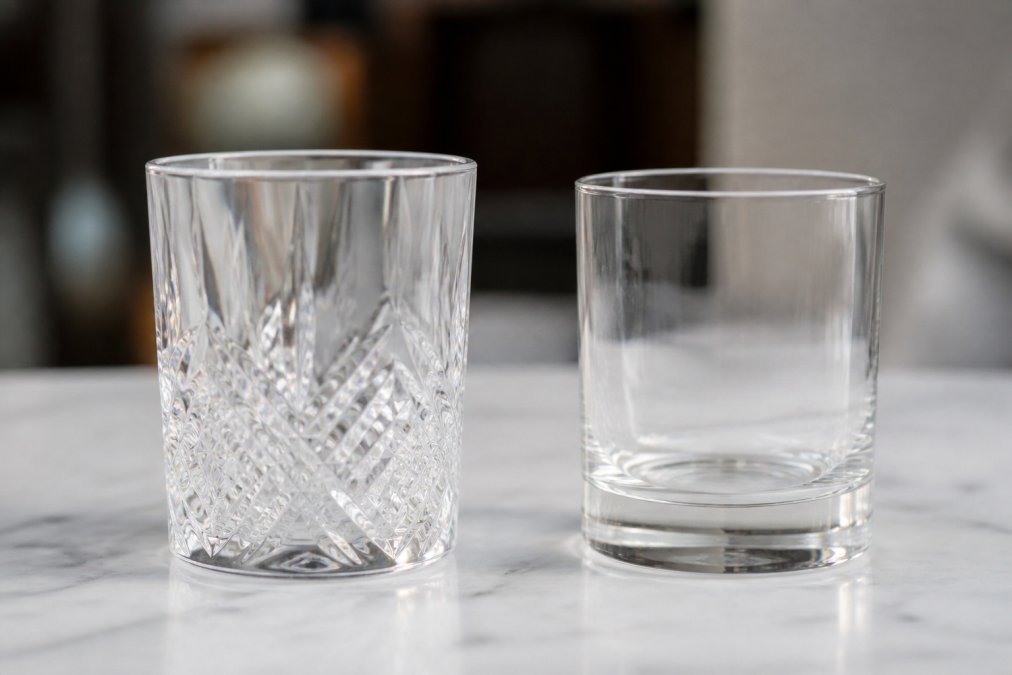
Laser engraving works by vaporising the surface of glass to create a permanent mark. The process produces a frosted or etched appearance that's highly durable, the mark is part of the glass itself, not applied to it. This method excels for corporate logos, monograms, and designs that benefit from a sophisticated, understated aesthetic. The engraving won't fade, peel, or wear away in commercial dishwashers because there's no coating to degrade.
Full-colour printing applies pigmented ink directly to glass, allowing photographic detail, gradient effects, and vibrant multi-colour designs. This method suits promotional campaigns where visual impact and brand colour accuracy are non-negotiable. The trade-off: printed designs can fade or chip with repeated washing, particularly in high-temperature commercial dishwashers. The longevity depends heavily on the quality of the ink and the curing process used by the vendor.
The real decision hinges on your use case. If you're creating keepsake wine glasses for a vineyard's tasting room, laser engraving builds perceived value and longevity. If you're producing promotional merchandise with a full-colour logo for a brand activation event, printing delivers immediate visual impact, though you'll need to set expectations about lifespan.
Many businesses make the mistake of choosing based on initial cost alone. A vendor offering cheaper full-colour printing might deliver faded designs after three months of regular washing. The Glassware Company specialises in both methods, which means you're not locked into one approach; the recommendation comes down to your specific product and use case.
Best Laser Engraved Glassware for Corporate Gifts
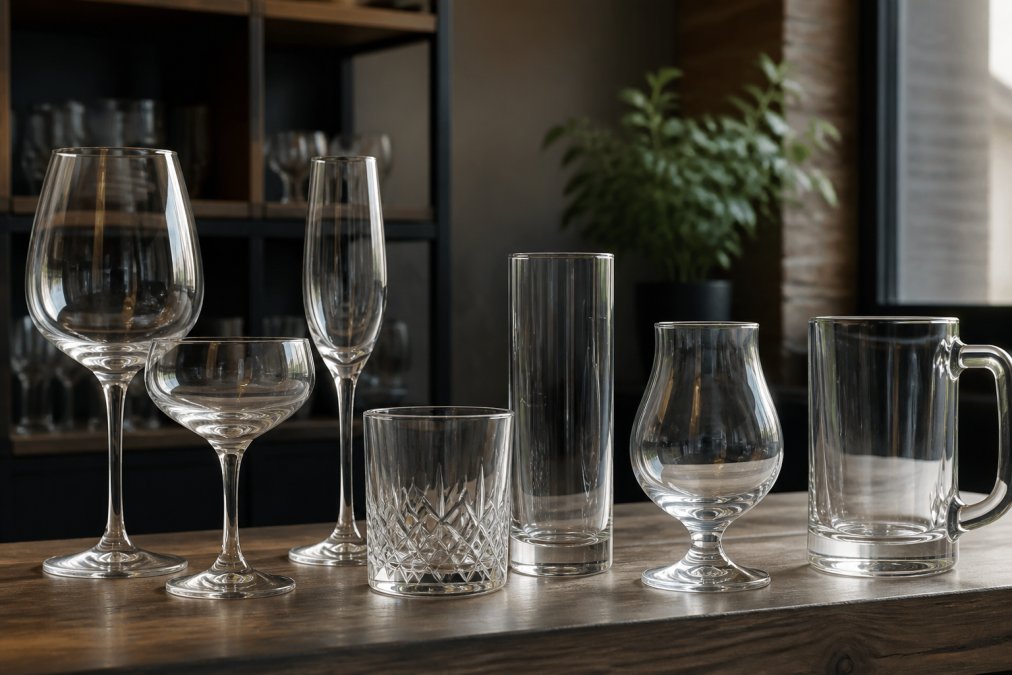
Laser engraving works best on glassware styles where the frosted aesthetic enhances rather than compromises the design. The most effective choices are wine glasses, champagne flutes, beer steins, and whisky tumblers, all categories where an engraved logo or monogram reads as premium rather than industrial.
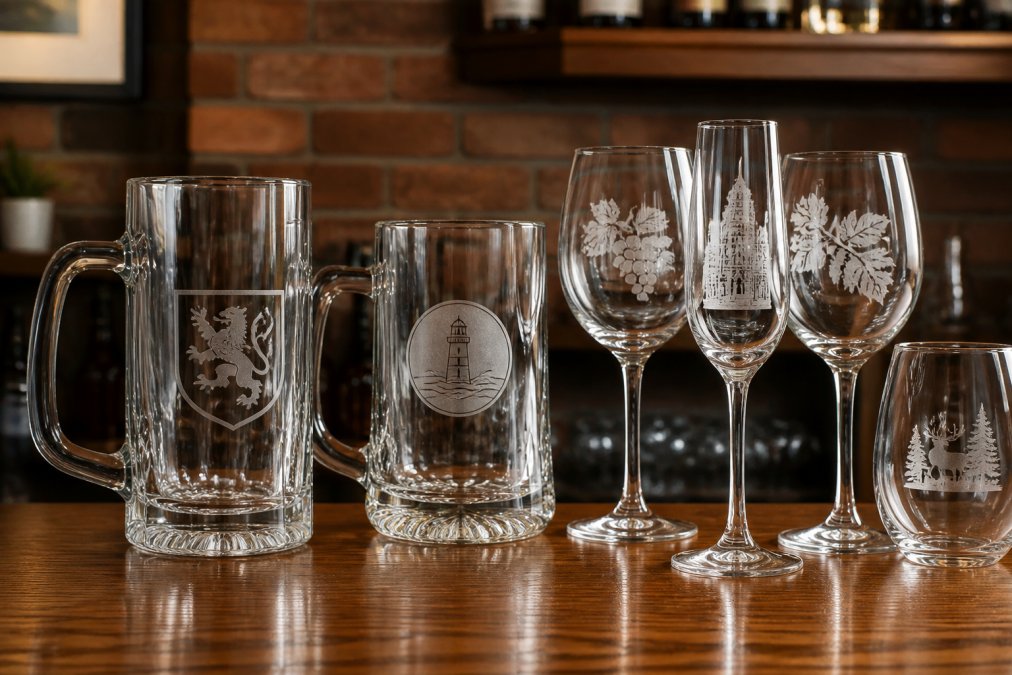
For corporate gifting specifically, champagne flutes and wine glasses dominate because they signal luxury and occasion. An engraved corporate logo on a flute feels like a thoughtful keepsake; the same logo on a disposable cup feels cheap. The Glassware Company maintains a large range of styles, which means you're not forced into a one-size-fits-all aesthetic.
Beer steins and pint glasses work equally well for breweries and hospitality venues. The larger surface area accommodates detailed logos without overcrowding, and the engraved finish suggests craftsmanship rather than mass production. Whisky tumblers and rocks glasses suit legal firms, finance companies, and luxury brands, the engraved monogram or company crest conveys exclusivity.
The mistake most businesses make is choosing a glassware style first, then trying to fit a logo onto it. Reverse the process: start with your brand identity and logo complexity, then select glassware that showcases it. A detailed, multi-colour logo doesn't work on laser engraving; a simple, bold logo can look stunning. If your logo is complex, you'll need full-colour printing instead, and that's where vendor expertise becomes critical. The Glassware Company's team can advise which branding method maximises your logo's visual impact on your chosen glassware style.
Corporate Gift Branding Best Practices
Effective corporate gifting relies on three elements working in concert: product quality, artwork execution, and brand recall.
Artwork submission and proofing is where most relationships falter. A vendor that requires vector files and provides a detailed proofing process before production protects both parties. You need to see exactly how your logo will appear on the glass, not a generic mockup, but a production-ready proof. The Glassware Company's approach centres on ensuring your artwork is on point before anything goes into production, which directly addresses the customer concern about design consistency.
Logo placement matters more than most businesses realise. A logo placed too high on a wine glass gets obscured when the glass is held. Placement too low and it disappears into the base. For beer steins, front-and-centre placement maximises visibility; for champagne flutes, consider wrapping the logo around the bowl for 360-degree brand exposure. The vendor you choose should guide this decision rather than defaulting to whatever's easiest to produce.
Batch consistency is the silent killer of repeat orders. When you reorder the same design three months later, you expect identical results. Inconsistency, different engraving depth, slight colour shifts in printing, or misaligned logos, undermines the professional impression you're trying to create. This is why choosing a vendor with documented quality assurance processes matters. The Glassware Company's years of industry experience mean they've built systems to maintain consistency across batches, which directly addresses the customer concern about colour and design variations across reorders.
Minimum order quantities and turnaround times shape the entire campaign timeline. A six-week lead time is standard for custom glassware, but vendors who can turn around smaller orders faster offer flexibility for businesses testing a new promotional strategy. The Glassware Company's approach accommodates varying order sizes without punitive setup fees, which is critical for small breweries and wineries that don't need 1,000 units.
Eco-Friendly Custom Wine Glasses Alternatives
Sustainability is becoming a non-negotiable factor for corporate gifting, particularly for wineries, breweries, and hospitality businesses that position themselves as environmentally conscious.
Traditional glassware is infinitely recyclable, glass can be recycled repeatedly without degradation, and the recycling infrastructure in Australia is well-established. However, the environmental cost of production (energy-intensive furnaces, raw material extraction) and shipping weight means that sustainability considerations extend beyond the material itself.
Recycled glass options are increasingly available. Some vendors now produce glassware from post-consumer recycled glass, which reduces the energy required for production compared to virgin glass. The visual quality is identical to standard glassware; the environmental footprint is measurably lower. If your brand values sustainability, this is a straightforward way to communicate that commitment through your promotional gifts.
Reusable alternatives to single-use plastic cups, which is what promotional glassware fundamentally replaces, carry an implicit sustainability message. By gifting durable, engraved glassware instead of disposable merchandise, you're positioning your brand as invested in reducing waste. This resonates particularly strongly with younger demographics and environmentally conscious clients.
Longevity as sustainability: A custom wine glass that lasts 10 years is more sustainable than cheap promotional merchandise that ends up in landfill within months. Laser engraving guarantees durability; full-colour printing requires careful selection of vendors who use fade-resistant inks and proper curing processes. The Glassware Company's focus on high standards in product quality directly translates to glassware that lasts, which is the most meaningful sustainability contribution you can make.
The trade-off: eco-friendly glassware options sometimes carry a small premium over standard options. That premium is usually justified by reduced environmental impact and the durability benefit, which extends the lifespan of your promotional investment.
Durability and Quality Assurance in Custom Glassware
Durability concerns centre on two failure modes: engraving or printing wearing away, and the glass itself becoming compromised (chips, cracks, cloudiness).
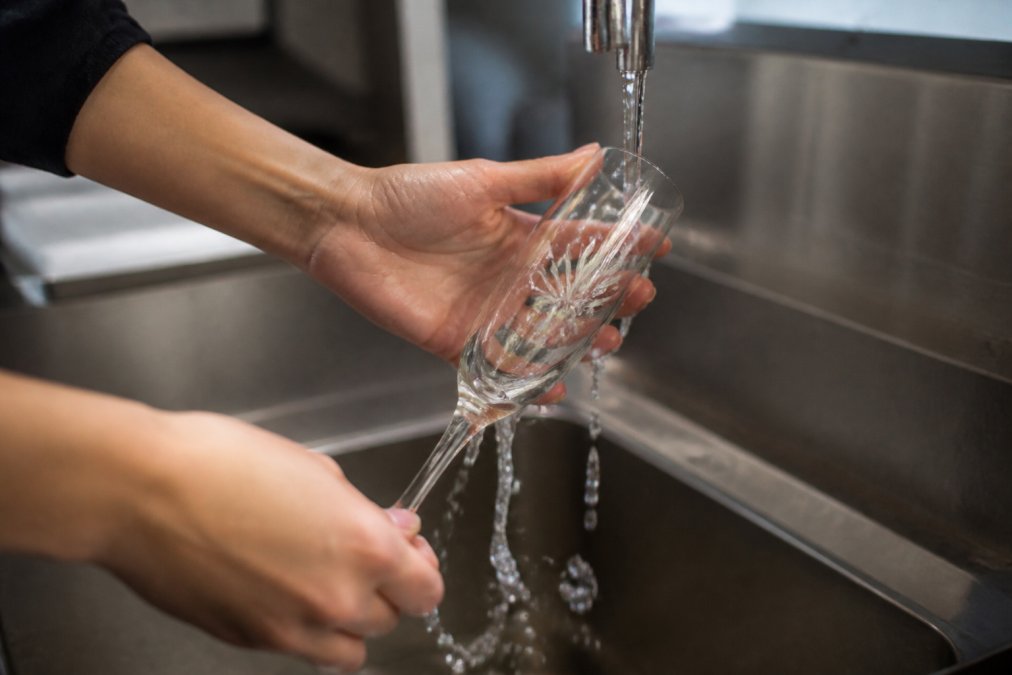
Laser engraving durability is straightforward: the mark is permanent because it's part of the glass structure. Laser-engraved glassware survives commercial dishwashers, high-temperature washing, and decades of regular use without fading or peeling. The only failure mode is physical damage to the glass itself, chips or cracks, which is a handling issue, not a branding issue.
Full-colour printing durability depends entirely on the vendor's process. High-quality printing uses UV-cured inks and multiple protective coatings, which can withstand commercial dishwashing for 2-3 years before noticeable fading. Lower-quality printing fades within months. This is why vendor selection is critical for printed glassware. The customer concern about etching or engraving fading after a few months of regular washing typically indicates a vendor using substandard printing processes rather than true laser engraving.
Quality assurance processes separate reliable vendors from those cutting corners. A vendor should:
- Inspect every batch for surface defects, engraving depth consistency, and colour accuracy
- Maintain documentation of quality standards for each production run
- Offer a clear process for addressing defective items
- Use consistent equipment and materials across production cycles
The Glassware Company's commitment to high standards in product quality and customer service includes these elements. When you're evaluating vendors, ask specifically about their QA process. A vague answer is a red flag.
Glass quality itself matters. Some vendors use thin-walled glass that's prone to chipping; others use thicker, more durable stock. For corporate gifting, thicker glass signals higher quality and lasts longer. It's worth asking about glass thickness and material composition when comparing vendors.
Turnaround Times, Minimum Orders, and Scalability
Turnaround time and minimum order requirements are operational constraints that often determine whether a vendor is viable for your specific project.
Standard turnaround for custom glassware is 4-6 weeks from artwork approval to delivery. This timeline accounts for design finalisation, production setup, engraving or printing, quality inspection, and packaging. Vendors who promise faster turnaround typically sacrifice quality or charge rush fees.
Rush orders are possible but come with cost implications. A 2-week turnaround might incur a 25-50% premium, depending on the vendor. If your event is six weeks away, plan accordingly; don't assume you can compress the timeline without penalty.
Minimum order quantities vary significantly. Some vendors enforce strict minimums (500 or 1,000 units) with setup fees for smaller runs. Others, like The Glassware Company, accommodate smaller orders without punitive fees, which is critical for small breweries, wineries, and businesses testing a new promotional strategy. If you're ordering 50 custom beer steins for a tasting event, you need a vendor who can handle that without charging setup costs that make the project uneconomical.
| Consideration | Impact on Decision | Best Practice |
|---|---|---|
| Turnaround time | Plan campaigns 6+ weeks in advance | Confirm timeline before committing to artwork |
| Minimum order | Affects total cost per unit | Negotiate minimums for repeat orders |
| Scalability | Ability to reorder without friction | Choose a vendor who tracks your specifications |
| Rush fees | Budget impact for urgent campaigns | Avoid relying on rush orders; plan ahead |
Scalability is the long-term consideration. If you're planning quarterly reorders of the same design, you need a vendor who documents your specifications, maintains consistent production parameters, and can reliably reproduce your design without variation. The customer concern about colours coming back differently on reorders directly reflects poor vendor documentation and communication. The Glassware Company's approach to custom glassware includes consistent tracking of specifications, which ensures that your second order matches your first.
Small businesses often underestimate the value of a vendor who can scale with them. Starting with 100 units and growing to 500 units requires a vendor who can accommodate both without friction. Larger vendors sometimes lose interest in small orders; boutique vendors with The Glassware Company's customer-focused approach maintain quality regardless of order size.
Conclusion
When choosing between promotional glassware vendors, the decision ultimately hinges on three factors: branding method precision (laser engraving vs full-colour printing), your ability to scale orders without friction, and consistency across batches. Promotion Products and Engraveworks both serve the market, but The Glassware Company differentiates through expertise in both engraving and etching techniques, a large range of styles from beer steins to champagne flutes, and a customer-focused approach that prioritises artwork accuracy and batch consistency. For corporate gifting that needs to make a striking impression and stand the test of time, The Glassware Company's bespoke approach ensures your brand stands out. Get started with The Glassware Company's online quote process to discuss your custom glassware requirements today.
Frequently Asked Questions
How does laser engraving compare to full-colour printing for promotional glassware?
Laser engraving creates permanent designs by removing a thin layer of the glass surface, making it ideal for logos and monograms. The result is durable and dishwasher-safe. Full-colour printing offers more vibrant graphics but may fade with repeated washing in commercial dishwashers. Choose laser engraving for longevity and professional brand presentation; choose full-colour when you need photographic detail or complex artwork that engraving cannot replicate.
What makes custom laser engraved glassware suitable for corporate gifts?
Laser-engraved glassware creates a premium, lasting impression because the design is etched permanently into the glass. It won't peel, fade, or wear off after months of use or commercial dishwashing. For corporate gifting, this durability signals quality and investment in the recipient's experience. The professional appearance of engraved logos also reinforces brand identity every time the glass is used, making it a cost-effective marketing tool with high perceived value.
Are there eco-friendly custom wine glasses alternatives I should consider?
Yes. Look for suppliers offering recycled or sustainably sourced glass. Some producers use water-based inks for printing and minimise packaging waste. Laser engraving itself is an eco-friendly branding method because it requires no chemical inks or solvents, only laser energy. When sourcing eco-friendly custom wine glasses alternatives, verify the supplier's material sourcing and ask about their carbon footprint for production and shipping. Sustainable options cost more upfront but align with corporate environmental commitments.
What should I check before ordering custom glassware to avoid disappointment?
Request a digital proof before production begins. Verify the artwork submission process, ask whether they accept vector files or high-resolution images, and what file formats they prefer. Confirm turnaround time and whether rush orders incur extra charges. Ask about their quality assurance process and what happens if the final product doesn't match your approval. Clarify their policy on minimum orders, especially if you're a small business or running a trial order. Finally, ask for customer testimonials or examples of similar projects.
This article was written using GrandRanker