 Listicle
Wine Glass Presentation Ideas That Elevate Winery Events
Last Updated: November 25, 2026
Quick Summary
Wine glass presentation starts with matching glass shape to wine style: wider bowls for reds, narrower bowls for whites, and flute or tulip shapes for sparkling. For a polished winery event, coordinate a matched set, set glasses in flight order with a hand's width between them, and finish with custom engraved glasses or gift boxing.
- Stemless glasses suit casual standing events where breakage risk is higher and guests move around.
- Plan one pouring station per 20 to 30 guests, each with its own ice bucket, water jug, dump bucket and cloth.
- Stage clean glasses upside down on a lint-free cloth and never stack stemmed glasses bowl-in-bowl.
- Custom manufactured gift boxing for etched and branded glassware has an approximate turnaround of 28 working days.
- Stemless glasses and wider bases make tasting more accessible for guests with limited grip or using wheelchairs.
Table of Contents
- Why Glassware Sets the Tone at a Winery Event
- Matching Glass Shape to Wine Style and Tasting Purpose
- Wine Tasting Table Setup: Placement, Flights and Flow
- Wine Glass Display Ideas for Tasting Rooms and Bars
- Custom Engraved Wine Glasses as a Branding Tool
- Wine Tasting Party Favours and Premium Gift Boxing
- Pro Tips for Large Groups, Accessibility and Reuse
- Requesting a Quote for Your Event Glassware
- Frequently Asked Questions
Why Glassware Sets the Tone at a Winery Event
Wine glass presentation is the first physical detail guests notice at a winery event. Before the first pour, the glass signals whether the afternoon will feel considered or thrown together.
A wine glass is the only object a guest holds for the entire event, from the tasting table to the barrel hall to the garden. Every photograph includes it.
Most guides stop at centrepieces and tablecloths.
Below, we break down how to match glass shape to wine style, set a tasting table that flows, display glassware in a tasting room, and turn etched glasses into favours guests take home.
Matching Glass Shape to Wine Style and Tasting Purpose
The right glass shape depends on what you are pouring and why. A tasting flight built around aroma needs different stemware from a relaxed lunch service.
Stemware Choices for Reds, Whites and Sparkling
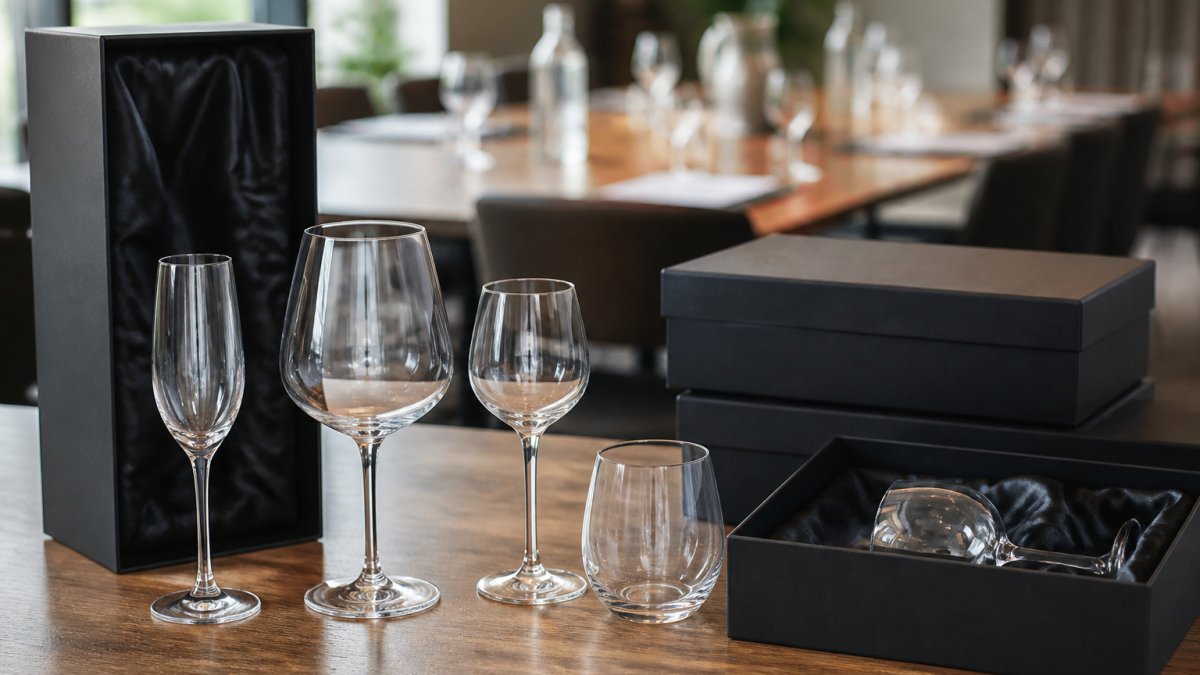
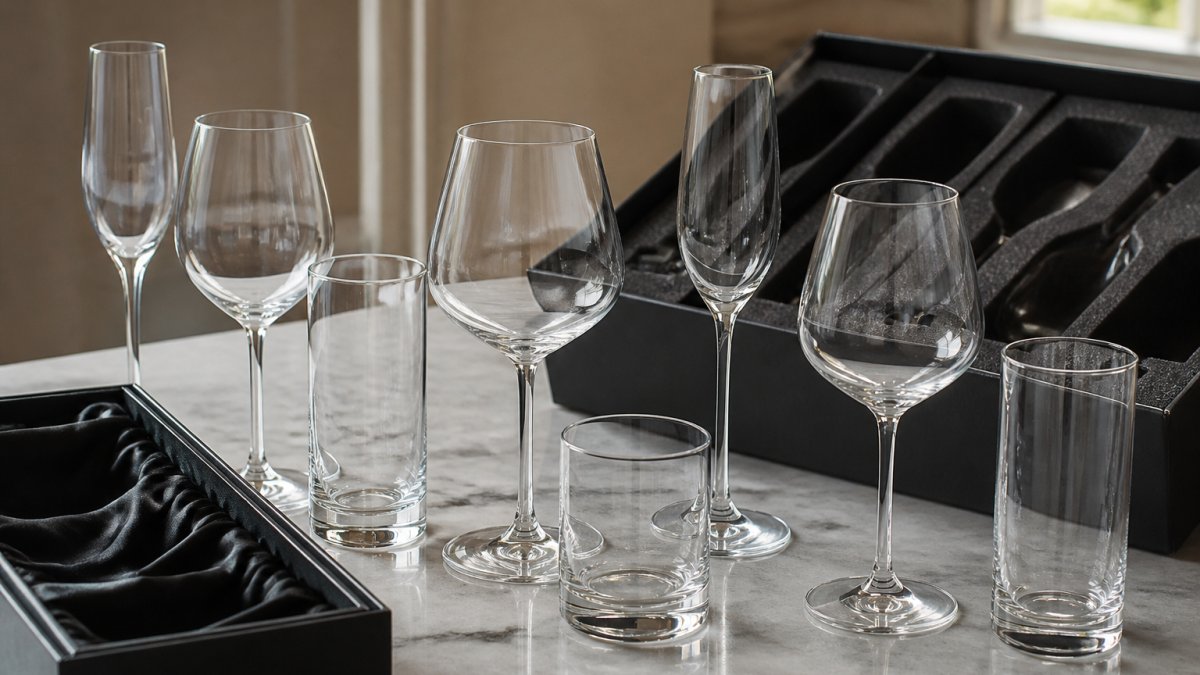
Reds suit a wider bowl that lets the wine breathe and directs aroma toward the nose; whites and lighter styles suit a narrower bowl that preserves chill. Sparkling wines need a flute or tulip shape to hold bubbles longer.
Coordination matters as much as shape. A matched set reads as intentional and calm, while mismatched glassware scatters the eye. For a guided flight, one style per wine keeps the focus on what is in the glass.
When to Use Stemless or Universal Glasses
Stemless glasses work for casual, standing events where guests move around and breakage risk is higher. They are easier to carry, stack and pack down.
A universal glass is the practical middle ground. One shape that handles reds, whites and most styles simplifies stock, washing and storage, and removes the sorting step at the end of the night.
Here is how glass shape maps to what you are pouring and how guests will move through the room.
| Glass type | Best for | Key difference |
|---|---|---|
| Wider bowl stemware | Reds | Lets wine breathe, directs aroma to nose |
| Narrower bowl stemware | Whites and lighter styles | Preserves chill |
| Flute or tulip | Sparkling wines | Holds bubbles longer |
| Stemless | Casual standing events, higher breakage risk | Easier to carry, stack and pack; hands warm the bowl |
| Universal | Reds, whites and most styles | One shape simplifies stock, washing and storage |
Wine Tasting Table Setup: Placement, Flights and Flow
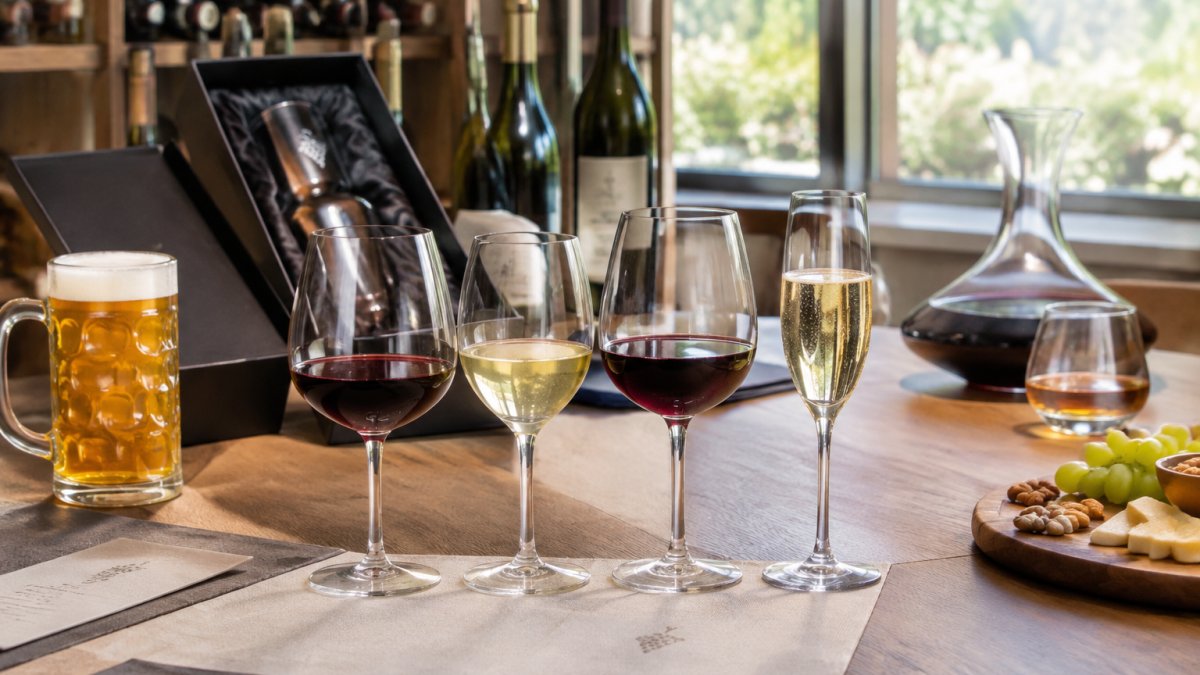
A well-planned wine tasting table setup moves guests through the flight without confusion. Everything a guest needs should sit within reach, in the order they will use it: the glass lands first, the tasting mat or notes sit beside it, and the food pairing lives at the edge of the setting.
Placement mechanics that survive a busy service
Set glasses slightly to the right of each mat, with the flight order running left to right. Leave a gap of roughly a hand's width between glasses so servers can pour without knocking the row. For seated tastings, a small water glass and a shared spittoon keep the flow steady.
For a standing or roaming format, work in stations rather than one long table. One pouring station per 20 to 30 guests, each with its own ice bucket, water jug, dump bucket and cloth, keeps queues short and stops a single spill from taking out an entire row.
Flights, sequencing and the visible order
Flights work best when the sequence is visible. Numbered tasting mats, printed order cards or a chalkboard at the head of the table tell guests where to start. For a themed tasting, group glasses by style or region so the table tells the story.
A practical sequence runs sparkling first, then whites and lighter reds, then fuller reds, then dessert styles last. For six wines, plan one glass per wine plus a water glass, and stage empty glasses in reverse order so the first wine is nearest the guest. Pre-pouring the first glass removes the opening bottleneck.
Staging, replenishment and the back table
Keep a back table out of guest sight for clean glasses, spare mats and replacement bottles. Keeping a reserve of spare glasses covers breakage and mid-event swaps. Stage clean glasses upside down on a lint-free cloth, and never stack stemmed glasses bowl-in-bowl, because the rim is where chips start.
Service flow for larger rooms
If the event includes a food pairing, place the food at the edge of the setting and time it to arrive with the middle of the flight rather than the first pour, so the table does not feel crowded at the start.
Wine Glass Display Ideas for Tasting Rooms and Bars
Wine glass display ideas should do two jobs at once: make the glassware look good and make it easy to grab. A tasting room bar that displays glassware well signals quality before a guest has tasted anything. For more inspiration, see our guide to 10 unique wine glass designs for cellar doors.
Back-bar shelving with under-shelf lighting is the classic move. Etched logos catch the light and read clearly from across the room.
Bamboo wine holders and simple wall rails work well for smaller tasting rooms where floor space is tight. A glass rail above the bar keeps stemware inverted and dust-free while freeing up the counter.
Watch out: displaying glasses upside down on a rail for long periods can trap stale air in the bowl if the rail sits near the kitchen or a bin.
Custom Engraved Wine Glasses as a Branding Tool
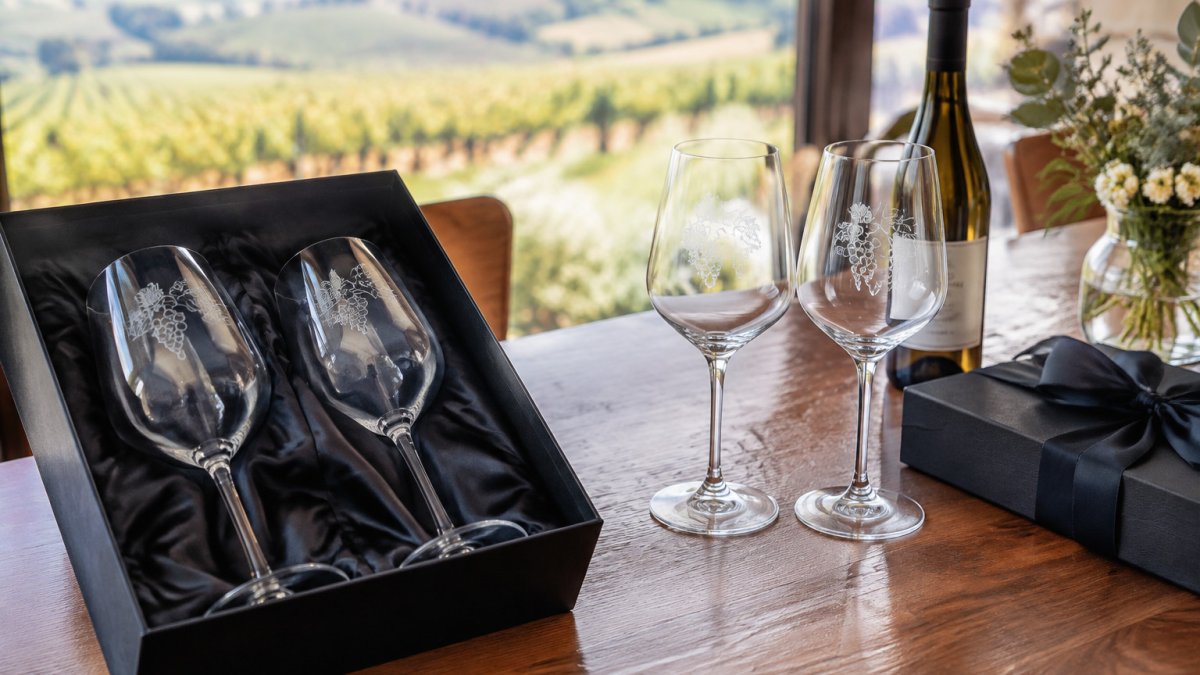
Custom engraved wine glasses turn a disposable event detail into a lasting brand asset. Etching is a permanent finish, so the winery's mark stays on the glass through regular use. If you want the full business case, our article on the benefits of custom engraved stemware for business events covers it in detail.
Design choices matter. A clean logo etched on the bowl reads well in photographs and low light, while busy artwork on a curved surface can distort.
Consistency across reorders is the other half of the job.
Wine Tasting Party Favours and Premium Gift Boxing
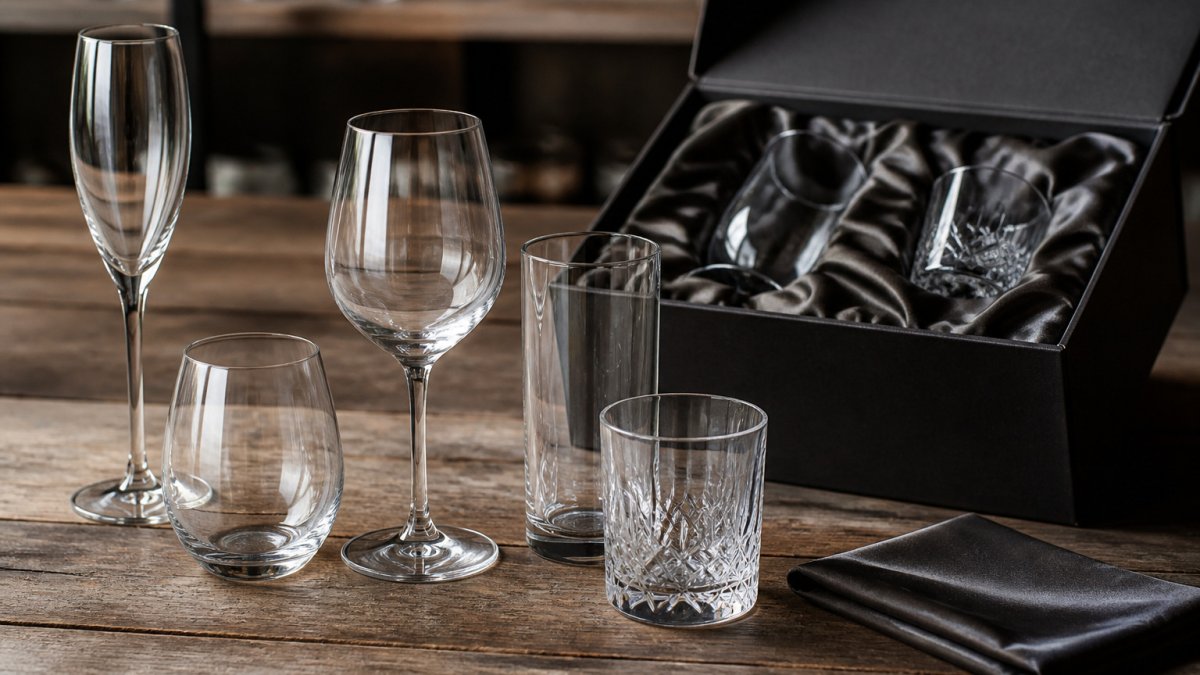
Wine tasting party favours work best when they feel like a gift rather than a giveaway. A branded glass handed over loose gets tucked into a bag and forgotten; the same glass in a custom gift box becomes something guests keep on a shelf.
For etched and branded glassware, we offer custom manufactured gift boxing as a premium presentation option alongside the glassware itself. Thoughtful boxing gives etched and branded glassware a polished finish, making it easier to present a personalized gift with the same care that goes into the wine glass itself.
For the full process, read our guide to custom gift boxing for etched glassware.
Pro Tips for Large Groups, Accessibility and Reuse
Large-group events expose every weak point in a glassware plan. The practical answer is to standardise: one or two glass shapes, a clear flight order and a serving station that keeps refills moving. For durable options, our guide to selecting durable stemware for catering events covers the trade-offs.
Quantities and breakage planning
Work out glass numbers first. Plan one glass per wine per guest, plus a water glass, plus a spare allowance for breakage and swaps.
Breakage clusters at three points: the pass, the dump bucket and the end-of-night clear. Reduce it by keeping dump buckets wide-mouthed and at table height, clearing glasses in trays rather than by hand, and washing in the order the glasses were used.
Washing, drying and storage between events
Reusable glassware only pays off if the wash and store cycle is planned. Stemmed glasses need a rack that holds them by the foot rather than the bowl. Dry glasses upside down on a lint-free cloth and store them in purpose-built glass racks, not cardboard, which holds moisture and dust.
Watch out: etched glasses washed at very high temperatures with harsh detergents can dull over time. Use a detergent rated for glassware and keep the rinse cycle clean, and the etching will stay crisp across seasons.
Accessibility and inclusive presentation
Accessibility is where most event guides stop short. Stemless glasses suit guests with limited grip strength, and lighter glasses are easier to lift. Wider bases reduce tipping for guests using wheelchairs or seated at low tables.
Clear labelling matters as much as the glass itself. Large-print tasting cards, high-contrast text and simple numbering help guests with low vision follow the flight.
For guests with sensory sensitivities, offer a smaller pour and a covered or lidded water glass, and keep strong-smelling food away from the tasting row.
Reuse, rentals and the low-waste option
Reuse is the sustainable option and the cheaper one over time. Etched glasses that come back to the winery can be washed, stored and used again, and any that go home with guests keep the brand in circulation. Plan storage before the event so glasses are packed safely for the next one.
For recurring events, owning a standardised set usually wins on cost and consistency.
Requesting a Quote for Your Event Glassware
The fastest way to lock in glassware for a winery event is to start the quote early. Our custom glassware turnaround times guide explains what to expect at each stage, from artwork approval to delivery.
When you request a quote, have your glass style or styles, quantity, event date and artwork ready so we can advise on what is achievable in your timeframe.
Planning glassware for a winery event comes down to a handful of decisions made early: the right shapes for your wines, a table setup that flows, and a presentation that carries your brand home with guests.
Frequently Asked Questions
How should wine glasses be presented at a tasting event?
Line glasses up in tasting order, lightest wine first, so guests taste from left to right without moving bottles around. Place each glass on a tasting mat with a printed tasting note, and keep a water glass and spittoon within reach. For larger groups, pre-pour flights onto trays before guests arrive so the room stays calm. Custom engraved wine glasses with your logo on the base also double as a keepsake and cut down on glass identification confusion.
What type of glass is best for a winery tasting?
A universal stemmed glass with a tulip-shaped bowl handles most varieties well and is the practical choice when one glass must serve a whole flight. Use narrower flutes for sparkling and wider bowls for bold reds where the tasting focuses on one style. Stemless glasses suit casual, standing events and outdoor settings because they tip less easily. Match the glass to how guests will move through the room, not just to the wine.
How can wineries personalise wine glasses for an event?
Etching or engraving your logo, event name or artwork directly onto the glass gives a durable finish. The Glassware Company etches or engraves glassware to your artwork and offers custom manufactured gift boxing for a premium presentation option, with an approximate 28 working day turnaround. Request a quote early so proofing and production fit your event date.
How do you display wine glasses as event favours?
Present each guest's glass at their place setting or hand it over in branded gift boxing at the end of the tasting. Add a personalised ribbon, a wine glass charm or a small tasting card so the favour feels considered rather than an afterthought. Gift boxing lifts the perceived value and protects the glass on the trip home. Order favours alongside your service glassware to keep the design consistent across the event.