 how-to
How to Select Varietal-Specific Wine Glasses for Wholesale
Table of Contents
- Understanding Varietal-Specific Wine Glasses for Wholesale
- Selecting Glasses for Red Wines vs White Wines
- Custom Etched Wine Glasses for Wineries and Hospitality
- Wholesale Glassware for Hospitality Venues
- Branded Glassware Lead Times and Custom Gift Boxing
- Universal vs Varietal-Specific Glasses for Bulk Orders
- Evaluating Glass Quality, Crystal vs Standard Glass
- Conclusion
- Frequently Asked Questions
Last Updated: September 22, 2026
Understanding Varietal-Specific Wine Glasses for Wholesale
Learning how to select varietal specific wine glasses for wholesale requires understanding how glass shape directly affects what your guests taste and smell. Bowl diameter, rim width, and stem length are functional specifications that change the drinking experience, and these details compound across your entire operation.
At The Glassware Company, we work with hospitality venues and wineries to source custom etched wine glasses that match their brand identity and wine service standards. Varietal-specific glasses show up immediately in guest perception and repeat business.
Why bowl shape and rim diameter matter
Bowl shape controls how wine aerates as it sits in the glass. A wider bowl exposes more surface area to oxygen, which softens tannins in red wines and opens up aromatic compounds. A narrower bowl concentrates aromas and maintains acidity in delicate white wines.
Rim diameter affects where wine first touches your palate. A wider rim spreads wine across more taste receptors, while a narrower rim directs flow to the tip of the tongue, where sweetness registers first.
When ordering wholesale, consistency is critical. Every glass in your shipment must match its siblings in bowl volume, rim width, and stem thickness, as variability creates an unprofessional service experience.
The role of aeration in wine service
Red wines benefit from larger bowl surfaces that expose tannin structures to oxygen, softening harsh edges and releasing deeper fruit notes. White wines and sparkling wines need less aeration, so their glasses feature smaller bowls that preserve delicate aromatics and maintain carbonation.
For hospitality venues, the aeration profile of your glassware affects how quickly wines open up during service. The right glass allows guests to experience the wine as the winemaker intended.
Selecting Glasses for Red Wines vs White Wines
Red and white wine glasses serve fundamentally different purposes, critical when ordering glassware for a beverage program featuring both.
Red wine glasses: managing tannin structure and aroma
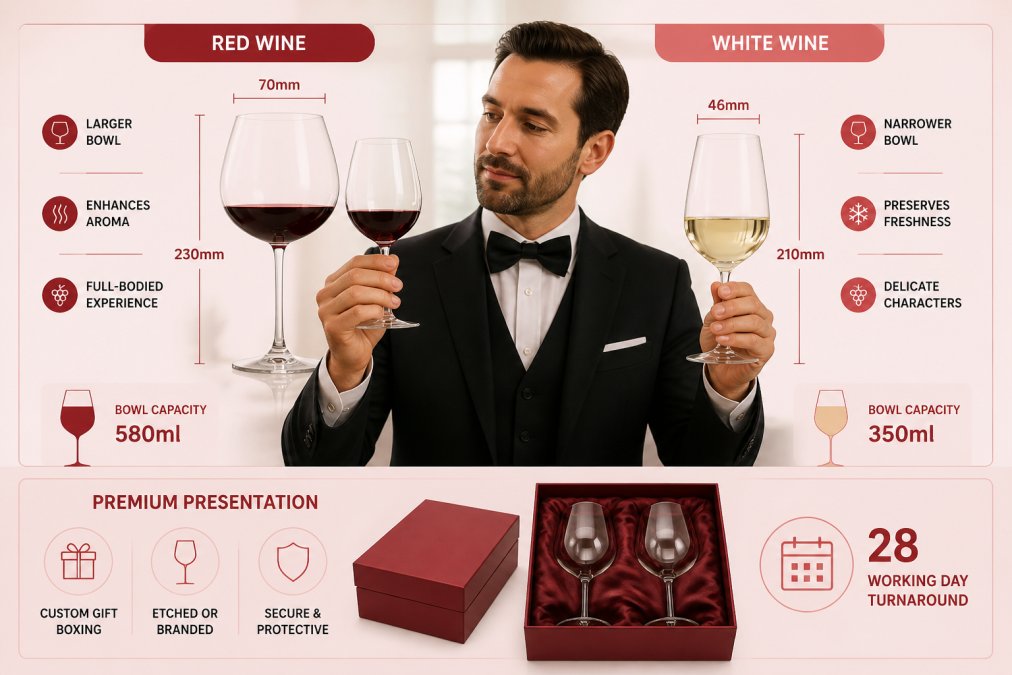
Red wine glasses feature a larger bowl (typically 450-750 ml) that allows tannins to soften through oxygen exposure and releases the wine's aroma profile to the drinker's nose.
For wholesale orders, red wine glass durability matters because larger bowls create more stress points during commercial dishwasher cycles and wider rims are more prone to chipping. Custom etched red wine glasses need strong etching that withstands repeated washing.
When selecting red wine glasses for a winery tasting room or upscale restaurant, consider the specific varietals you serve. If your venue serves multiple red varieties, a universal red wine glass is often more practical than buying separate glasses for each varietal.
White wine glasses: preserving acidity and delicate notes
White wine glasses have a smaller bowl (typically 300-400 ml) and narrower rim that preserves acidity, keeps delicate aromatics concentrated, and maintains the crisp temperature that defines white wine service.
White wine glasses are more durable in commercial settings because their smaller size creates fewer stress points and narrower rims are less prone to chipping.
For bulk orders, white wine glasses often represent better value because they're simpler to manufacture and less likely to break during service.
Custom Etched Wine Glasses for Wineries and Hospitality
Custom etching transforms standard glassware into branded assets that reinforce your venue's identity. Etched wine glasses enhance the guest experience and create a lasting impression of your brand.
Etching durability in commercial dishwashers
Etching durability is the most common concern for hospitality venues. Poorly etched designs fade after 30-50 dishwasher cycles, while well-executed etchings last 500+ cycles without visible degradation.
The difference comes down to etching depth and glass surface preparation. Deep etchings (typically 0.5-1.0 mm into the glass) remain visible for years of commercial service.
When ordering custom etched wine glasses for wholesale, confirm your supplier uses industrial-grade etching equipment, tests durability on actual commercial dishwasher cycles, and guarantees etching longevity.
At The Glassware Company, our etching process is designed for commercial dishwasher environments. We test every batch to ensure your artwork remains sharp and visible through hundreds of wash cycles, protecting your brand investment across the lifespan of your glassware.
Consistency across batches and reorders
Reordering the same design months or years later creates a consistency challenge, as lighting conditions, equipment calibration, and operator technique can shift between production runs.
For hospitality venues that reorder quarterly or annually, consistency matters because guests notice when glassware doesn't match, and inconsistent etching undermines the premium impression you're creating.
Wholesale Glassware for Hospitality Venues
Ordering glassware for a hospitality venue involves balancing durability, aesthetics, storage capacity, and breakage rates, which affect your actual cost per usable glass over time.
Inventory management and storage footprint
A typical hospitality venue needs 2-3 glasses per seat for each wine type. A 100-seat restaurant serving both red and white wines needs 600-800 glasses in total stock (including backup for breakage and washing cycles).
Durability vs elegance: balancing breakage rates and ROI
Crystal glassware looks more elegant but is more fragile. Standard glass survives commercial dishwashing and bar service better. The trade-off is visual appeal versus long-term cost.
Branded Glassware Lead Times and Custom Gift Boxing
Lead times and presentation options are often overlooked until they become critical. Knowing how long custom glassware takes to produce helps you plan reorders and coordinate with marketing campaigns.
Standard turnaround and rush order options
Standard production for custom etched wine glasses typically runs 4-6 weeks from approval to shipment, including design proofing, etching setup, production, quality inspection, and packaging.
Premium presentation with custom gift boxing
Custom gift boxing transforms your glassware from a functional product into a memorable gift. For corporate clients, wineries, and event planners, branded packaging elevates the perceived value and creates a lasting unboxing experience.
Universal vs Varietal-Specific Glasses for Bulk Orders
The choice between universal stemware and varietal-specific glasses depends on your venue's wine program, storage constraints, and guest expectations.
When universal stemware makes sense
Universal wine glasses are designed to work across red, white, and sparkling wines. They feature a medium-sized bowl (around 400-500 ml) with a slightly tapered rim that accommodates multiple wine types reasonably well.
Specialised glasses for premium beverage programs
If your venue positions itself around wine expertise, a winery tasting room, fine dining restaurant, or wine bar, varietal-specific glasses signal that commitment to your guests. They also measurably improve the guest experience by allowing wines to express their intended characteristics. This same meticulous attention to the nuances of aroma and aeration remains equally essential when you develop a whiskey tasting profile.
Evaluating Glass Quality, Crystal vs Standard Glass
The material composition of your glassware affects durability, clarity, and the sensory experience of wine service.
Impact on wine sensory experience and guest perception
Crystal glassware is more transparent and refracts light differently than standard glass, creating a more luxurious visual impression. Crystal also feels different in the hand, lighter and more refined than standard glass.
Sustainability and eco-friendly sourcing for bulk procurement
Increasingly, hospitality venues and corporate clients care about the environmental impact of their glassware sourcing. Glass is infinitely recyclable, but the energy required to produce new glass is significant.
Conclusion
Selecting varietal-specific wine glasses for wholesale requires balancing sensory science, practical durability, storage efficiency, and brand presentation. The right glassware choice depends on your venue's specific wine program, guest expectations, and operational constraints.
Wine service standards and glassware guidelines
Frequently Asked Questions
Why does glass shape matter for different wine varietals?
Glass shape directly affects how wine aerates, how aromas reach your palate, and how the wine feels in your mouth. A larger bowl with a wider opening increases aeration for bold red wines with high tannin structure, while a narrower bowl preserves delicate acidity in white wines. The rim diameter influences where wine first touches your palate, affecting your perception of sweetness and bitterness. For wholesale venues, selecting the correct varietal-specific glass elevates the wine sensory experience for guests and reinforces your brand's commitment to quality service.
What are the essential varietal-specific glasses for a hospitality venue?
Most hospitality venues need at least three core styles: a larger red wine glass (for Cabernet, Shiraz, and other full-bodied wines), a medium white wine glass (for Chardonnay and Sauvignon Blanc), and a smaller white or sparkling wine flute (for lighter whites and champagne). If your beverage program includes fortified wines or dessert wines, add specialist glasses for those. For smaller operations, a quality universal stemware option can serve multiple purposes. Wholesale procurement of these core styles ensures consistency across your service and reduces inventory complexity.
How do I determine the right volume and rim thickness for wholesale glassware?
Volume depends on your wine service standards and the varietals you typically pour. Red wine glasses usually hold 400-500 ml to allow for proper aeration, whilst white wine glasses typically hold 300-400 ml. Rim thickness affects mouthfeel and durability; thinner rims feel more elegant but are more prone to chipping, whilst thicker rims are more durable in commercial dishwashers. For bulk procurement, balance your venue's aesthetic standards with breakage rates and ROI. Consult with your glassware supplier about commercial-grade options that withstand frequent washing without compromising the wine tasting experience.
What is the typical lead time for custom-branded wholesale glassware?
Standard turnaround for custom-branded glassware typically ranges from 4-6 weeks, depending on order volume and complexity of your artwork. If you need custom etched wine glasses or branded glassware with intricate logos, allow additional time for proofing and setup. The Glassware Company offers custom manufactured gift boxing for etched and branded glassware with approximately 28 working day turnaround, providing a premium presentation option that elevates your promotional gifts or event-specific order. Rush orders may be available at additional cost; discuss your timeline with your supplier before committing to a bulk order.