 ultimate-guide
How to Choose Custom Glassware Vendor: 2026 Guide
Table of Contents
- What to Look for in a Custom Glassware Vendor
- Material Quality and Glass Types
- Laser Engraving vs Screen Printing Glassware
- Custom Beer Glass Minimum Order Requirements
- Promotional Glassware Lead Times and Production
- Quality Assurance and Durability Standards
- Vetting Supplier Certifications and Sustainability
- Conclusion
Last Updated: August 30, 2026
What to Look for in a Custom Glassware Vendor
Choosing the right custom glassware vendor determines production quality, timeline reliability, artwork accuracy, and whether your brand investment pays off. Five core criteria help you assess vendors before placing an order: material quality, branding methods, lead times, quality control, and certifications.
Start by examining their material quality and manufacturing capability. A vendor's willingness to discuss glass types, soda-lime versus borosilicate, tempered options, and lead-free certifications signals they understand commercial-grade durability. Ask what happens when your glassware hits a commercial dishwasher 500 times. If they dodge the question, move on.
Next, scrutinise their branding methods. Screen printing delivers vibrant colour but can fade with repeated washing. Laser engraving creates permanent marks that won't wear away, but the aesthetic is monochromatic. The vendor should explain which method suits your use case, not push you toward whichever is cheaper for them.
Lead times matter more than most buyers realise. A vendor quoting six weeks for a rush order when your event is five weeks away isn't being cautious, they're telling you they can't help. Understand their standard production window and what rush options cost.
At The Glassware Company, we prioritise transparency on these fundamentals because they determine whether your promotional glassware actually survives its first use cycle. A vendor that won't discuss durability standards, material options, or realistic timelines is betting you won't ask difficult questions later.
Material Quality and Glass Types
The glass itself determines whether your custom glassware will be a lasting investment or dead stock after one season.
Soda-lime glass is the industry standard for most promotional and event glassware. It's cost-effective and handles normal use well. However, it's susceptible to thermal shock; rapid temperature changes can cause breakage. Most beer glasses, wine glasses, and promotional tumblers use soda-lime because the price point allows for larger order quantities.
Borosilicate glass is the premium option. It resists thermal shock far better than soda-lime, making it ideal for commercial kitchens, breweries, and venues where glassware endures extreme temperature swings. The trade-off is cost; borosilicate runs 30-50% higher than soda-lime. For hospitality venues and high-end event applications, the durability justifies the expense.
Tempered glass reduces the risk of shattering on impact and improves thermal resistance. Ask your vendor whether tempering is available for your chosen glass type. Not all glassware can be tempered after customisation, as branding methods sometimes interfere with the process.
Food-grade certification is non-negotiable if your glassware will hold beverages or food. Verify that your vendor's materials and branding inks meet food safety standards, especially for restaurant, winery, and brewery applications where regulatory compliance is mandatory.
Ask whether your vendor controls annealing in-house or outsources it. Proper annealing relieves internal stress in glass and reduces the likelihood of spontaneous breakage. In-house control usually means better consistency.
Laser Engraving vs Screen Printing Glassware
The branding method you choose affects aesthetics, durability, cost, and minimum order quantities. These two techniques are not interchangeable.
Laser engraving uses focused heat to etch designs directly into the glass surface. The mark becomes part of the glass structure, making it virtually permanent and resistant to fading after 500 dishwasher cycles. It produces crisp, detailed results and works exceptionally well for intricate logos, fine text, and geometric patterns. The aesthetic is monochromatic, typically a frosted mark against clear glass, which suits corporate branding and formal events.
The downside is setup cost. Laser engraving requires programming and calibration for each unique design. Minimum order quantities typically start at 48-100 units, depending on the vendor. For small breweries or event planners needing fewer than 50 pieces, laser engraving becomes cost-prohibitive per unit.
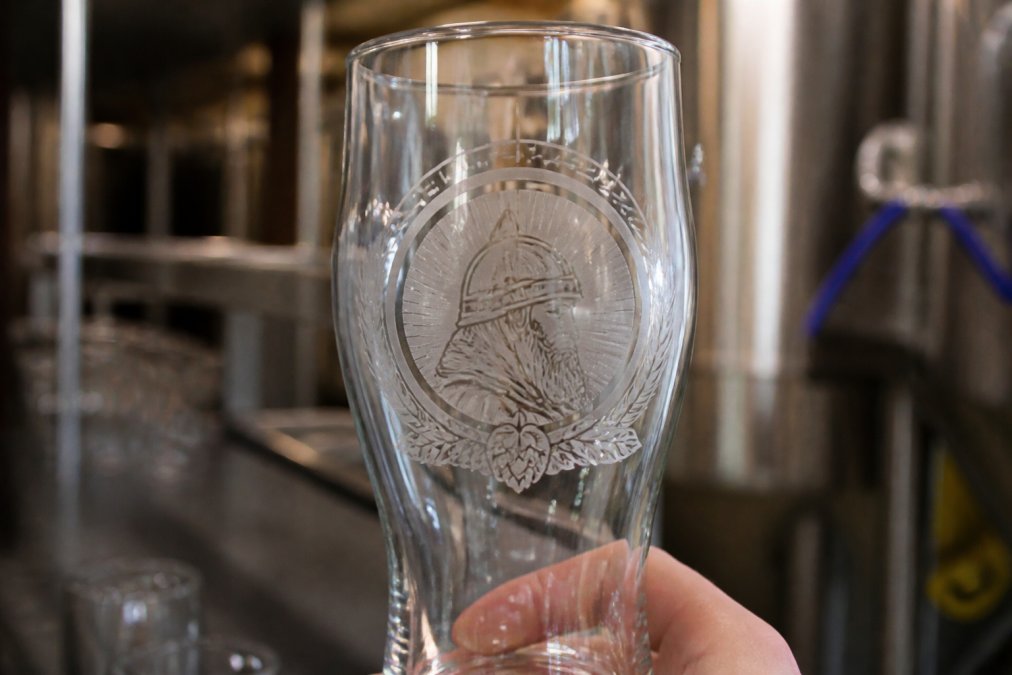
Screen printing applies coloured ink to the glass surface through a mesh screen. It delivers vibrant, full-colour branding, perfect for logos with multiple colours or photographic elements. Screen printing is faster to set up and accommodates smaller minimum order quantities, sometimes as low as 24 units.
The trade-off is durability. Screen-printed designs can fade with repeated washing. After 200-300 commercial dishwasher cycles, colour degradation becomes visible (peer-reviewed research). For promotional giveaways used occasionally, this matters less. For restaurant glassware or brewery merchandise used daily, screen printing may disappoint.
Ask your vendor about ink formulations and whether they use dishwasher-safe inks. A vendor that can't answer this question is guessing.
Choosing between them: If durability and permanent branding matter, laser engraving is worth the higher cost and larger minimum order. If you need vibrant colour, smaller quantities, or one-time event glassware, screen printing delivers better value. Some vendors offer both methods on the same piece: laser engraving for a permanent logo, screen printing for secondary colour accents.
Custom Beer Glass Minimum Order Requirements
Minimum order quantities are where many buyers encounter their first real constraint. Understanding what drives MOQ and how to negotiate it separates smart procurement from costly surprises.
Most vendors set minimum order quantities based on production efficiency. For laser engraving, the setup cost is high relative to unit volume, so vendors typically require 48-100 units minimum. For screen printing, minimums often sit at 24-50 units. Some vendors offer tiered pricing: order 50 units at one price per unit, 100 units at a lower price per unit.
The vendor's production model determines flexibility. Large-scale manufacturers may have rigid minimums. Smaller, more agile vendors sometimes negotiate lower MOQs for premium pricing. It's worth asking directly: "What's your absolute minimum for a custom order?"
Lead time and MOQ are often linked. A vendor offering a 48-unit minimum with a four-week lead time may drop to 36 units if you extend the timeline to six weeks. They're managing production scheduling; lower volumes take longer to batch efficiently.
For breweries and wineries reordering the same design quarterly, MOQ becomes less painful. You're building volume across multiple orders. A 100-unit minimum per order might feel steep initially, but over four quarters, you're at 400 units annually, a volume that justifies the vendor's setup investment.
At The Glassware Company, we understand that not every client needs 100 units at once. Discuss your actual volume needs, reorder frequency, and timeline flexibility. Vendors that listen to your constraints rather than reciting standard minimums are more likely to deliver what you need.
Promotional Glassware Lead Times and Production
Lead times determine whether your custom glassware arrives before your event or becomes a consolation prize months later. Understanding what drives production timelines and how to negotiate them prevents costly scheduling mismatches.
Standard lead times for custom glassware typically range from four to eight weeks. This includes design approval, tooling (if custom moulds are required), production, quality inspection, and packaging.
Laser engraving usually has shorter lead times, often three to five weeks, because no physical tooling is required. Screen printing is similarly fast, typically four to six weeks.
Custom mould creation adds substantial time. If you're designing a bespoke glassware shape that doesn't exist in the vendor's standard range, they'll need to commission a custom mould, adding four to six weeks to the timeline. Ask whether your design requires custom tooling or uses an existing shape.
Seasonal demand affects lead times. If you're ordering during peak season (October through November for holiday promotions, June through August for summer events), vendors' schedules fill quickly. Off-season ordering (January, February, September) typically offers shorter timelines and more flexibility.
Rush orders are possible but expensive. Most vendors can accelerate production by one to two weeks if you pay a rush premium, typically 15-25% above standard pricing. Ask about rush options and their cost before you need them.
Ask your vendor for a detailed production schedule: when design approval is due, when production starts, when quality inspection occurs, and when shipping happens. Transparency about each phase signals a vendor that's managing the process carefully.
Quality Assurance and Durability Standards
Quality control separates vendors that deliver consistent, durable glassware from those that ship inconsistent batches where some pieces fail within weeks.
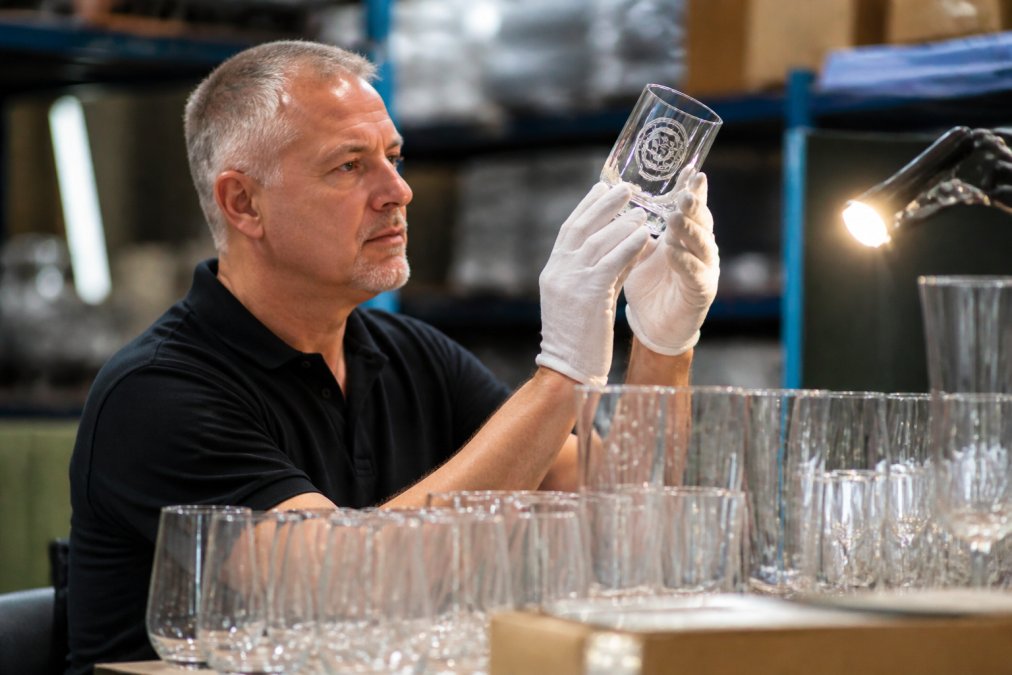
Reputable vendors conduct thermal shock testing, subjecting sample glassware to rapid temperature changes to identify weaknesses before full production. They'll test screen-printed designs by running samples through commercial dishwashers 200-300 times and inspecting for fading or adhesion failure. They'll measure laser engraving depth and clarity to ensure consistency across the batch.
Ask your vendor for documentation of their quality testing. What tests do they run? How many samples do they test per batch? What are their acceptance criteria? A vendor that can show you actual test results is demonstrating rigour.
Food-grade compliance is non-negotiable. Verify that your vendor's inks, coatings, and materials meet food safety regulations. Ask for certificates or test reports from independent laboratories. Don't accept verbal assurances.
Consistency across batches is where many vendors fail. You approve a sample, production runs 500 units, and the finished batch looks noticeably different. Ask how they ensure consistency: Do they use the same equipment, same operators, same material suppliers across batches? Do they keep reference samples from previous runs to compare against?
A vendor that offers a durability guarantee, "This engraving will not fade for five years of commercial use" or "This glass will not crack under normal commercial handling", is standing behind their quality.
Vetting Supplier Certifications and Sustainability
Beyond production capability, assessing a vendor's certifications and sustainability practices reveals whether they're operating to genuine standards.
Manufacturing certifications matter. Ask whether your vendor holds ISO certifications for quality management or environmental standards. ISO 9001 indicates a formal quality management system. ISO 14001 demonstrates environmental management practices. These signal that the vendor has submitted to external auditing and maintains documented processes.
Food-grade certifications are essential if your glassware will hold beverages or food. Vendors should provide certificates showing compliance with food contact material standards. Ask to see documentation, not just verbal confirmation.
Sustainability practices are increasingly important for corporate clients and event planners. Ask your vendor about waste reduction, recycling, and energy efficiency. Do they recycle glass scraps and failed pieces? Do they minimise packaging waste?
Look for specific practices: "We recycle 95% of production waste" is more credible than "We're committed to sustainability." Ask for documentation or third-party verification.
Supply chain reliability is a sustainability issue often overlooked. Ask about their material sourcing: Where do they source glass? How long do they maintain inventory? Vendors with diversified suppliers and reasonable inventory are more resilient.
Environmental impact extends to shipping. Efficient packaging reduces weight and carbon emissions. Ask whether your vendor optimises packaging and offers carbon-neutral shipping options.
At The Glassware Company, we believe that quality and sustainability are connected. Durable glassware that lasts years reduces waste. Responsible manufacturing practices protect the environment and reduce long-term costs.
Conclusion
Choosing a custom glassware vendor is fundamentally about reducing risk: the risk that your glassware won't survive its first use cycle, that timelines will slip, that artwork won't match your approval, or that you'll pay premium prices for commodity quality.
The strongest vendors combine transparent communication about what they can and can't deliver, proven quality control processes, and willingness to adapt to your specific needs. They'll discuss material options, branding durability, lead times, and costs without evasion. They'll show you test results, certifications, and sample work.
Get started with The Glassware Company and experience the difference that years of industry expertise makes. We specialise in bespoke glassware with precision laser engraving and screen printing, maintain rigorous quality assurance standards, and deliver consistent results across large and small orders. Our team manages timelines transparently and ensures your artwork is on point before production begins. Request an online quote today and see how custom glassware can strengthen your brand presence.
| Evaluation Criteria | What to Assess | Red Flags |
|---|---|---|
| Material Quality | Soda-lime vs borosilicate options, food-grade certification, annealing process | Vendor won't discuss glass types or certification |
| Branding Method | Laser engraving durability, screen printing fade resistance, colour vibrancy | Evasive answers about durability testing |
| Lead Times | Standard timelines, rush options, seasonal capacity, production schedule transparency | Aggressive timelines with no buffer, vague scheduling |
| Quality Control | Thermal shock testing, dishwasher durability testing, batch consistency processes | "We just inspect visually" or no documentation |
| Certifications | ISO standards, food-grade compliance, sustainability practices | No certifications or documentation available |
| Supply Chain | Material sourcing, inventory levels, supplier diversity, shipping efficiency | Single supplier, thin inventory, heavy packaging |
Frequently Asked Questions
What should I look for when choosing a custom glassware vendor?
Prioritise vendors who provide transparent information about material quality, branding durability, and quality assurance processes. Ask about their experience with your specific use case, whether corporate gifts, event drinkware, or hospitality service. Request samples, understand their proofing process, and verify they offer the lead times and minimum order quantities that suit your needs. Check certifications for food-grade compliance and sustainability practices.
What are typical minimum order requirements for custom beer glasses?
Minimum order quantities vary significantly by vendor and production method. Many manufacturers set MOQs between 50 and 500 units per design, though some accommodate smaller orders with adjusted pricing. Screen printing typically allows lower minimums than custom mould creation. Discuss your volume upfront with your chosen vendor, as smaller runs may incur setup fees or higher per-unit costs. Confirm whether MOQ applies per design or across multiple designs.
How does laser engraving differ from screen printing for custom glassware?
Laser engraving creates a permanent mark by vaporising the glass surface, offering fine detail and exceptional durability through commercial dishwashers. Screen printing applies ink or enamel to the surface, providing vibrant colour options but potentially fading with heavy use. Laser engraving suits minimalist logos and text; screen printing works better for multi-colour designs. Engraving typically costs more per unit but offers superior longevity for high-use environments like bars and restaurants.
What lead times should I expect for promotional glassware orders?
Standard lead times range from 4 to 8 weeks, depending on order volume, design complexity, and production method. Custom mould creation adds 2 to 4 weeks. Rush orders are often available at a premium cost. Confirm lead times in writing before committing, especially for time-sensitive events. Factor in packaging and logistics, some vendors offer expedited shipping. Always clarify whether quoted lead times include delivery or only production.
How can I ensure custom etching or engraving will hold up in a commercial dishwasher?
Request samples tested through at least 100 commercial dishwasher cycles to verify durability. Ask your vendor about the annealing process they use, proper thermal treatment strengthens the glass and ensures the engraving bonds permanently. Laser-engraved designs are inherently more durable than surface-applied methods. Request written durability guarantees and ask whether they've supplied similar glassware to restaurants, bars, or hospitality venues. Avoid vendors who cannot provide documented durability evidence.
What certifications should a custom glassware vendor have?
Look for food-grade certification, which confirms the glass and any coatings are safe for beverages and food contact. Verify compliance with relevant food safety standards in your region. Ask about quality assurance certifications and whether they conduct third-party testing. For sustainability-focused buyers, inquire about recycled glass content, energy-efficient manufacturing, and waste reduction practices. Request documentation of certifications rather than relying on claims alone.
How can I verify consistency across repeat orders?
Request a detailed proofing process before production begins, colour samples, artwork placement, and engraving depth should be approved in writing. Ask whether the vendor maintains master files and production specifications for your design, ensuring batch-to-batch consistency. For large or repeat orders, request sample units from each production run before full delivery. Establish a written quality standard in your contract, specifying acceptable tolerances for colour, positioning, and finish.
This article was written using GrandRanker