 listicle
Custom Logo Glassware for Wedding Venues: A 2026 Guide
Table of Contents
- Why Custom Logo Glassware Matters for Wedding Venues
- Types of Custom Glassware for Wedding Events
- Personalisation and Engraving Techniques
- Wholesale Branded Glassware for Hospitality Venues
- Benefits of Branded Drinkware for Wedding Venues
- Durability, Care, and Maintenance
- Design Trends and Sustainability for 2026
- Choosing the Right Custom Logo Glassware for Your Venue
- Frequently Asked Questions
Last Updated: September 2, 2026
Why Custom Logo Glassware Matters for Wedding Venues
Custom logo glassware transforms ordinary events into branded experiences that guests remember long after the celebration ends. Personalised drinkware signals attention to detail and creates a cohesive aesthetic that elevates the entire occasion.
Branded glassware serves as a functional keepsake. Guests take these glasses home, and every future use reinforces the memory of your event. For venues, this translates to extended brand visibility and word-of-mouth marketing that costs nothing after the initial investment.
Many wedding planners overlook this opportunity, treating glassware as a generic commodity rather than a strategic branding tool. Custom logo glassware becomes a competitive advantage. At The Glassware Company, we've worked with venues to create bespoke drinkware solutions that align with wedding themes and hospitality standards.
A well-chosen glass collection ensures consistency across your service, reduces breakage compared to mismatched stock, and demonstrates professionalism to clients evaluating multiple venues.
Types of Custom Glassware for Wedding Events
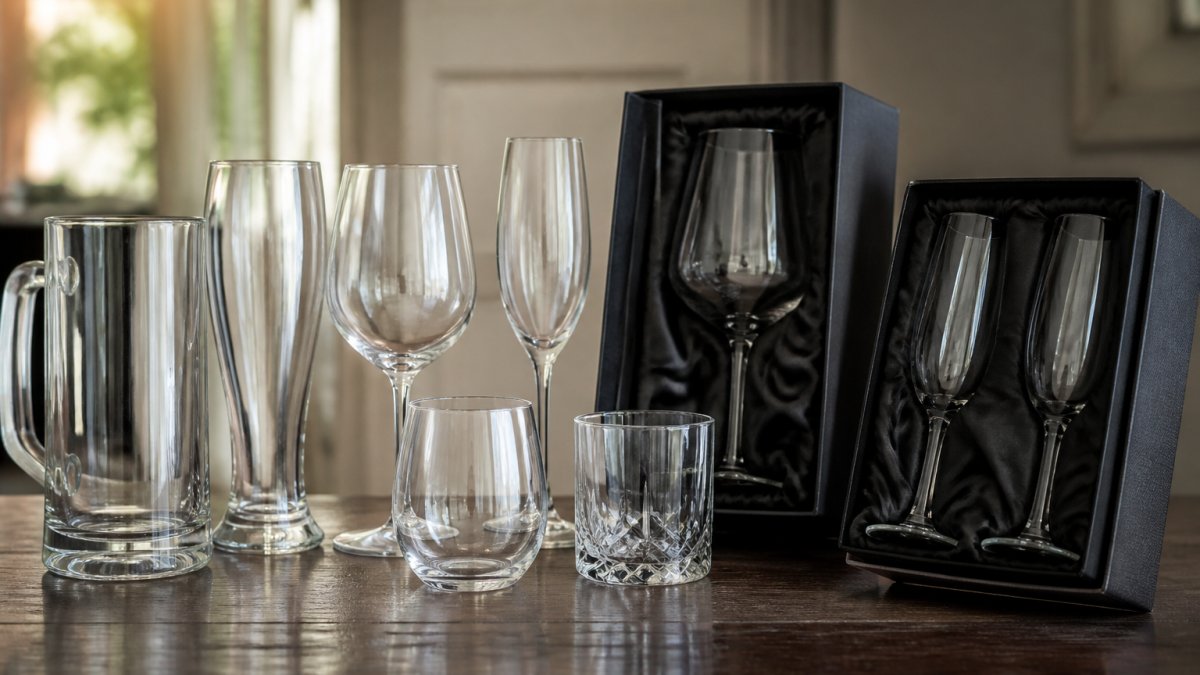
Wedding venues need variety in their glassware collection to accommodate different service moments and guest preferences.
Customised Champagne Flutes for Wedding Packages
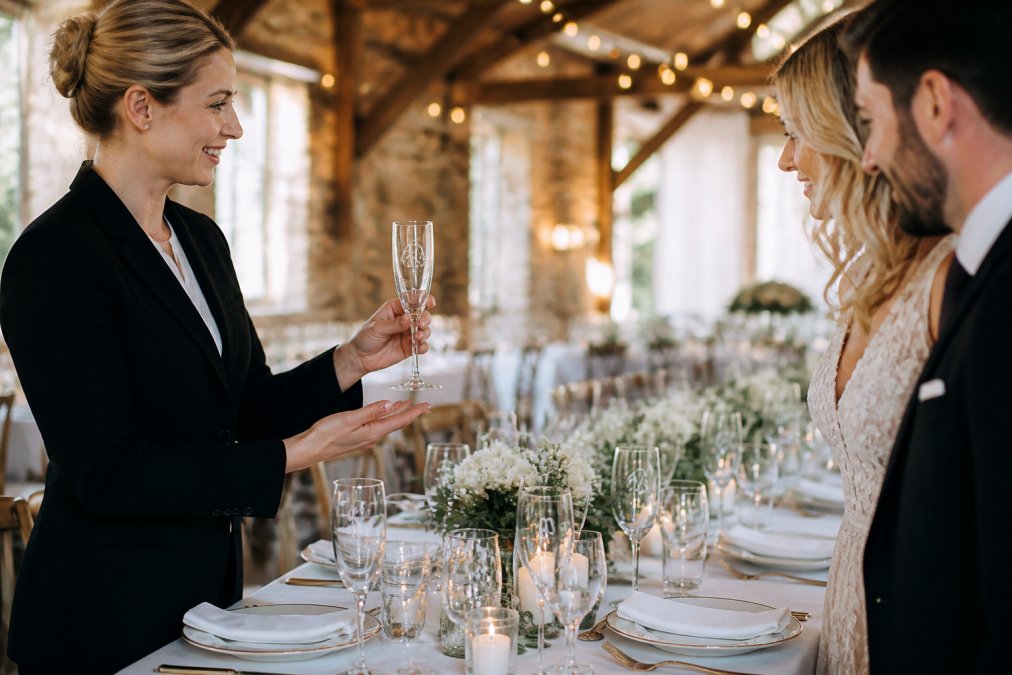
Champagne flutes remain the iconic choice for toasts and celebratory moments. A customised champagne flute, etched with the couple's names, wedding date, or venue logo, becomes the centrepiece of formal toasting moments. The tall, narrow bowl shape preserves carbonation and creates an elegant visual line on the table.
When selecting champagne flutes, consider capacity (typically 150-200ml for formal service) and stem length (peer-reviewed research). Stemmed flutes maintain temperature and prevent fingerprints on the bowl, though stemless options offer a modern aesthetic and improved stability. Lead times for custom champagne flutes vary depending on order volume and design complexity. Laser etching creates permanent designs that won't fade or chip with regular use.
Wine Glasses and Stemless Options
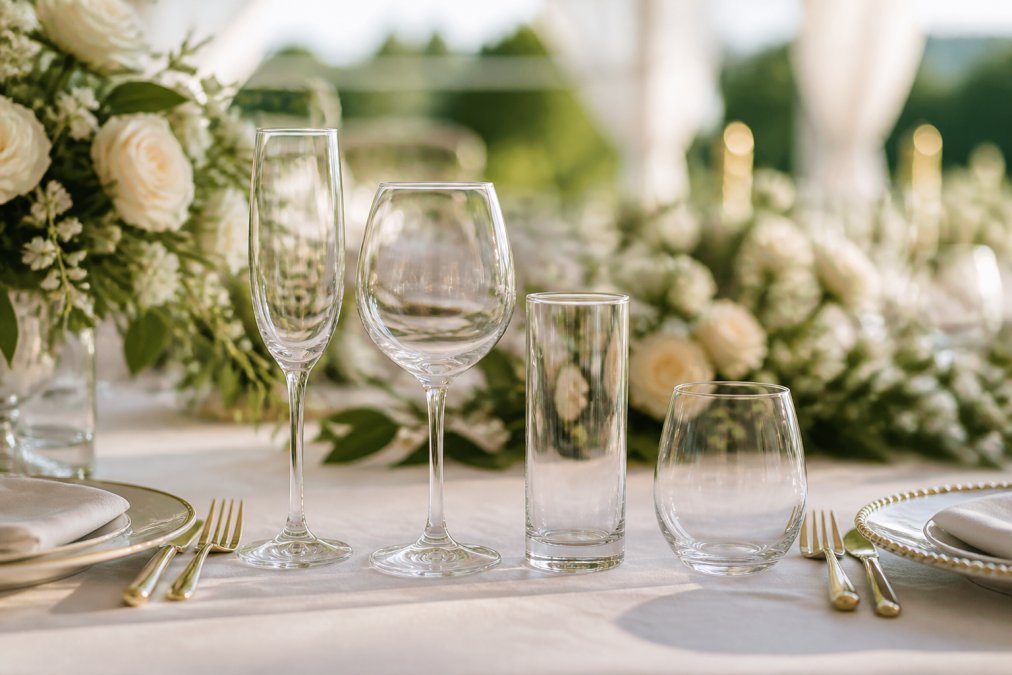
Wine service requires different glassware depending on the varietals being served. A standard wine glass (350-400ml) works for most red and white wines, while larger bowls suit bold reds (peer-reviewed research). Stemless wine glasses have gained popularity at modern venues for their contemporary look and reduced breakage risk.
The choice between stemmed and stemless depends on your venue's style and service model. Stemmed glasses project formality; stemless glasses feel contemporary. Both can be custom-etched with logos, dates, or monograms. Bulk ordering wine glasses becomes cost-effective at quantities of 100 or more.
Cocktail Tumblers and Shot Glasses
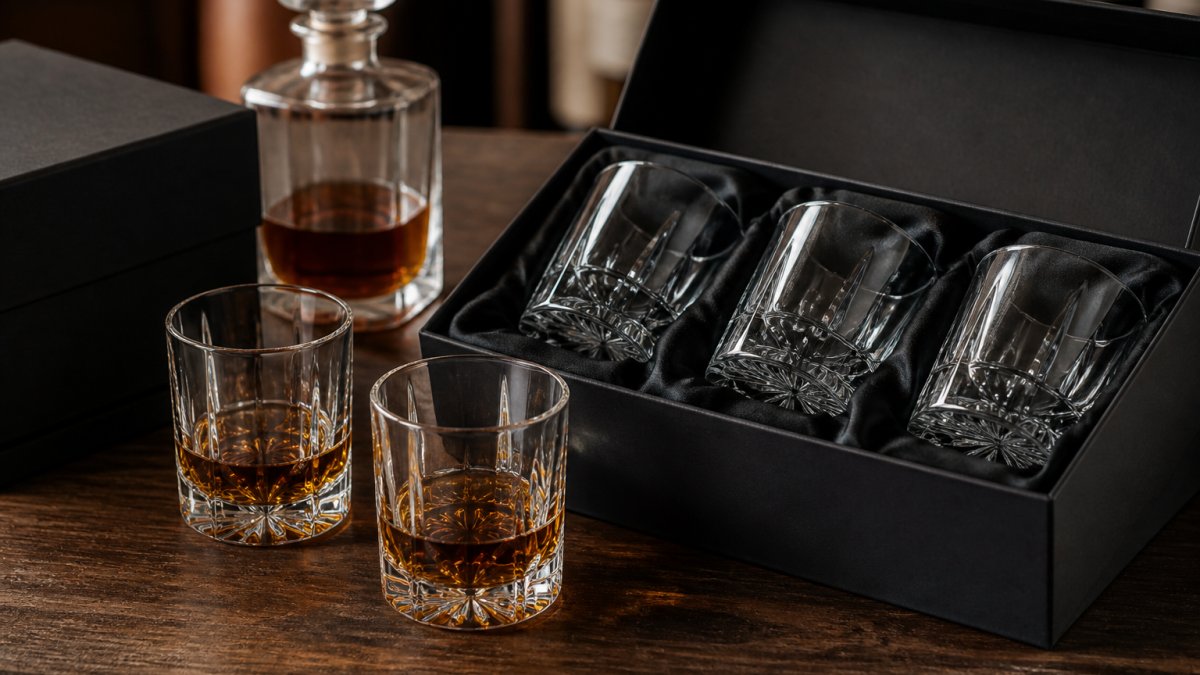
Cocktail tumblers (300-350ml) and shot glasses (40-60ml) round out a complete glassware collection. Tumblers work for mixed drinks, spirits, or water service. Shot glasses serve both functional and decorative purposes when personalised.
Custom-etched tumblers are particularly popular for venue branding. Unlike single-use glasses, tumblers get repeated use, maximising brand exposure.
Personalisation and Engraving Techniques
The method you choose for personalising glassware affects durability, appearance, and cost.
Laser Etching vs. Traditional Engraving
Laser etching uses focused light to vaporise a thin layer of glass, creating a frosted, permanent mark (peer-reviewed research). The process is precise, allowing for fine detail and photographic reproduction. Laser-etched designs won't fade, chip, or wash away.
Traditional engraving uses a rotating wheel or hand tool to cut grooves into the glass, creating a tactile, dimensional effect. The process is slower than laser etching and less suitable for highly detailed work, but it produces a distinctive, artisanal quality.
For wedding venues, laser etching generally offers better value, faster turnaround, finer detail reproduction, and no risk of inconsistency across large batches.
Design Approval and Proofing Process
Before production begins, reputable suppliers provide a proofing process. You'll receive a digital mockup or physical sample showing how your design appears on the actual glass. This step is critical, it's your opportunity to confirm that the logo scales properly and that the overall aesthetic matches your vision.
The design approval process typically takes 3-5 business days. Allocate sufficient time in your event planning timeline to review proofs carefully.
Wholesale Branded Glassware for Hospitality Venues
Venues operating at scale benefit from wholesale purchasing models that offer volume discounts and dedicated account management.
Bulk Ordering and Minimum Quantities
Minimum order quantities vary by supplier and product type. Simple, stock glassware styles might have minimums of 50-100 pieces. Custom-etched glassware typically requires minimums of 100-200 pieces to justify setup costs.
Larger orders (500+ pieces) unlock significant per-unit savings. The Glassware Company works with venues to structure orders around their actual needs, tailoring solutions to your event size and budget. bulk ordering process.
Lead Times and Rush Order Options
Standard lead times for custom glassware range from 6-10 weeks. Venues planning events should place orders well in advance to avoid rush charges.
Rush orders, typically 2-4 week turnarounds, incur premiums of 15-40% depending on the supplier and complexity. If your event is six weeks away, contact suppliers immediately. Many can accommodate six-week timelines for standard designs without rush fees.
Benefits of Branded Drinkware for Wedding Venues
Branded drinkware creates a unified visual identity throughout the event. When every glass bears your logo or the couple's monogram, it reinforces the event's theme and demonstrates intentionality.
Custom glassware functions as a take-home keepsake. A guest who receives a personalised champagne flute is likely to keep it and remember your venue fondly every time they use it.
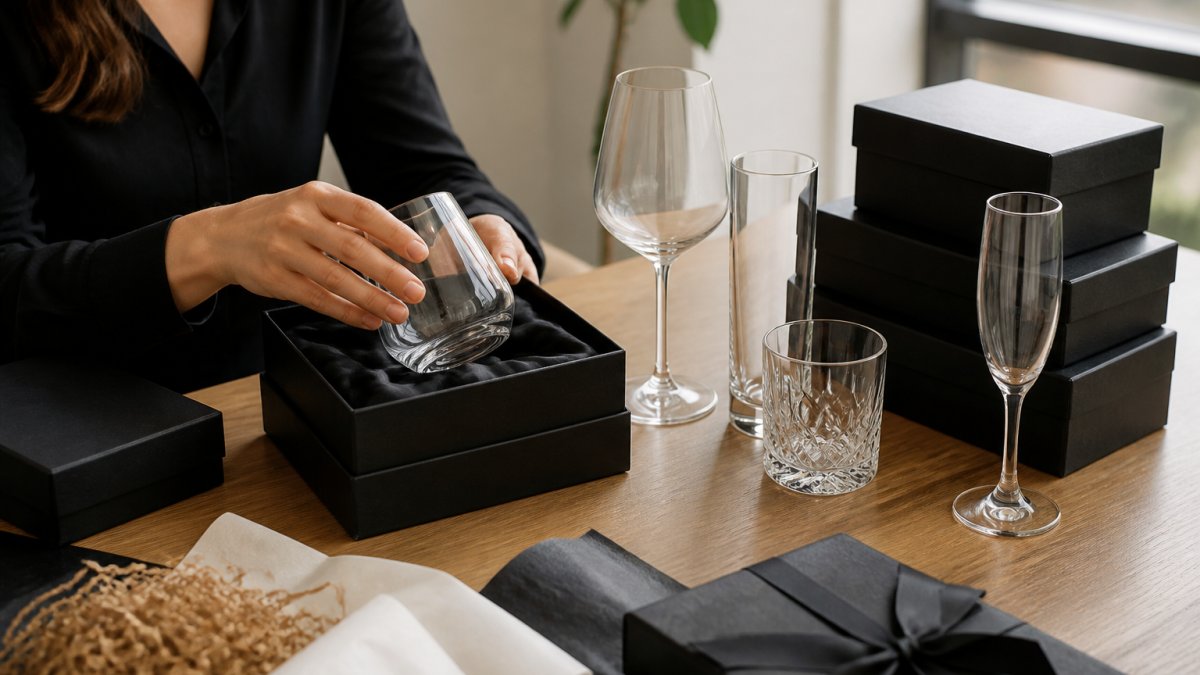
Branded glassware simplifies logistics. A cohesive custom collection ensures consistency across all service moments, reduces breakage, simplifies dishwashing, and improves the guest experience.
Custom drinkware differentiates your venue in a competitive market. Details like personalised glassware signal professionalism and attention to guest experience. For corporate events, branded drinkware creates a professional atmosphere and provides guests with a memorable takeaway.
Durability, Care, and Maintenance
Custom glassware must withstand commercial dishwashing, stacking, and regular use.
Dishwasher Safety and Long-Term Durability
High-quality glassware designed for hospitality venues tolerates commercial dishwashing without degradation. Lower-quality glass may develop a cloudy appearance after repeated washing due to mineral deposits or micro-scratches.
Laser-etched designs maintain clarity and permanence through hundreds of wash cycles. Traditional engraving also proves durable. Printed designs are more vulnerable and can fade or chip with aggressive dishwashing.
Storage and handling matter, stack glasses carefully to avoid chipping rims and train staff on gentle handling to minimise breakage.
Batch Consistency and Quality Control
When ordering custom glassware in bulk, consistency across the entire shipment is critical. Reputable suppliers implement quality control processes at multiple stages: design proofing, in-process inspection, and final inspection before shipment.
Ask your supplier about their quality control procedures before placing a large order. The Glassware Company maintains strict batch consistency standards, inspecting every production run to ensure your artwork is crisp and uniform across every piece.
Design Trends and Sustainability for 2026
Minimalist logos dominate contemporary wedding aesthetics. Clean line work and monograms create elegant, timeless appeal that outlasts trendy graphics.
Sustainability concerns influence material and design choices. Glass is infinitely recyclable and chemically stable. Choosing quality glass glassware aligns with guest expectations around environmental responsibility.
Personalisation continues to drive demand. Custom logo glassware increasingly incorporates individual touches like guest names or meaningful quotes, transforming glassware into cherished mementos.
The Glassware Company is committed to sustainable production methods and quality that ensures long-term use rather than single-event disposal.
Choosing the Right Custom Logo Glassware for Your Venue
Selecting ideal custom logo glassware requires evaluating guest count, event style, budget, timeline, and durability requirements.
Start with guest count. A 50-person intimate dinner requires different glassware strategy than a 300-person reception. Consider your venue's aesthetic, modern spaces pair well with sleek, stemless designs; traditional venues suit classic champagne flutes with elegant etching.
Budget influences both quantity and customisation complexity. A simple logo etched on a standard glass costs less than photo engraving. Ordering larger quantities reduces per-unit costs.
Timeline matters significantly. Events more than 10 weeks away have flexibility to source custom glassware without rush charges. Events within 6-8 weeks should contact suppliers immediately.
The Glassware Company specialises in matching venues with the right custom glassware solution. Our professional team guides you through design, personalisation, and production timelines. We maintain a large range of styles and offer customisation with logos or artwork of your choice. Request a quote to explore options tailored to your event's specific requirements.
| Glassware Type | Best For | Customisation | Durability |
|---|---|---|---|
| Champagne Flutes | Toasts, formal service | Laser etching, engraving | Excellent |
| Wine Glasses (Stemmed) | Wine service, formal events | Laser etching, engraving | Excellent |
| Stemless Wine Glasses | Modern venues, casual events | Laser etching, engraving | Excellent |
| Cocktail Tumblers | Mixed drinks, casual service | Laser etching, printing | Very Good |
| Shot Glasses | Aperitifs, keepsakes | Laser etching, engraving | Excellent |
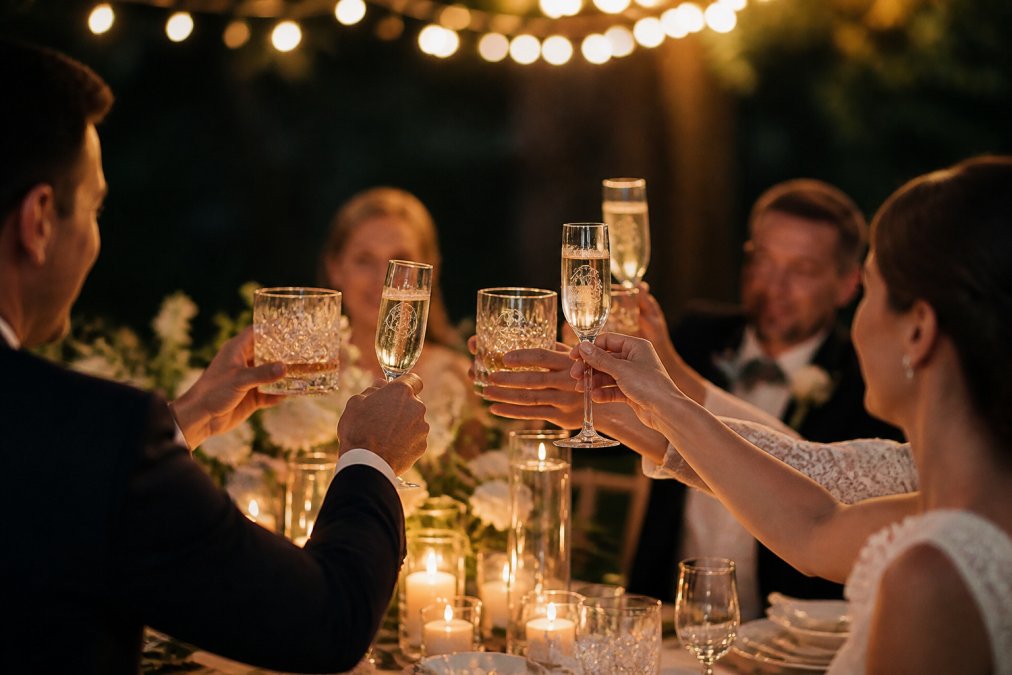
Custom logo glassware for wedding venues transforms events from generic to memorable. When guests raise a personalised glass to toast the couple, they're holding a tangible reminder of your venue's professionalism and attention to detail.
The Glassware Company has spent years perfecting the art of custom glassware production. Our expertise in etching and engraving, combined with our large range of styles and commitment to quality, ensures your custom logo glassware makes a striking impression. Whether you're planning an intimate 50-person celebration or a grand 500-person reception, we work with you to deliver glassware that reflects your vision and enhances your event. Get a custom quote from The Glassware Company today to explore options for your upcoming event.
Frequently Asked Questions
How long does custom logo glassware etching actually last through regular dishwasher cycles?
Laser-etched and properly engraved glassware is designed to withstand commercial dishwashers indefinitely when applied correctly. The etching creates a permanent mark in the glass surface itself, unlike printed designs that can fade. Quality providers use techniques that resist wear from repeated washing. Always confirm your supplier uses permanent etching methods and test a sample batch before committing to large orders. Avoid low-cost printing options if durability through frequent washing is critical for your venue.
What's included in the proofing process before custom logo glassware goes into production?
A professional proofing process typically includes a digital mockup showing your logo placement, size, and orientation on your chosen glassware style. You review the artwork, request adjustments to positioning or scaling, and approve the final design in writing before production begins. Some suppliers provide a physical sample or test piece. Always ask for approval rights in writing and confirm turnaround time for proof revisions. This step prevents costly mistakes and ensures your artwork appears exactly as intended on every glass.
Can I order wholesale branded glassware for hospitality without hitting large minimum quantities?
Minimum order quantities vary by supplier and customisation method. Many providers accommodate smaller runs for weddings and events, though setup fees may apply. Laser etching and hand-engraved pieces often have lower minimums than large-scale printing. Request a quote specifying your exact quantity, and ask whether setup costs scale with order size. Building a relationship with a supplier for repeat orders (quarterly or seasonal) can also unlock better pricing and flexibility on minimums over time.
How do I ensure colour and design consistency across multiple reorders of the same custom glassware?
Request that your supplier maintain a master artwork file and colour specification for your design. Ask them to document the exact etching depth, placement measurements, and any colour references used in your first batch. For reprints, specify that new batches should match the original approved sample. Discuss their quality control process and whether they can provide a comparison sample from a previous batch. Establishing these standards upfront prevents the colour and design drift that occurs when specifications aren't documented between orders.
This article was written using GrandRanker